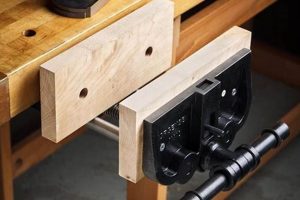
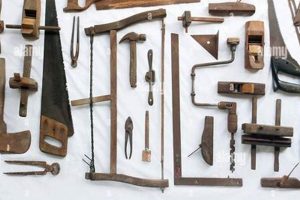
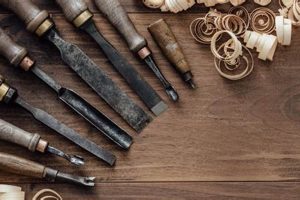
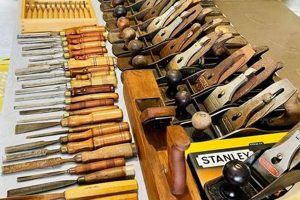
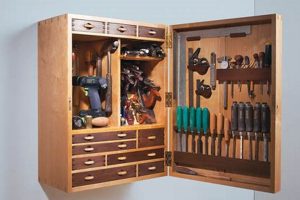
These implements, primarily associated with jointing and shaping wood, offer precision and repeatability. A notable example is a dovetail jig, designed for creating strong and aesthetically pleasing interlocking joints commonly found in furniture construction.
The significance of such specialized equipment lies in its ability to enhance accuracy and efficiency in woodworking projects. Historically, achieving complex joinery demanded considerable skill and time. These tools streamline the process, allowing for consistent results and enabling both hobbyists and professionals to produce high-quality work with greater ease. The resulting joinery boasts improved strength, longevity, and visual appeal in finished pieces.
Subsequent sections will delve into specific types of this specialized equipment, discussing their application in diverse woodworking techniques, appropriate usage guidelines, and maintenance requirements for optimal performance and lifespan. This exploration will cover aspects such as selecting the right tool for a given task, mastering effective operating procedures, and troubleshooting common issues.
Essential Usage Guidance
The following recommendations are intended to maximize the effectiveness and longevity of precision woodworking equipment. Adherence to these guidelines can improve project outcomes and reduce the risk of damage to tools and materials.
Tip 1: Material Compatibility: Determine suitability of stock being used. Hardwoods demand slower feed rates, while softwoods can be machined more quickly. Selecting appropriate cutting speeds and bit profiles prevents tear-out and ensures clean cuts.
Tip 2: Secure Workpiece Clamping: Rigorous clamping of the workpiece is paramount. Slippage during operation can lead to inaccurate cuts, tool damage, and potential injury. Verify that clamps are properly positioned and tightened before initiating the cutting process.
Tip 3: Proper Router Bit Selection: Use only router bits specifically designed for the intended application. Utilizing inappropriate bits may result in poor cut quality, excessive wear, and potential failure of the bit during operation.
Tip 4: Controlled Feed Rate: Employ a steady and controlled feed rate. Forcing the tool can overload the motor and damage the cutting edges. A consistent feed rate results in smoother, more accurate joinery.
Tip 5: Regular Cleaning and Lubrication: Maintain the equipment by regularly cleaning accumulated dust and debris. Lubricate moving parts as directed in the manufacturers documentation to ensure smooth operation and prevent premature wear.
Tip 6: Calibration and Adjustment: Periodically check the calibration of the equipment to ensure accurate measurements. Adjustments should be made as needed to maintain the tool’s precision and repeatability.
Tip 7: Safety Precautions: Always wear appropriate safety glasses and hearing protection during operation. Failure to do so may result in serious injury from flying debris or excessive noise levels.
Consistent application of these practices optimizes the performance and extends the service life of specialized woodworking equipment. These actions will result in improved accuracy and decreased errors on projects, allowing you to be more efficient.
The subsequent sections will focus on maintaining optimal condition and will contain procedures for troubleshooting common operational problems.
1. Dovetail Joint Precision

Achieving dovetail joint precision is a core function facilitated by specialized equipment designed for woodworking. This equipment, often associated with the referenced brand, utilizes jigs and templates to guide cutting tools, ensuring consistent and accurate dovetail joints. The cause-and-effect relationship is direct: precise guidance mechanisms yield precisely cut dovetails. Without this level of control, manual methods are prone to variations, impacting the structural integrity and aesthetic quality of the joint.
Dovetail joint precision, therefore, represents a critical component in evaluating the quality and utility of such equipment. For example, furniture manufacturers require uniform dovetails for mass production, achievable through repeatable jig-based systems. A lack of precision in this area would render the equipment unsuitable for high-volume applications. Hand-cut dovetails are valued for their craftsmanship but do not provide the efficiency demanded in industrial environments, which is where the practical advantage of such tools is highlighted.
In summary, precision in dovetail joint creation is a foundational benefit offered by this brand’s woodworking equipment. Its attainment addresses the challenge of achieving consistent and robust joinery, linking directly to the broader theme of enhancing woodworking productivity and the quality of finished products. These tools serve as a means to reliably replicate what was once a slow manual process.
2. Variable Mortise Creation

The capacity for variable mortise creation represents a significant advantage afforded by specialized woodworking equipment. This capability allows for customization in joint design, adapting to specific structural requirements and aesthetic preferences. The tools facilitate the precise cutting of mortises of varying dimensions and orientations, expanding the range of possible woodworking projects.
- Adjustability of Mortise Dimensions
Specialized tools provide the means to adjust mortise width, depth, and length independently. This adjustability accommodates different stock thicknesses and joint load requirements. For instance, a thicker table leg might necessitate a deeper mortise to ensure structural integrity. Similarly, variations in mortise width can influence the aesthetic appearance of the joint. These considerations illustrate the importance of fine-tuning mortise dimensions to match project-specific demands.
- Mortise Orientation Control
Beyond dimensional control, these tools allow for the precise control of mortise orientation. Mortises can be cut at specific angles or offsets, enabling the construction of complex joint configurations. This is crucial for creating furniture pieces with unique design elements or for accommodating irregular shapes. Accurate control over mortise orientation ensures that the finished joint aligns as intended, preventing structural weaknesses or visual imperfections.
- Repeatability and Consistency
A primary benefit of employing specialized equipment for mortise creation is the enhanced repeatability and consistency. Once a specific mortise configuration is established, it can be replicated multiple times with minimal variation. This is particularly valuable for large-scale projects or when constructing multiple identical components. The consistency afforded by these tools reduces the risk of errors and minimizes the need for manual adjustments, streamlining the manufacturing process.
- Integration with Other Woodworking Processes
The precision afforded by these tools also facilitates seamless integration with other woodworking processes. Precisely cut mortises align accurately with corresponding tenons or other joint components, simplifying assembly and improving the overall quality of the finished product. This integration extends to the use of power tools, enabling efficient material removal without compromising accuracy or structural integrity.
In summary, the ability to create variable mortises expands the capabilities of the woodworker, allowing for the production of more complex and customized pieces. The precision, adjustability, and repeatability afforded by these tools enhance both the efficiency and quality of mortise and tenon joinery. Use of these tools is advantageous for both those making custom designs and those working to mass produce items.
3. Accurate Tenon Formation

Accurate tenon formation is inextricably linked to the functionality and value proposition of specialized woodworking implements, including those of the defined brand. The creation of precise tenons, which insert into corresponding mortises to form robust joints, is a core woodworking task facilitated by specialized tools. The precision afforded by such implements directly impacts the strength, stability, and longevity of the resultant wood assemblies. Poorly formed tenons lead to weakened joints susceptible to failure under stress, highlighting the direct cause-and-effect relationship. A real-world example is the construction of chair frames; accurately formed tenons are essential to withstanding the daily stress of use, preventing wobbling or breakage. Implementations of this style is not only about joinery, but can be essential in creating artistic relief using accurate tenon formations.
The importance of accurate tenon formation extends beyond structural integrity to include aesthetic considerations. Precisely fitted tenons contribute to a visually seamless joint, enhancing the overall appearance of the finished piece. Furthermore, accurate tenon dimensions streamline the assembly process, reducing the need for manual adjustments and ensuring consistent results across multiple joints. This has practical significance in mass production settings, where efficiency and uniformity are paramount. These advantages are present in both the building of simple and intricate projects, showing the advantages of this style.
In summary, accurate tenon formation is a fundamental requirement for high-quality woodworking, and specialized equipment represents a reliable means of achieving this level of precision. The capacity to produce consistent and accurately sized tenons translates directly into stronger, more aesthetically pleasing, and more durable wood structures. The value and usefulness of specialized tenon-forming implements is shown by the ability to accurately create and reproduce shapes. These advantages show the benefits in its overall utility.
4. Jig-Based Repeatability

Jig-based repeatability is a defining characteristic of the equipment under consideration, directly impacting efficiency and consistency in woodworking projects. Jigs, which are templates or guides, allow for the creation of identical components with minimal variation. This capability is crucial for producing multiple parts that must fit together precisely, such as those used in cabinet construction or furniture making. The use of jigs effectively eliminates the inconsistencies inherent in manual woodworking methods, resulting in higher quality and reduced material waste. Consider a scenario where multiple dovetail joints are required for a chest of drawers; a jig ensures that each joint is cut to the same dimensions, guaranteeing a tight and aesthetically pleasing fit.
The practical significance of jig-based repeatability extends to both amateur and professional woodworkers. For hobbyists, it simplifies complex tasks, making them more accessible and less prone to error. For professionals, it increases productivity by reducing the time required to produce consistent components. In a production environment, the use of jigs allows for the rapid creation of multiple identical parts, enabling the efficient assembly of large quantities of furniture or other woodworking projects. A furniture manufacturer, for example, can use a jig to repeatedly cut mortises and tenons for chair legs, ensuring that each chair is structurally sound and visually uniform.
In summary, jig-based repeatability is a fundamental advantage afforded by such woodworking tools. This functionality provides consistency, reduces errors, and improves overall efficiency, making them valuable assets for woodworkers of all skill levels. While jigs require initial setup and calibration, the long-term benefits in terms of accuracy and repeatability far outweigh the initial investment of time and effort. The challenges associated with jig design and construction are mitigated by the availability of commercially produced jigs and templates, making this functionality readily accessible to a wide range of users.
5. Router Bit Compatibility
Router bit compatibility is a crucial consideration when evaluating the utility of woodworking equipment associated with the specified brand. These tools, often designed for precision joinery, rely on the precise interaction between the equipment and the router bit. Incompatibility leads to inaccurate cuts, potential damage to the equipment, and compromised joint integrity. The cause-and-effect relationship is direct: a properly matched router bit, designed for use with the specific jig or template, ensures accurate and repeatable cuts. Conversely, using an incompatible bit may result in deviations from the intended dimensions, rendering the joint structurally unsound. For example, dovetail jigs require specific dovetail bits with the correct angle and dimensions to create precisely interlocking joints. If the bit’s profile is incorrect, the dovetails will not fit properly, resulting in a weak and aesthetically unappealing joint. Furthermore, employing undersized or oversized router bits poses significant operational safety risks.
Practical applications highlight the importance of understanding router bit compatibility. Equipment instructions typically specify the types and sizes of router bits that are compatible with each jig or template. Failure to adhere to these specifications can lead to several adverse outcomes, including tear-out, excessive vibration, and premature wear of both the router bit and the jig. Professionals engaged in high-volume production utilize comprehensive router bit catalogs and reference charts to ensure appropriate pairings, while hobbyists should consult equipment manuals and online resources for guidance. Correct router bit installation and maintenance also fall under the umbrella of compatibility. A dull or improperly installed bit compromises cut quality and puts undue stress on the woodworking equipment. These types of problems can cause project failure and financial loss to materials and products.
In summary, router bit compatibility represents a critical component of the effective use. It affects precision, safety, and the longevity of both the equipment and the router bits themselves. By adhering to manufacturer specifications and understanding the principles of router bit selection, woodworkers can maximize the potential of these tools and achieve consistent, high-quality results. Ignoring this crucial aspect increases the risk of project failure and potential injury. In short, a well-rounded knowledge and implementation of router bit compatibility is a necessity for maximizing the quality of work, and the safety of the worker.
6. Workpiece Clamping Security

Workpiece clamping security is a foundational requirement for the safe and accurate operation of precision woodworking equipment. The ability to rigidly secure the workpiece during machining is paramount to achieving desired results and preventing potential hazards. This is especially true when using equipment from the specified brand, due to its emphasis on intricate joinery and precise cuts.
- Vibration Reduction and Accuracy
Secure clamping minimizes vibration during the cutting process. Vibration introduces inaccuracies, leading to flawed joinery and compromised structural integrity. Precision in creating dovetails and mortise-and-tenon joints is heavily reliant on preventing any movement of the workpiece. Unsecured material shifts under the force of the router bit, undermining the desired level of precision.
- Operator Safety Considerations
Inadequate clamping poses a significant safety risk to the operator. An unsecured workpiece can be ejected from the equipment during operation, leading to serious injury. Router bits spin at high speeds, and a projectile workpiece represents a hazardous situation. The use of appropriate clamping mechanisms, such as toggle clamps, cam clamps, or specialized jigs, is therefore essential to mitigate these risks.
- Material Integrity Preservation
Effective clamping not only secures the workpiece but also prevents damage to the material itself. Over-tightening clamps can leave indentations or compress the wood fibers, compromising the aesthetic quality and structural soundness. The selection of clamping methods that distribute pressure evenly across the workpiece surface is crucial, particularly when working with softwoods or delicate materials.
- Repeatability and Production Efficiency
Consistent clamping techniques contribute to repeatability in production settings. By establishing standardized clamping procedures, woodworkers can ensure that each workpiece is positioned and secured in the same manner, resulting in uniform cuts and consistent joinery. This is especially important for large-scale projects where multiple identical components must be created. Stable processes also mean more efficient machining and less loss due to errors.
Effective workpiece clamping security is an integrated component of the described brand’s woodworking system. Adherence to proper clamping techniques maximizes the accuracy, safety, and efficiency of woodworking operations. Proper selection of clamps and clamping methods, along with regular inspection of clamping mechanisms, is essential for achieving optimal results and mitigating potential hazards. This security is necessary for all levels of woodworking, from beginner to experienced professionals. The need for clamping stability must be a primary focus for all users of woodworking systems and tools.
7. User Skill Enhancement

Proficiency in woodworking is notably augmented through the use of specialized tools. These implements, designed to facilitate complex joinery, present opportunities for users to develop and refine their abilities. Skill enhancement occurs as users navigate the nuances of equipment operation, material selection, and project planning. The following points detail facets of how “leigh woodworking tools” aid in the woodworking user’s growth.
- Refined Precision Techniques
The use of precision woodworking equipment mandates the development of refined techniques. Operators must learn to calibrate tools, select appropriate cutting speeds, and maintain consistent feed rates. These skills transfer to other woodworking contexts, enhancing overall precision and control. For instance, mastering the use of a dovetail jig cultivates an understanding of angles, measurements, and material properties, improving the ability to execute precise cuts in other applications.
- Problem-Solving Abilities
Woodworking projects, particularly those involving complex joinery, often present unforeseen challenges. Users must develop problem-solving abilities to overcome obstacles, such as material inconsistencies, tool malfunctions, or design flaws. The process of troubleshooting these issues fosters critical thinking skills and a deeper understanding of woodworking principles. An example is addressing tear-out in hardwoods; this requires adjusting cutting parameters and selecting appropriate router bits, enhancing a user’s ability to adapt to varying material characteristics.
- Enhanced Project Planning and Execution
Effective use of specialized woodworking tools necessitates careful planning and execution. Users must consider material requirements, joint design, and tool setup prior to commencing a project. This process promotes organizational skills and a systematic approach to woodworking. For example, planning a project involving mortise-and-tenon joints requires careful consideration of mortise dimensions, tenon shoulder placement, and overall structural integrity, thereby honing a user’s ability to conceptualize and execute complex woodworking tasks.
- Expanded Knowledge of Woodworking Principles
The utilization of sophisticated equipment exposes users to a broader range of woodworking principles. They gain a deeper understanding of joinery techniques, material behavior, and tool maintenance. This expanded knowledge base enhances their ability to design and construct complex woodworking projects with confidence. Learning the effect of grain direction on joint strength, for example, informs material selection and joint design, enabling users to create more robust and aesthetically pleasing wood assemblies.
In conclusion, utilization of specialized equipment serves as a catalyst for user skill enhancement. It fosters the development of precision techniques, problem-solving abilities, and project planning skills, while also expanding knowledge of fundamental woodworking principles. By mastering these tools, users elevate their craftsmanship and expand the scope of their woodworking capabilities. These skills benefit users for projects from small, home repairs to large scale professional projects.
Frequently Asked Questions
The following questions address common inquiries concerning the use, maintenance, and compatibility of precision woodworking equipment. These responses aim to provide clarity and guidance for maximizing the effectiveness and longevity of the tools.
Question 1: What factors determine the appropriate router bit speed for dovetail operations?
Router bit speed is contingent upon several variables, including the diameter of the bit, the type of wood being machined, and the desired cut quality. Larger diameter bits require slower speeds to prevent excessive vibration and potential damage. Hardwoods demand slower speeds to minimize tear-out, while softwoods can generally be machined at higher speeds. The ultimate goal is to achieve a clean, smooth cut without excessive burning or chatter.
Question 2: How frequently should precision woodworking jigs be calibrated?
Calibration frequency depends on the intensity of use and the environment in which the jigs are stored. In a high-production setting, weekly calibration is recommended to ensure consistent accuracy. For occasional use, monthly calibration may suffice. However, any noticeable deviation in cut quality or measurement warrants immediate recalibration, regardless of the established schedule.
Question 3: What are the most common causes of tear-out when using dovetail jigs?
Tear-out, the splintering of wood fibers during cutting, is typically caused by one or more of the following factors: excessively high router speed, dull router bits, improper feed direction, or insufficient support for the workpiece. Mitigating tear-out involves optimizing router speed, ensuring sharp cutting edges, feeding the router against the grain, and employing sacrificial backing boards to support the wood fibers.
Question 4: What type of lubrication is recommended for precision woodworking equipment?
The manufacturer’s recommendations should always be prioritized. However, in general, a dry lubricant, such as PTFE-based spray, is preferred for sliding surfaces to minimize friction and prevent dust accumulation. Oil-based lubricants can attract dust and debris, leading to increased wear. Grease is appropriate for gears and bearings, but should be applied sparingly to prevent migration to other components.
Question 5: How can one prevent router burn when using a dovetail jig?
Router burn, the discoloration of wood due to excessive heat, is often caused by a combination of factors. Maintaining a sharp router bit is key to reducing friction. Multiple shallow passes are preferable to a single deep cut. Ensuring adequate dust extraction prevents chip build-up, which can contribute to heat generation. Reduce the router speed and/or increase the feed rate to minimize the bit’s dwelling time within the material.
Question 6: What safety precautions are essential when operating woodworking equipment?
The use of appropriate personal protective equipment (PPE), including safety glasses, hearing protection, and dust masks, is paramount. Workpieces must be securely clamped to prevent movement during operation. Hands should be kept clear of the cutting path at all times. Power tools should be disconnected from the power source during bit changes and maintenance procedures. Operators must be thoroughly familiar with the equipment’s operating instructions and safety features.
In summary, adherence to these recommendations can contribute to a safer, more efficient, and more productive woodworking experience. Consistency in these practices improves the longevity and usefulness of your systems.
Subsequent sections will delve into advanced techniques for optimizing performance and addressing complex troubleshooting scenarios.
Concluding Remarks
This exploration of specialized woodworking equipment has illuminated key aspects of its utility. Precision, repeatability, and user skill enhancement are central themes, demonstrating the value proposition for both amateur and professional woodworkers. Router bit compatibility, workpiece clamping security, and accurate tenon formation contribute to the creation of high-quality, durable wood assemblies. Dovetail jig precision and variable mortise creation further expand the possibilities of woodworking projects.
Continued development and refinement of these specialized tools are anticipated, furthering their contribution to the craft of woodworking. Consistent adherence to best practices, proper maintenance, and an ongoing commitment to safety are essential for maximizing the benefits and ensuring the longevity of this equipment. The effective implementation of “leigh woodworking tools” can improve woodworking quality and ensure safe working operations.