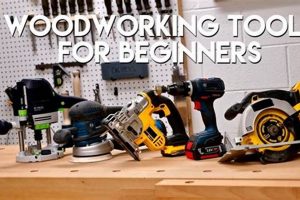
Equipment previously employed in large-scale woodworking operations constitutes a market segment distinct from both consumer-grade tools and new industrial machinery. This category includes items such as planers, jointers, saws, and sanders, originally designed for high-volume production and demanding workloads. For instance, a cabinet manufacturer might have utilized a wide-belt sander for finishing operations, and upon upgrading their equipment, that sander enters the secondary market as an available asset.
Acquiring pre-owned machinery offers potential cost savings compared to purchasing new equipment. Furthermore, some older models are recognized for their robust construction and longevity, potentially outperforming newer, less durable alternatives. Historically, the availability of these assets has allowed smaller woodworking businesses and independent craftspeople to access industrial-grade capabilities that would otherwise be financially prohibitive. This accessibility, in turn, has contributed to the diversity and competitiveness of the woodworking industry.
Subsequent discussions will delve into the various considerations involved in the acquisition of such assets, including evaluation criteria, maintenance requirements, and the identification of reliable vendors. Understanding these aspects is crucial for making informed decisions that align with specific operational needs and budgetary constraints.
Tips for Evaluating Pre-Owned Woodworking Machinery
Careful assessment is essential when considering the purchase of equipment previously used in industrial woodworking settings. Due diligence can mitigate risks and ensure a sound investment.
Tip 1: Thorough Visual Inspection: Conduct a detailed examination of the equipment’s physical condition. Look for signs of wear and tear, corrosion, or damage to critical components. Evidence of neglect can indicate potential underlying problems.
Tip 2: Operational Testing: Whenever possible, observe the machinery in operation. Assess its performance under load, noting any unusual noises, vibrations, or malfunctions. This provides insight into its functional status.
Tip 3: Component Verification: Inspect key components, such as motors, bearings, and control systems. Verify their functionality and check for excessive wear or damage. Replacement costs for these parts can be significant.
Tip 4: Review Maintenance Records: Request access to any available maintenance records. These documents can reveal the equipment’s service history and identify potential recurring issues. A well-maintained machine is typically a better investment.
Tip 5: Safety Feature Assessment: Ensure that all safety features, such as guards and emergency stops, are in proper working order. Non-functional safety mechanisms pose a significant risk to operators.
Tip 6: Verify Power Requirements: Confirm that the equipment’s power requirements are compatible with the available electrical supply. Mismatched voltage or amperage can result in damage to the machine or electrical system.
Tip 7: Check for Available Documentation: Inquire about the availability of manuals, wiring diagrams, and parts lists. These resources can be invaluable for future maintenance and repairs.
By following these guidelines, potential buyers can make informed decisions, minimizing the risk of acquiring problematic equipment and maximizing the return on investment.
The following sections will explore specific types of equipment commonly found in the pre-owned market and their respective evaluation criteria.
1. Condition Assessment

The condition assessment of equipment previously employed in industrial woodworking represents a critical step in its potential acquisition. The physical and operational state of this machinery directly impacts its suitability for continued use, its expected lifespan, and its ultimate economic value. A failure to accurately assess condition can result in unforeseen repair costs, operational downtime, or even safety hazards, negating any initial cost savings associated with purchasing used equipment. For example, a used edgebander might present cosmetically well but possess hidden wear on its glue pot or feed chain, leading to costly and disruptive repairs shortly after purchase.
The importance of rigorous assessment extends beyond simple visual inspection. It encompasses a thorough examination of mechanical components, electrical systems, and safety mechanisms. Factors such as the presence of corrosion, the degree of wear on moving parts, and the functionality of safety interlocks must be meticulously evaluated. Furthermore, a review of the machine’s maintenance history, if available, provides valuable insights into its past performance and potential future reliability. A used wide-belt sander, for example, should be assessed for drum condition, belt tracking accuracy, and the functionality of its pneumatic systems. Absence of service records raises red flags. This investigation provides essential data points from which to formulate a decision.
In summary, a comprehensive condition assessment serves as a foundational element in the acquisition of equipment previously used in industrial woodworking. It mitigates risks, informs budgetary considerations, and ultimately contributes to the long-term viability of woodworking operations. The failure to prioritize this critical step can lead to significant financial and operational setbacks. The knowledge gleaned from the assessment allows for informed decisions, balancing the cost savings with the realities of used equipment ownership.
2. Maintenance History

The maintenance history of equipment previously used in industrial woodworking operations provides a critical indicator of its present condition and future reliability. Evaluating this historical record is essential for informed decision-making when considering the acquisition of such assets.
- Record Completeness and Detail
The extent and thoroughness of the maintenance records directly correlate with the confidence placed in the equipment’s overall health. Comprehensive records should detail scheduled maintenance, repairs performed, parts replaced, and any identified issues. For example, a log documenting regular lubrication of bearings on a spindle moulder demonstrates proactive care, whereas sparse or non-existent records suggest potential neglect and hidden problems.
- Types of Maintenance Performed
The nature of the maintenance activities documented provides insights into the equipment’s usage and potential weaknesses. Records indicating frequent repairs to a specific component, such as a saw motor or a planer head, may suggest inherent design flaws or excessive strain placed on the machine. Conversely, documentation of preventative maintenance, such as belt replacements and filter changes, demonstrates a commitment to preserving operational efficiency and longevity.
- Frequency and Timeliness of Maintenance
The regularity with which maintenance procedures were conducted is a significant factor. Consistent adherence to scheduled maintenance intervals, as specified by the manufacturer, indicates responsible equipment management. Conversely, delayed or infrequent maintenance suggests potential accelerated wear and tear. For example, timely replacement of dull planer knives maintains cut quality and reduces stress on the machine’s motor; neglecting this maintenance can lead to increased strain and premature failure.
- Impact of Operator Skill and Training
Maintenance records may indirectly reflect the skill level and training of the equipment operators. Consistent records of proper setup procedures, adherence to safety protocols, and careful handling of the machinery indicate a knowledgeable and conscientious workforce. Conversely, frequent instances of misaligned fences, damaged blades, or other operator-induced errors suggest potential long-term damage to the equipment. This, of course, requires contextual knowledge to discern if operators are well-trained.
The facets above underscore the critical importance of assessing maintenance history when evaluating pre-owned industrial woodworking assets. The records serve as a proxy for the care and attention the equipment received, informing estimations of its current state and future reliability. Neglecting this aspect during due diligence can lead to costly surprises and operational inefficiencies.
3. Operational Capacity

The operational capacity of equipment previously used in industrial woodworking settings directly influences its suitability for subsequent applications. Capacity, in this context, encompasses factors such as the equipment’s throughput capabilities, the size and type of materials it can process, and the precision and consistency of its output. A machine with insufficient capacity for a given task will result in production bottlenecks, reduced efficiency, and potentially compromised product quality. For example, a small-scale cabinet shop requiring the processing of large sheet goods might find a used edgebander designed for thinner materials inadequate for its needs, leading to inconsistent edge application and increased material waste.
The acquisition of machinery that does not align with required operational capacity can have cascading effects on the entire production process. It may necessitate additional manual labor, require multiple passes to achieve the desired results, or limit the scope of potential projects. Conversely, overestimating the required capacity can lead to unnecessary capital expenditure and increased operating costs. A manufacturer producing small, intricate wooden components might not benefit from a large, high-speed CNC router if its capacity far exceeds the complexity and volume of the typical output. Therefore, carefully evaluating the operational capacity of equipment in relation to specific production requirements is paramount.
In summary, understanding the link between operational capacity and equipment previously used in industrial woodworking is essential for making sound investment decisions. Accurately assessing capacity needs and matching them to the capabilities of available equipment minimizes risks, optimizes production processes, and maximizes the return on investment. The challenge lies in balancing cost considerations with the long-term operational demands and potential for growth. Careful planning and thorough evaluation are critical to ensuring that acquired machinery contributes positively to overall productivity and profitability.
4. Safety Compliance

Safety compliance represents a paramount consideration in the acquisition and operation of pre-owned industrial woodworking assets. Adherence to established safety standards and regulations is not merely a legal obligation but a fundamental prerequisite for protecting personnel, preventing accidents, and ensuring the long-term viability of woodworking operations. The absence of adequate safety measures can expose workers to significant risks, leading to injuries, property damage, and legal liabilities. The relevance of safety protocols extends to equipment previously employed in industrial woodworking.
- Original Equipment Manufacturer (OEM) Standards and Modifications
Used machinery should, ideally, meet the safety standards in effect at the time of its original manufacture. However, modifications or alterations performed over time may compromise these standards. The absence of original safety guards, the disabling of interlock systems, or the installation of non-approved components can create hazardous conditions. For example, a used bandsaw lacking a blade guard or with a malfunctioning emergency stop presents a significant risk of injury. A comprehensive evaluation should verify the presence and functionality of all original safety features.
- Current Regulatory Requirements
Safety regulations evolve over time, and equipment acquired in the secondary market must comply with current standards. Even if a machine met safety requirements at the time of its original manufacture, it may not meet current standards due to changes in legislation or industry best practices. Integrating updated safety features, such as light curtains or improved dust collection systems, may be necessary to ensure compliance. Non-compliance can result in fines, operational shutdowns, and legal repercussions. Dust collection is crucial to prevent pulmonary problems.
- Risk Assessment and Mitigation
A thorough risk assessment should be conducted prior to placing any pre-owned industrial woodworking equipment into service. This assessment should identify potential hazards associated with the equipment’s operation, taking into account factors such as the type of materials being processed, the skill level of the operators, and the layout of the workspace. Based on this assessment, appropriate mitigation measures should be implemented, such as providing additional training, installing supplementary safety devices, or modifying operational procedures. This often requires professional consultation.
- Documentation and Training
Comprehensive documentation, including operating manuals, safety procedures, and maintenance schedules, is essential for ensuring safe and efficient operation of pre-owned industrial woodworking machinery. This documentation should be readily accessible to all operators and maintenance personnel. Furthermore, adequate training should be provided to ensure that all personnel are proficient in the safe operation and maintenance of the equipment. The training should cover topics such as hazard identification, lockout/tagout procedures, and emergency response protocols. Training logs must be maintained.
The multifaceted relationship between safety compliance and equipment previously employed in industrial woodworking necessitates diligent assessment, proactive mitigation measures, and a commitment to ongoing training and documentation. Prioritizing safety not only protects personnel but also safeguards the long-term success and sustainability of woodworking operations. Failing to do so introduces unacceptable risks.
5. Vendor Reputation
The reputation of a vendor specializing in equipment previously employed in industrial woodworking constitutes a critical factor in mitigating risk and ensuring a successful transaction. The integrity and experience of the vendor directly influence the quality of the equipment offered, the accuracy of its representation, and the level of support provided after the sale. A vendor with a questionable reputation may offer misrepresented or poorly maintained machinery, leading to unforeseen costs and operational disruptions.
- Honesty and Transparency in Equipment Representation
A reputable vendor provides accurate and comprehensive information regarding the condition, history, and capabilities of equipment previously used in industrial woodworking. This includes disclosing any known defects, repairs, or modifications. Conversely, a vendor with a poor reputation may engage in deceptive practices, such as concealing defects or exaggerating the equipment’s performance capabilities. For instance, a reputable vendor selling a used CNC machine would provide detailed information regarding its hours of operation, software version, and any previous repairs to its servo motors. Withholding this information would be detrimental to the buyer.
- Expertise and Technical Support Capabilities
A vendor possessing in-depth knowledge of equipment previously employed in industrial woodworking can offer valuable technical guidance and support to prospective buyers. This includes assisting with equipment selection, providing advice on installation and maintenance, and offering troubleshooting assistance. A vendor lacking technical expertise may be unable to provide adequate support, leaving the buyer to grapple with complex issues independently. A reputable vendor, for example, should be able to advise on the compatibility of a used dust collection system with a particular woodworking machine, and offer solutions to potential integration challenges.
- After-Sales Service and Warranty Provisions
The availability of after-sales service and warranty coverage provides a safeguard against potential issues that may arise after the purchase of equipment previously used in industrial woodworking. A reputable vendor stands behind the quality of its products and offers reasonable warranty terms and responsive service in the event of malfunctions or breakdowns. A vendor unwilling to provide any form of warranty coverage may be signaling a lack of confidence in the equipment’s reliability. For example, offering a limited warranty on critical components of a used planer, such as the cutterhead or feed rollers, demonstrates a commitment to customer satisfaction.
- Customer Testimonials and Industry Standing
Examining customer testimonials and assessing a vendor’s standing within the woodworking industry provides insights into their track record and reputation. Positive testimonials and a history of ethical business practices are indicative of a reliable and trustworthy vendor. Conversely, a pattern of negative reviews or complaints suggests potential problems. Seeking feedback from other woodworking professionals and consulting industry associations can help to gauge a vendor’s overall reputation. This can mitigate risks and improve results.
In conclusion, vendor reputation serves as a crucial filter when sourcing equipment previously used in industrial woodworking. Engaging with reputable vendors who prioritize transparency, expertise, after-sales service, and ethical business practices is essential for minimizing risks and maximizing the value of the investment. A careful assessment of vendor reputation is therefore an integral component of due diligence in the acquisition process, supplementing machine assessment.
6. Component Availability
Component availability directly influences the long-term operational viability of equipment previously used in industrial woodworking. The ease with which replacement parts can be sourced significantly impacts maintenance schedules, repair costs, and ultimately, the equipment’s lifespan. Limited availability of critical components can render a potentially functional machine unusable, negating any initial cost savings achieved through its purchase. Consider, for instance, a used edgebander for which the specialized glue pot components are no longer manufactured or readily obtainable. The inability to replace a worn or damaged glue pot effectively condemns the entire machine, regardless of the condition of its other components. This exemplifies the causal relationship: lack of parts leads to functional obsolescence.
The significance of component availability stems from its impact on downtime and production efficiency. When a machine requires repair, readily available replacement parts minimize the duration of the outage, allowing production to resume swiftly. Conversely, prolonged delays in sourcing components can disrupt production schedules, leading to missed deadlines and increased labor costs. Furthermore, the cost of obtaining rare or custom-fabricated parts can quickly escalate, eroding the economic benefits of purchasing used equipment. This emphasizes component availability as a core pillar of responsible management, crucial for making used equipment a feasible choice. Consider the practical example of a used wide-belt sander. If abrasive belts of the required dimensions and grit are no longer produced, or available only at exorbitant prices, the machine’s practical value diminishes significantly. Understanding this aspect beforehand is vital.
In summary, component availability is not merely a peripheral consideration but an intrinsic factor in the overall value proposition of equipment previously used in industrial woodworking. Addressing the potential challenges associated with sourcing replacement parts requires proactive research, careful selection of equipment brands known for long-term parts support, and potentially, the establishment of relationships with specialized parts suppliers. Ignoring this aspect introduces unnecessary risks and undermines the potential benefits of acquiring used machinery. The ability to maintain and repair machinery extends its economic life.
7. Price Negotiation

Price negotiation represents a crucial stage in acquiring equipment previously employed in industrial woodworking. The final price directly impacts the return on investment and overall financial viability of integrating the used machinery into woodworking operations. Ineffective negotiation can result in overpayment, diminishing the cost advantages typically associated with used equipment, effectively undermining the investment’s potential benefits. Conversely, skillful negotiation secures favorable terms, maximizing profitability and facilitating the efficient allocation of capital to other areas of the business. As an example, consider a used CNC router. If the initial asking price does not reflect its age, operational hours, and any necessary repairs, failing to negotiate a lower price reduces its economic appeal. If negotiations are successful, these savings provide a margin for later updates.
Successful price negotiation necessitates thorough preparation and a comprehensive understanding of the equipment’s condition, market value, and potential operating costs. This includes conducting a detailed inspection of the machinery, reviewing maintenance records, and researching comparable sales data. A lack of due diligence weakens the negotiating position and increases the likelihood of overpaying. For instance, identifying a malfunctioning component during the inspection allows the buyer to justify a lower price, reflecting the cost of repairs. Understanding market value requires research into the prices of similar machinery. Skilled negotiation involves a blend of objective data and strategic communication. If a piece of used equipment is listed at a price far exceeding that of similar equipment, the buyer is now in a position to negotiate more savings.
In conclusion, price negotiation is not merely a procedural step but an integral component of acquiring equipment previously used in industrial woodworking. It demands diligent research, a comprehensive understanding of the equipment’s value, and effective communication skills. Mastering the art of negotiation can significantly enhance profitability and optimize the return on investment, ensuring that used machinery contributes positively to the overall financial health of woodworking operations. Conversely, neglecting this crucial aspect can erode potential savings and undermine the economic rationale for purchasing used equipment. A successful acquisition is dependent on successful negotiation.
Frequently Asked Questions
The following addresses common inquiries regarding equipment previously employed in industrial woodworking settings, providing clarity on critical aspects of acquisition and utilization.
Question 1: What are the primary risks associated with acquiring equipment previously used in industrial woodworking?
Potential risks encompass the possibility of acquiring machinery with undisclosed defects, limited remaining lifespan, non-compliance with current safety standards, and difficulties in sourcing replacement parts. Thorough inspection and due diligence are crucial to mitigate these risks.
Question 2: How does the age of equipment previously used in industrial woodworking impact its suitability for continued use?
The age of equipment can influence its technological capabilities, efficiency, and the availability of replacement parts. Older machinery may lack advanced features found in newer models and may be more prone to breakdowns due to wear and tear.
Question 3: What factors should be considered when evaluating the condition of equipment previously used in industrial woodworking?
Key factors include the presence of physical damage, the extent of wear on moving parts, the functionality of electrical and mechanical systems, and the availability of maintenance records. A comprehensive inspection by a qualified technician is recommended.
Question 4: How important is it to verify the safety compliance of equipment previously used in industrial woodworking?
Verifying safety compliance is of utmost importance. Equipment should meet or exceed current safety standards to protect operators and prevent accidents. Modifications or upgrades may be necessary to ensure compliance.
Question 5: What are the potential benefits of purchasing equipment previously used in industrial woodworking compared to new equipment?
Potential benefits include lower initial cost, faster depreciation, and the availability of robust, well-built machinery that may outperform newer, less durable models. However, these benefits must be weighed against the potential risks.
Question 6: How can the total cost of ownership be accurately estimated when considering equipment previously used in industrial woodworking?
Estimating the total cost of ownership requires considering not only the purchase price but also potential repair costs, maintenance expenses, energy consumption, and the cost of any necessary upgrades or modifications. Life cycle cost analysis provides a comprehensive perspective.
Careful consideration of these questions is essential for making informed decisions regarding the acquisition of equipment previously employed in industrial woodworking. Thorough research and expert consultation are encouraged.
Further discussion will address specific types of equipment and their unique considerations.
Conclusion
The preceding exploration of “used industrial woodworking tools” has illuminated crucial aspects of their acquisition and integration into woodworking operations. From assessing condition and evaluating maintenance history to considering operational capacity, safety compliance, vendor reputation, component availability, and price negotiation, the decision-making process requires diligence. The aim has been to equip potential buyers with a framework for informed evaluation, enabling them to navigate the complexities of the used machinery market effectively.
The responsible acquisition and utilization of these assets hinges on a commitment to safety, rigorous assessment, and a realistic understanding of the long-term implications. Ignoring these factors can lead to compromised productivity, increased costs, and potential safety hazards. The future success of woodworking operations, particularly smaller businesses, may depend on their ability to leverage this market segment effectively, turning informed decisions into competitive advantages. The pursuit of reliable and cost-effective solutions necessitates a strategic approach to acquiring and maintaining these essential resources.