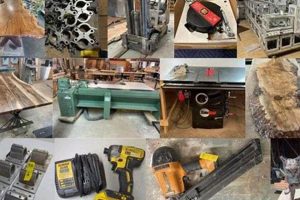
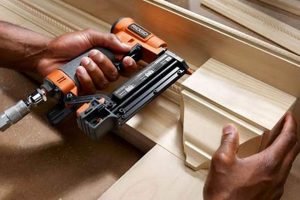
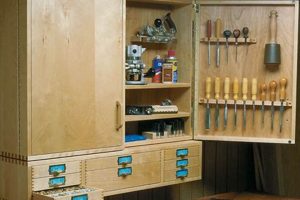
Implements and equipment designed for the specific task of working with lumber that retains its natural outer edge can vary significantly. These instruments are essential for shaping, smoothing, and finishing wood while preserving the organic form of the tree. Examples include specialized routers, sanders, and measuring devices that accommodate the irregular shapes inherent in this type of woodworking.
Proper utilization of appropriate instruments is paramount in realizing the aesthetic and structural potential of lumber with its original perimeter intact. This approach blends the precision of traditional woodworking with the inherent artistry of nature. Historically, retaining the natural edge was often a necessity due to limitations in milling capacity; however, it has evolved into a deliberate design choice celebrated for its unique character and connection to the natural world.
Therefore, a detailed exploration of the various instruments employed in creating pieces with unmilled borders, including their specific functions and considerations for their selection and application, is necessary for achieving optimal results.
Essential Guidance for Working with Natural-Edged Timber
The following guidelines are intended to optimize results when crafting projects that incorporate natural tree-trunk contours.
Tip 1: Moisture Content Assessment: Accurate measurement of moisture within the timber is crucial. Prior to commencing any work, verify the wood is sufficiently dry, typically between 6% and 12%, to minimize warping or cracking post-construction. A moisture meter is essential for this step.
Tip 2: Stabilization Techniques: Given the inherent instability of pieces with their natural perimeter, stabilization is often required. Options include kiln drying, applying epoxy resins, or incorporating butterfly joints to mitigate potential splitting or movement.
Tip 3: Flattening Irregular Surfaces: A router sled system is invaluable for creating a level surface on slabs that exhibit significant undulation. This technique involves running a router across a level frame to gradually plane the surface, ensuring a consistent thickness.
Tip 4: Sanding and Finishing: Progressive sanding with varying grits is paramount in achieving a smooth, refined surface. Power sanders equipped with dust collection systems are recommended. The choice of finishoil, varnish, or epoxyshould be based on the intended use and aesthetic.
Tip 5: Addressing Voids and Inclusions: Natural edges often contain voids or bark inclusions. These can be filled with epoxy resin, either clear or tinted, to create a seamless, durable surface. Alternatively, preserving these features as is can enhance the rustic character of the piece.
Tip 6: Edge Treatment: Careful consideration should be given to the edge treatment. Debarking, sanding, and applying a protective finish will prevent further deterioration and enhance the visual appeal of the live edge.
Tip 7: Hardware Selection: When incorporating metal components, such as legs or brackets, ensure they are appropriately sized and securely fastened. Predrilling pilot holes is essential to prevent splitting the wood, especially near the edge.
Implementing these strategies will contribute to the creation of aesthetically pleasing and structurally sound furniture pieces that showcase the inherent beauty of natural wood.
This knowledge provides a foundation for successful projects and prepares one to delve into specific instrument selections and advanced techniques in subsequent sections.
1. Flattening apparatus

Flattening apparatus forms a critical subset within the broader category of implements utilized for natural-edged woodworking. Given the inherent irregularity of slabs cut from tree trunks, these devices enable the creation of a planar surface essential for functional use and aesthetic refinement. The choice of apparatus depends on the size and degree of warp or twist present in the raw material.
- Router Sled Systems
Router sled systems involve a router moving across a fixed, level framework. The router bit gradually removes material, creating a uniformly flat plane. These systems are particularly suitable for large slabs with significant surface deviations. An example is the construction of a natural-edged conference table, where achieving a perfectly level surface is imperative for functionality.
- Planing Machines (Wide-Belt Sanders)
Industrial wide-belt sanders can effectively flatten slabs, particularly those of moderate size. These machines offer a high degree of precision and efficiency. Their use is exemplified in the mass production of natural-edged countertops, where consistent thickness and flatness are crucial.
- Hand Planes
For smaller pieces or localized imperfections, hand planes offer a traditional and precise approach. This method requires significant skill and patience but allows for nuanced control over material removal. Hand planing might be employed to refine the surface of a natural-edged charcuterie board, addressing minor irregularities while maintaining the wood’s character.
- Jointing Machines (for Smaller Edges)
While primarily designed for creating flat edges on dimensional lumber, jointing machines can be adapted for smaller natural-edged pieces. By carefully aligning the piece, a flat reference surface can be established. This is often used when creating smaller natural-edged shelves.
The selection and skillful application of appropriate apparatus dictates the success of transforming a rough slab into a refined piece. The specific tool should be chosen based on the scale of the project, the degree of surface irregularity, and the desired level of precision. The appropriate flattening apparatus will transform the piece of natural lumber into the canvas.
2. Sanding machinery
The implementation of appropriate sanding machinery is indispensable in achieving a refined surface on natural-edged lumber. Due to the irregular contours and often rough texture inherent in material of this type, mechanical sanding is frequently the only efficient means of achieving a smooth and consistent finish. The specific type of machinery selected depends on the scale of the project and the desired level of surface refinement. Without effective sanding, the natural beauty of the wood cannot be fully realized, and the piece may be unsuitable for its intended purpose.
Various types of sanding machinery are commonly employed. Orbital sanders are used for general surface preparation and light stock removal. Belt sanders are effective for more aggressive material removal and flattening minor irregularities. Spindle sanders are designed for sanding curved edges and intricate details, making them particularly useful for working with the natural undulations of the live edge. Drum sanders are often utilized for larger slabs requiring consistent thicknessing and surface leveling. For instance, in the creation of a natural-edged dining table, a combination of belt sanding for initial flattening, orbital sanding for surface refinement, and spindle sanding for smoothing the edge profile would be typical.
In summary, sanding machinery is a critical component in the repertoire of tools employed in achieving professional-quality results when working with natural-edged materials. The appropriate selection and skillful application of this equipment is essential to bring out the beauty inherent in the wood, ensure a functional and aesthetically pleasing result, and to address common issues such as roughness and unevenness that are part and parcel of this raw material. The effectiveness of all other processes depends on the quality of sanding applied, linking it inextricably to the overall project’s success.
3. Edge treatment applicators

Edge treatment applicators represent a specialized category of equipment essential for the long-term preservation and aesthetic enhancement of material’s natural perimeter. The exposed cambium and bark, being more susceptible to environmental degradation and insect infestation than milled surfaces, necessitate specific protective measures. Consequently, the selection and application of appropriate treatments form an integral part of working with naturally edged materials. The function of these implements is not merely cosmetic; rather, they contribute directly to the structural integrity and longevity of the finished piece. For instance, the proper application of a wood hardener to a decaying edge can arrest further decomposition, while a sealant can prevent moisture absorption, thereby mitigating the risk of cracking or warping. The absence of effective edge treatment invariably leads to premature deterioration, diminishing the value and lifespan of the finished article.
Specific types of applicators vary depending on the treatment being applied. Brushes are commonly used for applying penetrating oils, varnishes, and sealants. Spray systems offer a more uniform coating, particularly for larger or more intricate edges, with finishes such as lacquer or polyurethane. Specialized tools, such as foam applicators, are designed for applying epoxy resins to fill voids or stabilize fragile sections of bark. Heat guns may be employed to accelerate the curing process of certain finishes, enhancing their durability. As an example, in the creation of natural-edged furniture intended for outdoor use, a multi-stage process involving the application of a preservative, followed by a sealant using a brush or spray system, and potentially a heat gun for accelerated curing, would be necessary to ensure weather resistance.
In summary, edge treatment applicators fulfill a crucial role in the process of creating durable and aesthetically pleasing items. Their proper selection and application directly impact the long-term structural stability and visual appeal of the finished article. Neglecting this aspect of the fabrication process invariably leads to premature degradation and diminished value. Therefore, a thorough understanding of the various implements and techniques associated with edge treatment is paramount for practitioners.
4. Stabilization implements

The relationship between stabilization implements and naturally edged woodworking is causal and indispensable. Timber exhibiting its natural outer boundary is inherently prone to instability due to uneven drying rates and internal stresses. Consequently, stabilization implements are crucial components of any workshop engaged in this craft. These devices and materials directly counteract the natural tendencies of the material to warp, crack, or otherwise degrade, thereby ensuring the longevity and structural integrity of the finished product. Without appropriate stabilization, even the most skillfully crafted piece will ultimately fail. An example is the application of epoxy resin to fill voids within lumber, which prevents further cracking from internal stresses. Omission of this step could result in a structurally compromised item within a short time, negating the value of careful construction.
Specific applications of stabilization implements are diverse and project-dependent. Kiln drying facilities accelerate the drying process, reducing the likelihood of future movement. Wood hardeners and consolidants penetrate weakened wood fibers, reinforcing their structure and preventing further decay. Butterfly joints or dovetail keys mechanically restrain cracks from propagating, distributing stress across a wider area. Moisture meters provide critical data for assessing the timber’s dryness and predicting future stability. Vacuum chambers for resin infusion ensure thorough penetration of stabilizing compounds, particularly useful for porous or punky sections. In crafting a large conference table from a single slab, each of these stabilization techniques might be required to address specific vulnerabilities within the raw material, ensuring a stable and reliable surface.
In summation, stabilization implements are not merely optional accessories but essential tools, for this type of woodworking. Their proper application mitigates the inherent risks associated with using lumber in its natural form, directly affecting both the immediate quality and long-term viability of the creation. Challenges in the proper application of these processes exist, for example, difficulties controlling epoxy curing rates, can be mitigated with advanced techniques, proper environment. Understanding the principles of wood behavior and the appropriate application of stabilization methods is foundational for transforming raw timber into durable, functional art, connecting this set of tools to the foundational concepts of woodworking.
5. Measurement instruments
Accurate measurement is foundational to effective lumber work involving a natural exterior edge. The irregular geometry inherent in this type of material necessitates precise dimensioning to ensure structural integrity and aesthetic harmony. Measurement instruments, therefore, are indispensable components within the broader spectrum of implements employed in this craft. The absence of accurate measurements can lead to dimensional inaccuracies, structural weaknesses, and visual disharmony, rendering the final product unusable or aesthetically unappealing. An example of this is evident when crafting a natural-edged table; if the slab’s thickness is not accurately measured at various points, the resulting table may exhibit an uneven surface, compromising its functionality. Similarly, inaccurate measurements in determining the placement of support legs can lead to instability.
The types of measurement instruments utilized vary according to the specific task. Measuring tapes and rulers are essential for determining overall dimensions. Calipers are useful for measuring thickness variations along the edge or across the face of a slab. Angle finders and protractors are necessary for accurately determining the angles of cuts, ensuring that joints fit correctly and that the final piece is visually balanced. Levels and squares are critical for ensuring that surfaces are planar and that edges are perpendicular, respectively. Furthermore, digital levels and laser distance measurers can offer increased accuracy and efficiency, particularly when working with large or complex pieces. For example, when creating a natural-edged headboard, accurate angular measurements are crucial for ensuring that the headboard leans back at the desired angle and that the supporting legs are properly aligned.
In summary, instruments of measurement are not ancillary items but core necessities. Their correct utilization contributes directly to the structural integrity, aesthetic appeal, and overall success of the endeavor. Neglecting the importance of accurate measurement invariably leads to errors and compromises in the final product. Thus, a thorough understanding of measurement techniques and the appropriate application of various measuring instruments is paramount for any practitioner, ensuring that raw lumber is transformed into a durable and aesthetically pleasing creation.
6. Cutting implements
Cutting implements constitute a fundamental category within the apparatus essential for transforming naturally edged lumber into refined pieces. The unique forms and often substantial dimensions of this material demand specialized tools capable of making precise and efficient cuts while accommodating its irregular shape. Selection and utilization of appropriate cutting devices are crucial for achieving desired shapes and sizes, preparing the wood for subsequent finishing processes, and minimizing material waste.
- Chainsaws
Chainsaws serve as primary instruments for initial shaping and sectioning of raw lumber. These tools facilitate the removal of large portions of material, allowing for the extraction of usable slabs from entire logs. Their utility is particularly evident in the initial processing of salvaged trees or when dealing with large-diameter material, where other cutting methods are impractical. Improper chainsaw usage, however, can lead to rough cuts and increased material loss, necessitating subsequent remediation.
- Band Saws
Band saws offer increased precision compared to chainsaws, enabling the creation of curved and intricate cuts along the natural edge. These tools are invaluable for refining the shape of lumber, removing bark inclusions, and preparing edges for finishing. The relatively narrow blade of a band saw allows for tight radii and complex contours, enhancing the aesthetic potential of the material. For example, a band saw enables the creation of a flowing, organic edge on a tabletop, accentuating the natural characteristics of the wood.
- Circular Saws
Circular saws, equipped with appropriate blades, are useful for making straight cuts and trimming edges, providing clean lines and consistent dimensions. These tools are commonly employed for squaring off the ends of lumber, creating precise angles, and preparing surfaces for joining. Their portability and ease of use make them a versatile addition to any workshop engaged in working with naturally edged material, streamlining the process of preparing the wood for further refinement.
- Hand Saws
Hand saws, while requiring more manual effort, offer a high degree of control and precision, particularly for delicate cuts or intricate detailing. These tools allow for nuanced adjustments and are invaluable for fine-tuning the shape of the live edge, removing small imperfections, and creating custom profiles. Examples include coping saws for tight curves and Japanese pull saws for clean, precise cuts, adding a level of craftsmanship unattainable with power tools alone. A skilled woodworker can use hand saws to gently refine the shape of a natural knot or burl, enhancing its visual appeal without compromising the integrity of the surrounding material.
The effective incorporation of these implements into the woodworking process allows for realizing the full potential of rough-sawn material. Their selection and skillful application, in concert with other processes, are fundamental to transforming naturally edged timber into durable, functional art. Cutting implements, as such, are crucial elements in the practice, and have to be given special consideration.
7. Finishing supplies

The application of appropriate finishing supplies is inextricably linked to the successful completion of projects involving naturally edged lumber. These products, encompassing a spectrum of sealants, oils, varnishes, and lacquers, directly influence the long-term durability, aesthetic appeal, and resistance to environmental factors of the wood surface. The selection and proper application of such supplies are not merely cosmetic considerations but integral steps in preserving the inherent character and extending the lifespan of the piece. For example, a penetrating oil finish enhances the natural grain of wood while providing a degree of moisture resistance, crucial for items like naturally edged cutting boards or serving platters. Conversely, the incorrect application of a finish can detract from the wood’s beauty or compromise its structural integrity.
The interaction between finishing supplies and the natural edge itself presents unique challenges. The irregular surface and potential presence of bark inclusions require careful consideration in product selection and application technique. Flexible sealants or resins are often employed to stabilize and protect exposed bark, preventing it from drying out and cracking. Furthermore, the porosity and absorbency of the natural edge may differ significantly from the planed surfaces, necessitating multiple coats or specialized application methods to achieve uniform coverage and protection. Applying a tinted epoxy resin to fill voids and enhance the grain pattern is a common practice, effectively integrating the filling with the overall aesthetic of the wood.
In summary, finishing supplies are not merely add-ons but essential ingredients to woodworking. Their proper application protects the wood, enhances visual appeal, and ensures the long-term viability of the creation. Improper selection or application of these supplies can significantly detract from the value and longevity of the piece. Hence, a thorough understanding of the characteristics of various finishing products and their interaction with natural wood elements is paramount for artisans seeking to create durable and aesthetically pleasing pieces with natural edges. This knowledge directly informs choices in surface preparation, application techniques, and maintenance protocols, contributing to the overall success of the project.
Frequently Asked Questions
The following addresses common inquiries regarding the selection, application, and maintenance of implements employed in crafting with natural-edged materials.
Question 1: What constitutes the fundamental set of implements required for initiating projects?
A basic setup includes a chainsaw or bandsaw for initial shaping, a flattening apparatus (router sled or planer), sanding machinery, measuring instruments, and finishing supplies. Edge treatment applicators and stabilization implements are typically added as project complexity increases.
Question 2: How does one determine the appropriate method for flattening a slab?
The optimal method depends on the slab’s dimensions and degree of irregularity. Router sleds are suitable for large, uneven surfaces. Planers or wide-belt sanders offer efficiency for smaller slabs. Hand planes provide precision for localized imperfections.
Question 3: What are essential precautions when employing chainsaws in this type of work?
Safety is paramount. Protective gear, including eye protection, hearing protection, and appropriate clothing, is mandatory. Ensure the chainsaw is properly maintained and sharpened. Practice safe cutting techniques to avoid kickback and maintain control.
Question 4: What factors govern the selection of sanding machinery?
Consider the size of the surface, the desired level of smoothness, and the efficiency required. Orbital sanders are suitable for general use. Belt sanders are efficient for initial stock removal. Spindle sanders are useful for curved edges.
Question 5: What constitutes appropriate maintenance for apparatus?
Regular cleaning is essential. Sharpen blades and bits as needed. Lubricate moving parts. Inspect power cords and safety features. Follow manufacturer’s instructions for specific implements to ensure longevity and safe operation.
Question 6: What safety protocols are crucial to the craft?
Eye protection is necessary for all machining operations. Dust collection systems minimize airborne particles. Hearing protection mitigates noise exposure. Proper ventilation reduces the risk of inhaling harmful fumes. Implement lock-out/tag-out procedures for machinery maintenance.
This section highlights common operational concerns. Next the article explore advanced techniques.
Conclusion
This exploration of implements utilized in the craft has revealed the diverse spectrum of apparatus required to transform raw material into functional and aesthetically pleasing creations. The successful application of flattening apparatus, sanding machinery, edge treatment applicators, stabilization implements, measurement instruments, cutting implements, and finishing supplies is paramount in realizing the inherent potential of naturally edged lumber.
Continued refinement of these methods, coupled with ongoing advancements in implements and materials, will undoubtedly contribute to the evolution of this craft. Practitioners are encouraged to continually expand their knowledge and refine their expertise to enhance the art of incorporating the natural beauty of wood into enduring and functional pieces, and the significance of the appropriate “tools for live edge woodworking” cannot be overstated in achieving this goal.