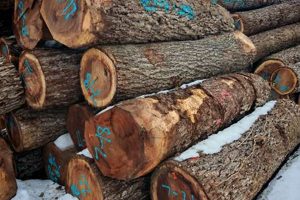
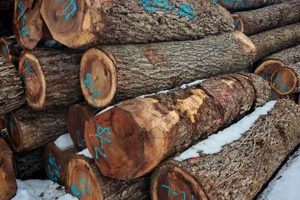
The raw material at the heart of many woodworking projects is, fundamentally, timber. This includes both hardwoods and softwoods, each possessing unique characteristics that make them suitable for diverse applications. For example, a craftsman constructing fine furniture might choose cherry or walnut for its aesthetic qualities and workability, while a construction project might utilize pine or fir for its structural strength and availability.
The selection of appropriate lumber is crucial to the success of any woodworking endeavor. Considerations include the wood’s density, grain pattern, moisture content, and resistance to decay. Historically, the availability of specific types of timber has shaped regional woodworking traditions and influenced the design and construction of objects ranging from simple tools to elaborate architectural elements.
Understanding the properties of various types of timber is just the first step. Effective utilization requires appropriate tools and techniques. Subsequent discussion will explore the selection, preparation, and application of essential adhesives, fasteners, finishes, and other adjunct materials necessary for successful woodworking projects.
Timber Selection Tips
Proper selection is crucial for successful woodworking. Understanding the nuances of different varieties allows for informed decision-making, leading to enhanced project quality and longevity.
Tip 1: Prioritize Kiln-Dried Material. Kiln-drying reduces moisture content, minimizing warping and cracking after construction. Opt for lumber with a moisture content appropriate for the intended environment.
Tip 2: Inspect for Defects. Carefully examine each piece for knots, splits, checks, and insect damage. Such imperfections compromise structural integrity and aesthetic appeal.
Tip 3: Consider Grain Orientation. The direction of the grain significantly impacts strength and stability. Quartersawn or riftsawn lumber offers superior resistance to warping compared to plainsawn lumber.
Tip 4: Match Species to Application. Select based on hardness, density, and workability. Hardwoods are suitable for high-wear surfaces, while softwoods are often preferred for framing and structural components.
Tip 5: Account for Waste. When calculating material requirements, factor in a percentage for waste due to cuts, errors, and unusable sections. Typically, add 10-15% to the calculated volume.
Tip 6: Store Lumber Properly. Prior to use, store in a dry, well-ventilated area, stacked to allow air circulation. Improper storage leads to moisture absorption and subsequent dimensional instability.
Tip 7: Understand Janka Hardness Ratings. The Janka hardness test measures resistance to indentation. Use this rating to compare the durability of different species for applications requiring resistance to wear and tear.
Implementing these tips leads to improved project outcomes and reduces material waste. The selection of quality timber is a critical component of successful woodworking.
The subsequent section will address the preparation and treatment of timber prior to assembly, ensuring optimal adhesion and finish quality.
1. Species selection

Species selection is a foundational aspect of woodworking, inextricably linked to the choice of raw materials. The inherent properties of various wood species directly influence the final product’s strength, durability, aesthetic appeal, and suitability for its intended function. Selecting the appropriate species is, therefore, a critical decision point in any woodworking endeavor.
- Mechanical Properties and Structural Integrity
Different species exhibit varying degrees of hardness, density, and flexural strength. For applications requiring high load-bearing capacity, such as structural framing or heavy-duty furniture, species like oak, maple, or hickory are often preferred due to their superior strength. Conversely, projects where weight is a concern may benefit from lighter species like pine or cedar, understanding that their structural capabilities are commensurately reduced.
- Workability and Finishing Characteristics
The ease with which a species can be shaped, cut, and joined significantly impacts the efficiency and complexity of the woodworking process. Species like cherry and walnut are known for their smooth texture and ability to be finely detailed, making them ideal for intricate carvings and decorative elements. Other species may be more prone to tear-out or splintering, requiring specialized tools and techniques for successful manipulation. Furthermore, the inherent color and grain pattern of a species influence the choice of finishes, stains, and sealants to achieve the desired aesthetic outcome.
- Resistance to Environmental Factors
The intended environment in which the finished product will reside dictates the importance of a species’ resistance to moisture, decay, and insect infestation. Exterior projects, such as decking or siding, require species like redwood, cedar, or pressure-treated lumber that possess natural or chemically enhanced resistance to these detrimental factors. Indoor applications may allow for a wider range of species, but even then, considerations must be given to humidity levels and potential exposure to pests.
- Aesthetic Appeal and Grain Pattern
The visual characteristics of a wood species, including its color, grain pattern, and figure, play a crucial role in the overall aesthetic appeal of the finished product. Species like mahogany and rosewood are prized for their rich colors and intricate grain patterns, making them suitable for high-end furniture and decorative veneers. The selection of a species based on its aesthetic qualities is often driven by personal preference and the desired style of the project.
In summary, species selection represents a fundamental intersection between raw materials and design intent. The careful consideration of mechanical properties, workability, environmental resistance, and aesthetic appeal ensures that the chosen species aligns with the project’s functional requirements and desired visual outcome. A comprehensive understanding of these factors optimizes material utilization and contributes to the overall success of any woodworking endeavor.
2. Grain orientation

Grain orientation, a fundamental characteristic of timber, significantly influences the selection, preparation, and application of raw materials in woodworking. Understanding grain patterns is crucial for optimizing strength, stability, and aesthetic appeal in finished projects.
- Structural Integrity and Load-Bearing Capacity
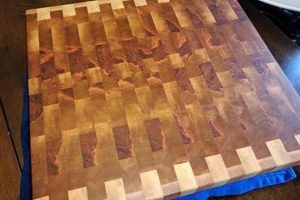
Grain direction directly affects the wood’s resistance to stress and deformation. Longitudinal grain, running parallel to the length of the wood, provides maximum strength along the axis. End grain, exposed at the cut ends, is significantly weaker and more susceptible to splitting. Applications requiring high load-bearing capacity necessitate careful consideration of grain orientation to prevent structural failure. For example, vertically oriented grain in support beams provides superior resistance to bending compared to horizontally oriented grain.
- Dimensional Stability and Warp Resistance
Wood expands and contracts primarily across the grain due to changes in moisture content. Tangential grain, cut perpendicular to the growth rings, exhibits the greatest dimensional instability, leading to warping, cupping, and twisting. Radial grain, cut parallel to the radius of the tree, demonstrates superior stability. Selecting lumber with predominantly radial grain, often referred to as quartersawn lumber, minimizes movement and maintains the integrity of finished pieces, particularly in applications exposed to fluctuating humidity levels.
- Surface Finishing and Adhesion
Grain orientation impacts the absorption and adhesion of finishes, stains, and adhesives. End grain, being more porous, absorbs liquids more readily than side grain, resulting in uneven color penetration and potential blotching. Proper sanding and sealing techniques are essential to mitigate these effects. Furthermore, adhesive bonding is strongest when applied parallel to the grain, maximizing surface contact and mechanical interlock. Mitre joints, for instance, often require reinforcement due to the inherent weakness of end-grain adhesion.
- Aesthetic Appearance and Visual Texture
The visual texture and pattern of wood grain contribute significantly to the aesthetic appeal of finished pieces. Variations in grain direction, such as figure, burl, and crotch grain, create unique visual interest. Matching grain patterns across multiple components enhances the overall cohesiveness and aesthetic harmony of a project. Cabinet doors and tabletop surfaces often benefit from careful grain matching to achieve a visually pleasing and balanced appearance.
The considerations surrounding grain orientation extend beyond mere aesthetics. Its influence on structural integrity, dimensional stability, and finishing characteristics dictates its central role in material selection and preparation. Woodworkers must possess a thorough understanding of grain patterns to effectively utilize timber and produce durable, aesthetically pleasing, and structurally sound finished products. Neglecting this facet results in weakened structures, unstable components, and suboptimal finishing results, ultimately diminishing the quality and longevity of the woodworking project.
3. Moisture content

Moisture content is a critical factor influencing the behavior and performance of timber used in woodworking. Its proper management is essential for achieving durable, stable, and aesthetically pleasing finished products. The quantity of water present within the cellular structure of the material directly impacts its dimensional stability, strength, and susceptibility to decay.
- Dimensional Stability and Wood Movement
Wood is hygroscopic, meaning it readily absorbs and releases moisture from the surrounding environment. Changes in moisture content cause wood to expand and contract, leading to warping, cracking, and joint failure. Equilibrium moisture content (EMC) represents the point at which wood neither gains nor loses moisture, corresponding to the ambient relative humidity and temperature. Woodworkers must acclimate timber to the EMC of its intended environment prior to construction to minimize dimensional changes after assembly. For instance, furniture constructed from wood with a high moisture content in a dry environment will shrink and potentially develop cracks.
- Strength and Mechanical Properties
The strength and stiffness of wood are inversely related to its moisture content. As moisture content increases, the wood becomes weaker and more flexible. Woodworkers must account for these changes when designing and constructing load-bearing structures. Lower moisture content, within acceptable limits, is generally preferred for applications requiring maximum strength. Conversely, wood that is excessively dry may become brittle and prone to splitting during machining or fastening. The ideal moisture content varies depending on the species and intended use.
- Adhesive Bonding and Finish Application
Proper moisture content is essential for achieving strong and durable adhesive bonds in woodworking joints. Excessive moisture inhibits adhesive penetration and weakens the bond strength. Conversely, overly dry wood may absorb adhesive too quickly, resulting in a starved joint. Similarly, the moisture content affects the adhesion and appearance of finishes. Applying finishes to wood with a high moisture content can lead to blistering, peeling, and uneven color penetration. Achieving the appropriate moisture content ensures proper adhesion and a smooth, uniform finish.
- Decay Resistance and Biological Degradation
High moisture content promotes the growth of fungi and other microorganisms that cause decay and rot. Maintaining a moisture content below a critical threshold (typically around 20%) prevents biological degradation and extends the lifespan of wooden structures. Wood used in exterior applications or damp environments requires treatment with preservatives or the selection of naturally decay-resistant species to prevent deterioration. Regular inspection and maintenance are essential to detect and address any signs of moisture intrusion or decay.
In conclusion, the management of moisture content is an indispensable aspect of woodworking, profoundly affecting the structural integrity, dimensional stability, finishing characteristics, and resistance to biological degradation of timber. By understanding the principles of moisture content control, woodworkers can enhance the quality, durability, and longevity of their creations. Consistent monitoring and meticulous adjustment of moisture content levels throughout the woodworking process are essential for achieving optimal results.
4. Dimensional stability

Dimensional stability, concerning timber for woodworking, describes its ability to maintain its original size and shape despite environmental changes, notably fluctuations in humidity and temperature. Timber’s hygroscopic nature causes it to absorb or release moisture, resulting in expansion or contraction across the grain. In woodworking, understanding and mitigating these dimensional changes are essential for creating durable and aesthetically pleasing objects. The selection of properly dried and seasoned timber, a primary aspect of “woodworking supplies wood,” directly impacts the final product’s resistance to warping, cracking, and joint failure. For instance, a cabinet constructed using wood that has not reached equilibrium moisture content with its intended environment is prone to developing gaps and structural weaknesses over time.
Specific species exhibit varying degrees of dimensional stability. Quartersawn lumber, sawn perpendicular to the growth rings, offers improved stability compared to plainsawn lumber due to its grain orientation. Denser hardwoods generally exhibit less movement than softwoods. Woodworkers often employ techniques like mortise-and-tenon joints, dovetail joints, and floating panel construction to accommodate potential dimensional changes. Furthermore, applying appropriate finishes can reduce moisture absorption and minimize dimensional instability. Real-world applications of this understanding are evident in the construction of musical instruments, where precise dimensional stability is critical for maintaining accurate intonation, and in fine furniture, where consistent dimensions are necessary for structural integrity and visual appeal.
The relationship between dimensional stability and the choice of timber is crucial for woodworking projects. Failure to account for these factors can lead to significant problems, including structural failures and aesthetic flaws. Selecting appropriate timber, coupled with proper drying, acclimation, and construction techniques, are paramount for achieving successful and long-lasting woodworking results. Challenges remain in accurately predicting wood movement in diverse environments and mitigating the effects of extreme fluctuations. Therefore, a continuous commitment to understanding and managing dimensional stability remains a hallmark of skilled woodworking practices.
5. Grade designation

Grade designation serves as a standardized classification system for timber, significantly influencing the selection and application of “woodworking supplies wood”. These grades provide a quantifiable measure of quality, based on the presence and extent of defects, thereby guiding purchasing decisions and impacting project outcomes.
- Defect Assessment and Yield Optimization
Grade designations such as FAS (First and Seconds), Select, Common, and Utility reflect the proportion of clear, defect-free wood within a board. Higher grades like FAS yield a greater percentage of usable material, minimizing waste in projects requiring long, clear runs of wood. Lower grades contain more knots, checks, and wane, suitable for smaller components or applications where aesthetic imperfections are permissible. A cabinet maker, for example, might select FAS grade walnut for door frames to ensure consistent color and grain, while using Common grade pine for internal shelving, where knots are less visually critical.
- Structural Integrity and Load-Bearing Applications
In structural applications, grade designations dictate allowable stress values and load-bearing capacity. Grading rules, often established by organizations like the National Lumber Grades Authority (NLGA), specify the maximum size and frequency of knots and other defects that can compromise strength. Construction-grade lumber, stamped with a grade mark indicating its suitability for specific structural uses, ensures compliance with building codes and safety standards. Decking materials, for instance, require higher structural grades to withstand exposure to weather and the weight of occupants.
- Aesthetic Considerations and Visual Uniformity
Grade designations influence the visual uniformity and aesthetic appeal of finished woodworking projects. Higher grades typically exhibit more consistent color, grain, and texture, contributing to a refined and polished appearance. Furniture makers, for example, often specify Select grade hardwoods to achieve a consistent and visually appealing surface. Lower grades may exhibit greater variability in color and grain, lending a rustic or character-rich aesthetic. Understanding these differences allows woodworkers to select the appropriate grade to achieve the desired visual effect.
- Cost Optimization and Project Budgeting
Grade designations directly impact the cost of “woodworking supplies wood,” with higher grades commanding premium prices. Selecting the lowest acceptable grade that meets the project’s functional and aesthetic requirements allows woodworkers to optimize material costs. For projects where imperfections are less critical, such as hidden structural elements or painted surfaces, lower grades offer a cost-effective alternative to higher grades. Careful assessment of project needs and material requirements enables informed purchasing decisions that balance quality and cost.
Therefore, understanding grade designations is essential for efficient and effective timber selection in woodworking. Properly interpreting these classifications enables woodworkers to optimize material yield, ensure structural integrity, achieve desired aesthetic outcomes, and manage project costs, all of which are integral to the successful utilization of “woodworking supplies wood.”
Frequently Asked Questions About Woodworking Timber
The following addresses common inquiries regarding timber selection and utilization in woodworking, providing clarity and guidance based on established practices.
Question 1: What is the optimal moisture content for woodworking timber?
The ideal moisture content generally falls between 6% and 8% for interior applications. This range minimizes dimensional changes after construction. Exterior projects necessitate timber treated for moisture resistance.
Question 2: How does grain orientation affect wood strength?
Longitudinal grain exhibits maximum strength along the wood’s length. End grain is significantly weaker and prone to splitting. Quartersawn lumber offers improved stability compared to plainsawn.
Question 3: Which hardwood species are best suited for furniture making?
Cherry, walnut, and maple are commonly selected for furniture due to their workability, aesthetic appeal, and relative hardness. The specific choice depends on desired color, grain pattern, and budget.
Question 4: What factors influence the cost of woodworking timber?
Species, grade, dimensions, and availability all contribute to the cost. Exotic hardwoods command higher prices than domestically sourced softwoods. Higher grades with fewer defects are more expensive.
Question 5: How should woodworking timber be stored properly?
Timber should be stored in a dry, well-ventilated area, elevated off the ground and stacked with spacers to allow air circulation. This prevents moisture absorption and minimizes warping.
Question 6: What are common defects to look for when purchasing woodworking timber?
Inspect timber for knots, splits, checks, wane, insect damage, and fungal decay. The presence and extent of these defects influence the timber’s structural integrity and aesthetic appeal.
In summary, informed timber selection and proper handling are paramount for successful woodworking projects. Understanding moisture content, grain orientation, and grade designations enables optimal material utilization and long-lasting results.
The next section will delve into the tools and techniques essential for preparing timber for woodworking.
Conclusion
The preceding discussion has illuminated the multifaceted considerations surrounding the selection and utilization of woodworking supplies wood. From understanding the implications of species selection and grain orientation to managing moisture content and interpreting grade designations, a comprehensive knowledge of these factors is critical. Sound decision-making in this area directly impacts the structural integrity, aesthetic quality, and longevity of finished woodworking projects. Woodworkers must, therefore, prioritize education and meticulous attention to detail when sourcing and preparing this essential material.
Given the enduring importance of woodworking in both functional and artistic domains, continued refinement of timber sourcing and processing practices remains essential. The ethical and sustainable procurement of timber, coupled with advancements in drying and preservation techniques, will ensure the availability of high-quality woodworking supplies wood for generations to come. The responsibility rests with practitioners to champion responsible stewardship of these resources and uphold the time-honored traditions of woodworking craftsmanship.