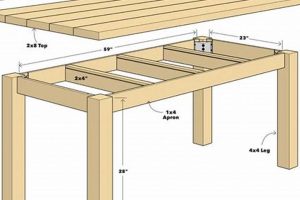
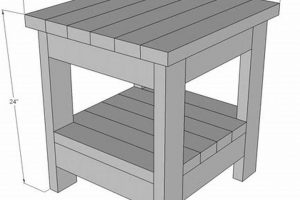
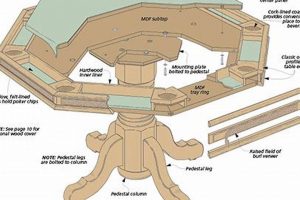
The construction of tables that incorporate a rotating tabletop, allowing the surface to be oriented in different ways or stored vertically, represents a specific subset of woodworking. This design often utilizes specialized hardware and joinery techniques to achieve a smooth and stable flipping mechanism. An example includes a table used for dining that can be folded to a smaller footprint when not in use.
This approach to furniture creation offers space-saving advantages and enhanced versatility. Historically, such designs have been employed in situations where space is limited or where a single piece of furniture must serve multiple purposes. The ability to quickly transform a table’s function contributes to its practicality and enduring appeal.
The following sections will delve into the specific materials, joinery methods, and hardware solutions commonly employed in creating such adaptable furniture pieces. Furthermore, considerations for design and structural integrity will be examined to ensure a successful outcome for woodworking projects involving rotating tabletops.
Essential Considerations for Rotating Table Construction
The successful creation of a table featuring a rotating and flipping top requires meticulous planning and precise execution. Several key aspects demand careful attention during the design and construction phases to ensure structural integrity and smooth operation.
Tip 1: Hardware Selection: The selection of appropriate hinges and locking mechanisms is paramount. Heavy-duty hinges designed for load-bearing applications are essential for stability. Locking mechanisms should provide secure engagement in both the open and closed positions.
Tip 2: Joinery Strength: Strong and durable joinery is critical. Mortise-and-tenon joints, dovetail joints, or robust mechanical fasteners are recommended for connecting the tabletop and supporting structure. The chosen joinery method must withstand repeated flipping and potential stress.
Tip 3: Weight Distribution: Careful consideration must be given to weight distribution, particularly when the tabletop is in the flipped position. Offset weight can cause instability. Balancing mechanisms or counterweights may be necessary to maintain equilibrium.
Tip 4: Clearance and Movement: Adequate clearance must be provided for the tabletop to rotate and flip without obstruction. Precise measurements and tolerances are essential to ensure smooth, unrestricted movement. Account for potential wood expansion and contraction.
Tip 5: Locking Mechanism Reliability: The locking mechanism must be reliable and easy to operate. A robust design that prevents accidental disengagement is crucial for safety. Regularly inspect and maintain the locking mechanism to ensure proper function.
Tip 6: Material Selection: The selected lumber species must be dimensionally stable and resistant to warping. Kiln-dried hardwoods are generally preferred. Consider the weight and density of the material to minimize stress on the hardware and joinery.
Tip 7: Surface Treatment: Apply a durable finish to protect the wood surface from wear and tear. A protective coating will help resist scratches, moisture, and other environmental factors that can compromise the table’s appearance and longevity.
Adhering to these guidelines will contribute significantly to the creation of a functional, durable, and aesthetically pleasing piece of furniture. Proper planning and execution are essential for a successful project.
The subsequent sections will address specific design considerations and advanced techniques for achieving optimal results in rotating tabletop construction.
1. Hardware Durability

The operational longevity of a rotating tabletop table is directly proportional to the durability of its constituent hardware. Hinges, latches, and other mechanical components are subjected to repeated stress as the tabletop is flipped and rotated. Inferior hardware is prone to failure, leading to instability, operational difficulties, and ultimately, a compromised piece of furniture. The selection of robust, high-quality hardware is, therefore, not merely a design consideration but a fundamental prerequisite for a functional and lasting product. For example, a table utilizing low-grade hinges may exhibit sagging, binding, or complete failure within a relatively short period of use.
The correlation between hardware quality and the overall lifespan of a rotating tabletop table extends to the material composition and manufacturing processes employed in the hardware’s creation. Components fabricated from hardened steel or other durable alloys, and subjected to rigorous quality control measures, demonstrate superior resistance to wear, corrosion, and mechanical stress. Conversely, hardware constructed from less durable materials, or manufactured with lax quality standards, is more susceptible to premature failure, regardless of the quality of the woodworking itself. Practical application dictates that investing in higher-quality hardware, despite the initial cost, results in long-term cost savings by minimizing the need for repairs or replacements.
In summary, the robustness of hardware is an indispensable element of rotating tabletop table construction. The selection of durable, high-quality hinges, latches, and locking mechanisms is essential for ensuring the furniture’s stability, smooth operation, and long-term performance. Compromising on hardware quality inevitably leads to diminished functionality and a reduced lifespan for the finished product, underscoring the critical importance of this consideration within the broader context of rotating tabletop woodworking.
2. Joinery Strength

In the context of flip top table woodworking, joinery strength is not merely a structural consideration, but a fundamental determinant of the table’s functionality and longevity. The rotating and flipping action places unique stresses on the joints, demanding robust construction techniques to withstand repeated movement and weight shifts.
- Mortise and Tenon Joints
Mortise and tenon joints, particularly those reinforced with wedges or pegs, offer exceptional resistance to both tensile and shear forces. This makes them highly suitable for connecting the tabletop to the supporting frame, where the stress of rotation and flipping is concentrated. An example would be the connection between the table top frame to legs. Failure of these joints can lead to instability and eventual collapse of the table.
- Dovetail Joints
Dovetail joints are prized for their ability to resist racking and pulling forces. These joints are often employed in constructing the frame that supports the rotating mechanism. A well-executed dovetail joint provides a mechanical interlock that prevents the joint from separating under stress, essential for maintaining the structural integrity of the table. Example of using dovetail joints is at each conner for the legs.
- Reinforced Mechanical Fasteners
In situations where traditional joinery is impractical or insufficient, reinforced mechanical fasteners, such as bolts or screws combined with wood glue, provide an alternative method for achieving high joint strength. These fasteners must be carefully selected and installed to ensure they can withstand the forces generated by the table’s movement. For example, a bolted connection might be used to secure the rotating mechanism to the underside of the tabletop.
- Wood Selection and Grain Orientation
The choice of wood species and the orientation of the wood grain within the joint significantly impact its overall strength. Hardwoods with dense grain patterns are generally preferred for joinery that will be subjected to high stress. Aligning the grain direction to resist the primary forces acting on the joint further enhances its durability. An example to be considered is choosing harder wood on the frame and legs, where the load is applied.
The connection between joint strength and the design is critical for the practical application of a flip top table. Strong joints in the design ensure that the table is durable and that a successful flip top table provides both functionality and aesthetically appealing design. These aspects highlight the need for a deep knowledge of woodworking techniques, attention to the smallest of details, and a commitment to excellent craftsmanship in the construction of flip top tables.
3. Weight Distribution

In the specific domain of flip top table woodworking, weight distribution transcends basic structural concerns and becomes a critical factor directly influencing the table’s operational stability and ease of use. An imbalanced weight distribution causes instability, particularly when the tabletop is in the flipped or partially flipped position. This imbalance can make the table difficult to maneuver, increase the risk of accidental tipping, and accelerate wear on the hinges and locking mechanisms. Therefore, deliberate design and construction techniques are essential to counteract these potential problems.
One common approach to address weight distribution involves strategically positioning heavier components, such as the rotating mechanism or reinforcing structures, to counterbalance the weight of the tabletop. This may entail incorporating weights into the base or frame or adjusting the placement of the hinges to alter the pivot point. For example, in a table with a solid wood tabletop, a heavier base constructed of metal or dense hardwood could be employed to offset the tabletop’s weight. Another practical application is a design that allows adding weights to the based that will be hidden to not sacrifice the aesthetic appearance. If not considered, a seemingly well-crafted table may prove unwieldy and prone to tipping, undermining its intended functionality.
In summary, weight distribution is an indispensable element in the design and construction of a flip top table. Addressing weight imbalances requires careful planning, strategic material selection, and precise execution. Failure to adequately consider weight distribution can lead to a compromised product, characterized by instability and reduced usability. Understanding this principle is crucial for achieving a functional, safe, and aesthetically pleasing flip top table. Furthermore, this principle has significance because it combines the practicality, safety and user experience aspects of a well done flip top table.
4. Clearance Precision
Clearance precision is paramount in flip top table woodworking, representing a critical factor that directly influences the functionality and smooth operation of the finished piece. Insufficient clearance between moving components, such as the tabletop and its supporting frame, results in binding, friction, and restricted movement. This can hinder the flipping action, increase stress on the hardware, and potentially lead to premature wear or structural failure. Conversely, excessive clearance introduces instability and wobble, detracting from the table’s overall solidity and user experience. The necessity for precise clearance underscores the importance of accurate measurements and meticulous craftsmanship in the construction process. A practical example is the space between the table top and the frame, if not calculated correctly, the table will not flip adequately. The connection between proper clearance and the efficiency of the product is fundamental to achieving a practical and aesthetically appealing project.
The attainment of proper clearance necessitates a comprehensive understanding of material properties, particularly the potential for wood expansion and contraction due to changes in humidity and temperature. Designs must accommodate these fluctuations to prevent binding or excessive gaps from developing over time. Precise joinery techniques, coupled with careful hardware selection, are essential for maintaining consistent clearances throughout the range of motion. Furthermore, the application of finishes can affect the dimensions of the components, requiring adjustments to be made during the assembly process. For instance, a thick coat of varnish can reduce the clearance between the tabletop and the frame, impeding the flipping action. These considerations are the fundamentals in crafting a well-executed flip top table.
In summary, clearance precision is an indispensable element of flip top table woodworking. It requires a meticulous approach to measurement, joinery, hardware selection, and finishing. Failure to achieve proper clearance results in operational difficulties and compromised structural integrity. The successful implementation of this principle is essential for creating a functional, durable, and aesthetically pleasing flip top table that provides lasting utility and satisfaction. Furthermore, it emphasizes the importance of a precise and calculated methodology in woodworking.
5. Locking Reliability

Locking reliability constitutes a critical safety and functional aspect of flip top table woodworking. The core function of a flip top table involves transitioning between horizontal and vertical orientations. The mechanism responsible for securing the tabletop in either position directly impacts the table’s usability and prevents unintended collapses or movements. Therefore, the reliability of this locking mechanism is not merely a design feature but a fundamental safety requirement. The absence of a robust and dependable locking system introduces the risk of injury and damage, potentially rendering the table unusable.
A practical example illustrates this significance. Consider a flip top table used as a dining surface. A failure in the locking mechanism while the table is in its horizontal, extended position could result in the sudden collapse of the tabletop, causing potential harm to individuals seated at the table and damage to items placed upon it. Conversely, an unreliable lock in the vertical, stowed position presents a risk of the table unexpectedly unfolding, posing a hazard in walkways or confined spaces. These scenarios highlight the direct correlation between locking reliability and the safe, effective use of flip top tables. Incorporating redundant locking mechanisms, such as safety latches or secondary locking pins, can mitigate the risk of failure and enhance overall safety. Furthermore, the selection of high-quality locking hardware, constructed from durable materials and designed for repeated use, is essential for ensuring long-term reliability.
In conclusion, locking reliability is an indispensable component of flip top table woodworking. Its presence directly contributes to the safety, functionality, and long-term usability of the finished product. Prioritizing the design and implementation of robust, dependable locking mechanisms is therefore essential for any woodworking project involving flip top table construction. The challenges lie in balancing ease of use with a high degree of security, demanding careful consideration of hardware selection, mechanism design, and construction techniques to ensure a reliable and safe end result. Addressing this aspect is fundamental to the creation of a successful and practical flip top table.
6. Material Stability

Material stability constitutes a critical determinant in the success and longevity of flip top table woodworking projects. The inherent properties of wood, notably its susceptibility to dimensional changes in response to fluctuating humidity levels, directly impact the structural integrity and operational smoothness of these tables. Failure to account for these properties during design and construction leads to warping, cracking, joint failure, and impaired functionality.
- Dimensional Changes and Wood Movement
Wood undergoes dimensional changes due to moisture content variations. As humidity increases, wood absorbs moisture and expands; conversely, it shrinks as humidity decreases. This phenomenon, known as wood movement, affects different wood species to varying degrees and occurs primarily across the grain. In flip top tables, differential expansion and contraction between the tabletop, frame, and supporting components can induce stress on joints, causing them to loosen or fail. A tabletop constructed from improperly seasoned lumber is particularly vulnerable to warping, rendering the flipping mechanism difficult or impossible to operate smoothly.
- Wood Species Selection
The selection of appropriate wood species is paramount in mitigating the effects of wood movement. Hardwoods generally exhibit greater dimensional stability compared to softwoods. However, even within the hardwood category, significant variations exist. Species such as mahogany and walnut are known for their relatively low shrinkage coefficients, making them well-suited for applications where dimensional stability is critical. Conversely, species like maple and birch are more prone to movement and require careful consideration in design and construction. In the context of flip top tables, selecting a combination of wood species with compatible stability characteristics minimizes the risk of differential movement and structural stress. For example, pairing a walnut tabletop with a mahogany frame promotes dimensional harmony and structural integrity.
- Kiln Drying and Seasoning
Proper kiln drying and seasoning are essential steps in preparing lumber for flip top table construction. Kiln drying reduces the moisture content of the wood to a level consistent with the anticipated service environment, minimizing subsequent dimensional changes. Air drying, while a slower process, allows the wood to gradually acclimate to its surroundings. Regardless of the method employed, thorough seasoning is crucial for ensuring that the lumber reaches a stable equilibrium before being incorporated into the table. Using improperly seasoned lumber in a flip top table introduces a high risk of warping, cracking, and joint failure, regardless of the quality of the joinery or hardware.
- Grain Orientation and Construction Techniques
The orientation of the wood grain within the various components of a flip top table significantly influences its structural stability. Orienting the grain parallel to the longest dimension of the tabletop minimizes warping. Employing construction techniques that allow for wood movement, such as floating tenons or slotted screw holes, accommodates dimensional changes without inducing stress on the joints. These techniques allow the wood to expand and contract without compromising the structural integrity of the table. Ignoring grain orientation and employing rigid construction methods can lead to catastrophic joint failures and warping, rendering the table unusable.
The interplay between material selection, preparation, and construction techniques directly impacts the long-term performance of flip top tables. Prioritizing material stability through informed wood species selection, thorough seasoning, and strategic grain orientation minimizes the risk of structural problems and ensures a functional and aesthetically pleasing piece of furniture that withstands the test of time. Furthermore, it underscores the crucial role of understanding the fundamental properties of wood in achieving successful woodworking outcomes. For instance, pairing knowledge of material properties with innovative construction methods will lead to superior end results.
Frequently Asked Questions
This section addresses common inquiries and misconceptions related to the construction and design of tables incorporating a rotating tabletop.
Question 1: What is the primary advantage of a flip top table design?
The principal benefit lies in its space-saving capabilities. The ability to orient the tabletop vertically when not in use reduces its footprint, making it suitable for environments with limited space.
Question 2: What type of hardware is best suited for a flip top table mechanism?
Heavy-duty hinges designed for load-bearing applications are recommended. The hardware should provide smooth rotation and secure locking in both the open and closed positions. Durability is paramount.
Question 3: Which joinery techniques are most effective for constructing a flip top table?
Strong and durable joinery is essential. Mortise-and-tenon joints, dovetail joints, or robust mechanical fasteners are recommended for connecting the tabletop and supporting structure. The selected method must withstand repeated flipping.
Question 4: How should weight distribution be managed in a flip top table design?
Careful consideration must be given to weight distribution, particularly when the tabletop is in the flipped position. Offset weight can cause instability. Balancing mechanisms or counterweights may be necessary to maintain equilibrium.
Question 5: What materials are best for constructing a durable flip top table?
Dimensionally stable hardwoods are generally preferred. Kiln-dried lumber is recommended to minimize warping and cracking. The material’s weight and density should also be considered.
Question 6: How can the long-term reliability of the locking mechanism be ensured?
The locking mechanism must be robust and easy to operate. Regular inspection and maintenance are crucial. A design that prevents accidental disengagement is essential for safety.
In summary, successful flip top table woodworking hinges on a combination of thoughtful design, careful material selection, and precise construction techniques. Attention to these details will result in a functional and durable piece of furniture.
The subsequent sections will explore advanced design considerations and troubleshooting tips for optimizing flip top table projects.
Concluding Thoughts on Flip Top Table Woodworking
The preceding discussion has illuminated the multifaceted nature of flip top table woodworking. The creation of a functional and aesthetically pleasing rotating tabletop design requires a comprehensive understanding of material properties, joinery techniques, hardware selection, and weight distribution principles. Attention to detail and adherence to established woodworking practices are essential for achieving a successful outcome.
The enduring appeal of these tables lies in their ability to maximize space and enhance versatility. Further innovation in this area will likely focus on the integration of advanced materials, improved hardware designs, and enhanced locking mechanisms, leading to even more functional and adaptable furniture solutions. Careful execution and attention to detail are paramount for both seasoned woodworkers and those new to the craft, enabling them to deliver a high-quality product that will endure.