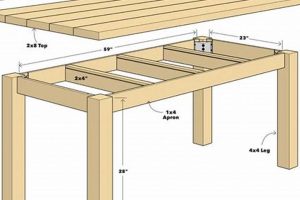
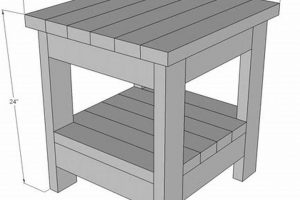
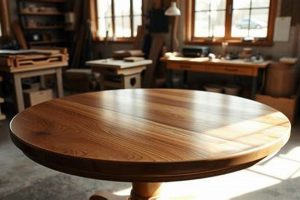
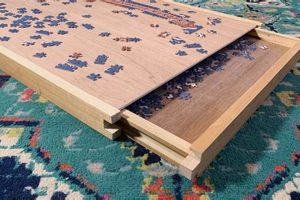
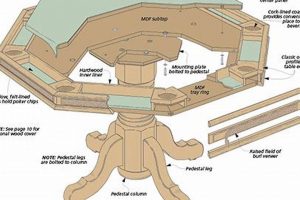
Creating a surface for resting beverages and other items, situated centrally in a living space, through personal construction using wood-based techniques is a common project. The endeavors involve a range of skills, including measuring, cutting, joining, and finishing lumber to produce a functional and aesthetically pleasing furnishing. An example would be constructing a rectangular support structure from reclaimed pallet wood, topped with a glass insert.
Engaging in such projects fosters creativity, offers cost savings compared to retail purchases, and provides a sense of accomplishment. Historically, handcrafted furnishings were prevalent, with individuals relying on their skills to furnish homes. This approach offers a tangible connection to this tradition and allows for customization, ensuring the finished piece aligns with specific spatial needs and personal preferences. Furthermore, it can promote sustainable practices by utilizing recycled materials or sourcing lumber responsibly.
The subsequent sections will address crucial aspects of successfully undertaking such a construction project, including selecting suitable lumber, employing appropriate joinery methods, and applying durable finishes. Details on design considerations, necessary tools, and safety precautions will also be provided to ensure a rewarding and safe experience.
Essential Considerations for Woodworking a Custom Center Table
The following guidelines address key considerations for constructing a surface, crafted from wood, designed for placement in a central living space.
Tip 1: Material Selection: Careful selection of lumber is paramount. Consider the wood’s hardness, grain pattern, and moisture content. Hardwoods like oak or maple offer durability, while softwoods like pine are more budget-friendly but less resistant to dents and scratches. Ensure the lumber is kiln-dried to minimize warping or cracking after construction.
Tip 2: Precise Measurement and Cutting: Accuracy in measurements and cuts is crucial for a professional finish. Utilize a measuring tape, square, and marking gauge to ensure precise dimensions. Employ a circular saw or table saw for straight cuts and a miter saw for angled cuts. Prioritize safety by wearing appropriate eye and ear protection.
Tip 3: Robust Joinery Techniques: Select appropriate joinery methods based on the design and structural requirements. Options include mortise and tenon, dovetails, biscuit joints, or pocket-hole screws. Each method offers varying degrees of strength and aesthetic appeal. Ensure proper glue application and clamping during the joining process.
Tip 4: Proper Sanding and Surface Preparation: Sanding is essential for a smooth and even surface. Start with coarser grit sandpaper (80-grit) to remove imperfections and gradually progress to finer grits (120-grit, 220-grit) for a polished finish. Thoroughly remove sanding dust before applying any finish.
Tip 5: Durable Finish Application: Choose a finish that provides protection and enhances the wood’s natural beauty. Options include polyurethane, varnish, lacquer, or oil-based finishes. Apply multiple thin coats, allowing sufficient drying time between each coat, to achieve a durable and professional result.
Tip 6: Design for Functionality: Consider the intended use and integrate functional elements into the design. Options include incorporating drawers for storage, shelves for display, or a lift-top mechanism for added versatility. Ensure the design complements the surrounding dcor.
Tip 7: Adequate Workspace and Tools: A well-equipped workspace is essential for efficient and safe execution. Ensure sufficient space for cutting, assembling, and finishing. Invest in quality tools, including a saw, drill, sander, and clamps. Regularly maintain and sharpen tools for optimal performance.
By adhering to these principles, individuals can effectively construct a functional and aesthetically pleasing furniture piece, customized to their specific needs and preferences. Success hinges on meticulous planning, precise execution, and a commitment to quality craftsmanship.
The following section will explore common pitfalls and troubleshooting techniques encountered during the furniture-making process, providing solutions for overcoming challenges and achieving desired results.
1. Wood Selection Criteria

Wood selection profoundly influences the structural integrity, aesthetic appeal, and longevity of a handcrafted central table. The type of wood chosen directly affects its resistance to daily wear and tear. Selecting a softwood like pine, for instance, often necessitates extra care during use to prevent dents and scratches, while hardwoods such as oak or maple offer superior durability. The grain pattern also plays a role, influencing the visual character and the ease with which the material can be worked. Different wood species react differently to stains and finishes, which directly impacts the final appearance. The practical significance of understanding these criteria lies in preventing premature failure and ensuring the finished piece aligns with the intended use and aesthetic preferences.
Furthermore, the chosen woods moisture content is a critical factor. Wood that has not been properly kiln-dried can warp or crack after construction as it acclimates to its environment. This underscores the importance of sourcing lumber from reputable suppliers and verifying moisture levels with a moisture meter. Beyond structural and aesthetic considerations, the environmental impact of wood selection must be acknowledged. Opting for sustainably sourced lumber or reclaimed wood contributes to responsible forest management and minimizes the carbon footprint of the project. Example: Using reclaimed barn wood allows a project to use the beauty of the old and also being environtmentally friendly.
In conclusion, “Wood Selection Criteria” constitutes a foundational element in successful furniture construction. A thoughtful approach to this aspect, considering not only durability and aesthetics but also sustainability, ultimately determines the success and longevity of the woodworking project. Careful consideration of material properties helps minimize the risk of structural failure and ensures the creation of a functional and visually appealing object. Understanding this interplay is crucial for the craftsperson aiming to achieve professional-grade results.
2. Joinery Method Selection

The structural integrity of a central table constructed by non-professionals is directly dependent on the joinery methods employed. The selection of an appropriate joinery technique functions as a pivotal decision point, influencing not only the aesthetic appearance but, more crucially, the long-term durability and stability of the final product. Improper joinery selection introduces the risk of premature failure, rendering the table unsuitable for its intended purpose. For example, using simple butt joints, secured only with screws, for a large, solid-wood table would likely result in racking and eventual joint separation under load, whereas a mortise-and-tenon joint, properly executed, distributes stress more effectively and provides significantly greater resistance to shearing forces.
Varied options exist, each possessing distinct strengths and weaknesses relative to specific design parameters and material properties. Dovetail joints, revered for their strength and visual appeal, are well-suited for drawer construction where resistance to pulling forces is critical. Biscuit joints, while simpler to execute, offer limited structural support and are best suited for alignment purposes or edge joining thinner materials. Pocket-hole joinery provides a fast and relatively strong connection, especially when concealed, but may not be appropriate for high-stress applications or when aesthetics dictate a more traditional approach. Therefore, each method presents a tradeoff between ease of execution, material usage, and structural performance. Making use of these methods well ensures the project turns out better than one might assume.
In conclusion, the successful realization of a durable and functional central table through personal construction mandates a thorough understanding of joinery principles and a careful evaluation of the demands placed on the structure. Selecting a joint solely based on ease of execution, without considering its load-bearing capacity and suitability for the materials used, is a recipe for eventual failure. Mastery of joinery techniques is, therefore, not merely an optional skill but an essential prerequisite for achieving professional-quality results in non-professional woodworking endeavors. Proper technique allows the table to withstand the pressure and use of everyday life.
3. Surface Preparation Protocols

Surface preparation constitutes a critical phase in personally constructed wood furniture projects. The quality of surface preparation directly influences the adhesion and appearance of subsequent finishes, thereby determining the overall durability and aesthetic appeal of the completed table. Proper execution of these protocols is non-negotiable for achieving professional-grade results.
- Sanding Techniques
Sanding involves progressively refining the wood surface using abrasive materials. The process aims to remove imperfections such as scratches, planer marks, and glue residue. Starting with a coarse grit (e.g., 80-grit) removes significant defects, while subsequent passes with finer grits (e.g., 120-grit, 220-grit) refine the surface, creating a smooth base for finishing. Uneven sanding can lead to visible inconsistencies in the final finish, highlighting imperfections and diminishing the table’s aesthetic value. For example, failing to remove planer marks before staining will result in uneven color absorption.
- Dust Removal
Thorough dust removal is essential between sanding stages and before applying any finish. Residual dust particles contaminate the finish, resulting in a textured or cloudy appearance. Methods for dust removal include vacuuming with a soft brush attachment, wiping with a tack cloth, or using compressed air. Neglecting this step can lead to a finish that appears amateurish and lacks clarity. Example: Dust left from sanding the table before applying polyurethane will give a gritty feel and look to the surface.
- Filling Imperfections
Minor imperfections, such as small knots or cracks, can be addressed using wood filler. The filler should be color-matched to the wood to ensure a seamless appearance. Overfilling and improper sanding of the filler can create visible patches, detracting from the table’s overall appearance. It is important to allow the filler to dry completely before sanding it flush with the surrounding wood surface. Example: If the table surface has a significant knot in it, wood filler can be used to fill that in before sanding to a smooth surface to be prepared for a finish.
- Sealing and Priming
Application of a sealer or primer prepares the wood surface to receive the final finish. Sealers reduce the wood’s absorbency, preventing uneven stain penetration and blotching. Primers enhance adhesion and provide a uniform base for paint application. Selecting the appropriate sealer or primer depends on the type of wood and the intended finish. Example: Applying a sanding sealer to a pine wood table before staining will help to minimize blotching and create a more uniform color.
In summary, meticulous execution of surface preparation protocols is indispensable for achieving a professional-quality finish. Neglecting these steps compromises the final product’s aesthetic appeal and long-term durability. By adhering to established best practices, individuals can significantly enhance the value and longevity of their furniture creations.
4. Finishing Technique Application

The application of a finish represents a pivotal stage in transforming a completed wooden center table from a raw construction into a durable and aesthetically pleasing furnishing. This process not only enhances the visual appeal but also provides crucial protection against environmental factors, extending the lifespan and functionality of the piece. Appropriate technique application is directly correlated with the quality and longevity of the final product.
- Selection of Finish Type
The selection process entails evaluating various types of finishes, including varnish, polyurethane, lacquer, oil-based finishes, and water-based finishes. Each finish possesses distinct properties regarding durability, sheen, drying time, and application method. For example, polyurethane offers exceptional resistance to scratches and water damage, making it suitable for surfaces subject to heavy use, while oil-based finishes penetrate the wood, enhancing its natural grain and providing a warm aesthetic. The choice should align with the intended use, desired appearance, and skill level of the individual.
- Surface Preparation for Finishing
Prior to applying any finish, meticulous surface preparation is paramount. This includes thorough sanding to achieve a smooth, even surface, followed by the removal of all dust and debris. Imperfections, such as knots or cracks, should be addressed with wood filler and sanded flush. Failure to adequately prepare the surface will result in an uneven finish with visible blemishes. For instance, residual sanding dust can become trapped in the finish, creating a textured surface and compromising its clarity.
- Application Methods
Various application methods exist, including brushing, spraying, and wiping. Each method requires specific techniques and tools to achieve optimal results. Brushing is suitable for smaller projects and offers greater control, while spraying provides a more uniform finish on larger surfaces. Wiping involves applying a thin coat of finish with a cloth, allowing it to penetrate the wood. The chosen method should be dictated by the type of finish, the size of the surface, and the desired level of control. An example is using a spray finish for a smooth even finish that one might not achieve with a standard paint brush.
- Multiple Coat Application
Achieving a durable and visually appealing finish typically requires the application of multiple coats, allowing sufficient drying time between each coat. Each coat builds upon the previous one, enhancing protection and creating a smoother, more uniform surface. Light sanding between coats can further refine the surface and improve adhesion. Skipping this crucial step often results in a finish that is thin, prone to scratches, and lacks depth. For example, applying two coats of polyurethane results in a more durable, water-resistant finish than a single coat.
In conclusion, the successful application of a finish hinges on a comprehensive understanding of the various finish types, meticulous surface preparation, appropriate application techniques, and the strategic use of multiple coats. Neglecting any of these aspects can compromise the quality and longevity of the finished piece. By adhering to established best practices, individuals can enhance the beauty and durability of their furniture creations, ensuring they stand the test of time.
5. Structural Design Integrity
The inherent stability and load-bearing capacity of a central table, particularly in projects undertaken without professional oversight, are paramount. Structural design integrity, therefore, dictates the long-term viability and safety of the piece. A deficiency in this area compromises the functionality and poses potential risks.
- Joint Strength and Stability
The efficacy of joinery methods employed directly influences the table’s ability to withstand imposed loads. Inadequate joint strength leads to racking, wobbling, and eventual failure. For example, utilizing butt joints secured only with fasteners for substantial components is structurally unsound, whereas mortise-and-tenon or dovetail joints provide superior resistance to shear forces. The selection must align with anticipated stresses.
- Material Load Capacity
The chosen materials capacity to bear weight without deformation is a crucial factor. Selecting lumber with insufficient thickness or density relative to the intended load results in sagging or breakage. For instance, employing thin, unsupported plywood for the table surface may cause it to bow under the weight of common items, while solid hardwood of adequate thickness offers greater resistance.
- Leg Placement and Support
Strategic leg placement is essential for distributing weight evenly across the structure. Insufficient leg support or improper positioning leads to instability and concentrated stress points. For instance, placing legs too close together or using slender, unbraced legs can result in tipping or collapse, whereas a wider stance and robust leg construction provide greater stability.
- Bracing and Reinforcement
Incorporating bracing elements enhances structural rigidity and prevents deformation. Diagonal bracing, aprons, or stretchers provide additional support, particularly in larger tables or those subjected to heavy loads. Failure to include adequate reinforcement mechanisms can lead to instability and premature failure. For example, neglecting to add aprons beneath the table surface can cause it to sag over time.
These facets underscore the importance of meticulous planning and execution. Understanding load paths, material properties, and appropriate joinery techniques is crucial for achieving a structurally sound result. Deviations from established principles compromise the integrity and potentially endanger users, highlighting the need for a pragmatic approach when building load-bearing furniture.
Frequently Asked Questions Regarding Wooden Center Table Construction
This section addresses common inquiries and misconceptions regarding the construction of wooden center tables by non-professionals. The information provided aims to clarify essential aspects and promote informed decision-making.
Question 1: What is the minimum recommended wood thickness for a center table surface to prevent sagging?
The minimum recommended thickness depends on the span and type of wood. Solid hardwood should be at least 1 inch thick for spans under 48 inches. Plywood should be at least inch thick and ideally supported with a frame.
Question 2: Which joinery methods are most suitable for novice woodworkers constructing a center table?
Pocket-hole joinery and biscuit joints are generally considered more accessible to beginners. These methods require relatively simple tools and techniques while providing adequate strength for many center table designs.
Question 3: What safety precautions should be observed when applying wood finishes?
Adequate ventilation is paramount. Use respirators to avoid inhaling harmful vapors, and wear gloves to protect skin. Dispose of rags properly to prevent spontaneous combustion. Refer to the finish manufacturer’s safety data sheet for specific instructions.
Question 4: How can wood warping be prevented during the construction process?
Using kiln-dried lumber minimizes the risk of warping. Acclimate the wood to the environment for several days before construction. Apply a finish to all surfaces evenly to prevent uneven moisture absorption.
Question 5: What type of finish provides the best protection against spills and stains on a center table?
Polyurethane offers excellent resistance to water, alcohol, and other common household spills. Epoxy resin provides even greater protection but requires more specialized application techniques.
Question 6: How can existing imperfections in reclaimed wood be addressed when constructing a center table?
Minor imperfections can be filled with wood filler or epoxy resin. Larger imperfections can be strategically incorporated into the design, adding character to the piece. Sanding and surface preparation are essential for achieving a smooth finish.
In summary, careful planning, proper material selection, and adherence to safety guidelines are essential for successful wooden center table construction. Addressing common concerns and misconceptions can significantly improve the outcome of the project.
The following section explores common design styles and aesthetic considerations for enhancing the visual appeal of the project.
Conclusion
This exposition has detailed the core tenets of engaging in furniture construction, with specific emphasis on the central table design. Key areas, encompassing lumber selection, joinery methodologies, surface preparation protocols, finishing techniques, and structural integrity, have been examined. The significance of each aspect in determining the durability, aesthetic quality, and overall success of the project has been underscored.
The information presented equips individuals to embark on such woodworking endeavors with enhanced knowledge and preparedness. It encourages a mindful approach, recognizing that successful execution requires not only skill but also a commitment to sound principles and best practices. The creation of functional and aesthetically pleasing furniture represents a tangible accomplishment, reflecting the application of learned techniques and careful execution.