



In woodworking, a specific technique guides a cutting tool along a predetermined path. This method employs a template or pattern affixed to the workpiece. A bearing-guided bit, mounted in a handheld router or router table, follows the contours of the template, transferring its shape precisely onto the material. For example, crafting identical cabinet doors involves securing a template to each door blank and using a router to trim the excess wood, resulting in consistent profiles across all doors.
This approach offers significant advantages in terms of accuracy, repeatability, and efficiency, particularly when producing multiple identical components. The use of guides ensures that each piece matches the template, minimizing variations and reducing the need for manual adjustments. Historically, skilled artisans relied on hand tools and keen eyesight to achieve accuracy, but template-based techniques democratize precision, allowing woodworkers of varying skill levels to produce professional-quality results. Its adoption streamlines production, reduces waste, and allows for the creation of intricate designs that would be difficult or impossible to achieve freehand.
The following sections will delve deeper into the specific tools, techniques, and considerations for implementing this process effectively. Detailed information on template materials, bit selection, router table setup, and safety procedures will be discussed to ensure optimal results in woodworking projects.
Routing Table Woodworking
The following guidance addresses critical aspects of utilizing a router, especially in a table configuration, to enhance precision and safety in woodworking. Careful adherence to these principles promotes high-quality outcomes and minimizes potential risks.
Tip 1: Material Selection for Templates: Employ durable materials such as MDF, acrylic, or solid wood for template construction. The template’s integrity directly impacts the precision of the final cut. Avoid flexible or easily damaged materials that could introduce inaccuracies.
Tip 2: Securing Workpieces: Prioritize robust clamping or fixturing mechanisms to stabilize the workpiece during routing. Movement or vibration can lead to inconsistencies and potentially hazardous situations. Consider using feather boards and push blocks for added control.
Tip 3: Bit Selection and Maintenance: Choose router bits specifically designed for template routing, typically bearing-guided bits. Ensure that the bearing rotates freely and is properly lubricated. Dull or damaged bits compromise cut quality and increase the risk of kickback.
Tip 4: Climb Cutting Mitigation: Be acutely aware of the potential for climb cutting, where the bit pulls the workpiece in the direction of rotation. This often results in a loss of control. Make shallow passes and adjust the feed direction accordingly, especially when working with challenging grain patterns.
Tip 5: Router Speed Control: Adjust the router speed to match the bit size and material density. Excessive speed can cause burning, tear-out, and premature bit wear. Refer to the bit manufacturer’s recommendations for optimal speed settings.
Tip 6: Dust Collection Integration: Implement an effective dust collection system to maintain visibility and reduce the inhalation of harmful wood particles. A clean work environment is essential for both precision and safety.
Tip 7: Gradual Depth Adjustments: When removing significant amounts of material, make multiple passes with incremental depth adjustments. Avoid attempting to remove too much material in a single pass, as this can strain the router and compromise cut quality.
These guidelines underscore the importance of careful preparation, precise execution, and a steadfast commitment to safety when using a router for woodworking operations. Proper implementation of these principles will contribute significantly to achieving professional-grade results.
The subsequent sections will offer a more detailed examination of specific routing techniques and applications, building upon the foundational concepts presented herein.
1. Precision

In woodworking, precision signifies the degree to which a finished piece adheres to specified dimensions and intended design. Within the context of routing table operations, achieving a high degree of precision is paramount for producing consistent, accurate components, essential for quality craftsmanship and structural integrity.
- Template Accuracy and its Influence
The accuracy of the template directly influences the precision of the cut. Any deviation or imperfection in the template is transferred to the workpiece. Employing rigid, dimensionally stable materials for template construction, along with precise cutting techniques, is crucial. For example, a template with a slight warp will produce a corresponding warp in each piece routed, rendering components unsuitable for precise joinery.
- Bit Selection and its Role
The choice of router bit profoundly affects precision. A sharp, high-quality bit with a precisely ground cutting edge produces clean, accurate cuts. Conversely, a dull or damaged bit will cause tear-out, splintering, and dimensional inaccuracies. The bearing must rotate freely and smoothly for it to accurately guide the cutter. Using a spiral upcut bit can affect the top edge, but this is eliminated by using a downcut bit, or compression bit that marries both for high precision result.
- Router Table Setup and Adjustment
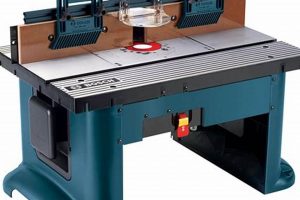
A properly calibrated router table is essential for consistent, precise routing. The table surface must be flat and level, and the fence must be square to the table. Minor misalignments can accumulate over multiple cuts, leading to significant inaccuracies in the final assembly. Regular calibration and maintenance are necessary to maintain optimal precision.
- Feed Rate and Control
Maintaining a consistent and controlled feed rate is critical for achieving precise cuts. An inconsistent feed rate can result in uneven cuts and dimensional variations. Using featherboards and other work-holding devices to maintain consistent pressure against the fence or template improves precision and safety. Overly aggressive feed rates can overload the bit, causing it to deflect and compromise accuracy.
Achieving precision in “routing table woodworking” is a multifaceted endeavor, demanding attention to template creation, bit selection, table setup, and operational control. By prioritizing these aspects, woodworkers can consistently produce accurate, high-quality components suitable for a wide range of woodworking applications. Neglecting any of these facets inevitably leads to diminished precision and compromised results.
2. Stability

In routing table woodworking, stability directly correlates with the accuracy and safety of the operation. Insufficient stability, whether of the router table itself, the workpiece, or the guiding mechanism, introduces vibration, movement, and ultimately, inaccuracies in the final cut. The cause-and-effect relationship is straightforward: a stable setup yields a precise cut; an unstable setup yields inconsistent, potentially hazardous results. For instance, if the router table is not securely mounted to the floor or workbench, vibrations from the router motor are amplified, leading to chatter and imperfections in the routed edge. Similarly, a workpiece that is inadequately clamped or supported can shift during the routing process, resulting in uneven profiles or even kickback.
The stability of the template or pattern used for guided routing is equally crucial. A flimsy template made from thin material is prone to flexing, which will transfer directly to inconsistencies in the workpiece. Employing thicker, more rigid materials for template construction, and ensuring it is firmly affixed to the workpiece, contributes significantly to overall stability. As another example, consider routing a raised panel door. If the door blank is not adequately supported and clamped to the router table, the unsupported portion can vibrate, leading to tear-out and an inconsistent profile along the raised panel edge. The appropriate use of feather boards, hold-downs, and other work-holding devices mitigates these risks by providing consistent downward and inward pressure, securing the workpiece throughout the routing process.
In summary, stability is not merely a desirable attribute in routing table woodworking; it is a fundamental requirement for achieving precise, safe, and repeatable results. Addressing potential sources of instability, from the router table itself to the workpiece and guiding mechanisms, is essential for any woodworker seeking to maximize accuracy and minimize risks. Overlooking stability leads to compromised results, increased waste, and potentially dangerous situations. Therefore, a thorough understanding of the factors contributing to stability, and the implementation of appropriate stabilization techniques, are paramount for success in routing table operations.
3. Bit Selection

The choice of router bit is pivotal to the success of any woodworking project utilizing a routing table. It directly impacts the quality of the cut, the efficiency of the operation, and the safety of the user. Ineffective bit selection can lead to tear-out, burning, inconsistent dimensions, and an increased risk of kickback. Therefore, a comprehensive understanding of bit types, their intended applications, and the material properties of the workpiece is essential for optimized routing table performance.
Different router bits are designed for specific tasks. Straight bits are commonly used for creating grooves, dados, and rabbets. Roundover bits create decorative edges, while chamfer bits produce angled bevels. Flush trim bits, equipped with a bearing, are utilized for template routing, enabling the duplication of shapes and profiles. For example, when crafting cabinet doors with a decorative edge profile, selecting the appropriate roundover or ogee bit ensures the desired aesthetic outcome. Conversely, attempting to use a straight bit for this purpose would yield unsatisfactory results. Furthermore, bit material and construction influence performance. Carbide-tipped bits offer superior durability and longevity compared to high-speed steel bits, particularly when working with abrasive materials like hardwoods or manufactured wood products. Utilizing a dull or improperly chosen bit necessitates increased force, leading to potential loss of control and compromised cut quality.
Proper bit selection necessitates careful consideration of the wood species, the desired cut profile, and the power of the router. A small diameter bit is preferable for intricate details or delicate work, while a larger diameter bit is suitable for removing significant amounts of material quickly. The feed rate must be adjusted accordingly to prevent overloading the bit and causing the router motor to stall. Ultimately, informed bit selection is not merely a technical detail but a fundamental skill for any woodworker seeking to achieve professional-grade results on a routing table. Recognizing the causal link between bit choice and outcome empowers the woodworker to make informed decisions, optimizing performance and mitigating potential hazards.
4. Feed Control
Feed control, in the context of routing table woodworking, refers to the rate at which a workpiece is advanced past the rotating router bit. This parameter exerts a direct influence on cut quality, safety, and the lifespan of the cutting tool. An inadequate feed rate precipitates a spectrum of problems, ranging from tear-out and burning to increased risk of kickback and premature bit wear. Excessive force to compensate for a too-slow feed rate can lead to loss of control and compromised accuracy. The correct feed rate, therefore, is not an arbitrary selection, but rather a critical adjustment based on material hardness, bit geometry, and router power. For example, attempting to rout hardwood at an excessive feed rate will likely result in tear-out and splintering along the grain, requiring additional sanding and potentially rendering the workpiece unusable. Conversely, a feed rate that is too slow can cause the bit to overheat and burn the wood, leaving unsightly marks and dulling the cutting edge.
Maintaining consistent feed control is as important as selecting the appropriate rate. Variations in pressure or speed during the routing process can lead to uneven cuts, dimensional inaccuracies, and potentially dangerous situations. Techniques such as using feather boards to maintain consistent pressure against the fence or template and employing push sticks to safely advance the workpiece are crucial for achieving consistent results and mitigating the risk of kickback. In the creation of raised panel doors, for instance, inconsistent feed control can result in an uneven profile on the raised panel, compromising the aesthetic appeal and requiring rework. Similarly, when routing a complex profile, a sudden change in feed rate can cause the bit to dig in, resulting in a gouge or a sudden, uncontrolled movement of the workpiece.
In summary, effective feed control is an indispensable component of successful routing table woodworking. The selection of the appropriate feed rate, coupled with the consistent application of force and adherence to safety protocols, directly contributes to cut quality, user safety, and the longevity of the cutting tool. The challenges associated with mastering feed control highlight the importance of experience, practice, and a thorough understanding of the interplay between bit selection, material properties, and router power. Ultimately, prioritizing feed control elevates the standard of craftsmanship and minimizes potential hazards in routing table operations.
5. Dust Management
In routing table woodworking, effective dust management is not merely a matter of cleanliness, but a critical component impacting precision, safety, and long-term health. The act of routing generates substantial airborne particulate matter, composed primarily of wood dust. This dust obscures the workpiece, hindering accurate alignment and visual inspection of the cut. The accumulation of dust around the router bit can also impede its performance, leading to increased friction, heat buildup, and ultimately, a reduction in cut quality. Furthermore, prolonged exposure to wood dust poses significant health risks, including respiratory irritation, allergic reactions, and, in some cases, more severe conditions like occupational asthma. For example, routing MDF without adequate dust collection releases fine particles containing formaldehyde, a known carcinogen, exacerbating the health risks.
The implementation of a comprehensive dust management strategy involves several key elements. A dust collection system, connected directly to the router table enclosure, is essential for capturing dust at its source. The system should provide sufficient airflow to effectively remove airborne particles before they can disperse into the surrounding environment. Regular cleaning of the router table and surrounding workspace prevents the accumulation of dust, reducing the risk of re-suspension and inhalation. Utilizing personal protective equipment, such as dust masks or respirators, provides an additional layer of protection against dust exposure, particularly when working with species known to produce allergenic or toxic dust. Consider the process of creating intricate moldings with a routing table. Without proper dust management, the operator’s visibility is severely compromised, increasing the risk of errors and potential injury. The accumulation of dust on the workpiece also obscures the details of the cut, making it difficult to assess progress and identify imperfections.
In conclusion, dust management is an indispensable element of routing table woodworking, impacting both the immediate quality of the work and the long-term well-being of the operator. Neglecting this aspect can lead to compromised accuracy, increased risk of injury, and potential health complications. Therefore, integrating effective dust collection systems, implementing diligent cleaning practices, and utilizing appropriate personal protective equipment are essential for promoting a safe, efficient, and sustainable woodworking environment. Proper attention to dust management transforms routing table operations from a potentially hazardous activity into a controlled and predictable process, ensuring both the quality of the finished product and the health of the craftsperson.
6. Template Accuracy

In routing table woodworking, the fidelity of the template employed assumes paramount importance. The template serves as the definitive guide for the router bit, dictating the shape and dimensions of the resulting cut. Any deviation in the template will be directly transferred to the workpiece, compromising the accuracy and quality of the finished product.
- Material Stability
The dimensional stability of the template material is crucial. Materials prone to warping, swelling, or shrinking due to changes in temperature or humidity will introduce inaccuracies into the routing process. Dense, stable materials like MDF, acrylic, or solid hardwoods are preferred for their resistance to environmental factors. Using a warped template will result in a warped workpiece, even if all other aspects of the routing setup are perfect.
- Edge Precision
The edges of the template must be smooth, consistent, and precisely shaped. Imperfections like saw marks, chips, or inconsistencies in the profile will be replicated in the routed piece. Fine-tuning the template edges with sanding or filing techniques is essential for achieving optimal results. If the template edge is not perfectly smooth, the router bit bearing will follow these imperfections, creating a corresponding imperfection in the workpiece.
- Fixture Rigidity
The method of securing the template to the workpiece impacts accuracy. The template must be held firmly in place to prevent movement or slippage during the routing operation. Inadequate clamping or taping can lead to misalignment and inaccuracies in the cut. Using a vacuum chuck or double-sided tape can help prevent template movement, thus resulting in a workpiece that matches the templates exact specifications.
- Duplication Fidelity
In applications requiring multiple identical pieces, each template must precisely replicate the original design. Even minute variations between templates will accumulate over multiple routings, leading to noticeable inconsistencies in the final product. The use of CNC machining for template creation ensures a high degree of precision and repeatability. The cost of machining precise templates often results in repeatable results. It also reduces the time and skill required to make additional versions of a piece.
The accuracy of the template, therefore, functions as the cornerstone of precise routing table woodworking. By addressing the factors of material stability, edge precision, fixture rigidity, and duplication fidelity, woodworkers can maximize the consistency and accuracy of their work, achieving professional-grade results. Compromises in template quality inevitably lead to diminished outcomes, underscoring the critical role of template accuracy in this technique.
Frequently Asked Questions
This section addresses common inquiries regarding the safe and effective utilization of a routing table in woodworking applications. The information presented aims to clarify essential techniques and dispel potential misconceptions.
Question 1: Is a dedicated router table necessary, or can a handheld router achieve the same results?
While a handheld router is versatile, a router table offers increased stability, control, and precision for many operations. The table allows for both hands to manipulate the workpiece, improving safety and accuracy, especially when working with smaller or more complex shapes. Specific joinery tasks are significantly easier and more consistent on a router table.
Question 2: What safety precautions are paramount when using a routing table?
Eye protection is mandatory. Hearing protection is strongly recommended due to the high noise levels. Proper dust collection is crucial to minimize inhalation of wood particles. Push sticks or push blocks should be used to keep hands safely away from the router bit. Ensure the router is unplugged before making any adjustments to the bit or fence.
Question 3: What types of router bits are best suited for routing table use?
Carbide-tipped bits are generally preferred due to their durability and ability to maintain sharpness longer than high-speed steel bits, especially when working with hardwoods. Bearing-guided bits are essential for template routing, allowing the bit to follow the contours of a pattern or template accurately.
Question 4: How is tear-out minimized when routing on a table?
Several factors contribute to tear-out reduction. Using sharp bits, adjusting the feed direction (climb cutting can sometimes be beneficial, but requires extreme caution), taking multiple shallow passes, and using a backer board to support the workpiece can all minimize tear-out.
Question 5: How can one ensure consistent depth of cut across multiple workpieces?
Precise adjustment and locking of the router bit height is crucial. Using a digital height gauge can significantly improve accuracy. After setting the desired depth, it is advisable to test the cut on a scrap piece of wood before proceeding with the final workpiece.
Question 6: What is the significance of proper fence alignment on a routing table?
Accurate fence alignment is critical for achieving straight, consistent cuts. The fence should be parallel to the miter slot or the router bit. Minor misalignments can accumulate over longer cuts, leading to significant inaccuracies. Regular inspection and adjustment of the fence are necessary.
Mastering these techniques and understanding these precautions are crucial for safe and effective routing table operation. Prioritizing safety and precision ensures high-quality results in woodworking projects.
The following section will address advanced techniques to “routing table woodworking”, offering detailed guidance to enhance skill development.
Conclusion
This exploration of “routing table woodworking” has elucidated the critical factors underpinning precision, safety, and efficiency. Aspects such as template accuracy, bit selection, feed control, stability, and dust management are not isolated considerations but rather interconnected elements that collectively determine the success of routing operations. Proper implementation of these principles elevates the standard of craftsmanship and mitigates potential hazards inherent in the process.
A comprehensive understanding of these techniques provides a solid foundation for woodworkers of all skill levels. Continuous learning and meticulous attention to detail are paramount. The ongoing pursuit of knowledge and skill development in “routing table woodworking” will enable the creation of high-quality woodworking projects, while also promoting a safer and more sustainable working environment.

![Jefferson Woodworking Slide Table: [Benefits] & [Uses] | Step-by-Step Guides, Tools & Inspiration to Build Beautiful Wooden Decor on a Budget](https://woodfromhome.com/wp-content/uploads/2026/05/th-35-300x200.jpg "Jefferson Woodworking Slide Table: [Benefits] & [Uses] Step-by-Step Guides, Tools & Inspiration to Build Beautiful Wooden Decor on a Budget")