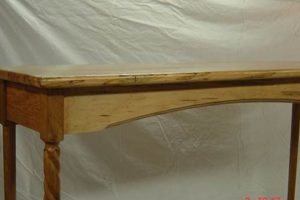
The creation of bespoke wood products tailored to individual client specifications is a specialized sector. This practice encompasses the design, fabrication, and finishing of items ranging from cabinetry and furniture to architectural millwork. Skilled artisans employ a combination of traditional techniques and modern technologies to achieve unique and high-quality results. For example, a homeowner might commission a library featuring shelving specifically designed to house their collection, crafted from a particular type of hardwood with custom inlays.
This particular craft offers numerous advantages, including the ability to precisely meet dimensional requirements and aesthetic preferences unavailable in mass-produced alternatives. The focus on quality materials and meticulous craftsmanship often results in products that are more durable and valuable than their counterparts. Historically, the practice represents a continuation of age-old woodworking traditions, adapted for contemporary needs and design sensibilities. The preservation of these skills contributes to the cultural heritage of craftsmanship.
The following sections will delve into the specific aspects of design considerations, material selection, the construction process, finishing techniques, and maintenance practices associated with this specialized form of woodworking. Furthermore, it will examine the considerations involved in choosing a provider capable of delivering projects that meet the client’s expectations for quality, design, and durability.
Woodworking Project Guidance
The following recommendations address critical aspects of woodworking projects. Adherence to these suggestions can significantly improve project outcomes, encompassing durability, aesthetics, and long-term value.
Tip 1: Material Selection: Matching wood species to the project’s intended use is paramount. Softwoods are generally suitable for interior projects not requiring substantial strength. Hardwoods are recommended for furniture and applications subject to stress or moisture exposure.
Tip 2: Precision Measurement and Cutting: Accurate measurements and precise cuts are essential for successful assembly. Utilize high-quality measuring tools and ensure saw blades are sharp and appropriate for the wood being cut. Test cuts are recommended to verify accuracy.
Tip 3: Joinery Techniques: Select joinery methods appropriate for the project’s structural requirements. Dovetail joints offer superior strength for drawer construction, while mortise and tenon joints are well-suited for framing. Glue selection should correspond to the type of joint and wood species used.
Tip 4: Sanding and Surface Preparation: Thorough sanding is crucial for achieving a smooth and even finish. Begin with coarser grits to remove imperfections, progressing to finer grits for a polished surface. Dust removal prior to finishing is essential.
Tip 5: Finishing Application: Choose a finish that provides adequate protection against moisture, UV exposure, and wear. Apply multiple thin coats, allowing sufficient drying time between each. Consider the aesthetic characteristics of the finish and its impact on the wood’s natural color and grain.
Tip 6: Hardware Selection: Select hardware that is both functional and aesthetically consistent with the project’s overall design. Ensure hardware is appropriately sized and constructed of materials suitable for the intended application. Corrosion-resistant hardware is recommended for outdoor projects.
Tip 7: Proper Assembly Techniques: Pre-drilling pilot holes prior to screw insertion minimizes the risk of splitting the wood. Clamps should be used to secure joints during glue drying. Excess glue should be removed promptly to prevent interference with the finishing process.
Incorporating these considerations into the woodworking process promotes durable, aesthetically pleasing, and structurally sound end products. Attention to detail in each phase contributes to the long-term performance and value of the completed work.
The subsequent section will explore design considerations that complement and refine these fundamental woodworking principles.
1. Bespoke Design

Bespoke design forms the cornerstone of operations. It signifies the creation of unique, individualized wood products, diverging from mass-produced, standardized offerings. The effect of a robust bespoke design process directly impacts the final product’s suitability for its intended purpose and its aesthetic value. The design phase determines the dimensions, materials, joinery methods, and overall appearance, all tailored to meet specific client requirements. A failure in this stage invariably leads to a compromise in functionality or aesthetics, diminishing the perceived value of the final product.
Consider a scenario where a client requires custom cabinetry for a kitchen with unconventional dimensions. A bespoke design approach would involve detailed site measurements, analysis of the client’s storage needs, and the creation of detailed drawings that account for every spatial constraint and functional requirement. In contrast, a standardized approach would necessitate compromises in cabinet size, layout, or functionality to fit the existing space, potentially resulting in inefficient storage or an aesthetically disjointed appearance. The integration of bespoke design with specialized capabilities ensures the realization of projects that precisely fulfill the clients unique vision.
In summary, bespoke design ensures the final product is not merely functional but also a tailored solution that precisely addresses the client’s specific needs and aesthetic preferences. Overcoming the challenges associated with translating abstract client requirements into tangible designs is vital for maintaining product excellence. This commitment to bespoke design ensures that each project is a true reflection of the client’s vision, enhancing the intrinsic value and utility of the crafted woodwork.
2. Material Sourcing

Material sourcing plays a pivotal role in determining the quality, durability, and aesthetic characteristics of woodworking projects. The strategic acquisition of wood and related materials directly impacts the final product’s performance and long-term value within a business context.
- Supplier Relationships
Establishing strong relationships with reputable lumber suppliers ensures access to consistent quality and a diverse range of wood species. Long-term partnerships often facilitate preferential pricing and priority access to rare or specialized materials. These relationships allow for better negotiation and the ability to secure materials that meet specific project requirements, such as grain patterns or specific dimensions.
- Sustainability Considerations
Sourcing materials from sustainably managed forests is an increasingly important factor. Employing certified wood demonstrates a commitment to environmental responsibility and can be a key differentiator for clients who value sustainability. This practice involves verifying that the lumber is harvested and processed in accordance with environmental standards, ensuring responsible forestry practices.
- Material Inspection and Quality Control
Thorough inspection of materials upon arrival is critical for identifying defects, inconsistencies, or moisture content issues. Implementing quality control procedures ensures that only materials meeting established standards are used in production. This can minimize waste, reduce the likelihood of structural problems, and maintain the overall quality of finished products.
- Species Selection and Properties
A comprehensive understanding of the properties of different wood species is essential for selecting the appropriate material for each project. Factors such as hardness, grain pattern, moisture resistance, and workability must be considered to ensure the final product meets performance requirements and aesthetic goals. Matching the wood species to the project’s intended use optimizes durability and aesthetic appeal.
The integrated management of supplier relationships, sustainable practices, rigorous quality control, and informed species selection constitutes effective material sourcing. These considerations directly translate into superior quality and customer satisfaction. The strategic advantages gained through meticulous sourcing are integral to maintaining a competitive edge and upholding standards of excellence.
3. Precision Craftsmanship

Precision craftsmanship forms the operational nucleus, dictating the ultimate quality and aesthetic refinement of custom woodwork. It represents a commitment to exacting standards, meticulous execution, and the skillful application of techniques. This focus enhances the value and longevity of each project, ensuring alignment with client expectations.
- Dimensional Accuracy
Maintaining dimensional accuracy is crucial for seamless assembly and functionality. Precise measurements, cuts, and joinery ensure that components fit together correctly, minimizing gaps and structural weaknesses. For example, in crafting custom cabinetry, even minute discrepancies in dimensions can lead to misalignment of doors and drawers, impacting both appearance and usability. Inaccurate execution undermines the overall integrity and aesthetic appeal.
- Joinery Expertise
The selection and execution of appropriate joinery methods is pivotal for structural integrity. Dovetail joints, mortise and tenon joints, and other specialized techniques require mastery to ensure strength and durability. A poorly executed joint can compromise the stability of a piece, leading to premature failure. Skilled artisans can assess load-bearing requirements and select the most suitable joint for a given application, enhancing the piece’s lifespan.
- Surface Preparation and Finishing
Surface preparation and finishing are critical for achieving a flawless aesthetic. Thorough sanding, filling, and sealing create a smooth, uniform surface that enhances the wood’s natural beauty. Improper preparation can result in uneven stain absorption, visible scratches, or peeling finishes. Applying finishes with precision protects the wood from moisture, UV exposure, and wear, preserving its appearance over time. This requires a controlled environment and careful attention to detail.
- Attention to Detail
Attention to detail encompasses every aspect of the woodworking process, from hardware selection to the subtle shaping of edges. Each element contributes to the overall impression of quality and craftsmanship. Overlooking minor imperfections or inconsistencies detracts from the final product’s value. A meticulous approach ensures that every detail aligns with the intended design and contributes to a cohesive and refined aesthetic.
In summary, precision craftsmanship represents a holistic approach to woodworking, prioritizing accuracy, expertise, and attention to detail. The integration of these facets results in the creation of bespoke woodwork characterized by superior quality, durability, and aesthetic appeal. This commitment to precision distinguishes outputs, ensuring they stand as enduring testaments to the artisan’s skill and dedication.
4. Client Collaboration

Client collaboration is integral to the success of bespoke woodworking projects. It represents the active engagement between the artisan and the client throughout the design and construction phases. A deficiency in effective communication or shared decision-making can lead to a final product that fails to meet expectations, undermining the value of the commissioned work. This collaborative dynamic is not merely a courtesy but a functional necessity to ensure the project aligns with the client’s needs, preferences, and the intended application of the piece.
The process typically begins with an initial consultation to establish the client’s vision, functional requirements, and budget. Subsequent interactions involve the presentation of design concepts, material selections, and construction details for client approval. Revisions and refinements are made based on client feedback, ensuring that the project evolves in accordance with their specifications. For example, a client commissioning a custom dining table may express a preference for a particular wood species, leg style, and finish. Through collaborative discussions, the artisan can advise on the structural implications of these choices and present alternative options to optimize both aesthetics and functionality. The absence of such collaboration could result in a table that, while visually appealing, lacks the necessary stability or durability for regular use.
In summary, client collaboration is a critical determinant of satisfaction and project success. It requires open communication, mutual respect, and a willingness to incorporate client feedback throughout the process. By actively engaging clients in every stage, from initial design to final installation, the artisan can ensure that the finished product not only meets but exceeds expectations, fostering long-term relationships and reinforcing the value of bespoke craftsmanship. The ability to effectively manage this collaborative dynamic is, therefore, a hallmark of a successful operation.
5. Project Management

Effective project management is crucial for the successful execution of custom woodworking endeavors. It encompasses the planning, organization, and oversight of all project phases, from initial client consultation to final installation. Poor project management can result in delays, cost overruns, and compromised quality, thereby impacting the client’s satisfaction and the organization’s reputation.
- Scope Definition
Precise scope definition is foundational. It involves clearly outlining project deliverables, specifications, and boundaries. Ambiguous or incomplete scope definitions can lead to misunderstandings and scope creep, resulting in increased costs and extended timelines. For example, if a client requests a custom bookcase but fails to specify shelving dimensions or weight capacity, the project’s scope remains undefined. The artisan must then engage in further dialogue to clarify these details, ensuring the final product meets the client’s needs. The absence of a defined scope creates potential for dissatisfaction and disputes.
- Resource Allocation
Strategic resource allocation involves assigning personnel, materials, and equipment to specific project tasks. Inefficient allocation can result in bottlenecks and delays. For instance, if a woodworking project requires a specialized piece of machinery that is already in use on another project, it can delay the progress of the second project. Effective resource management ensures that all necessary resources are available when needed, optimizing productivity and minimizing downtime. This proactive approach is vital for maintaining project momentum and meeting deadlines.
- Schedule Management
Schedule management focuses on creating and maintaining a realistic project timeline. It involves identifying key milestones, dependencies, and deadlines. Poor schedule management can lead to delays, cost overruns, and client dissatisfaction. If a custom table project is delayed due to material shortages, the client may become frustrated. Effective schedule management involves tracking progress, identifying potential risks, and implementing corrective actions to keep the project on track. This meticulous approach ensures projects are completed on time and within budget.
- Risk Mitigation
Proactive risk mitigation involves identifying and addressing potential threats to the project’s success. These risks may include material shortages, equipment malfunctions, or unforeseen design challenges. Failure to mitigate risks can result in significant delays or increased costs. For example, if a project relies on a specific type of wood that is susceptible to warping, the artisan should consider alternative materials or implement moisture control measures. A proactive risk management approach minimizes the potential for disruptions and ensures project stability.
In summary, effective project management is essential for the successful completion of custom woodworking commissions. By prioritizing scope definition, resource allocation, schedule management, and risk mitigation, Robbins Custom Woodworking can consistently deliver high-quality products that meet or exceed client expectations. The integration of these management practices ensures operational efficiency, client satisfaction, and a strong reputation within the industry.
6. Quality Assurance

Quality assurance constitutes a critical element in the operations. It ensures that all woodworking projects adhere to established standards of excellence, meeting and often exceeding client expectations. The implementation of rigorous quality control measures is integral to maintaining the reputation and delivering consistent value.
- Material Inspection Protocols
The rigorous inspection of incoming materials forms the first line of defense against substandard components. This includes verifying the grade, moisture content, and absence of defects in lumber. For example, lumber intended for a high-end dining table is scrutinized for knots, warping, or inconsistencies in grain pattern. Material rejections at this stage prevent flawed components from entering the production process, mitigating potential structural or aesthetic compromises later on.
- Dimensional Verification
Dimensional verification involves meticulous measurement and validation of component dimensions at each stage of production. This process utilizes precision instruments to ensure adherence to design specifications. Consider a custom cabinet project where accurate dimensions are paramount for seamless door and drawer alignment. Dimensional discrepancies detected early in the assembly phase can be corrected, preventing costly rework and ensuring the final product meets stringent aesthetic and functional requirements.
- Finish Evaluation
The evaluation of finishes encompasses assessing the smoothness, color consistency, and durability of applied coatings. This involves visual inspections, as well as tests for adhesion and resistance to common household chemicals. For instance, a custom-built desk undergoes a finish evaluation to ensure that the coating is free from blemishes, provides adequate protection against spills, and maintains its appearance over time. Any deficiencies are addressed before the product is released, guaranteeing long-term satisfaction.
- Structural Integrity Testing
Structural integrity testing assesses the stability and load-bearing capacity of assembled products. This may involve applying controlled loads to simulate real-world use conditions and verifying that the product can withstand the intended stresses. For example, a custom-built bookcase undergoes testing to ensure that the shelves can support the weight of books without sagging or collapsing. Structural weaknesses identified during testing are rectified through reinforcement or design modifications, ensuring the safety and longevity of the final product.
These facets of quality assurance work in concert to guarantee that all woodworking creations reflect superior craftsmanship and durability. By prioritizing rigorous inspection, precise measurement, finish evaluation, and structural testing, the practice is able to deliver consistently high-quality products that align with the expectations of discerning clientele.
7. Installations

The proper execution of installations is paramount to realizing the full value of custom woodworking projects. It represents the culmination of the design and fabrication process, transforming crafted components into functional and aesthetically integrated elements within a space. Flawless installations not only ensure the structural integrity and operational efficiency of the woodwork but also significantly enhance the overall client experience. Substandard installation, conversely, can diminish the quality and longevity of even the most meticulously crafted pieces.
- Precise Measurement and Alignment
Accurate measurements and precise alignment are foundational to successful installations. They ensure that custom cabinetry, shelving, or millwork fits seamlessly within the designated space, avoiding gaps, uneven surfaces, or functional impediments. For example, a custom-built entertainment center requires precise leveling and alignment to ensure that doors operate smoothly and that the unit presents a balanced and symmetrical appearance. Incorrect measurements or misalignment can compromise both aesthetics and functionality, necessitating costly rework.
- Secure Mounting and Anchoring
Secure mounting and anchoring are essential for the structural integrity and safety of installed woodwork. They ensure that cabinets, shelves, and other components are firmly affixed to walls or floors, preventing movement, instability, or potential hazards. In the case of a custom-built kitchen island, proper anchoring prevents tipping or shifting during use, safeguarding against accidents. Adequate mounting and anchoring techniques must account for wall or floor construction, weight loads, and seismic considerations.
- Seamless Integration with Existing Structures
Achieving seamless integration with existing architectural elements is crucial for creating a cohesive and aesthetically pleasing result. This involves careful attention to detail when blending custom woodwork with walls, ceilings, floors, and other existing features. For instance, custom crown molding should seamlessly transition into existing trim, creating a unified and visually harmonious effect. Any discrepancies or mismatched elements can detract from the overall aesthetic and diminish the perceived value of the installation.
- Final Adjustments and Refinements
Final adjustments and refinements are necessary to ensure optimal functionality and aesthetic perfection. This includes fine-tuning door and drawer alignment, adjusting hardware, and addressing any minor imperfections. In a custom-built closet system, for example, final adjustments ensure that drawers slide smoothly and that doors close securely. These refinements contribute to the overall quality and user experience, demonstrating a commitment to meticulous craftsmanship and attention to detail.
These elements of proficient installations highlight the need for skilled installers who possess not only technical expertise but also a keen eye for detail and a commitment to precision. A successful installation transforms custom woodworking from individual components into an integrated, functional, and aesthetically pleasing element of the client’s space. The value of this integration underscores the importance of viewing installations as a critical and indispensable component of the overall value proposition.
Frequently Asked Questions about Robbins Custom Woodworking
The following addresses common inquiries concerning commissioned woodworking projects. The information presented aims to provide clarity and transparency regarding processes, expectations, and considerations pertinent to engaging professional woodworking services.
Question 1: What factors influence the cost of a custom woodworking project?
The expense is determined by material selection, project complexity, dimensions, finishing techniques, and required hardware. Intricate designs, rare wood species, and specialized finishes will invariably increase the overall expenditure. Labor costs, determined by the project’s duration and the skill level required, also contribute significantly.
Question 2: How long does a typical custom woodworking project take from initial consultation to final installation?
Project duration varies depending on design intricacy, material availability, and current workload. Smaller projects, such as individual pieces of furniture, may require several weeks. Larger undertakings, such as complete kitchen or library installations, can extend over several months. A detailed timeline is typically provided following the initial consultation and design phase.
Question 3: What types of wood are commonly used in custom woodworking projects?
A wide array of wood species is available, each possessing unique characteristics in terms of grain, color, hardness, and durability. Common choices include oak, maple, cherry, walnut, and mahogany for hardwoods. Softwoods such as pine and cedar are often employed for specific applications like linings or exterior projects.
Question 4: How does one ensure the longevity and maintain the appearance of custom wood furniture?
Regular dusting and cleaning with appropriate wood care products are essential. Exposure to direct sunlight and excessive moisture should be avoided. Periodic application of furniture polish or wax can help protect the finish and enhance its luster. Specific maintenance recommendations will be provided based on the selected wood and finish.
Question 5: What is the difference between solid wood and wood veneer in custom woodworking?
Solid wood refers to lumber that is composed entirely of a single wood species throughout its thickness. Wood veneer consists of thin sheets of wood adhered to a substrate such as plywood or MDF. Solid wood offers superior durability and can be refinished multiple times. Veneer provides a cost-effective alternative, allowing the use of expensive wood species without the associated expense of solid lumber. The selection depends on project budget and performance requirements.
Question 6: What steps are taken to ensure the environmental sustainability of woodworking practices?
Sustainable practices include sourcing lumber from certified sustainable forests, minimizing waste through efficient cutting techniques, and using low-VOC (volatile organic compound) finishes. Reclamation of salvaged lumber and the use of recycled materials are also employed to reduce environmental impact. Adherence to environmental regulations and responsible waste disposal are integral components.
Understanding these key aspects aids in making informed decisions regarding custom woodworking projects. Open communication and thorough planning are vital for achieving successful outcomes.
The subsequent section delves into case studies that exemplify successful custom woodworking implementations.
Conclusion
This discourse has examined the critical elements defining robbins custom woodworking. From initial bespoke design and meticulous material sourcing to the precision of craftsmanship, collaborative client engagements, stringent project management, robust quality assurance, and the vital execution of installations, each facet contributes to the creation of superior, individualized products. These procedures are foundational to meeting discerning client expectations and upholding standards of excellence within the field.
The consistent application of these principles distinguishes providers capable of delivering enduring value and aesthetic refinement. A continued focus on these core competencies remains essential for sustained success and the preservation of skilled craftsmanship within the custom woodworking domain. Individuals and organizations seeking bespoke solutions should rigorously evaluate providers against these criteria to ensure alignment with project goals and lasting satisfaction.