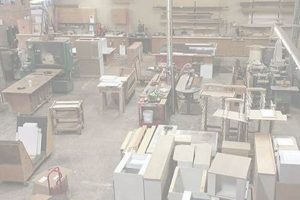
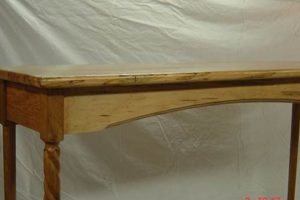
The creation of bespoke wooden elements for buildings, ranging from intricate moldings and paneling to complete cabinetry systems, is a specialized sector of the construction and design industries. These elements are not mass-produced; rather, they are individually crafted to meet specific architectural designs and client requirements. For example, a historic building restoration might require exact replication of original door frames and trim, or a modern office space might incorporate uniquely designed reception desks and conference tables.
The significance of this specialized craft lies in its ability to enhance the aesthetic appeal, functionality, and overall value of a structure. Historically, meticulously crafted woodwork has been a hallmark of quality and luxury in architecture. Today, it provides solutions for complex design challenges, offering opportunities to integrate unique details and high-quality materials into any project. Its durability and timeless appeal contribute to the long-term value of buildings, while its customizable nature allows for the creation of spaces that are both beautiful and tailored to specific needs.
Subsequent sections will delve into the specific types of wood used in this process, the range of products produced, the technological advancements impacting fabrication, and the essential considerations for selecting a qualified provider for such specialized services.
Successfully executing intricate projects demands careful planning and informed decision-making at every stage.
Tip 1: Early Collaboration with the Provider. Engage the selected firm during the design phase. This facilitates constructability reviews, value engineering suggestions, and material selection optimization.
Tip 2: Detailed Shop Drawings are Critical. Insist on comprehensive shop drawings that accurately reflect all dimensions, joinery details, and hardware specifications. Thorough review and approval are paramount.
Tip 3: Precise Material Specifications. Clearly define wood species, grade, cut, and finishing requirements. Ambiguity in these areas can lead to inconsistencies and unexpected outcomes.
Tip 4: Finish Matching and Mock-Ups. Request finish samples and, when feasible, full-scale mock-ups to verify color, texture, and sheen meet project specifications. Early approval minimizes costly revisions.
Tip 5: Understanding Lead Times. Acknowledge that custom fabrication requires sufficient time. Account for material procurement, fabrication, finishing, and delivery in the project schedule.
Tip 6: Climate Control Considerations. Understand the impact of humidity and temperature on wood stability. Ensure proper acclimation and climate control measures are implemented during storage and installation.
Tip 7: Qualified Installation is Non-Negotiable. Employ experienced installers familiar with handling and installing intricate elements. Improper installation can compromise the integrity and appearance of even the finest craftsmanship.
Adhering to these guidelines contributes to mitigating potential challenges, controlling costs, and ensuring project success.
The subsequent conclusion will provide a summary of the preceding information.
1. Precision Engineering

Precision Engineering serves as the bedrock for successful outcomes in the creation of bespoke wooden elements. Its application ensures designs are faithfully translated into tangible structures with accuracy and efficiency. The integration of advanced engineering principles minimizes errors, optimizes material usage, and ultimately contributes to the longevity and structural integrity of the final product.
- CAD/CAM Integration
Computer-Aided Design (CAD) and Computer-Aided Manufacturing (CAM) technologies are fundamental. CAD software allows for the creation of detailed three-dimensional models, while CAM software translates these models into instructions for automated machinery. This integration allows for the precise cutting, shaping, and joining of wood components, far exceeding the capabilities of manual methods. For example, complex curves and intricate patterns can be produced with a level of accuracy impossible to achieve through traditional woodworking techniques. The implications include reduced waste, faster production times, and the ability to realize highly complex designs.
- Dimensional Accuracy and Tolerance Control
Maintaining strict control over dimensional accuracy is paramount. Specified tolerances, the acceptable range of variation from a target dimension, must be clearly defined and rigorously enforced throughout the manufacturing process. Laser measuring devices and coordinate measuring machines (CMMs) are employed to verify that components meet these stringent requirements. In instances involving interlocking components or assemblies within a larger architectural framework, even minor deviations can lead to significant installation challenges. Failure to control tolerances can compromise structural integrity and aesthetic appearance.
- Finite Element Analysis (FEA)
FEA is a computational technique used to simulate the behavior of structures under various loads and conditions. This allows engineers to identify potential stress points and weaknesses in a design before fabrication begins. FEA can predict how wooden elements will respond to environmental factors, such as changes in temperature and humidity, and structural loads such as wind or weight, allowing for informed decisions about material selection and structural reinforcement. For example, a large, cantilevered wooden beam can be analyzed using FEA to determine the optimal dimensions and support structure required to ensure structural stability and prevent deformation over time.
- CNC Machining and Automation
Computer Numerical Control (CNC) machining represents a pivotal aspect of precision engineering. CNC machines, guided by computer programs, execute intricate cutting, shaping, and drilling operations with unparalleled accuracy and repeatability. This technology facilitates the production of complex geometries, uniform components, and intricate details that would be prohibitively expensive or impossible to produce manually. Automated processes, integrated with CNC machining, further enhance efficiency and minimize human error, especially for high-volume production runs of identical components. The utilization of CNC machining enhances production speed and quality while improving accuracy.
The connection between precision engineering and custom architectural woodworking ensures both the aesthetic vision and structural integrity are realized with maximum efficiency. These advanced technological approaches permit the execution of increasingly ambitious and intricate architectural designs, contributing to both the artistic expression and practical performance of built environments.
2. Material Sourcing

The selection and procurement of raw materials profoundly impact the quality, durability, and aesthetic character of bespoke woodworking. The nexus between responsible sourcing and superior craftsmanship is undeniable; the characteristics of the chosen wood directly influence the project’s ultimate appearance and structural integrity. For example, specifying sustainably harvested quarter-sawn white oak for a library’s paneling ensures both environmental responsibility and dimensional stability, preventing warping and ensuring longevity. Conversely, overlooking the origin and drying process can lead to issues such as cracking or color inconsistencies, undermining the entire project.
The sourcing process extends beyond simply identifying the species of wood. Factors such as grade, cut, drying method, and ethical considerations play critical roles. A high-grade walnut destined for executive office furniture, for instance, requires meticulous scrutiny to ensure consistent grain pattern and minimal defects. The drying process, whether kiln-dried or air-dried, significantly affects the wood’s stability and resistance to movement in varying humidity conditions. Furthermore, responsible material sourcing aligns with sustainable forestry practices, mitigating environmental impact and promoting ethical labor standards. Certifications such as those from the Forest Stewardship Council (FSC) provide a mechanism for verifying responsible sourcing.
In conclusion, strategic material sourcing is not merely a preliminary step in the process; it is a foundational element inextricably linked to the success of any bespoke woodworking endeavor. Challenges such as fluctuating timber prices, supply chain disruptions, and the imperative to adhere to sustainable practices require diligent planning and expertise. Recognizing the profound influence of material sourcing on project outcomes is essential for commissioning high-quality, long-lasting, and ethically responsible architectural woodworking.
3. Artisanal Craftsmanship

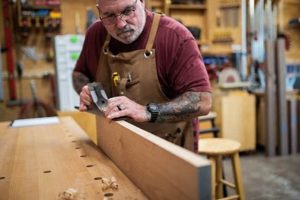
Artisanal craftsmanship forms an indispensable core within custom architectural woodwork and millwork manufacturing. This craft transcends mere technical execution, embodying a dedication to precision, detail, and the intrinsic properties of the materials employed. The cause-and-effect relationship is direct: superior craftsmanship yields elements of enhanced aesthetic value, structural integrity, and longevity. For instance, hand-carved moldings in a historic renovation project, meticulously replicating original designs, not only preserve historical accuracy but also imbue the space with a level of artistry unattainable through mechanized production alone. The significance of artisanal skill as a component stems from its ability to address complexities and nuances that automated processes cannot replicate, allowing for unique design expressions and problem-solving tailored to specific project challenges.
The practical application of this understanding manifests in numerous ways. Architects and designers, recognizing the value, actively seek out craftspeople with specialized skills, such as veneer matching, marquetry, or complex joinery techniques. These skills enable the creation of features that elevate the overall architectural design, transforming mundane spaces into showcases of refined artistry. Consider custom cabinetry in a high-end residential project, where precisely fitted dovetail joints and hand-rubbed finishes not only enhance the cabinet’s structural stability but also contribute significantly to its aesthetic appeal. Such details exemplify the tangible benefits of integrating artisanal expertise into the manufacturing process.
In conclusion, while technological advancements undoubtedly play a crucial role in modern woodworking, artisanal craftsmanship remains an essential element in custom architectural woodwork and millwork manufacturing. Its absence results in a diminished capacity to achieve true design excellence and personalized solutions. The challenge lies in preserving and promoting these traditional skills in an increasingly automated world, ensuring that the human touch continues to enrich the built environment. Understanding the symbiotic relationship between technology and craftsmanship is vital for unlocking the full potential of custom woodworking in architectural projects.
4. Design Integration
Design Integration, within the context of bespoke woodworking, represents the seamless incorporation of custom elements into the broader architectural scheme. This process involves a collaborative synergy between architects, designers, and woodworking professionals, ensuring that every custom-fabricated component harmonizes functionally and aesthetically with the surrounding environment. The absence of effective design integration often leads to disjointed and unsatisfactory outcomes, where custom elements appear as afterthoughts rather than integral components of the design. For instance, in a contemporary office building, a custom reception desk designed without careful consideration of the building’s overall aesthetic and flow may clash with the existing architectural style, undermining the intended visual impact.
Effective design integration demands early and consistent communication throughout the project lifecycle. Woodworking specialists must engage with the design team during the conceptual phase to offer insights regarding material selection, constructability, and potential cost efficiencies. The process typically involves detailed shop drawings, material samples, and finish mock-ups to ensure alignment between the designer’s vision and the capabilities of the woodworking artisans. For example, in a historical renovation project, precisely matching existing trim profiles and finishes requires close collaboration between the architect, the millwork provider, and historical preservation specialists. The degree of integration achieved directly impacts the quality and cohesion of the final product, affecting both its visual appeal and functional performance.
In conclusion, design integration serves as a linchpin in successful architectural woodworking projects. It transforms isolated custom elements into cohesive and impactful features that enhance the overall design narrative. The key lies in fostering open communication, embracing collaborative problem-solving, and recognizing the value each stakeholder brings to the table. Overcoming challenges associated with complex geometries, material compatibility, and historical accuracy requires a commitment to seamless design integration, resulting in built environments that are both aesthetically pleasing and functionally sound.
5. Sustainable Practices

The integration of sustainable practices into the creation of bespoke wooden elements is no longer a peripheral consideration but a core imperative. Responsible stewardship of natural resources, coupled with a commitment to minimizing environmental impact, directly influences the long-term viability of custom architectural woodworking and millwork manufacturing.
- Forest Stewardship Council (FSC) Certification
FSC certification represents a crucial mechanism for ensuring responsible forest management. The certification verifies that timber originates from forests managed to meet stringent environmental, social, and economic standards. For example, specifying FSC-certified wood for architectural millwork in a LEED-certified building contributes to earning points toward overall project sustainability goals. The implementation of FSC standards mitigates deforestation, protects biodiversity, and supports the rights of forest communities.
- Reclaimed and Salvaged Wood Utilization
The incorporation of reclaimed and salvaged wood into custom woodworking projects reduces demand for newly harvested timber. Reclaimed wood, sourced from deconstructed buildings, old barns, or fallen trees, possesses unique character and historical significance. The use of reclaimed wood diverts materials from landfills, reduces energy consumption associated with new lumber production, and contributes to a lower carbon footprint. For instance, crafting a conference table from salvaged heart pine timbers not only showcases the wood’s inherent beauty but also embodies principles of resource conservation.
- Low-VOC Finishes and Adhesives
Traditional wood finishes and adhesives often contain volatile organic compounds (VOCs), which are harmful pollutants that contribute to indoor air quality problems. Opting for low-VOC or VOC-free alternatives minimizes off-gassing and reduces the release of harmful chemicals into the environment. The use of water-based finishes or formaldehyde-free adhesives in custom cabinetry construction safeguards the health of building occupants and contributes to a healthier indoor environment. Compliance with regulations governing VOC emissions is essential for responsible woodworking practices.
- Waste Minimization and Recycling Programs
Implementing comprehensive waste minimization and recycling programs within woodworking facilities reduces the environmental impact of manufacturing processes. Optimizing cutting layouts, reusing offcuts, and recycling wood scraps minimizes waste generation. For example, collecting sawdust and wood shavings for use in composting or as fuel for biomass energy production diverts waste from landfills and reduces reliance on fossil fuels. Efficient resource management and responsible waste disposal are integral components of sustainable woodworking operations.
The multifaceted approach to sustainable practices within custom architectural woodwork and millwork manufacturing necessitates a holistic perspective. Integrating FSC-certified materials, utilizing reclaimed wood, employing low-VOC finishes, and implementing robust waste management programs collectively contribute to a more environmentally responsible and ethically sound industry. Acknowledging the interdependencies between these elements is vital for achieving meaningful and lasting progress toward sustainability goals.
6. Installation Expertise

The proficient installation of bespoke wooden elements is paramount to realizing the intended aesthetic and functional objectives within architectural projects. Expertise in this domain ensures that custom-fabricated components are integrated seamlessly into the building, preserving their integrity and maximizing their longevity.
- Precision Alignment and Leveling
Precise alignment and leveling are fundamental to a successful installation. Deviations from specified planes and levels can compromise the structural integrity of the element and detract from its visual appeal. For example, improperly aligned door frames may lead to operational issues, while unevenly installed paneling can create visual distortions. The use of laser leveling equipment and precise measuring techniques is essential for achieving accurate alignment and ensuring that the final product meets design specifications.
- Joinery and Fastening Techniques
Appropriate joinery and fastening methods are critical for securing custom woodworking elements to the building structure. The selection of fasteners must consider the type of wood, the substrate to which it is being attached, and the anticipated loads. Improperly selected or installed fasteners can result in structural failure or aesthetic blemishes. For instance, using drywall screws to attach heavy millwork to a plaster wall is likely to result in failure. Skilled installers understand the principles of wood movement and employ techniques that accommodate expansion and contraction, preventing warping and cracking.
- On-Site Finishing and Touch-Up
On-site finishing and touch-up are often necessary to address minor imperfections or damage that may occur during transportation or installation. Skilled installers possess the knowledge and tools to seamlessly blend repairs and apply protective coatings, ensuring a consistent and flawless finish. For example, scratches on a pre-finished cabinet can be carefully filled, sanded, and re-coated to match the surrounding surface. Expertise in color matching and finish application is crucial for maintaining the aesthetic integrity of the installed element.
- Protection and Preservation Measures
Implementing protective measures during installation safeguards the custom woodwork from damage. Covering finished surfaces with protective films, using padded equipment, and controlling dust and debris minimizes the risk of scratches, dents, and stains. Proper handling techniques prevent structural damage and preserve the integrity of the wood. For example, protecting newly installed wood flooring from foot traffic and construction debris prevents premature wear and tear. Meticulous attention to detail during installation ensures that the finished product is delivered in pristine condition.
The skillful execution of these facets of installation expertise is crucial for realizing the full potential of custom architectural woodwork and millwork manufacturing. The integration of precision alignment, appropriate joinery, on-site finishing, and protective measures ensures that the installed elements meet design specifications and provide lasting value within the architectural environment.
Frequently Asked Questions Regarding Custom Architectural Woodwork and Millwork Manufacturing
This section addresses prevalent inquiries concerning the design, fabrication, and application of bespoke woodworking solutions for architectural projects. The information provided aims to clarify industry practices and address common misconceptions.
Question 1: What distinguishes architectural woodwork from standard millwork?
Architectural woodwork denotes highly customized, often complex, and meticulously crafted wooden elements designed to integrate seamlessly with the architectural design of a building. Standard millwork typically refers to mass-produced, readily available items like doors, windows, and trim, with limited customization options.
Question 2: How is the cost of custom architectural woodwork determined?
Cost calculation involves several factors, including material selection (wood species, grade), design complexity, fabrication techniques (hand-carving, CNC machining), finish specifications, installation requirements, and project scale. Detailed cost breakdowns are typically provided in project proposals.
Question 3: What are the typical lead times associated with custom woodworking projects?
Lead times vary significantly based on project scope and complexity. Simple projects might require several weeks, whereas intricate, large-scale installations can span several months. Material availability, shop capacity, and finishing requirements also influence timelines. Communication with the selected manufacturing firm provides accurate estimations.
Question 4: How does one ensure the sustainability of custom woodworking projects?
Sustainability can be enhanced by specifying Forest Stewardship Council (FSC) certified wood, utilizing reclaimed or salvaged materials, employing low-VOC finishes and adhesives, and implementing responsible waste management practices throughout the manufacturing process. Documentation of these practices should be requested from the provider.
Question 5: What level of design detail is required when initiating a custom woodworking project?
While initial concepts can be broad, progressively detailed shop drawings are essential. These drawings must accurately represent all dimensions, joinery details, and hardware specifications. Collaboration with the manufacturing firm’s design team refines design details and ensures constructability.
Question 6: What considerations are crucial when selecting a provider for custom architectural woodworking and millwork?
Key considerations include the firm’s experience, portfolio showcasing relevant projects, fabrication capabilities (CNC machining, finishing), in-house design expertise, certifications (FSC), adherence to quality control standards, and references from previous clients. Thorough due diligence is recommended.
The successful execution of custom architectural woodworking projects hinges upon informed decision-making, clear communication, and a commitment to quality at every stage.
The subsequent conclusion will offer a summary of all points in this article.
Conclusion
The preceding exploration has illuminated the multifaceted nature of custom architectural woodwork and millwork manufacturing. From the foundational principles of precision engineering and strategic material sourcing to the nuanced aspects of artisanal craftsmanship, design integration, sustainable practices, and installation expertise, the creation of bespoke wooden elements demands a holistic approach. Successfully navigating the complexities inherent in this specialized field requires a thorough understanding of each component and a commitment to collaborative execution.
The pursuit of exceptional architectural design often necessitates the incorporation of unique and meticulously crafted wooden elements. As architectural trends continue to evolve and sustainability concerns gain prominence, the demand for skilled professionals and innovative techniques within custom architectural woodwork and millwork manufacturing will undoubtedly increase. Continued advancements in technology, coupled with a renewed appreciation for traditional craftsmanship, will shape the future of this vital industry, enabling the creation of increasingly sophisticated and environmentally responsible built environments.