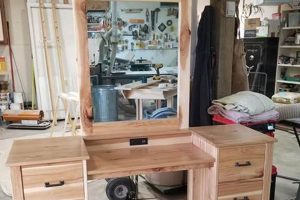
The creation of bespoke wooden objects and structures tailored to individual client specifications is a specialized field. This encompasses a broad range of projects, from crafting unique furniture pieces to designing and installing intricate architectural elements. Consider, for instance, the design and fabrication of a dining table built to exact dimensional requirements and stylistic preferences for a specific dining room.
The value of this discipline lies in its capacity to provide solutions that are not achievable through mass-produced alternatives. It offers a high degree of personalization, ensuring that the final product aligns precisely with the client’s vision and the intended environment. Historically, this level of craftsmanship represented the norm, evolving through generations of skilled artisans who honed their techniques and passed them down through apprenticeships. Today, it signifies a commitment to quality, durability, and aesthetic distinction.
Further discussion will elaborate on various aspects of this craft, including the selection of appropriate materials, the application of specific techniques, and the collaboration process between the artisan and the client to achieve optimal results.
Expert Guidance on Woodworking Excellence
The following points outline crucial considerations for achieving superior outcomes in bespoke woodworking projects.
Tip 1: Material Selection is Paramount. The choice of wood directly impacts the final product’s durability, aesthetics, and suitability for its intended purpose. Consult with specialists to determine the most appropriate species based on factors such as hardness, grain pattern, and environmental conditions.
Tip 2: Precise Measurements are Indispensable. Accurate measurements are foundational to the success of any woodworking endeavor. Employ calibrated measuring tools and double-check all dimensions to minimize errors and ensure seamless integration.
Tip 3: Invest in Quality Tools. While a comprehensive toolkit is not always necessary, prioritizing high-quality tools ensures precision and longevity. Select tools designed for specific tasks and maintain them meticulously.
Tip 4: Master Joinery Techniques. The strength and integrity of woodworking projects depend on the quality of the joinery. Explore various techniques, such as mortise and tenon, dovetail, and miter joints, and practice consistently to develop proficiency.
Tip 5: Proper Finishing Enhances Longevity. The application of appropriate finishes protects the wood from moisture, UV exposure, and wear and tear. Research different types of finishes, including varnishes, lacquers, and oils, and select one that complements the wood species and desired aesthetic.
Tip 6: Adherence to Safety Protocols. Woodworking involves the use of power tools and sharp implements, necessitating strict adherence to safety protocols. Always wear appropriate personal protective equipment and follow manufacturer’s instructions for operating machinery.
Tip 7: Consistent Workspace Organization. Maintaining a clean and organized workspace promotes efficiency and reduces the risk of accidents. Designate specific areas for different tasks and store tools and materials in designated locations.
Tip 8: Plan and Design Meticulously. Before commencing any woodworking project, create detailed plans and drawings that outline the design, dimensions, and construction methods. Thorough planning minimizes errors and ensures a successful outcome.
Adherence to these guidelines can significantly enhance the quality and longevity of woodworking projects.
Further exploration into the complexities of materials and joinery will provide additional insight.
1. Precision Craftsmanship

Precision craftsmanship constitutes a foundational element in specialized woodworking. This involves executing detailed designs with exceptional accuracy, requiring skilled application of techniques and adherence to stringent quality control measures. The direct effect of precision craftsmanship is manifested in the structural integrity, functional reliability, and aesthetic refinement of the final product. Without it, projects risk misalignment, instability, and a compromised overall appearance. An illustrative instance is the creation of intricate dovetail joints, where minute discrepancies can undermine the joint’s strength and visual appeal. This level of care becomes crucial in areas of form and function. An ill-fitting door, for example, undermines the look and function of the piece.
The practical significance of understanding the relationship between precision and quality lies in the realization that woodworking extends beyond mere assembly. It necessitates a deep understanding of material properties, tool proficiency, and meticulous attention to detail. A craftsman must anticipate potential challenges, such as wood movement due to environmental factors, and adapt their techniques accordingly. Successful application of precision craftsmanship enhances product durability, increases longevity, and ultimately contributes to long-term value.
In summary, precision craftsmanship is not merely an optional attribute but rather an indispensable requirement for woodworking excellence. Its mastery necessitates continuous learning, dedication to quality, and a profound respect for materials and techniques. The challenges include maintaining consistent accuracy across projects and adapting to the unique characteristics of each piece of wood. Understanding this connection is pivotal for achieving optimal results and delivering exceptional woodworking solutions.
2. Bespoke Design Solutions

Bespoke design solutions represent a core tenet within the realm of individualized woodworking. These solutions transcend conventional approaches, addressing unique requirements and aesthetic preferences through meticulously tailored designs. Their effectiveness is crucial in providing value. This involves the careful management of materials, the precision of workmanship, and the close client relationship throughout the design process.
- Functionality Optimization
Functionality optimization ensures that the final woodworking product aligns perfectly with its intended purpose. This may involve designing storage solutions with specific organizational needs in mind or creating furniture pieces tailored to the ergonomic requirements of the user. For instance, a custom-designed desk might incorporate adjustable height mechanisms and integrated cable management systems, catering to the specific needs of a home office.
- Spatial Adaptation
Spatial adaptation focuses on tailoring woodworking projects to the unique dimensions and characteristics of a given space. This could involve designing built-in cabinetry to maximize storage capacity in an irregularly shaped room or creating furniture pieces that complement the existing architectural style. Consider the example of designing custom bookshelves to fit within the alcoves of a historic home, preserving the building’s character while providing functional storage.
- Aesthetic Integration
Aesthetic integration ensures that woodworking projects harmonize with the client’s personal style and the overall aesthetic of the environment. This may involve selecting specific wood species, finishes, and hardware that complement existing decor or incorporating custom design elements that reflect the client’s individual tastes. As an illustration, one could custom-design a dining table with a unique inlay pattern that complements the client’s art collection.
- Material Innovation
Material innovation explores the use of unconventional materials and techniques to create unique and visually striking woodworking projects. This could involve incorporating reclaimed wood, exotic veneers, or alternative materials like metal or glass into the design. An example would be using reclaimed barn wood to create a rustic-chic headboard that incorporates integrated lighting and charging stations.
These facets of bespoke design solutions are integral to creating woodworking projects that are both functional and aesthetically pleasing, exceeding the expectations of those seeking truly individualized creations. Integration of design and material science can create new functions never before considered.
3. Premium Material Selection

The selection of premium materials constitutes a critical determinant in the quality and longevity of bespoke woodworking. Its direct impact on structural integrity, aesthetic appeal, and overall performance necessitates careful consideration within any specialized woodworking project. The choice of materials significantly influences the final product’s ability to withstand environmental factors, resist wear and tear, and retain its visual appeal over time. It is with this in mind, that premium material selection should be approached.
- Hardwood Durability
Hardwood species, such as oak, maple, and cherry, offer superior durability compared to softwood alternatives. Their density and inherent strength contribute to the structural stability and resistance to impact damage in furniture and architectural elements. For instance, a custom-built dining table crafted from solid oak is inherently more resistant to scratches and dents than one made from pine.
- Dimensional Stability
The dimensional stability of wood refers to its ability to resist changes in size and shape due to variations in moisture content. Premium hardwoods, properly dried and seasoned, exhibit greater dimensional stability, minimizing the risk of warping, cracking, or splitting over time. This is particularly critical in applications where precision and tight tolerances are essential, such as in the construction of fine cabinetry or musical instruments.
- Aesthetic Characteristics
Premium materials offer a wider range of aesthetic characteristics, including unique grain patterns, colors, and textures. These features contribute significantly to the visual appeal and perceived value of woodworking projects. For example, the distinctive grain patterns of walnut or the rich color of mahogany can elevate the aesthetic of a custom-built desk or credenza.
- Sustainability Considerations
Premium material selection can also encompass sustainability considerations, such as sourcing wood from responsibly managed forests or utilizing reclaimed lumber. These practices minimize environmental impact and promote ethical sourcing within the woodworking industry. Using reclaimed wood not only adds character and uniqueness to a project but also reduces the demand for newly harvested timber.
In summation, the deliberate selection of premium materials is integral to realizing the full potential of specialized woodworking endeavors. This approach not only enhances the product’s durability and aesthetic value but also aligns with responsible environmental practices. The use of premium materials translates directly to a higher-quality, longer-lasting result, justifying the investment for discerning clients seeking enduring value. This can also be said for reclaimed materials, depending on the market and location.
4. Durable Construction Methods

The application of durable construction methods directly influences the longevity and resilience of bespoke woodworking projects. These methods, integral to specialized woodworking practices, dictate a piece’s ability to withstand environmental stressors, physical wear, and the passage of time. Improperly executed joinery or inadequate finishing techniques, conversely, can lead to structural failures, diminished aesthetic appeal, and a significantly shortened lifespan. Consider, for example, a custom-built bookcase constructed with mortise-and-tenon joints versus one assembled with simple butt joints and fasteners. The former, employing a durable construction method, distributes stress more effectively, preventing racking and ensuring structural integrity over years of use. The latter, however, is prone to instability and eventual collapse under similar loads.
Durable construction encompasses several critical elements, including selecting appropriate joinery techniques, implementing robust frame construction, and applying protective finishes. Understanding wood species’ propertiessuch as grain direction, moisture content, and inherent strengthis paramount in selecting the correct construction approach. Further, the selection of appropriate adhesives and fasteners is essential for reinforcing joints and preventing separation. In the realm of furniture, durable frame construction often involves incorporating corner blocking and reinforcing members to distribute weight and prevent stress concentrations. Similarly, the application of multiple coats of a durable finishsuch as varnish or lacquerprotects the wood surface from moisture, UV exposure, and abrasion, preserving its appearance and structural integrity.
In summation, durable construction methods are not merely desirable attributes but essential requirements for ensuring the enduring quality and value of bespoke woodworking. The investment in time, expertise, and appropriate materials to implement these methods translates directly into increased product lifespan, reduced maintenance requirements, and enhanced customer satisfaction. This approach presents challenges that include mastering complex joinery techniques and staying abreast of advancements in materials and construction methodologies. However, the pursuit of durability remains a cornerstone of quality in specialized woodworking, directly reflecting the craftsman’s commitment to excellence.
5. Client Collaboration Process

Effective client collaboration forms a linchpin in the domain of specialized woodworking projects. This process, characterized by open communication and mutual understanding, directly influences the final product’s alignment with the client’s vision and functional requirements. The absence of robust client engagement can result in misinterpretations, design flaws, and ultimately, dissatisfaction with the delivered outcome. For instance, consider a scenario where a client commissions a custom entertainment center without clear specifications regarding the desired media storage capacity. In the absence of thorough consultation, the resulting unit may prove inadequate, necessitating costly modifications or a complete redesign. Therefore, a proactive and detailed collaboration process acts as a safeguard against such potential pitfalls, ensuring that the finished piece precisely meets the client’s needs.
The client collaboration process typically encompasses several key stages, commencing with initial consultations to ascertain the client’s preferences, functional requirements, and budgetary constraints. Subsequent stages involve design development, material selection, and the presentation of detailed plans and renderings for client approval. Throughout this iterative process, ongoing communication is essential to address any concerns, incorporate feedback, and ensure alignment between the client’s expectations and the craftsman’s interpretation. Moreover, this collaborative approach fosters a sense of shared ownership and investment in the project, strengthening the client-craftsman relationship and increasing the likelihood of a successful and satisfying outcome. Real-world applications include a furniture designer engaging with a client to establish the perfect dimensions for a bedroom closet to make the client happy with the result. The designer presented multiple designs to the client. In the end, the client picked what they liked best.
In summary, a well-structured client collaboration process is not merely a procedural formality but an indispensable element of specialized woodworking. Its effectiveness directly correlates with the degree to which the final product fulfills the client’s unique needs and expectations. While challenges may arise in managing client expectations, conveying technical concepts, or navigating design disagreements, prioritizing open communication, active listening, and a commitment to shared understanding are crucial for fostering a collaborative environment that yields exceptional results. The collaboration enables design creativity to make the client beyond their expectations.
6. Artisanal Finishing Touches
Artisanal finishing touches represent the culmination of the woodworking process, imbuing each piece with a unique character and refined aesthetic that distinguishes it from mass-produced alternatives. Within the context of specialized woodworking, these details elevate the product from a functional object to a work of art, showcasing the craftsman’s skill and attention to detail.
- Surface Preparation Excellence
Surface preparation is paramount to achieving a flawless finish. This involves meticulous sanding, filling imperfections, and ensuring a uniformly smooth surface before applying any finish. Real-world examples include the careful sanding of a custom-built table to eliminate any blemishes or unevenness, ensuring a smooth surface for the final varnish coat. Poor surface preparation can result in uneven finish application and diminished aesthetic appeal.
- Finishing Material Selection
The selection of appropriate finishing materials is crucial to achieving the desired aesthetic and functional properties. Different finishes, such as varnish, lacquer, oil, and wax, offer varying degrees of protection, sheen, and durability. A custom-built cabinet may benefit from a durable lacquer finish to withstand daily use and resist moisture, while a decorative wooden bowl may be enhanced with a natural oil finish that accentuates the wood grain. The choice of finish depends on the intended use and desired aesthetic of the piece.
- Application Techniques Mastery
Mastery of application techniques is essential for achieving a professional-grade finish. This involves understanding the proper application methods for different finishes, including brushing, spraying, and wiping. Applying a varnish using a brush requires precise control to avoid brush strokes and ensure a uniform coating, while spraying a lacquer requires careful setup and technique to achieve a smooth, even finish. Proper application techniques ensure optimal finish performance and aesthetic appeal.
- Hand-Applied Detailing
Hand-applied detailing, such as distressing, glazing, and hand-rubbed finishes, adds unique character and depth to woodworking pieces. These techniques involve the skillful manipulation of finishing materials to create visual interest and enhance the overall aesthetic. For example, applying a glaze to the crevices of a carved wooden piece can highlight the details and create a sense of depth, while distressing a piece can impart a rustic or antique appearance. Hand-applied detailing demonstrates the craftsman’s artistry and attention to detail.
These artisanal finishing touches, when meticulously executed, contribute significantly to the value and aesthetic appeal of specialized woodworking projects. They represent the culmination of the craftsman’s skill and dedication, transforming functional objects into enduring works of art. Furthermore, it enables opportunities to innovate designs for custom builds for specialized purposes.
7. Timeless Aesthetic Value
Timeless aesthetic value, in the context of specialized woodworking, represents the enduring appeal and enduring relevance of design choices that transcend fleeting trends. It signifies a commitment to principles of proportion, harmony, and material integrity that resonate across generations. Within this framework, the creation of custom pieces is inextricably linked to the pursuit of lasting aesthetic merit. For example, crafting a dining table from sustainably sourced black walnut, employing classic joinery techniques, and finishing it with a hand-rubbed oil finish will create a piece that remains visually appealing and functionally sound for decades to come. The cause is the pursuit of fundamental design principles; the effect is an object that retains its beauty and utility over time. The absence of timeless aesthetic value in specialized woodworking can result in pieces that appear dated or out of place within a relatively short timeframe.
Practical application of this concept involves careful consideration of design elements that have consistently demonstrated enduring appeal. This includes employing natural materials, adhering to established design proportions, and avoiding excessive ornamentation or trendy details. Furniture designs rooted in Shaker or Mid-Century Modern principles, for instance, often exhibit a timeless quality due to their emphasis on simplicity, functionality, and clean lines. Understanding the interplay between design choices and their long-term aesthetic impact allows craftsmen to create pieces that not only meet the immediate needs of their clients but also become cherished heirlooms passed down through generations.
In conclusion, the pursuit of timeless aesthetic value constitutes a cornerstone of specialized woodworking. This approach, while demanding a deep understanding of design principles and a commitment to quality materials, yields pieces that offer enduring beauty and relevance. The challenge lies in resisting the allure of fleeting trends and adhering to design fundamentals that have consistently proven their lasting appeal. Ultimately, the creation of woodworking pieces that embody timeless aesthetic value represents a testament to the craftsman’s skill, vision, and commitment to enduring quality.
Frequently Asked Questions Regarding Bespoke Woodworking Services
The following addresses common inquiries concerning the nature, scope, and benefits associated with custom woodworking commissions.
Question 1: What distinguishes custom woodworking from mass-produced furniture?
Custom woodworking entails the creation of pieces tailored to individual client specifications, encompassing unique dimensions, materials, and design aesthetics. Mass-produced furniture, conversely, adheres to standardized designs and manufacturing processes, offering limited customization options.
Question 2: How does the pricing of custom woodworking compare to that of retail furniture?
Pricing for custom woodworking projects is generally higher than that of mass-produced retail furniture, reflecting the individualized design, craftsmanship, material quality, and limited production scale involved. The investment, however, yields a unique and durable product designed to meet specific needs and preferences.
Question 3: What types of wood are typically used in custom woodworking projects?
A wide range of wood species can be employed in custom woodworking, depending on the desired aesthetic, functional requirements, and budget. Common choices include hardwoods such as oak, maple, cherry, and walnut, as well as select softwoods like pine and cedar. The selection process takes into account factors such as grain pattern, color, durability, and dimensional stability.
Question 4: How long does a custom woodworking project typically take to complete?
The timeframe for completing a custom woodworking project varies significantly based on the complexity of the design, the availability of materials, and the craftsman’s workload. Simple projects may be completed within a few weeks, while more intricate commissions can require several months. A detailed project timeline is typically provided during the initial consultation phase.
Question 5: Can clients be involved in the design process?
Client involvement is integral to the custom woodworking process. Skilled craftsmen typically collaborate closely with clients throughout the design phase, soliciting their input on design preferences, functional requirements, and material choices. This collaborative approach ensures that the final product aligns precisely with the client’s vision.
Question 6: What warranty or guarantee is offered on custom woodworking projects?
The availability of a warranty or guarantee on custom woodworking projects is subject to the specific terms offered by the craftsman or woodworking firm. A written contract outlining the scope of the warranty, coverage period, and any limitations is standard practice.
In summary, custom woodworking presents a bespoke solution for individuals seeking high-quality, uniquely designed pieces crafted to exacting specifications.
The next section will delve into the various style selections available.
Conclusion
This exposition has illuminated the diverse facets of bamco custom woodworking, underscoring the pivotal role of precision craftsmanship, tailored design solutions, premium materials, durable construction, collaborative client engagement, meticulous finishing, and timeless aesthetic principles. The integration of these elements culminates in woodworking pieces that transcend mere functionality, embodying enduring value and artistic expression.
The pursuit of excellence in bespoke woodworking demands a steadfast commitment to quality, innovation, and client satisfaction. As design trends evolve and technological advancements emerge, bamco custom woodworking remains steadfast, promising a future where traditional artistry converges with modern ingenuity to create unparalleled woodworking solutions.

![Unique Acorn Custom Woodworking: [Your City] Designs | Step-by-Step Guides, Tools & Inspiration to Build Beautiful Wooden Decor on a Budget](https://woodfromhome.com/wp-content/uploads/2026/03/th-492-300x200.jpg "Unique Acorn Custom Woodworking: [Your City] Designs Step-by-Step Guides, Tools & Inspiration to Build Beautiful Wooden Decor on a Budget")