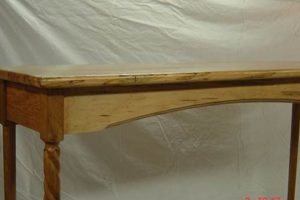
The creation of bespoke wood products, tailored to specific client needs and design specifications, is a specialized craft. This service encompasses the design, fabrication, and installation of unique furniture, cabinetry, and architectural elements. An example includes crafting a precisely fitted library bookcase with intricate carvings to complement an existing home aesthetic.
The importance of this specialized field lies in its ability to provide personalized solutions unattainable with mass-produced items. Benefits include maximizing space utilization, achieving a distinct aesthetic expression, and incorporating high-quality materials for enhanced durability. Historically, such craftsmanship has been a hallmark of fine homes and prestigious institutions, reflecting a commitment to quality and individuality.
This introduction sets the stage for a deeper exploration of the aspects related to bespoke woodworking projects, which include project planning, material selection, the intricacies of the fabrication process, and considerations for installation and finishing.
Guidance on Commissioning Custom Woodwork
The following guidelines are provided to assist individuals and organizations seeking to engage in the commissioning of bespoke woodworking projects. Careful consideration of these factors can contribute to a successful and satisfying outcome.
Tip 1: Define Project Scope Clearly: Establish precise requirements for the project. Detail dimensions, functionalities, and desired aesthetic attributes upfront. This clarity minimizes potential misunderstandings and rework.
Tip 2: Establish a Realistic Budget: Custom woodworking involves skilled labor and potentially rare or high-quality materials. A comprehensive budget should account for design, materials, fabrication, finishing, and installation costs.
Tip 3: Research and Select a Qualified Craftsman: Review portfolios, seek references, and assess the craftsman’s expertise relevant to the project’s specific demands. Verify certifications and insurance as applicable.
Tip 4: Insist on Detailed Design Documentation: Request thorough drawings, specifications, and material samples. These documents serve as a reference point throughout the project’s lifecycle and provide a basis for quality control.
Tip 5: Maintain Open Communication: Regular dialogue between the client and the craftsman is crucial. Addressing concerns promptly and providing timely feedback ensures the project aligns with expectations.
Tip 6: Address Finishing and Installation Requirements: Clarify expectations regarding finishes, hardware, and installation procedures. These elements significantly impact the overall aesthetic and functionality of the completed piece.
Tip 7: Document All Agreements: Formalize all understandings, including project scope, budget, timelines, and payment schedules, in a written contract. This provides legal protection for both parties.
Careful adherence to these guidelines facilitates a smooth commissioning process, ensuring the delivery of high-quality, bespoke woodwork that meets or exceeds expectations. These steps represent due diligence in securing a valuable, enduring addition to a space.
The next section will address the long-term care and maintenance of custom woodwork, ensuring its preservation for generations to come.
1. Precision Craftsmanship

Precision craftsmanship is paramount within specialized woodworking, directly influencing the quality, longevity, and aesthetic appeal of the final product. Its mastery separates exceptional work from the commonplace and ensures structural integrity in custom designs.
- Dimensional Accuracy
Dimensional accuracy refers to the exactness in measurements and adherence to specified dimensions. In specialized woodworking, this entails utilizing precision tools and techniques to ensure that each component aligns precisely with the design blueprint. For example, a custom-built drawer must fit seamlessly within its frame, requiring tolerances within fractions of an inch. Imperfect dimensional accuracy results in misaligned joints, structural weaknesses, and compromised aesthetics.
- Joinery Mastery
Joinery mastery involves the art and science of connecting wood pieces to form a unified structure. Traditional and modern joinery techniques, such as dovetail joints, mortise-and-tenon joints, and mitered corners, demand precision in execution. A well-executed joint provides strength, stability, and aesthetic appeal. In specialized woodworking, selecting the appropriate joinery method and executing it flawlessly is critical to the durability and longevity of the piece.
- Surface Preparation and Finishing
Surface preparation and finishing are crucial steps that directly impact the final appearance and protection of the wood. Precision craftsmanship in this phase involves meticulous sanding, smoothing, and application of finishes. This process enhances the wood’s natural beauty, protects it from environmental factors, and contributes to its tactile quality. A flawlessly finished surface demonstrates attention to detail and elevates the overall perception of quality in specialized woodworking.
- Tool Maintenance and Sharpening
The ability to maintain and sharpen tools to their optimal condition is essential for precision craftsmanship. Sharp, well-maintained tools allow for clean cuts, smooth surfaces, and accurate joinery. In specialized woodworking, investing in quality tools and dedicating time to their upkeep is a hallmark of a skilled craftsman. The results are immediately evident in the precision and quality of the work produced.
The outlined aspects of precision craftsmanship are not isolated skills but rather interconnected elements that contribute to the overall excellence within specialized woodworking. Each component, from dimensional accuracy to tool maintenance, works in concert to ensure that the final product meets the highest standards of quality and reflects the dedication and skill of the craftsman. Specialized woodworking emphasizes these details as fundamental to its value proposition.
2. Bespoke Design

Bespoke design is the cornerstone of specialized woodworking, defining its departure from mass-produced alternatives. The term signifies a design process entirely tailored to the client’s unique requirements, preferences, and spatial constraints. The impact of bespoke design on specialized woodworking is causal: it dictates the form, function, and aesthetic qualities of the finished product. Without a personalized design, the woodworking remains standardized, lacking the distinguishing features of a tailored creation. Consider the instance of a homeowner commissioning a dining table to precisely fit a non-standard alcove and complement an existing art collection. The design process involves detailed consultations, precise measurements, and material selections that reflect the homeowner’s vision and lifestyle. A store-bought table could never achieve this level of integration and personalization.
The importance of bespoke design as a component of specialized woodworking is underscored by its ability to address specific functional needs and aesthetic desires. It allows for the creation of pieces that maximize space utilization, incorporate unique storage solutions, or feature intricate ornamentation that reflects the client’s personal taste. Practical applications extend to commercial settings, where bespoke reception desks or conference tables can reinforce a company’s brand identity and create a welcoming atmosphere for clients. Understanding this connection is practically significant because it enables clients to articulate their needs effectively, craftsmen to translate those needs into tangible designs, and ensures the final product aligns perfectly with the intended purpose and environment.
In summary, bespoke design and specialized woodworking are inextricably linked. The former serves as the driving force behind the latter, transforming raw materials into functional art that reflects individual expression. The key challenge lies in effective communication and collaboration between the client and the craftsman to ensure the design accurately captures the client’s vision and translates into a structurally sound and aesthetically pleasing piece. This understanding highlights the value of specialized woodworking in creating enduring, personalized solutions that enrich the spaces they inhabit.
3. Material Sourcing
Material sourcing forms a crucial component within the context of specialized woodworking. The selection of appropriate materials directly influences the durability, aesthetic appeal, and overall value of the final product. Ethical considerations and sustainability practices are also increasingly relevant within this aspect of the craft. The origin and quality of materials dictate the success of any woodworking endeavor.
- Wood Species Selection
The choice of wood species directly impacts the functional and aesthetic properties of a custom woodworking project. Different wood types exhibit varying levels of hardness, grain patterns, and resistance to moisture. For example, cherry wood is often selected for its rich color and smooth texture in fine furniture, while oak is preferred for its strength and durability in structural elements. The correct wood selection ensures longevity and appropriate aesthetic for intended use. The properties of each wood type influences design and execution of the project.
- Veneer and Laminate Options
Veneers and laminates offer alternatives to solid wood, providing cost-effective solutions or access to rare and exotic wood grains. These materials consist of thin layers of wood or synthetic materials applied to a substrate, such as plywood or MDF. They provide stability and uniformity while offering the appearance of solid wood at a lower cost. The selection of high-quality veneers and laminates is crucial to ensure durability and prevent delamination or damage over time. These choices allows designer a larger flexibility on the raw material to be selected
- Hardware and Fastenings
The hardware and fastenings used in a woodworking project are integral to its structural integrity and functionality. Hinges, drawer slides, screws, and bolts must be selected based on their strength, durability, and compatibility with the chosen wood species. High-quality hardware ensures smooth operation and prevents premature wear or failure. The material and finish of the hardware also contribute to the overall aesthetic of the finished piece. This selection is critical for the proper functionality of the final work.
- Finishes and Adhesives
The selection of appropriate finishes and adhesives is essential for protecting the wood and ensuring its long-term preservation. Finishes provide a protective barrier against moisture, UV radiation, and wear, while adhesives bond wood components together securely. The choice of finishes and adhesives must consider the intended use of the project, as well as its aesthetic requirements. Non-toxic, environmentally friendly options are increasingly preferred to minimize health and environmental impacts. These final decisions are part of the long-term quality of the work.
These facets of material sourcing underscore its central role within specialized woodworking. From the selection of wood species to the application of finishes, each decision contributes to the quality, durability, and aesthetic value of the final product. A comprehensive approach to material sourcing, encompassing both functional and ethical considerations, is essential for achieving exceptional results and ensuring the long-term satisfaction of clients. Each individual section is important to the success of the entire piece.
4. Client Collaboration
Client collaboration is not merely a procedural step but a foundational element in specialized woodworking projects. This interaction directly shapes the outcome, determining the degree to which the final product fulfills the client’s needs and reflects their vision. Without effective client collaboration, even the most technically proficient woodworking risks falling short of expectations. The effect of this partnership is manifest: it transforms a craftsman’s skill into a personalized solution. An illustration of this dynamic is a business commissioning custom shelving for a retail space. The success relies on continuous dialogue to accommodate evolving inventory needs and customer flow, features that are unlikely to be considered in a vacuum.
The significance of this collaboration extends beyond aesthetic preferences. It encompasses functional considerations such as ergonomics, accessibility, and integration with existing architectural elements. Real-world examples include designing a custom kitchen for a client with mobility limitations, necessitating adjustments to countertop heights, cabinet configurations, and hardware selection. In such cases, client input is critical to ensure the design meets specific accessibility requirements and enhances the user’s daily life. The practical impact of this understanding allows woodworking professionals to adapt to diverse client needs and deliver solutions that improve the quality of life for those they serve.
In summary, client collaboration is more than a courtesyit is an indispensable element in specialized woodworking. It ensures that the final product is not only aesthetically pleasing but also functional, practical, and aligned with the client’s individual needs and vision. The challenge is to cultivate open, transparent communication channels, manage expectations, and translate client ideas into tangible design solutions. This approach strengthens client relationships and ultimately enhances the reputation and success of specialized woodworking businesses.
5. Space Optimization
Space optimization is intrinsically linked to specialized woodworking projects. This concept emphasizes the efficient and effective use of available area through tailored design and construction. Custom woodworking, by its nature, addresses specific spatial challenges and maximizes functionality in ways that standard, mass-produced furniture often cannot. The cause-and-effect relationship is clear: limited or awkwardly shaped spaces necessitate custom solutions to avoid wasted area and ensure usability. An example is a small urban apartment where a custom-built, wall-mounted desk and shelving unit can transform an unused corner into a productive workspace. This approach is in contrast to freestanding furniture that may occupy excessive floor space without fully utilizing vertical area.
The importance of space optimization as a component of specialized woodworking is underscored by its ability to increase storage capacity, improve workflow, and enhance the overall aesthetic appeal of a space. Custom-built cabinetry in kitchens, for instance, can be designed to accommodate specific appliances and cooking utensils, maximizing counter space and minimizing clutter. In retail environments, custom display cases can be tailored to showcase products in an organized and visually appealing manner, optimizing customer engagement and sales. This focus on tailored solutions distinguishes specialized woodworking from generic alternatives, offering clients a higher degree of control and personalization.
In summary, space optimization is a critical consideration in specialized woodworking, driving design choices and ensuring that finished products are both functional and aesthetically appropriate for their intended environment. The challenge lies in accurately assessing spatial constraints, understanding client needs, and translating these factors into efficient and elegant design solutions. This understanding allows woodworking professionals to provide value beyond mere furniture creation, offering clients tailored solutions that enhance the usability and enjoyment of their spaces.
6. Installation Expertise

Installation expertise represents the crucial final stage in bespoke woodworking projects. The proper installation of custom-crafted pieces is as vital to the overall success as the design and fabrication processes. Errors during installation can compromise the structural integrity, aesthetic appeal, and functionality of even the most meticulously crafted items.
- Precision Alignment and Leveling
Precise alignment and leveling are foundational to a successful installation. Cabinets, shelving units, and other built-in elements must be perfectly aligned and leveled to ensure proper functionality and prevent undue stress on the structure. Incorrect alignment can lead to uneven weight distribution, binding drawers or doors, and an aesthetically displeasing appearance. Precision instruments, such as laser levels and digital inclinometers, are frequently employed to achieve the required accuracy. The alignment and leveling dictates the proper use of the item being installed.
- Secure Fastening Techniques
Secure fastening techniques are essential for ensuring the stability and longevity of installed woodworking. Appropriate fasteners, such as screws, bolts, and anchors, must be selected based on the weight and structural requirements of the piece, as well as the composition of the wall or floor to which it is being attached. Improper fastening can result in sagging, instability, or even complete detachment of the installed element. This is a serious matter of structural integrity.
- Seamless Integration with Existing Structures
Seamless integration with existing structures requires careful planning and execution. Custom woodworking installations often involve integrating new elements with existing walls, floors, and ceilings. This may necessitate modifications to existing structures, such as electrical wiring or plumbing, to accommodate the new installation. A skilled installer will possess the knowledge and expertise to perform these modifications safely and efficiently, ensuring a cohesive and functional result. An example might include running new electrical to a bookshelf that has lighting built in.
- Mitigation of Environmental Factors
Mitigation of environmental factors involves accounting for the effects of humidity, temperature, and other environmental conditions on the installed woodworking. Wood expands and contracts with changes in humidity, which can lead to warping, cracking, or joint failure. A skilled installer will employ techniques to minimize these effects, such as allowing for expansion gaps and applying appropriate sealants and finishes. This helps to ensure the long-term stability and appearance of the installed piece. The environmental impacts need to be accounted for, even at installation time.
These factors underscore the importance of installation expertise in specialized woodworking. Proper installation is not merely a matter of attaching a piece to a wall; it requires a deep understanding of structural principles, environmental factors, and the specific characteristics of the materials being used. Competent installation ensures that custom woodworking projects not only meet aesthetic expectations but also provide lasting functionality and value.
7. Durable Finishes
The implementation of durable finishes represents a critical step in specialized woodworking. These coatings safeguard wood surfaces from environmental stressors, physical wear, and chemical exposure, thereby prolonging the lifespan and maintaining the aesthetic integrity of custom-crafted pieces. The application of a durable finish, thus, has a direct, causal relationship with the longevity and visual appeal of woodworking projects. Neglecting this aspect can lead to premature degradation, necessitating costly repairs or replacements. An illustrative example includes the use of a catalyzed varnish on a custom-built kitchen island; this finish resists water damage, scratches, and staining from common household substances, ensuring the island remains functional and attractive for years.
The importance of durable finishes as a component of specialized woodworking is further underscored by their ability to enhance the inherent beauty of the wood. Finishes can accentuate the grain patterns, deepen the color, and create a desired sheen, ranging from matte to high-gloss. Practical applications extend to various settings, including residential, commercial, and institutional environments. For instance, a durable, UV-resistant finish on exterior doors and window frames protects the wood from sun damage, preventing fading and warping. This understanding has real-world relevance, because it allows stakeholders to properly select and maintain their custom wood pieces. It improves the long-term success and preserves the value of these items.
In summary, durable finishes are essential for preserving the value and extending the lifespan of custom woodworking. Selecting appropriate coatings, coupled with proper application techniques, presents a challenge to woodworking professionals, requiring knowledge of material science and environmental factors. By prioritizing durable finishes, custom woodworking projects can withstand the test of time, offering lasting beauty and functionality.
Frequently Asked Questions
The following questions address common inquiries regarding commissioned woodworking projects. The responses are designed to provide clarity and assist in informed decision-making.
Question 1: What factors influence the cost of bespoke woodwork?
The cost is determined by several variables including: material selection (species, grade, and sourcing), design complexity (intricacy of joinery and ornamentation), project size, finishing requirements (type and number of coats), and installation demands (site conditions and accessibility). Detailed project specifications allow for accurate cost estimation.
Question 2: How long does a typical custom woodworking project take?
Project duration varies significantly depending on scope and complexity. A simple piece, such as a small table, may take several weeks. A complex, multi-component installation, such as a custom kitchen, can extend to several months. Realistic timelines are established during the initial project planning phase.
Question 3: What types of wood are best suited for different applications?
Wood selection depends on functional and aesthetic requirements. Hardwoods like oak and maple are durable and suitable for high-wear surfaces. Softwoods like pine and cedar are more cost-effective for less demanding applications. Exotic woods offer unique aesthetic qualities but may require specialized handling.
Question 4: How can one ensure the longevity of custom woodworking?
Longevity is achieved through: proper material selection (appropriate for intended use and environment), quality construction techniques (durable joinery and robust framework), protective finishing (resistant to moisture and UV radiation), and regular maintenance (cleaning and refinishing as needed). Adherence to these principles extends the lifespan of the piece.
Question 5: What level of design input is expected from the client?
Client input is integral to the success of custom woodworking. The level of involvement varies based on client preferences and design expertise. Clients are encouraged to provide detailed specifications, inspiration images, and feedback throughout the design process. Collaborative design ensures the final product aligns with expectations.
Question 6: How does one assess the qualifications of a woodworking professional?
Qualifications can be evaluated by reviewing portfolios (demonstrating craftsmanship and design capabilities), checking references (verifying client satisfaction and professionalism), assessing experience (years in the trade and types of projects completed), and confirming certifications (industry-recognized credentials). Thorough due diligence is recommended.
These FAQs provide a foundational understanding of specialized woodworking commissions. Further inquiries should be directed to qualified professionals for specific project guidance.
The subsequent section will explore case studies of successful specialized woodworking projects, illustrating the principles discussed herein.
Concluding Remarks
The preceding discussion has elucidated the multifaceted nature of roma custom woodworking, emphasizing the integral role of precision craftsmanship, bespoke design, judicious material sourcing, client collaboration, spatial optimization, installation expertise, and durable finishes. The synthesis of these elements culminates in the creation of unique, high-value products tailored to specific needs.
The continued appreciation for specialized woodworking reflects a broader societal recognition of the enduring value of craftsmanship, personalization, and quality. Individuals and organizations seeking to invest in enduring, functional art should carefully consider the principles outlined herein, thereby ensuring a successful project outcome and a lasting legacy of skilled artistry.