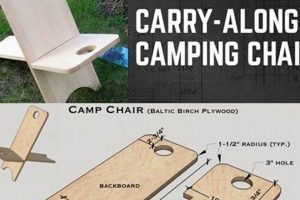
The creation of functional and decorative items from wood using rudimentary tools and techniques characterizes a specific approach to woodworking. This method often involves sourcing materials directly from the environment and employing hand-powered tools like axes, saws, and knives. An example of this practice is the construction of a simple stool or bowl utilizing only a felled tree and hand tools for shaping.
This style of crafting offers several advantages, including a connection to historical practices, a reliance on sustainable material sourcing, and the development of resourcefulness. It allows for a deeper appreciation of the materials and the labor involved in transforming raw resources into useful objects. Historically, this constituted the primary method for producing essential household items and structures.
The subsequent sections will explore specific techniques used in forming objects from wood with limited resources, including methods for wood selection, tool usage, and joinery, demonstrating how functional and aesthetically pleasing results can be achieved through careful planning and execution.
Essential Guidance for Working with Basic Woodcrafting
The following guidance provides fundamental insights for approaching woodcrafting with limited resources, emphasizing efficiency, safety, and sustainable practices.
Tip 1: Material Selection is Critical. Prioritize wood types that are locally abundant and easily workable with hand tools. Softwoods like pine or cedar are often suitable choices for initial projects.
Tip 2: Tool Maintenance Ensures Safety and Efficiency. Sharpen cutting tools regularly. A dull axe or knife requires more force, increasing the risk of injury and reducing the precision of cuts.
Tip 3: Practice Basic Carving Techniques. Develop proficiency in essential cuts such as push cuts, pull cuts, and controlled chopping. Consistent practice improves accuracy and reduces the likelihood of errors.
Tip 4: Employ Natural Fasteners and Joinery. Explore traditional joinery methods that do not require metal fasteners. Mortise and tenon, dovetail, and lap joints can provide robust connections.
Tip 5: Utilize Green Wood When Possible. Green wood, or freshly cut wood, is easier to work with hand tools than seasoned wood. Be aware of the increased shrinkage as the wood dries.
Tip 6: Minimize Waste Through Careful Planning. Plan projects carefully to minimize material waste. Utilize offcuts for smaller components or future projects.
Tip 7: Prioritize Safety. Wear appropriate protective gear, including eye protection and gloves. Maintain a clear and stable work area to prevent accidents.
Tip 8: Start Simple. Begin with small, manageable projects such as spoons, bowls, or simple stools. Progress to more complex projects as skills and confidence increase.
Adhering to these guidelines promotes successful outcomes, reduces potential hazards, and enhances appreciation for the craft. By focusing on resourcefulness and careful execution, one can create functional and aesthetically pleasing objects from wood.
The subsequent sections will delve deeper into specific techniques and considerations for advanced work within this area.
1. Tool Selection

The selection of tools directly determines the feasibility and outcome of work within a basic woodcrafting context. Due to the absence of power machinery, reliance shifts to hand tools such as axes, saws, chisels, and knives. The capabilities and limitations of these tools fundamentally shape the scale, complexity, and aesthetic qualities of the resulting objects. For instance, crafting a dugout canoe necessitates a robust axe for felling the tree and adzes for hollowing the log, whereas a simple wooden spoon requires only a carving knife and perhaps a small gouge. The chosen toolset therefore imposes constraints on the scope of potential projects.
In a practical context, an inadequate or poorly maintained tool significantly increases labor and reduces the quality of the finished piece. A dull axe, for example, makes felling and splitting wood arduous and unsafe. Similarly, a poorly shaped knife compromises the precision needed for intricate carving. Historical examples reveal that indigenous cultures developed specialized tools adapted to local materials and project requirements. The Inuit ulu knife, designed for skinning and butchering, exemplifies a tool optimized for specific tasks, demonstrating that appropriate tool selection is crucial for efficient and effective work.
In summary, the selection of tools profoundly impacts the realization of these works. A carefully chosen and well-maintained set of hand tools enables precision, efficiency, and safety, thereby expanding the possibilities within the craft. Conversely, inadequate or inappropriate tools lead to increased effort, reduced quality, and potential hazards. Understanding this relationship is foundational for success within the context of resource-limited woodworking, especially in the execution of specific projects.
2. Wood Source

The origin and characteristics of wood are critical determinants in the success of crafting basic woodcrafting objects. The direct correlation between wood source and project viability stems from material properties such as density, grain structure, and moisture content. For instance, utilizing readily available softwood like pine in regions where hardwoods are scarce directly influences the techniques and designs achievable. Selecting appropriate wood ensures that the raw material aligns with the limitations of hand tools and resource constraints. Examples include the use of willow branches for basketry or cedar logs for constructing shelters in regions where these materials are abundant, showcasing resourcefulness derived from local ecosystems.
The selection of wood also dictates the durability and longevity of the finished product. In contexts where preservation methods are rudimentary, choosing rot-resistant species such as cypress or cedar becomes paramount for outdoor applications like fencing or watercraft. Furthermore, considerations of ethical sourcing and sustainability become integral when practicing this craft. Harvesting deadfall or utilizing salvaged wood minimizes environmental impact and adheres to principles of responsible resource management. Documented cases of indigenous communities sustainably managing forests for generations demonstrate a long-term approach to wood sourcing that balances immediate needs with ecological preservation.
In summary, the wood source substantially influences the technical, functional, and ethical dimensions of basic woodcrafting. Thoughtful consideration of material properties, local availability, and sustainability practices ensures that projects are both feasible and environmentally sound. The intrinsic relationship between resource and craft underscores the importance of understanding the natural world and employing responsible resource management strategies within woodcrafting endeavors, furthering design and structural integrity.
3. Joint Simplicity

Joint simplicity constitutes a defining characteristic within the scope of basic woodcrafting, largely dictated by the limitations of available tools and resources. In contrast to modern woodworking techniques reliant on complex machinery and manufactured fasteners, basic woodcrafting emphasizes joinery methods achievable with minimal tooling. This restriction imposes a direct effect on design and structural possibilities. Consequently, robust yet straightforward joints, such as mortise and tenon, dovetail, and lap joints, are frequently employed due to their inherent strength and relative ease of execution with hand tools. The efficacy of these simple joints is demonstrable in historical examples, such as timber-framed structures built centuries ago, which continue to stand due to the enduring strength of their mortise and tenon joinery.
The importance of joint simplicity extends beyond mere practicality; it also influences the aesthetic and functional aspects of the crafted object. The deliberate exposure of joinery, such as visible dovetails or pegged mortise and tenon joints, often serves as a design element, highlighting the handcrafted nature of the piece. Moreover, understanding the limitations and strengths of different simple joint types directly impacts project design. A chair constructed using only lap joints, for instance, necessitates a design that accounts for the inherent weakness of this joint under certain stress conditions. Similarly, the construction of a wooden bowl utilizing only basic carving tools and a simple lap joint requires careful consideration of wood grain orientation to prevent splitting.
The reliance on joint simplicity in basic woodcrafting presents challenges, particularly in achieving structural integrity comparable to that of modern techniques. However, it simultaneously fosters resourcefulness and a deeper understanding of material properties. The practical significance of this understanding lies in the ability to create functional and aesthetically pleasing objects using only the most basic tools and readily available materials. This knowledge provides a valuable link to historical woodworking traditions and promotes sustainable practices by minimizing reliance on manufactured components. The core lies in that joinery simplicity is not merely a constraint, it’s a catalyst for creativity and ingenuity when engaging in rudimentary woodworking ventures.
4. Sustainable Practices
The integration of sustainable practices is intrinsic to the nature of basic woodcrafting. Due to its reliance on natural materials and limited tooling, this craft possesses an inherent alignment with ecological principles. Prioritizing sustainable approaches ensures the longevity of both the craft and the resources upon which it depends.
- Responsible Wood Sourcing
Sustainable basic woodcrafting necessitates careful consideration of wood origins. Harvesting should prioritize deadfall, storm-damaged trees, or selectively thinned woodlots. Avoiding the clear-cutting of mature forests preserves biodiversity and ecological integrity. Local sourcing minimizes transportation-related carbon emissions. Examples include utilizing downed branches for small-scale projects or partnering with local landowners to sustainably harvest timber.
- Tool Maintenance and Longevity
The hand tools used in basic woodcrafting, such as axes, saws, and knives, require meticulous maintenance for optimal performance and longevity. Sharpening, cleaning, and proper storage extend the lifespan of these tools, reducing the need for replacement. This practice minimizes resource consumption and waste associated with manufacturing new tools. Furthermore, the repair and restoration of vintage tools promote a circular economy and preserve historical craftsmanship.
- Minimizing Material Waste
Efficient utilization of wood is crucial in sustainable basic woodcrafting. Careful planning and precise execution minimize material waste. Offcuts can be repurposed for smaller projects, fuel, or compost. Sawdust and wood shavings can be used for animal bedding, mulch, or as a component in compost mixes. Avoiding unnecessary waste reduces the demand for new materials and minimizes environmental impact.
- Non-Toxic Finishes and Preservatives
Traditional basic woodcrafting often employed natural finishes and preservatives derived from plant-based oils, beeswax, or resins. These materials are biodegradable and non-toxic, minimizing environmental pollution and health risks associated with synthetic coatings. Examples include linseed oil finishes for protecting wooden tools or beeswax polishes for furniture. The use of these alternatives aligns with sustainable principles and promotes a healthier environment.
Adherence to these facets of sustainability ensures that basic woodcrafting remains a responsible and environmentally conscious practice. By minimizing resource consumption, reducing waste, and utilizing natural materials, practitioners can create functional and aesthetically pleasing objects while preserving ecological integrity. This approach not only benefits the environment but also fosters a deeper appreciation for the natural world and the skills required to transform raw materials into useful and enduring objects.
5. Functional Design

The intersection of functional design and basic woodcrafting is characterized by a direct and uncomplicated relationship where utility dictates form. In this context, design choices are primarily motivated by the intended use of the object, often resulting in simple, unadorned forms. The limitations inherent in rudimentary tools and readily available materials impose significant constraints on aesthetic complexity, thereby prioritizing practical performance above elaborate decoration. A prime example is the crafting of a basic stool; its design is determined by the need for a stable and comfortable seat, leading to a straightforward three- or four-legged structure without extraneous embellishments. The efficiency of resource use and ease of construction become paramount considerations. This imperative of functional design directly influences the techniques employed, the materials selected, and the ultimate form of the object.
The importance of functional design within basic woodcrafting extends beyond mere pragmatism. Objects created with a clear understanding of their intended use tend to be more durable, efficient, and sustainable. A well-designed axe handle, for instance, not only facilitates effective chopping but also minimizes user fatigue and reduces the risk of injury. Historical examples underscore this principle, with indigenous tools and implements often exhibiting a remarkable synergy between form and function, developed through generations of practical experience. The design of a traditional wooden kayak, for example, reflects a deep understanding of hydrodynamics and material properties, resulting in a vessel perfectly suited to its intended purpose. This synthesis of function and design illustrates the potential for objects crafted with limited resources to achieve a high degree of performance and utility. Moreover, applying functional designs increase project success rates.
In summary, functional design is an indispensable component of basic woodcrafting. It shapes design choices, influences technique selection, and prioritizes utility over aesthetic complexity. A focus on practical performance leads to efficient resource utilization, enhanced durability, and reduced environmental impact. By embracing functional design, practitioners of basic woodcrafting can create objects that are not only useful and enduring but also embody a deep understanding of the relationship between form, function, and the limitations imposed by available resources, further ensuring the project’s alignment with both practical needs and ecological concerns.
6. Technique Refinement

Technique refinement within the context of basic woodcrafting represents a critical iterative process through which practitioners enhance the efficiency, precision, and safety of their work. This refinement is not merely the acquisition of new skills, but rather the meticulous improvement of existing ones. Within basic woodcrafting, where power tools are absent and reliance on hand tools is paramount, the marginal gains achieved through technique refinement can have a disproportionately large impact on project outcomes. For example, the consistent and dedicated practice of sharpening an axe blade can dramatically reduce the effort required for felling a tree, minimizing physical strain and the risk of injury. A similar effect is observed in carving, where subtle adjustments to knife grip and cutting angles can significantly improve the control and accuracy of the blade, leading to cleaner cuts and more refined forms.
The importance of technique refinement is further underscored by the limited margin for error inherent in basic woodcrafting. A poorly executed cut or a misaligned joint cannot be easily corrected with fillers or fasteners. The process necessitates meticulous planning, careful execution, and constant evaluation. Real-life examples abound, from indigenous cultures that have honed their woodworking techniques over centuries to the bushcraft practitioners who strive to maximize the utility of their limited tools. The precise construction of a birch bark canoe, for instance, demands a profound understanding of material properties and cutting techniques to ensure watertight seams and structural integrity. This level of mastery can only be attained through persistent practice and refinement.
In summary, technique refinement is a fundamental component of basic woodcrafting, inextricably linked to both project success and practitioner safety. The limitations imposed by reliance on hand tools necessitate a continuous cycle of learning, practicing, and improving. This iterative process, driven by the desire for enhanced efficiency, precision, and safety, represents the foundation of true skill within the context of basic woodworking, linking theoretical understanding to practical proficiency and, ultimately, higher quality in outputs.
Frequently Asked Questions
The following addresses common inquiries regarding the scope, techniques, and considerations pertinent to engaging in basic woodworking projects.
Question 1: What distinguishes basic woodworking projects from conventional woodworking?
Basic woodworking projects are primarily characterized by the utilization of hand tools and the minimal application of powered machinery. Conventional woodworking often involves a broader range of tools, including power saws, planers, and jointers, allowing for more complex and refined construction.
Question 2: Are specific wood types more suitable for undertaking basic woodworking projects?
Softwoods, such as pine, cedar, and fir, are generally easier to work with hand tools, making them suitable choices for beginners. However, hardwoods, such as oak or maple, offer greater durability and may be preferred for projects requiring long-term structural integrity, provided the practitioner possesses sufficient skill and appropriate tools.
Question 3: What are the essential tools for initiating basic woodworking projects?
A fundamental toolset typically includes an axe, saw, carving knife, chisel, mallet, and sharpening equipment. The specific tools required will vary depending on the nature and complexity of the project.
Question 4: What safety precautions should be observed when working on basic woodworking projects?
Protective eyewear, gloves, and appropriate clothing are essential. A stable work surface and a clear understanding of tool usage are paramount. Sharp tools should be handled with extreme care, and caution should be exercised when felling trees or splitting wood.
Question 5: How can material waste be minimized in basic woodworking projects?
Careful planning and precise execution are key. Offcuts can be repurposed for smaller components or future projects. The utilization of green wood, when appropriate, reduces the need for extensive shaping and minimizes waste.
Question 6: How does one maintain the tools used in basic woodworking projects?
Regular sharpening, cleaning, and proper storage are crucial for maintaining tool performance and longevity. Rust prevention measures should be implemented, particularly for tools exposed to moisture. Damaged tools should be repaired or replaced promptly to ensure safety and efficiency.
In summary, success in basic woodworking relies on an understanding of material properties, mastery of hand tools, a commitment to safety, and a focus on sustainability. By addressing these essential aspects, practitioners can create functional and aesthetically pleasing objects while minimizing environmental impact.
The subsequent section explores common project ideas suitable for individuals new to this type of woodworking.
Conclusion
This exploration of basic woodworking projects has detailed fundamental techniques, considerations, and sustainable practices. The article underscored the importance of tool selection, wood sourcing, joint simplicity, functional design, and technique refinement, each contributing to the feasibility and integrity of such endeavors.
The enduring appeal of primitive woodworking projects lies in its ability to connect individuals with historical practices, promote resourcefulness, and foster a deeper appreciation for the natural world. Further engagement with this craft requires a commitment to continuous learning, responsible resource management, and a dedication to the principles of functionality and sustainability.

![Top Profitable Woodworking Projects to Sell [Guide] | Step-by-Step Guides, Tools & Inspiration to Build Beautiful Wooden Decor on a Budget](https://woodfromhome.com/wp-content/uploads/2026/04/th-243-300x200.jpg "Top Profitable Woodworking Projects to Sell [Guide] Step-by-Step Guides, Tools & Inspiration to Build Beautiful Wooden Decor on a Budget")