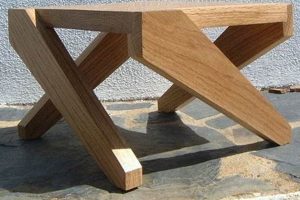
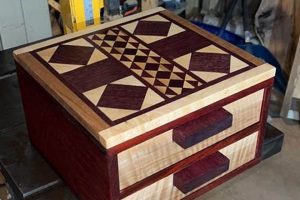
Creation of functional or decorative items from sections of trees constitutes a specific area of crafting. This practice involves utilizing the natural form of timber in its rounded, often un-milled state to produce pieces ranging from rustic furniture to sculptural art. For example, a craftsman might fashion a sturdy bench using a sizable section of a trunk, or sculpt decorative bowls from smaller pieces of seasoned timber.
Employing timber in this way offers distinct advantages. It allows for the preservation of natural features, such as bark and unique grain patterns, contributing to a unique aesthetic appeal. Historically, this practice has provided accessible resources for construction and artistry, particularly in areas with abundant forest resources. The resulting items often exhibit exceptional durability and possess a character not easily replicated with processed lumber.
The subsequent discussion will address key considerations in selecting appropriate materials, fundamental techniques for shaping and joining wood, and examples of project categories suitable for this approach.
Essential Considerations
Successful creation of items from tree sections requires adherence to specific guidelines to ensure structural integrity and aesthetic quality of the final product.
Tip 1: Material Selection. Careful consideration must be given to the type of wood. Hardwoods such as oak and maple offer superior durability for furniture, while softwoods like pine are more suitable for decorative items. Seasoning the wood properly to reduce moisture content is crucial to prevent cracking or warping.
Tip 2: Bark Management. The presence of bark can add rustic charm, but it is susceptible to insect infestation and decay. Consider removing bark entirely or treating it with preservatives to prolong its lifespan. Application of a sealant is often recommended.
Tip 3: Moisture Content Control. Precise monitoring of wood moisture content is paramount. A moisture meter should be employed to ensure levels are appropriate for the intended application, typically below 15% for interior projects. Kiln-dried timber is preferable.
Tip 4: Joint Construction. Employ robust joinery techniques. Mortise and tenon joints, dovetails, or strong adhesives are essential for ensuring structural stability. Consider the stresses the finished item will endure.
Tip 5: Sealing and Finishing. Apply a suitable sealant or finish to protect the wood from environmental factors and enhance its appearance. Consider the intended use of the object; exterior items require finishes with UV protection and water resistance.
Tip 6: Log Stabilization. For larger projects, explore techniques to stabilize the wood and minimize cracking as it dries. These methods may include end-sealing, controlled drying environments, or the use of penetrating epoxy consolidants.
Adhering to these guidelines will contribute to the creation of durable, aesthetically pleasing, and structurally sound items. The resulting pieces will embody both the natural character of the material and the skill of the craftsman.
These considerations form a foundation for undertaking a range of projects. The subsequent section will explore example designs and methods.
1. Material Selection

The selection of appropriate wood represents a foundational element in projects utilizing tree sections. This decision critically influences the final product’s durability, aesthetic appeal, and overall longevity. The inherent characteristics of different species dictate suitability for specific applications.
- Hardwood vs. Softwood
Hardwoods, derived from deciduous trees such as oak, maple, and walnut, are generally denser and more resistant to wear and tear. Their structural integrity makes them appropriate for furniture or weight-bearing applications. Softwoods, from coniferous trees like pine, fir, and cedar, are lighter and easier to work with but less durable. They are suitable for decorative items, paneling, or projects where weight is a consideration. The choice between hardwood and softwood must align with the intended function of the project.
- Moisture Content
The moisture content of the wood significantly affects its stability. Green wood, freshly cut, contains a high moisture level and is prone to warping, cracking, and fungal decay as it dries. Properly seasoned wood, air-dried or kiln-dried, has a reduced moisture content, making it dimensionally stable and less susceptible to these issues. Accurate measurement of moisture content using a meter is essential to ensure the wood is adequately dried before use.
- Species Characteristics
Each wood species possesses unique grain patterns, colors, and textures that contribute to the visual appeal. Cherry exhibits a rich reddish-brown hue, while birch has a light, even tone. These aesthetic qualities should be considered in relation to the desired style of the project. Further, some species are naturally more resistant to rot and insect infestation than others, making them suitable for outdoor applications or items intended for long-term use.
- Log Dimensions and Form
The physical dimensions and the inherent form of a section influence the type and scope of possible projects. A large-diameter trunk can yield substantial furniture components, whereas a smaller section might be suitable for smaller decorative objects. Irregularities in the shape of the piece present unique challenges and opportunities, often requiring designs that adapt to the natural form rather than imposing a rigid geometry.
Therefore, material selection is not merely a preliminary step but an integral design consideration that shapes the possibilities and limitations of any project involving tree sections. A thorough understanding of wood properties, including hardness, moisture content, aesthetic characteristics, and the physical attributes of the section itself, is crucial for realizing a successful and lasting outcome.
2. Wood Seasoning

Wood seasoning is a crucial process in preparing sections of trees for crafting. Proper seasoning minimizes structural instability and enhances the longevity of the resultant pieces. Failure to adequately season wood used in crafting can lead to cracking, warping, and the potential for fungal decay, significantly compromising the integrity and aesthetic value of completed items.
- Moisture Content Reduction
Wood seasoning primarily serves to reduce the moisture content within the wood structure. Green wood, freshly cut, contains a high percentage of water. As this water evaporates, the wood shrinks. Uneven drying can induce stress, resulting in cracks and distortions. Seasoning aims to control this process, allowing moisture to escape gradually and uniformly. For example, air-drying involves stacking timber in a well-ventilated area for an extended period, allowing natural air circulation to draw moisture from the wood. Kiln-drying employs controlled heat and humidity to accelerate moisture removal while minimizing stress.
- Dimensional Stability
Seasoning enhances dimensional stability. As wood loses moisture, it becomes less prone to changes in size and shape due to fluctuations in environmental humidity. This stability is essential for joints and connections in crafted objects. Wood that has not been properly seasoned will continue to shrink or swell in response to moisture variations, potentially loosening joints, creating gaps, or causing the object to deform. Achieving dimensional stability is, therefore, critical for functional and aesthetic longevity.
- Prevention of Decay
Reduced moisture content hinders the growth of fungi and other microorganisms responsible for wood decay. Fungi require moisture to thrive. Seasoning lowers the moisture content below the threshold necessary for fungal growth, thereby increasing the resistance to rot. This is especially important for outdoor projects or items exposed to humid conditions. Applying preservatives after seasoning provides an additional layer of protection against decay.
- Improved Workability
Seasoned wood exhibits improved workability. As wood dries, it becomes easier to cut, shape, and join. Green wood is often more difficult to work due to its higher moisture content, which can cause tools to bind or tear the fibers. Seasoned wood takes fasteners, such as screws and nails, more readily and holds them more securely. This ease of workability translates to greater precision and efficiency during the crafting process.
In summary, wood seasoning is an indispensable step in utilizing sections of trees to create lasting objects. Controlled moisture reduction, enhanced dimensional stability, prevention of decay, and improved workability are all direct results of proper seasoning, contributing to the structural integrity and aesthetic quality of the final crafted piece. Without this process, the inherent potential of the material remains unrealized and vulnerable to degradation.
3. Bark Considerations
The presence or absence of bark on sections of trees utilized in crafting significantly impacts the aesthetic, structural integrity, and longevity of the finished piece. Bark’s inherent characteristics necessitate careful evaluation before incorporation into woodworking projects. Retaining bark can impart a rustic, natural aesthetic, appealing to those seeking a connection with the unprocessed material. However, bark is inherently less stable than the underlying wood. It is prone to detaching, cracking, and harboring insects or fungal growth, potentially compromising the entire structure. For example, a table crafted with bark intact may eventually shed its bark layer, diminishing its aesthetic value and creating maintenance issues. Therefore, the decision to retain or remove bark is a crucial early consideration.
Proper management of bark, when retention is desired, requires specific techniques. Thorough cleaning to remove loose debris, application of sealants to prevent moisture penetration, and treatment with insecticides can mitigate some risks. However, even with these precautions, the long-term stability of bark remains uncertain. An alternative approach involves removing the bark and then reapplying it using adhesives and mechanical fasteners, providing a controlled and stable bark layer. This method allows for the desired aesthetic while minimizing the risk of natural detachment. The success of any bark-retention strategy hinges on understanding the specific properties of the bark species involved and the environmental conditions to which the finished piece will be exposed.
In conclusion, bark considerations are integral to crafting with timber. The decision to retain or remove bark represents a trade-off between aesthetic appeal and long-term stability. While a rustic aesthetic may be desirable, the inherent instability of bark necessitates careful management and awareness of potential long-term challenges. Addressing these challenges through appropriate techniques and informed decision-making will contribute significantly to the durability and enduring aesthetic value of the finished article.
4. Joint Strength

The structural integrity of items crafted from tree sections is fundamentally dependent on the strength of the joints employed. Unlike dimensional lumber, these sections often possess irregular shapes and varying densities, presenting unique challenges in creating robust connections. Insufficient joint strength inevitably leads to structural failure, rendering the crafted piece unusable. For example, a bench constructed from a split log utilizing weak mortise and tenon joints will likely collapse under sustained weight, negating its intended function. Therefore, joint strength is not merely a desirable attribute but a critical necessity for the success of any undertaking.
Selection of appropriate joinery techniques is paramount. Traditional methods such as dovetails, mortise and tenon, or lap joints may require adaptation to accommodate the specific characteristics of the timber. Furthermore, modern adhesives, when used in conjunction with mechanical fasteners, can significantly enhance joint strength. Consider a rustic coffee table; reinforcing the leg attachments with epoxy resin, in addition to screws, creates a far more resilient connection than screws alone. The type of wood, the intended load, and the aesthetic requirements influence the choice of jointing method. Achieving optimal strength requires a thorough understanding of both traditional joinery and contemporary adhesive technology.
Ultimately, the longevity and utility of any structure crafted from tree sections are inextricably linked to the strength and durability of its joints. Ignoring this fundamental principle results in that are aesthetically pleasing but structurally unsound. Emphasis on robust joinery, adapted to the unique challenges presented by these irregular materials, is, therefore, crucial for ensuring the creation of durable, functional, and aesthetically pleasing items. The pursuit of structural integrity through optimized joint design represents a cornerstone of successful crafting from logs.
5. Design Adaptability

Design Adaptability, within the context of woodworking using tree sections, refers to the capacity to modify pre-conceived plans or invent entirely new approaches to accommodate the inherent irregularities and unique characteristics of natural materials. This flexibility is not merely a desirable attribute, but a fundamental prerequisite for successful project completion. The deviation from standard lumber dimensions and forms necessitates a departure from rigid designs.
- Form-Driven Modification
The natural shape dictates the final product’s form. A tree trunk’s curvature might suggest a rocking chair rather than a straight-backed chair. Skilled adapts the original design to leverage this natural characteristic. If the section has a natural Y-shape, a design for a coat rack is suitable. In contrast, attempting to force a tree section into a geometric shape will result in material waste, structural weakness, or aesthetic discordance.
- Defect Incorporation
Knots, cracks, or insect galleries are considered. A design might transform a large knot into a focal point of a tabletop, emphasizing the material’s organic origin. Filling voids with contrasting resin, creating visual interest and preventing further degradation. Refusal to adapt to these defects leads to structural failure or aesthetic compromises, reducing the overall quality.
- Joinery Innovation
Customized joinery solutions is essential. Standard joinery techniques, such as mortise and tenon, must be adapted to irregular angles. Wedges, shims, or non-traditional fasteners may be required. Ignoring the specific requirements of each joint increases the risk of failure and reduces the overall stability.
- Resource Optimization
Effective use of available material reduces waste. A design considers the dimensions of a given section, maximizing the yield and minimizing offcuts. A skilled minimizes waste by planning the cuts, so remaining pieces can be used. Failure to optimize yields significant material waste, and negatively impacting efficiency.
These components are not discrete elements but interdependent factors that contribute to design adaptability. A woodworking project is successful by recognizing, adapting, and using these aspects to its advantages. Design adaptability fosters innovation, resourcefulness, and a deeper appreciation for the unique beauty.
6. Tool Proficiency

Successful execution of woodworking projects involving timber sections is inextricably linked to the artisan’s skill in utilizing a diverse range of tools. The irregular shapes and substantial dimensions of these materials necessitate a higher level of tool mastery than is often required for projects using milled lumber. Proficiency encompasses not only the correct application of each tool but also the ability to maintain them in optimal working condition.
- Chainsaw Operation
Chainsaws are indispensable for initial shaping, sectioning large pieces, and removing unwanted material. Competent chainsaw operation includes knowledge of safe handling practices, proper chain tensioning, and the ability to sharpen the chain effectively. For example, precisely sectioning a large trunk into manageable segments requires not only a powerful saw but also an understanding of wood grain and stress distribution to avoid binding or kickback. Incorrect chain sharpening can lead to inefficient cutting and increased risk of accidents.
- Adze and Drawknife Mastery
Adzes and drawknives are essential for shaping curved surfaces and removing bark while preserving the natural contours of the wood. Using these tools effectively requires a sensitivity to grain direction and the ability to control the depth and angle of each cut. For instance, hollowing out a seat blank with an adze demands precise control to avoid gouging or splitting the wood. A dull drawknife will tear the wood fibers rather than creating a smooth surface.
- Hand Plane Expertise
Hand planes are used to create smooth, even surfaces and refine joinery. Achieving a flawless surface on a rough-sawn timber section requires meticulous plane setup, including blade sharpening and accurate adjustment of the depth of cut. Planing against the grain results in tear-out, while a poorly sharpened blade produces a rough or uneven surface. The ability to “read” the grain and adjust technique accordingly is crucial.
- Jointing Tool Precision
Creating strong and accurate joints, such as mortise and tenon, relies on precise use of chisels, saws, and marking gauges. A poorly executed mortise and tenon joint will compromise the structural integrity. Precise chisel work, accurate saw cuts, and careful marking are all essential for achieving a tight, durable fit. Inaccurate layout or sloppy cutting can lead to a joint that is either too loose or too tight, both of which weaken the overall structure.
The successful creation of woodworking projects involving timber sections necessitates a comprehensive understanding of tools and their appropriate application. The artisan’s skill directly influences the quality, durability, and aesthetic appeal of the finished piece. Mastery of these tools represents a cornerstone of proficient craftsmanship in this specialized area of woodworking.
7. Finishing Techniques

The application of appropriate finishes to items derived from timber sections is critical, not merely for enhancing aesthetic appeal, but also for ensuring the long-term preservation and functionality of the crafted objects. The selection and execution of such techniques directly impact resistance to environmental factors, prevention of decay, and the overall durability of the piece.
- Surface Preparation and Smoothing
Prior to finish application, meticulous surface preparation is essential. This includes sanding to remove imperfections, level the surface, and open the wood pores for optimal finish absorption. Coarse sanding addresses significant irregularities, while progressively finer grits create a smooth, polished surface. Inadequately prepared surfaces result in uneven finish penetration and a visually unappealing outcome. A rustic bench, for instance, may require extensive sanding to remove splinters and create a comfortable seating surface before the application of a protective sealant.
- Penetrating Oil Finishes
Penetrating oil finishes, such as linseed oil or tung oil, permeate the wood fibers, enhancing the natural grain and providing a degree of water resistance. These finishes require multiple coats and extended drying times but offer a natural, low-luster appearance. They are particularly suitable for furniture or decorative items where the natural wood grain is desired. Application of penetrating oil to a rustic wooden bowl protects the wood from moisture absorption and enhances its visual appeal.
- Film-Forming Finishes
Film-forming finishes, including varnishes, lacquers, and polyurethanes, create a protective layer on the wood surface, offering superior resistance to scratches, stains, and moisture. These finishes are available in various sheens, from matte to high gloss. They are suitable for projects requiring a durable and easily cleanable surface, such as tabletops or cutting boards. Application of polyurethane to a log coffee table provides protection against spills and scratches, extending its lifespan.
- Exterior Finishes and Preservatives
Outdoor projects demand specialized finishes designed to withstand exposure to sunlight, rain, and temperature fluctuations. Exterior varnishes, stains with UV inhibitors, and wood preservatives protect against rot, insect infestation, and color fading. Application of a wood preservative to a log bench intended for outdoor use is essential to prevent decay and prolong its structural integrity.
The selection of appropriate techniques is contingent upon the intended use of the piece, the species of wood, and the desired aesthetic. While penetrating oils enhance the natural beauty, film-forming finishes offer superior protection. Outdoor applications necessitate specialized finishes to withstand environmental factors. Therefore, a comprehensive understanding of the available options and their respective properties is crucial for achieving optimal results in projects derived from sections of trees.
Frequently Asked Questions
This section addresses common inquiries regarding the creation of functional and artistic items utilizing timber sections. It aims to clarify aspects of material preparation, project suitability, and long-term maintenance.
Question 1: What specific wood species are most suitable for projects involving tree sections intended for outdoor use?
Certain species exhibit inherent resistance to decay, rendering them appropriate for exterior applications. Cedar, redwood, and pressure-treated pine offer enhanced durability in environments exposed to moisture and insect activity. Careful consideration of species-specific resistance is crucial for longevity.
Question 2: How can the risk of cracking in large timber sections be minimized during the drying process?
End-sealing is a technique employed to slow moisture loss from the cut ends of the wood. This reduces the differential drying rate between the ends and the interior, minimizing stress and potential cracking. Additionally, controlled drying environments can further mitigate this risk.
Question 3: Is it essential to remove the bark from timber intended for interior furniture construction?
While bark can contribute to a rustic aesthetic, it is susceptible to insect infestation and decay. Removal is often recommended to ensure long-term structural integrity and prevent pest-related issues. If retention is desired, appropriate sealing and treatment are imperative.
Question 4: What are the primary safety precautions that should be observed when using a chainsaw for woodworking with tree sections?
Chainsaw operation necessitates adherence to stringent safety protocols. These include wearing appropriate personal protective equipment (PPE), maintaining a firm grip on the saw, ensuring adequate chain tension, and being acutely aware of the potential for kickback. Formal training in chainsaw operation is strongly advised.
Question 5: How can the structural integrity of joints in projects involving irregularly shaped tree sections be ensured?
Traditional joinery techniques may require modification to accommodate atypical shapes. Employing robust mechanical fasteners in conjunction with high-strength adhesives can enhance joint stability. Careful consideration of load-bearing requirements is crucial for selecting appropriate methods.
Question 6: What types of finishes are most appropriate for preserving the natural appearance of wood while providing adequate protection?
Penetrating oil finishes, such as tung oil or linseed oil, enhance the wood grain and offer a degree of water resistance while maintaining a natural appearance. However, they provide less protection than film-forming finishes like varnish or polyurethane. The choice depends on the desired aesthetic and functional requirements.
Key takeaway: Woodworking with tree sections requires awareness of wood characteristics, techniques, and safety. It encompasses the necessity of proper drying methods, bark treatments, and robust joint designs to make high-quality projects.
The subsequent section delves into case studies of completed projects, illustrating the application of the principles discussed thus far.
Conclusion
The preceding discussion has comprehensively explored the multifaceted nature of woodworking projects with logs. The selection and preparation of materials, the management of bark, the implementation of robust joinery techniques, the critical importance of design adaptability, the necessity of tool proficiency, and the application of appropriate finishing methods all converge to determine the success and longevity of these endeavors. A thorough understanding of these elements is paramount for achieving structurally sound and aesthetically pleasing outcomes.
The challenges inherent in working with unaltered sections of trees demand both technical skill and creative vision. The craftsman must reconcile the irregular forms and natural imperfections of the material with the intended function and aesthetic of the finished piece. As such, mastering this domain of woodworking represents a significant accomplishment, contributing to the creation of enduring objects that embody both utility and artistic merit. Further exploration and refinement of these techniques will undoubtedly yield innovative and sustainable approaches to crafting with natural materials.