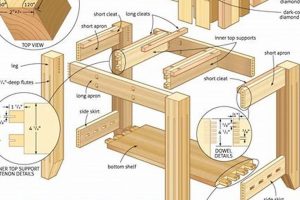
Introductory woodworking endeavors encompass a range of simple, beginner-friendly tasks designed to teach fundamental skills. These undertakings typically involve basic techniques like cutting, joining, sanding, and finishing wood. Examples include building a small box, crafting a simple birdhouse, or assembling a basic shelf unit. The projects serve as a practical introduction to the craft.
Engaging in these initial activities provides multiple advantages. They establish a foundation in woodworking principles, foster confidence in handling tools, and promote creative problem-solving. Historically, apprenticeship systems used similar starting points to impart foundational knowledge and develop a worker’s competence gradually.
The subsequent sections will delve into specific project ideas suitable for newcomers, detail the essential tools required, and provide guidance on safety protocols to ensure a secure and rewarding learning experience. Furthermore, material selection and basic joinery techniques will be explained, providing a comprehensive overview for those new to the craft.
Essential Guidance for Novice Woodworkers
The following recommendations are designed to optimize the beginner’s experience. Adhering to these principles enhances skill development and project success.
Tip 1: Prioritize Safety: Secure appropriate personal protective equipment, including safety glasses and hearing protection, before commencing any work. A safe workspace minimizes the risk of injury.
Tip 2: Master Basic Measurements: Accurate measurements are crucial. Utilize a reliable measuring tape and double-check all dimensions before cutting any material. Consistent precision ensures proper assembly.
Tip 3: Practice Cutting Techniques: Develop proficiency with essential cutting tools, such as saws. Practice on scrap wood to refine technique and minimize errors on the final project. Clean, straight cuts are essential for professional-looking results.
Tip 4: Understand Wood Grain: The direction of the wood grain affects cutting, sanding, and finishing. Pay attention to the grain orientation to prevent splintering and ensure a smooth surface. Proper grain consideration enhances the aesthetic appeal of the finished piece.
Tip 5: Choose Appropriate Joinery Methods: Select simple and strong joinery techniques, such as butt joints with screws or dowels, for initial projects. Secure and durable joints ensure the longevity of the finished item.
Tip 6: Sand Methodically: Sand wood surfaces systematically, progressing through increasingly finer grits of sandpaper. Smooth surfaces are crucial for optimal finishing. Consistent sanding prepares the wood for stain or paint application.
Tip 7: Apply Finishes Correctly: Research and select appropriate finishes for the intended use of the project. Follow the manufacturer’s instructions for application, ensuring proper ventilation and drying times. A well-applied finish protects the wood and enhances its appearance.
Effective execution of these tips leads to improved workmanship, reduced material waste, and increased project satisfaction. Consistent application of these guidelines fosters a strong foundation for future woodworking endeavors.
The subsequent section will explore more advanced strategies and complex project options, building upon the skills established through these initial principles.
1. Basic Tool Familiarity

The successful execution of elementary woodworking is intrinsically linked to a fundamental understanding of the tools involved. Without adequate familiarity, the likelihood of errors increases, project quality suffers, and, most importantly, the risk of injury escalates. For instance, attempting to cut a straight line with a hand saw without knowing the proper grip, stance, and blade angle invariably leads to a crooked cut and potential damage to the material. Similarly, using a power drill without understanding speed settings, bit types, or clamping techniques can result in broken bits, marred surfaces, or kickback.
The acquisition of basic tool skills is therefore a foundational element for any novice woodworker. A hands-on approach is frequently the most effective learning method. Start with simpler tools, such as hand saws, chisels, measuring tapes, and sandpaper, before progressing to power tools. Prioritize safety training and practice on scrap wood before commencing actual projects. Understanding the intended purpose, operation, and maintenance requirements of each tool is crucial. Furthermore, recognition of the tool’s limitations prevents misuse and fosters a realistic expectation of what can be achieved.
In summary, elementary woodworking cannot be effectively pursued without a solid grounding in basic tool knowledge. Mastery of these tools, coupled with safe work practices, translates to more accurate, aesthetically pleasing, and structurally sound projects. Investment in tool familiarization early in the learning process significantly enhances the potential for success and reduces the likelihood of setbacks or accidents. This foundational knowledge provides a building block for more advanced woodworking skills in the future.
2. Simple Joinery Methods

The execution of introductory woodworking relies heavily on the application of simple joinery methods. The selection and proper implementation of these techniques directly affect the structural integrity and aesthetic quality of beginner projects. Methods such as butt joints, lap joints, and dowel joints are commonly employed due to their relative ease of execution and the minimal tooling required. A poorly executed joint, regardless of the overall project design, compromises the finished product’s durability and visual appeal. For instance, a wobbly table constructed with inadequately glued butt joints highlights the critical importance of correct joinery.
The connection between simple joinery and woodworking 101 projects extends beyond mere assembly; it serves as a practical introduction to fundamental woodworking principles. Learning to accurately cut and join wood using these basic methods provides essential experience in measuring, clamping, and adhering materials. These skills are directly transferable to more complex joinery techniques and advanced projects. The construction of a basic box, for example, provides an opportunity to practice cutting accurate angles for miter joints, or accurately drilling holes to insert dowels for stronger reinforcement. Furthermore, it emphasizes the importance of achieving tight, flush fits which enhance both the strength and the visual presentation.
In conclusion, simple joinery methods form an indispensable component of woodworking 101 projects. Mastery of these techniques translates directly into improved project outcomes, enhanced skill development, and a greater understanding of woodworking principles. The challenges encountered during the initial application of these methods provide valuable learning opportunities, setting the stage for more advanced woodworking pursuits.
3. Accurate Material Cutting

Accurate material cutting is paramount to the successful completion of introductory woodworking endeavors. Precise cuts form the foundation of structurally sound and aesthetically pleasing projects. Deviations from specified dimensions can lead to misalignment, weakened joints, and an overall reduction in the quality of the final product.
- Dimensional Precision
Dimensional precision ensures that each component of a woodworking project adheres to the intended measurements. Inaccurate cuts can compound, leading to significant discrepancies in the overall dimensions of the assembled piece. For instance, if each board of a simple box is cut 1/8 inch short, the resulting box will be a half-inch smaller than planned. This can affect the function and appearance of the project.
- Joint Integrity
The accuracy of cuts directly affects the integrity of joints. A miter joint, for example, requires precise 45-degree cuts to create a seamless corner. If the cuts are not accurate, the joint will be weak and visually unappealing, necessitating the use of excessive adhesives or fasteners to compensate. This compromises the quality and longevity of the project.
- Material Efficiency
Accurate cutting practices minimize material waste. When cuts are made precisely, there is less need to compensate for errors, resulting in more efficient use of lumber and reduced costs. Inefficient cutting leads to offcuts that are too small to be used for other projects, increasing the overall material consumption and environmental impact.
- Safety Considerations
Accurate material cutting contributes to a safer working environment. When cuts are made precisely and cleanly, there is less chance of kickback from power tools or splintering from hand tools. This reduces the risk of injury and enhances the overall safety of the woodworking process. Precise cuts also reduce the need for forcing ill-fitting pieces together, which can also lead to accidents.
The principles of accurate material cutting are intrinsically linked to the success of woodworking 101 projects. Mastering these techniques not only enhances the quality of the finished product but also fosters a disciplined approach to woodworking, paving the way for more advanced projects and techniques.
4. Safe Workshop Practices

Safe workshop practices are indispensable in introductory woodworking. The inherent risks associated with tools and materials necessitate a comprehensive safety protocol to prevent injuries and ensure a productive learning environment. Novices often lack the experience to anticipate potential hazards, making strict adherence to safety guidelines paramount.
- Personal Protective Equipment (PPE)
The consistent use of appropriate personal protective equipment is a fundamental aspect of workshop safety. This includes safety glasses to protect against flying debris, hearing protection to mitigate noise-induced hearing loss, and dust masks or respirators to prevent inhalation of wood dust. Gloves can also safeguard hands from splinters and sharp edges. The absence of PPE significantly increases the risk of injuries, particularly eye and respiratory ailments, commonly encountered in woodworking settings. For example, failing to wear safety glasses during sawing operations can result in irreversible eye damage from ejected wood fragments.
- Tool Handling and Maintenance
Proper tool handling and regular maintenance are critical for preventing accidents. This involves understanding the correct operating procedures for each tool, ensuring that blades are sharp, and tools are stored safely when not in use. Dull blades require more force, increasing the likelihood of slippage and injury. Regular maintenance, such as lubricating moving parts and inspecting power cords, prevents malfunctions that could lead to accidents. Improper storage can also lead to injuries if tools are accidentally knocked over or mishandled.
- Ventilation and Dust Control
Adequate ventilation and effective dust control measures are essential for maintaining a healthy workshop environment. Wood dust, a byproduct of sanding and sawing, can cause respiratory irritation and, over prolonged exposure, can contribute to more severe respiratory illnesses. A well-ventilated workshop reduces the concentration of airborne dust particles. Dust collection systems, such as shop vacuums connected to power tools, are highly effective in capturing dust at the source. Regular cleaning of the workshop also helps to minimize dust accumulation.
- Emergency Preparedness
Being prepared for emergencies is a crucial aspect of safe workshop practices. This includes having a well-stocked first-aid kit readily accessible, knowing the location of emergency shut-off switches for power tools, and having a clear understanding of emergency procedures. A fire extinguisher should be available in case of fire hazards associated with combustible materials such as sawdust and wood finishes. Practicing emergency drills and ensuring that everyone in the workshop is aware of safety protocols can significantly reduce the severity of accidents.
These safety measures, integral to any woodworking setting, are particularly vital in introductory projects. Adherence to these practices cultivates a culture of safety, minimizing risks and enabling a more rewarding and secure learning experience. The application of these safe workshop habits in woodworking 101 projects is not just about accident prevention, it establishes a foundation for conscientious practices throughout any future woodworking career.
5. Effective Wood Finishing
Effective wood finishing represents a crucial stage in woodworking, particularly within the scope of initial projects. This process serves not only to enhance the aesthetic appeal of the wood but also to protect it from environmental factors and wear, thereby extending the lifespan of the completed item.
- Surface Preparation
Proper surface preparation forms the groundwork for any successful finishing endeavor. This entails sanding the wood to a uniform smoothness, removing any imperfections, and cleaning the surface to ensure optimal adhesion of the finish. In woodworking 101 projects, a common mistake is neglecting thorough sanding, resulting in an uneven or blotchy finish that detracts from the overall quality of the piece. For example, building a small wooden box without adequate sanding will reveal scratches and inconsistencies under the applied stain or paint.
- Selecting the Appropriate Finish
The choice of finish is contingent upon the intended use of the project and the desired aesthetic. Options range from penetrating oils, which enhance the natural grain of the wood, to film-forming finishes like varnish or lacquer, which provide a durable protective layer. In introductory projects, selecting a finish that is easy to apply and forgiving, such as water-based polyurethane, is often recommended. An example of a poorly selected finish would be using an exterior varnish on an indoor project, leading to excessive fumes and a potentially undesirable gloss level.
- Application Techniques
The method of application significantly influences the final appearance and durability of the finish. Techniques such as brushing, wiping, and spraying each yield distinct results. For beginners, wiping finishes like oil or gel stain are often favored due to their ease of control and minimal equipment requirements. A common error is applying too much finish at once, leading to runs, drips, and prolonged drying times. A properly applied finish should be thin, even, and free of imperfections.
- Curing and Protection
The curing process allows the finish to fully harden and develop its protective properties. It is essential to follow the manufacturer’s instructions regarding drying times and environmental conditions. Protecting the finished piece during the curing phase prevents dust, scratches, and other damage that could compromise the integrity of the finish. For example, placing a freshly finished table in direct sunlight or a humid environment can lead to cracking, blistering, or uneven curing.
These facets of effective wood finishing, when applied correctly in woodworking 101 projects, transform raw materials into functional and visually appealing items. The process not only enhances the aesthetic appeal but also imparts valuable skills and a deeper understanding of wood as a material. Success in this area fosters confidence and encourages further exploration of woodworking techniques.
Frequently Asked Questions
The following addresses common inquiries regarding fundamental woodworking practices. The information provided is intended to clarify key concepts and dispel misconceptions encountered by novice woodworkers.
Question 1: What constitutes a suitable first woodworking project?
A suitable initial project typically involves simple geometric shapes, minimal joinery complexity, and readily available materials. Examples include constructing a small box, a basic shelf, or a simple birdhouse. The focus should be on mastering fundamental skills rather than achieving intricate designs.
Question 2: What are the essential tools required for introductory woodworking?
Essential tools include a measuring tape, hand saw, combination square, sandpaper (various grits), wood glue, clamps, and a drill with assorted drill bits. The specific selection may vary slightly depending on the project but this represents a foundational set.
Question 3: How critical is wood selection for beginner projects?
Wood selection is significant. Softwoods like pine or fir are generally easier to work with due to their lower density. Hardwoods, while more durable, require sharper tools and more effort. Clear, straight-grained lumber minimizes challenges for novices.
Question 4: What are the most common safety precautions to observe?
Critical safety measures include wearing safety glasses to protect the eyes from debris, using hearing protection in noisy environments, ensuring adequate ventilation to minimize dust inhalation, and maintaining sharp tools to prevent slippage. Focus and concentration during tool operation are also paramount.
Question 5: How can one ensure accurate measurements and cuts?
Employ a high-quality measuring tape and double-check all dimensions before cutting. Use a combination square to ensure accurate angles. Practice cutting techniques on scrap wood to refine precision before working on the actual project material.
Question 6: What constitutes an acceptable wood finish for introductory projects?
A suitable finish protects the wood and enhances its appearance. Options include polyurethane, varnish, or penetrating oil. Water-based finishes are often easier to clean up and have lower VOC emissions. Follow the manufacturer’s instructions meticulously during application.
The information presented herein offers clarification on frequently encountered questions, serving as a reference point for beginners navigating the foundational aspects of woodworking.
The next section transitions to exploring advanced techniques and further development within the field of woodworking.
Conclusion
This exploration of introductory woodworking has detailed the fundamental skills, tools, safety practices, and techniques essential for successful project completion. The discussed concepts of basic tool handling, simple joinery, accurate material cutting, safe workshop habits, and effective wood finishing are critical components of early woodworking experiences.
Proficiency in these initial steps provides a firm foundation for continued growth within the discipline. Individuals who dedicate themselves to mastering these fundamentals are well-positioned to advance into more complex and rewarding woodworking endeavors. Continued learning and diligent practice will yield improved skill and the ability to create complex projects.