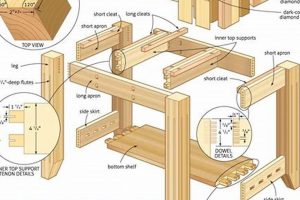
Construction endeavors employing wood as the primary material, designed and intended for utilization in external environments, represent a significant subset of the broader crafting domain. Examples encompass outdoor furniture such as benches and tables, decorative garden structures like trellises and planters, and functional installations including sheds and fences.
The creation of structures for open-air placement offers numerous advantages, including the enhancement of outdoor living spaces, the augmentation of property value, and the provision of practical storage or shelter solutions. Historically, such undertakings have been essential for both functional purposes, such as building barns and fences, and aesthetic enhancements to landscapes, demonstrating enduring practicality and artistic merit.
Subsequent sections will delve into various project categories, material considerations, construction techniques, and essential finishing practices applicable to ensuring longevity and weather resistance when engaging in wooden constructions for external settings.
Guidance for Durable Exterior Woodcraft
Achieving lasting results in exterior wooden constructions requires meticulous planning and execution. The following guidelines address critical aspects of the process.
Tip 1: Material Selection: Employ wood species naturally resistant to decay and insect infestation, such as cedar, redwood, or pressure-treated lumber. This proactive choice significantly extends the lifespan of exterior structures.
Tip 2: Design for Water Runoff: Incorporate slopes and drainage features into the design to prevent water accumulation. Standing water accelerates rot and weakens structural integrity.
Tip 3: Proper Joinery: Utilize robust joinery techniques like mortise-and-tenon or dovetail joints, coupled with exterior-grade adhesives. Secure connections resist the stresses of weather exposure.
Tip 4: Galvanized or Stainless Steel Fasteners: Employ fasteners resistant to corrosion to avoid rust stains and structural weakening. Standard steel fasteners will degrade rapidly in outdoor settings.
Tip 5: Seal End Grain: Apply a sealant to all exposed end grain surfaces. End grain absorbs moisture more readily than other surfaces, increasing the risk of rot.
Tip 6: Thorough Finishing: Apply multiple coats of a high-quality exterior-grade paint, stain, or sealant. Regular maintenance and reapplication of finish are crucial for ongoing protection.
Tip 7: Adequate Ventilation: Design elements to permit airflow around and through the structure. Ventilation minimizes moisture buildup and inhibits fungal growth.
Adhering to these best practices minimizes the detrimental effects of environmental exposure and maximizes the lifespan and aesthetic appeal of exterior applications of wood.
The subsequent section provides insight into specific construction techniques to complement these general guidelines.
1. Weather-resistant Materials

The selection of weather-resistant materials forms the bedrock of successful and enduring exterior wooden constructions. The ability of a given material to withstand prolonged exposure to environmental stressors directly dictates the lifespan, structural integrity, and aesthetic quality of the finished project. Failure to prioritize appropriate materials invariably leads to premature degradation, increased maintenance demands, and potential structural compromise.
- Natural Resistance to Decay and Insects
Certain wood species, such as cedar, redwood, and teak, possess inherent oils and compounds that render them naturally resistant to decay, rot, and insect infestation. Utilizing these materials significantly reduces the need for chemical treatments and enhances the longevity of exterior applications. For example, cedar shingles on a garden shed offer a long-lasting, aesthetically pleasing, and naturally protective barrier against the elements, minimizing maintenance requirements.
- Pressure-Treated Lumber
Pressure treatment involves impregnating wood with chemical preservatives under high pressure, rendering it highly resistant to decay and insects. This process is particularly effective for lumber used in ground contact or environments with high moisture levels. Decks constructed with pressure-treated lumber provide a durable and cost-effective solution for outdoor living spaces, withstanding years of exposure to rain, sun, and temperature fluctuations.
- Composite Materials
Composite materials, typically composed of wood fibers and recycled plastics, offer an alternative to traditional lumber. These materials are highly resistant to moisture, insects, and decay, requiring minimal maintenance. Composite decking materials, for example, eliminate the need for staining or sealing, providing a long-lasting, low-maintenance surface for patios and walkways.
- Protective Coatings and Treatments
Even with inherently durable woods, protective coatings and treatments play a crucial role in prolonging lifespan. Applying sealants, stains, or paints specifically formulated for exterior use provides a barrier against moisture penetration, UV radiation, and fungal growth. Regular reapplication of these coatings is essential for maintaining protection and preserving the aesthetic appearance of wooden structures. For example, staining a wooden fence with a UV-resistant stain not only enhances its appearance but also protects it from sun damage and weathering, extending its lifespan.
The selection of weather-resistant materials, be it naturally durable wood species, pressure-treated lumber, or composite alternatives, coupled with appropriate protective coatings, represents a fundamental investment in the long-term performance and aesthetic value of exterior wooden constructions. Prioritizing material selection ensures that structures remain functional, attractive, and structurally sound for years to come, minimizing maintenance requirements and maximizing the return on investment.
2. Structural Integrity

In the realm of exterior applications of wood, structural integrity assumes paramount importance. It defines the capacity of a given construction to withstand external forces, environmental stressors, and the test of time without experiencing deformation, failure, or collapse. Compromised structural integrity not only undermines the functionality and aesthetic value of the work but also poses significant safety risks.
- Load-Bearing Capacity
The ability to support intended weight and forces is fundamental. Decks, pergolas, and sheds must withstand the weight of occupants, snow, wind, and any stored items. Accurate calculations and robust construction techniques are critical to ensure adequate load-bearing capacity. Insufficient support can lead to sagging, instability, and eventual collapse. For example, a deck designed without accounting for anticipated weight loads may exhibit dangerous flexing or warping under normal use.
- Resistance to Wind and Weather
Exterior structures are constantly subjected to wind, rain, snow, and temperature fluctuations. Adequate bracing, secure connections, and proper drainage are essential to resist these forces. Wind loading, in particular, can exert significant pressure on exposed surfaces, necessitating strong structural connections. A gazebo lacking sufficient bracing, for instance, is vulnerable to damage or destruction during high winds.
- Durability of Joinery
The points at which wooden components connect are often the weakest links in a structure. Robust joinery techniques, such as mortise-and-tenon, dovetail, or properly executed screw or bolt connections, are crucial for maintaining structural integrity. Weak or poorly executed joints are prone to failure under stress. For example, a wooden fence with inadequately fastened posts will likely lean or collapse over time due to wind and ground movement.
- Material Degradation Mitigation
Wood, by its nature, is susceptible to degradation from moisture, insects, and ultraviolet radiation. Proper material selection (e.g., using decay-resistant wood or pressure-treated lumber) and protective finishes are vital for minimizing these effects. Regular inspection and maintenance are also necessary to identify and address any signs of deterioration before they compromise structural integrity. Ignoring rot in a deck support beam, for example, can lead to catastrophic failure.
These facets underscore that structural integrity is not merely a construction detail; it’s the foundational principle upon which the safety, durability, and longevity of all exterior woodworking projects rest. Careful attention to load-bearing capacity, resistance to weather, joinery durability, and material degradation mitigation is essential for creating structures that will endure the challenges of the outdoor environment.
3. Protective Finishes

Protective finishes represent a critical component in the creation and maintenance of wooden structures intended for external deployment. The application of appropriate coatings acts as a primary defense against environmental stressors, directly influencing the lifespan, appearance, and structural integrity of woodworking projects in the outdoors.
- Moisture Resistance
Exterior-grade paints, stains, and sealants create a barrier that inhibits water absorption into the wood. Excessive moisture content promotes fungal growth, leading to rot and decay, ultimately compromising the structural integrity of the project. For instance, a properly sealed picnic table resists water damage from rain and spills, preventing warping and extending its usability.
- Ultraviolet (UV) Protection
Prolonged exposure to sunlight causes the lignin in wood to degrade, resulting in discoloration, surface cracking, and weakening of the material. UV-resistant finishes contain pigments and additives that absorb or reflect harmful rays, mitigating these effects. A fence treated with a UV-inhibiting stain will maintain its color and structural soundness longer than an untreated one.
- Insect and Pest Deterrence
Certain finishes incorporate insecticides or create a physical barrier that deters wood-boring insects and other pests. Protecting wood from insect infestation is essential for preventing structural damage and maintaining the aesthetic appeal of exterior structures. A wooden deck treated with an insect-repelling sealant is less susceptible to termite damage, ensuring its long-term stability.
- Prevention of Mold and Mildew
Exterior environments often promote the growth of mold and mildew on wooden surfaces. Finishes containing mildewcides inhibit the growth of these organisms, preventing unsightly stains and potential health hazards. Garden benches treated with a mildew-resistant finish remain clean and attractive, even in humid or shaded locations.
The strategic selection and application of protective finishes are therefore paramount to safeguarding woodworking projects in the outdoors from a variety of destructive elements. By mitigating moisture damage, providing UV protection, deterring pests, and preventing mold growth, these finishes ensure that exterior wooden structures remain functional, aesthetically pleasing, and structurally sound for extended periods.
4. Appropriate Joinery

The selection and execution of joinery techniques are of critical importance in wooden constructions designed for outdoor use. The durability, stability, and longevity of such projects are directly influenced by the capacity of joints to withstand environmental stressors and imposed loads.
- Resistance to Weather-Induced Movement
Wood expands and contracts in response to fluctuations in moisture and temperature. Joinery methods must accommodate this movement to prevent cracking, warping, or loosening of connections. For example, mortise-and-tenon joints, properly sized and fitted, allow for seasonal expansion and contraction without compromising the structural integrity of a gate or pergola. Ignoring this factor results in weakened joints and premature failure.
- Load-Bearing Capacity in Exposed Conditions
Outdoor structures often bear significant loads from snow, wind, or use. Joinery must be capable of transferring these loads effectively. Dovetail joints, known for their strength in tension, are suitable for applications such as benches or tables where substantial weight is supported. Substituting weaker joinery may lead to collapse under stress.
- Protection Against Moisture Intrusion
Joints represent potential entry points for moisture, which can accelerate decay and weaken the structure. Careful detailing, such as tight fits and the use of waterproof adhesives, is essential to prevent water from penetrating the joint. A properly sealed lap joint in a fence, for instance, minimizes water accumulation and prolongs the lifespan of the structure. Inadequate protection invites rot and subsequent structural damage.
- Compatibility with Material Properties
Different wood species exhibit varying degrees of strength, flexibility, and resistance to decay. The choice of joinery should be aligned with the characteristics of the chosen material. For instance, using screws and glue with a softer wood, like pine, requires careful consideration of screw length and adhesive strength to ensure adequate holding power. Mismatched joinery may result in joint failure due to material limitations.
The integration of appropriate joinery is not merely a construction detail but a fundamental requirement for ensuring the enduring performance of structures crafted for external environments. The resilience of outdoor furniture, the stability of garden structures, and the longevity of wooden fences all hinge on the selection and execution of joinery techniques that effectively address the challenges posed by weather, load, and material properties.
5. Drainage Provision

Effective drainage is a critical component in the design and construction of wooden projects intended for outdoor placement. The accumulation of water, whether from precipitation, irrigation, or condensation, represents a significant threat to the long-term integrity of wood structures. Without adequate provision for water runoff and dispersal, wooden elements are susceptible to accelerated decay, fungal growth, and structural weakening. The connection between effective drainage and the longevity of such endeavors is direct and consequential. For instance, a raised garden bed lacking drainage holes will retain excessive moisture, leading to root rot and potentially damaging the wooden structure itself. Similarly, decks built without sufficient spacing between boards and adequate slope for water runoff will experience increased moisture absorption and accelerated deterioration.
Practical implementation of effective drainage involves several key considerations. Ground contact should be minimized or avoided entirely by elevating structures on piers or footings. Sloping surfaces promote water runoff, preventing ponding on horizontal elements. Adequate spacing between boards facilitates air circulation and reduces moisture retention. Furthermore, the strategic placement of drainage holes or channels allows water to escape from enclosed areas. A well-designed pergola, for example, will incorporate roof slopes to direct water away from the supporting posts and provide sufficient ventilation to prevent moisture buildup. Similarly, a wooden fence built with a slight gap between the bottom of the boards and the ground will minimize moisture absorption from soil and standing water.
In summary, adequate drainage provision is not merely a desirable feature but a fundamental requirement for ensuring the durability and longevity of exterior wooden constructions. The consequences of neglecting this aspect range from aesthetic degradation to structural failure. By prioritizing effective water management through careful design, appropriate construction techniques, and the selection of durable materials, the lifespan and performance of woodworking projects intended for outdoor use can be significantly enhanced, mitigating the detrimental effects of prolonged exposure to moisture and the elements.
6. Routine Maintenance

The longevity and aesthetic appeal of woodworking projects designed for the outdoors are inextricably linked to consistent routine maintenance. Exterior structures crafted from wood are perpetually exposed to environmental stressors, including moisture, sunlight, temperature fluctuations, and biological agents. Without proactive and recurring upkeep, these elements inflict cumulative damage, culminating in structural degradation, aesthetic decline, and eventual failure. The absence of routine maintenance precipitates a predictable cascade of detrimental effects; unchecked moisture intrusion fosters rot, UV radiation causes discoloration and embrittlement, and pest infestations compromise structural integrity. Consequently, the initial investment in craftsmanship and materials is diminished, necessitating costly repairs or premature replacement. A wooden deck, for instance, left unmaintained will exhibit splintering, discoloration, and eventual decay, transforming a valuable outdoor space into a hazardous liability.
Effective routine maintenance encompasses several key practices tailored to the specific needs of the project and the prevailing environmental conditions. Regular cleaning removes accumulated dirt, debris, and organic matter, preventing the formation of moisture-trapping biofilms that promote fungal growth. Periodic inspection allows for the early detection of minor issues, such as cracks, loose fasteners, or localized decay, enabling timely repairs that prevent escalation. Reapplication of protective finishes, such as stains, sealants, or paints, replenishes the barrier against moisture, UV radiation, and biological attack. Timely replacement of damaged or deteriorated components, such as individual deck boards or fence posts, prevents the spread of structural weakness. For example, a wooden fence that receives annual cleaning, inspection, and restaining will maintain its structural integrity and aesthetic appeal for decades, while a neglected fence will succumb to the elements within a few years.
In summary, routine maintenance constitutes an indispensable component of any exterior woodworking project, bridging the gap between initial construction and sustained performance. Neglecting this crucial aspect undermines the value of the project, accelerates its deterioration, and increases the long-term cost of ownership. Conversely, a commitment to proactive and consistent upkeep ensures the longevity, beauty, and structural integrity of exterior wooden constructions, maximizing the return on investment and providing lasting enjoyment of outdoor spaces.
7. Suitable Design

Appropriate design principles are fundamental to the successful creation and enduring functionality of outdoor woodworking projects. A design that considers environmental factors, intended usage, and material properties ensures both aesthetic appeal and structural longevity. The absence of thoughtful planning and design adaptation can lead to premature failure, safety hazards, and diminished aesthetic value.
- Environmental Considerations
Suitable designs account for prevailing weather conditions, including wind, rain, sun exposure, and temperature fluctuations. Orientation, shading, and drainage are carefully integrated to minimize the impact of these elements on the structure. For example, a pergola designed for a windy location will incorporate robust bracing and a low profile to resist wind loads, while a structure in a sunny area will utilize shading elements to reduce heat gain and protect the wood from UV degradation. Disregarding these factors can lead to structural instability and accelerated material deterioration.
- Functional Requirements
The intended purpose of the construction dictates the design parameters. Seating capacity, storage needs, accessibility, and safety are all considered. A deck designed for entertaining large gatherings will require ample space, sturdy railings, and appropriate weight-bearing capacity. A storage shed will incorporate secure doors, weatherproof construction, and efficient organization. Failure to address functional requirements results in structures that are impractical, uncomfortable, or unsafe.
- Material Properties and Selection
Designs should be tailored to the specific characteristics of the chosen materials. Wood species vary in strength, durability, resistance to decay, and aesthetic qualities. Joinery techniques must be appropriate for the material’s properties and the anticipated loads. A design utilizing cedar, known for its decay resistance, might employ simpler joinery than one using a less durable wood. Incompatible material choices or inadequate joinery compromise the structural integrity and longevity of the project.
- Aesthetic Integration
A suitable design considers the visual relationship between the new structure and its surroundings. Scale, proportion, style, and color are carefully chosen to create a harmonious and visually appealing addition to the landscape. A contemporary deck might utilize clean lines, minimalist details, and natural wood tones to complement a modern home, while a rustic garden shed might incorporate reclaimed materials and traditional joinery to blend with a rural setting. A design that clashes with its surroundings detracts from the overall aesthetic value of the property.
The integration of environmental considerations, functional requirements, material properties, and aesthetic integration defines a successful and enduring design for outdoor woodworking projects. Attention to these elements ensures that the finished construction is not only visually appealing but also functional, durable, and well-integrated into its environment.
Frequently Asked Questions
The following questions address common concerns and considerations related to executing durable and aesthetically pleasing wooden constructions for external environments.
Question 1: What wood species are best suited for exterior woodworking?
The most durable options include naturally decay-resistant woods such as cedar, redwood, and teak. Pressure-treated lumber provides a cost-effective alternative for ground contact applications. The selection hinges on budget, aesthetic preferences, and project requirements.
Question 2: How can wood be protected from moisture damage?
Effective protection involves selecting water-resistant wood, applying penetrating sealants, ensuring proper drainage, and maintaining adequate ventilation. Regular reapplication of finishes is crucial for long-term moisture control.
Question 3: What joinery techniques are recommended for outdoor projects?
Robust joints like mortise-and-tenon, dovetail, or well-executed screw-and-glue connections are essential for resisting the stresses of weather and load. Joints should be tightly fitted and, if necessary, sealed against moisture intrusion.
Question 4: How often should exterior wood finishes be reapplied?
The frequency depends on the finish type, climate, and exposure to sunlight. Generally, reapplication is recommended every one to three years for stains and sealants, and every three to five years for paints. Regular inspection helps determine the need for reapplication.
Question 5: Is it necessary to use galvanized or stainless steel fasteners?
Yes. Standard steel fasteners corrode rapidly in outdoor environments, leading to rust stains and structural weakening. Galvanized or stainless steel fasteners provide superior corrosion resistance and ensure long-term structural integrity.
Question 6: What steps can be taken to prevent insect infestation in exterior wood structures?
Employ naturally insect-resistant wood, use pressure-treated lumber for ground contact, apply insecticidal treatments, and maintain good hygiene by removing debris and leaf litter around the structure. Regular inspection for signs of infestation is also recommended.
Careful planning, appropriate material selection, proper construction techniques, and consistent maintenance are key to ensuring the longevity and enjoyment of such endeavors.
The subsequent section provides a summary checklist for project success.
Conclusion
The preceding discussion has illuminated key considerations for successful engagement in exterior wooden constructions. Emphasized throughout have been material selection, construction methodologies, and maintenance protocols essential for achieving durability and aesthetic longevity. The integration of weather-resistant materials, robust joinery techniques, and effective protective finishes has been identified as critical for mitigating the detrimental effects of environmental exposure.
Effective implementation of these principles demands diligent planning and meticulous execution. The long-term value derived from such endeavors is directly proportional to the investment in informed decision-making and consistent maintenance practices. It is therefore incumbent upon practitioners to prioritize adherence to established best practices to ensure both the enduring performance and the sustained aesthetic appeal of wooden structures intended for outdoor settings. The responsible application of these tenets is paramount to safeguarding the integrity and maximizing the lifespan of outdoor projects.