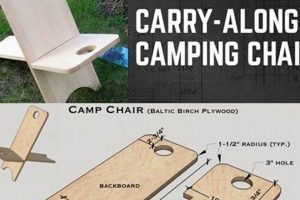
The creation of functional and decorative items from wood, utilizing inexpensive materials, offers an accessible entry point to the craft. Examples include constructing small storage boxes from reclaimed lumber, fashioning picture frames from readily available wood scraps, or building simple birdhouses using pallet wood. Such undertakings minimize material expenses while providing opportunities to develop fundamental skills.
Engaging in these cost-effective woodworking endeavors offers numerous advantages. It promotes resourcefulness, encourages creative problem-solving, and provides a tangible sense of accomplishment. Historically, woodworking has been a vital skill for creating essential household items and tools, and this approach allows individuals to connect with that tradition in an economically responsible manner. Furthermore, these activities can serve as a gateway to more complex and advanced woodworking techniques.
The following sections will explore various projects suitable for beginners, emphasizing readily accessible resources and step-by-step guidance. The objective is to equip individuals with the knowledge and confidence to embark on their own woodworking journey without significant financial investment.
Tips for Economical Woodworking Endeavors
The following recommendations aim to maximize efficiency and minimize expenses associated with crafting items from wood. Adherence to these principles will facilitate a more accessible and rewarding woodworking experience.
Tip 1: Material Sourcing. Prioritize reclaimed and repurposed wood. Pallets, discarded furniture components, and construction site offcuts often provide suitable materials for projects, significantly reducing raw material costs.
Tip 2: Project Selection. Begin with uncomplicated designs. Simple projects requiring minimal joinery and limited material quantities are ideal for developing foundational skills while minimizing the risk of costly errors.
Tip 3: Tool Acquisition. Invest in essential hand tools before power tools. A hand saw, chisel, measuring tape, and square can accomplish a wide range of tasks without the significant expense of powered equipment. Gradually acquire additional tools as needed.
Tip 4: Skill Development. Focus on mastering fundamental techniques. Accurately measuring, cutting, and joining wood are critical skills that will enhance the quality and durability of projects, regardless of material cost.
Tip 5: Plan Execution. Meticulously plan each stage of the project. Detailed plans, including accurate measurements and material lists, minimize waste and prevent costly mistakes. Careful planning contributes to both efficiency and economy.
Tip 6: Waste Management. Implement a system for managing wood scraps. Smaller pieces can be repurposed for future projects, reducing material expenses and promoting sustainability. Consider creating jigs or small accessories from leftover material.
Implementing these strategies can significantly reduce the financial barrier to entry into woodworking. A focus on resourcefulness, careful planning, and the development of essential skills promotes a more sustainable and economical approach to the craft.
The subsequent sections will delve into specific project ideas that align with these principles, providing practical examples of how to apply these strategies in real-world scenarios.
1. Material Acquisition

Material acquisition, in the context of woodworking where budgetary constraints are paramount, constitutes a critical determinant of project feasibility. The choice of materials significantly impacts overall project cost and resource expenditure.
- Reclaimed Lumber Sourcing
Obtaining lumber from reclaimed sources, such as discarded pallets, construction site offcuts, or deconstructed furniture, offers a significantly reduced cost alternative to purchasing new wood. These materials, while requiring additional preparation, such as nail removal and planing, provide a sustainable and economical foundation for woodworking projects. However, ensure that reclaimed material is safe to use and free of harmful chemicals.
- Utilizing Local Resources
Exploring locally available resources can lead to cost savings. This includes contacting local sawmills for less common wood species or purchasing directly from small-scale woodworkers. Engaging with local suppliers can provide access to lower prices and unique materials not typically found in larger retail chains.
- Scrap Wood Management
Effective scrap wood management involves carefully storing and organizing leftover pieces from previous projects. These scraps can be repurposed for smaller projects or incorporated as design elements in larger builds, thereby minimizing waste and reducing the need to purchase additional materials. Develop a system for cataloging and accessing these resources.
- Alternative Materials Exploration
Beyond traditional lumber, alternative materials such as bamboo, plywood, or composite boards can offer cost-effective options for certain projects. These materials possess unique properties and require different woodworking techniques, but they can significantly reduce material costs while providing desirable aesthetic or functional characteristics. Carefully consider the structural integrity and application of these alternative materials.
The effective utilization of these material acquisition strategies demonstrably enhances the feasibility of woodworking within restricted financial parameters. A resourceful approach to sourcing and managing materials directly contributes to the affordability and sustainability of the woodworking endeavor.
2. Simplified Designs

The adoption of simplified designs constitutes a fundamental strategy for cost reduction in woodworking endeavors. Complexity in design inherently translates to increased material requirements, intricate joinery, and prolonged construction time, all of which contribute to elevated project expenses. Conversely, streamlined designs minimize material waste, expedite construction processes, and reduce the reliance on specialized tools and advanced woodworking skills.
- Reduced Material Usage
Simple designs, characterized by minimal ornamentation and straightforward geometric forms, inherently require less material. A basic rectangular box, for example, utilizes significantly less wood than a multi-tiered shelving unit with intricate carvings. This reduction in material consumption directly translates to lower raw material costs, a significant factor in projects with limited budgets.
- Simplified Joinery Techniques
Complex designs often necessitate the use of advanced joinery techniques, such as dovetail joints or mortise-and-tenon joints, which demand precision and specialized tools. Simplified designs, on the other hand, can often be assembled using basic butt joints, screw connections, or dowel joints, requiring minimal skill and readily available tools. The avoidance of complex joinery reduces both labor time and the potential for costly errors.
- Accelerated Construction Time
The construction of intricate designs inevitably requires more time and effort than simpler alternatives. Simplified designs, with their reduced material requirements and straightforward joinery, allow for faster project completion. This accelerated construction time not only reduces labor costs but also minimizes the potential for project fatigue and errors.
- Ease of Adaption and Modification
Simplified designs offer flexibility in terms of adaptation and modification. If reclaimed or inexpensive wood pieces are slightly different sizes, simple designs are easier to adjust to accommodate these differences, reducing waste. More complex designs often lack the flexibility to allow for material variations, leading to increased waste and cost.
In summary, the strategic implementation of simplified designs represents a pivotal element in achieving cost-effectiveness in woodworking. By minimizing material usage, streamlining joinery techniques, and accelerating construction time, simplified designs enable individuals to engage in woodworking projects without incurring significant financial burden. The selection of simple, functional designs is, therefore, a critical first step in the pursuit of budget-conscious woodworking.
3. Essential Tooling

The acquisition of appropriate tools represents a significant consideration for woodworking endeavors. The selection of “Essential Tooling” directly impacts project feasibility, particularly in the context of “cheap woodworking projects,” where minimizing initial investment is paramount. A judicious approach to tool acquisition allows individuals to undertake a range of projects without incurring excessive expenditure.
- Hand Saws
Hand saws, specifically a crosscut saw and a rip saw, constitute a foundational element of essential tooling. These tools enable the accurate cutting of wood to specified dimensions, essential for project assembly. Unlike power saws, hand saws require no electricity, reducing operational costs. A well-maintained hand saw provides sufficient cutting capability for many “cheap woodworking projects” involving small to medium-sized stock.
- Measuring and Marking Tools
Accurate measurement and precise marking are indispensable for successful woodworking. A combination square, measuring tape, and marking knife are essential tools for ensuring accurate cuts and joinery. These tools are relatively inexpensive and crucial for minimizing material waste, a significant factor in maintaining project affordability. The absence of accurate measuring and marking tools can lead to costly errors and wasted material.
- Chisels
Chisels serve a multitude of purposes in woodworking, including shaping wood, creating joints, and removing excess material. A set of chisels, including a bench chisel and a mortise chisel, allows for the execution of a wide range of joinery techniques. While power tools can perform similar tasks, chisels offer greater control and precision, particularly in smaller-scale “cheap woodworking projects.”
- Clamps
Clamps are crucial for holding wood pieces together during glue-up, ensuring strong and accurate joints. Various types of clamps, such as bar clamps, pipe clamps, and spring clamps, are available. The selection of appropriate clamps depends on the size and shape of the project. While a comprehensive collection of clamps can be expensive, a basic assortment can be acquired gradually and used effectively for a variety of “cheap woodworking projects,” ensuring proper adhesion and structural integrity.
The strategic selection of essential tooling represents a critical aspect of undertaking “cheap woodworking projects.” Prioritizing hand tools and carefully managing tool acquisition costs enables individuals to engage in woodworking without significant financial burden. The gradual acquisition of additional tools can then be undertaken as project complexity and skill level increase.
4. Skill Development

The successful execution of budget-conscious woodworking is inextricably linked to skill development. Proficiency in fundamental woodworking techniques directly impacts material utilization, reduces waste, and minimizes the likelihood of costly errors. The acquisition of skills, therefore, transforms the potential for woodworking with inexpensive materials from a precarious endeavor into a viable and rewarding activity. For example, mastery of precise cutting techniques allows for the efficient use of reclaimed lumber, maximizing yield and reducing the need for additional material purchases. Similarly, a thorough understanding of joinery methods enables the construction of sturdy and aesthetically pleasing pieces from seemingly unpromising materials.
Skill development in areas such as sharpening tools, understanding wood properties, and applying finishes is also essential for maximizing the value of cheaper materials. A dull tool can tear the wood and lead to mistakes that wastes material, while knowledge of wood characteristics allows for proper selection and treatment of inexpensive wood types, preventing warping or cracking. Proper finishing techniques can elevate the appearance of budget-friendly wood, creating projects that look more polished and professional. A basic understanding of wood movement, for instance, ensures that projects built from readily available lumber remain structurally sound over time, even under varying environmental conditions. Proper use of finishing products such as paint or varnish can protect the wood from moisture and decay, extending the lifespan of the project.
In summary, skill development acts as a force multiplier for “cheap woodworking projects.” By enhancing efficiency, minimizing waste, and maximizing the potential of inexpensive materials, proficiency in woodworking techniques transforms budgetary constraints from a limitation into a creative challenge. Investment in skill development, whether through formal training, online resources, or practical experience, represents a crucial element in achieving successful and satisfying outcomes in cost-conscious woodworking endeavors. The development of said skills are integral to the pursuit of economical and successful woodwork projects.
5. Waste Minimization

Waste minimization is intrinsically linked to the economic viability of woodworking projects, particularly within the context of constrained budgets. Reducing waste translates directly into lower material costs, a crucial factor when undertaking projects where affordability is a primary concern. Waste in woodworking arises from various sources, including inaccurate cuts, design inefficiencies, and the improper handling of materials. Minimizing waste not only saves money but also promotes responsible resource utilization.
One practical application of waste minimization involves careful planning and precise measurement. By meticulously laying out cuts and minimizing errors, the amount of unusable material can be significantly reduced. For example, optimizing the arrangement of pattern pieces on a plywood sheet, often referred to as “nesting,” reduces the amount of wasted material. Another strategy involves repurposing offcuts from larger projects for smaller components or future builds. Small pieces of hardwood, considered waste by many, can be used for drawer pulls, small boxes, or inlays. Adopting such practices significantly diminishes material expenses.
In conclusion, waste minimization is not merely an ancillary consideration but an integral component of successful and affordable woodworking. Through careful planning, efficient cutting techniques, and resourceful repurposing of materials, individuals can significantly reduce project costs and promote sustainability. Addressing challenges such as the handling of irregular stock or the storage of small offcuts requires proactive strategies, but the economic and environmental benefits of waste minimization render it a critical practice in the pursuit of accessible woodworking.
Frequently Asked Questions
The following addresses common inquiries regarding the practice of woodworking on a limited budget. The information presented aims to clarify misconceptions and provide practical guidance.
Question 1: Is specialized equipment essential for undertaking woodworking endeavors with limited financial resources?
No. While advanced machinery can enhance efficiency, fundamental projects are achievable with essential hand tools. A focus on hand tools reduces initial investment and promotes the development of core woodworking skills.
Question 2: What constitutes a suitable source for inexpensive woodworking materials?
Reclaimed lumber, including pallets and construction site offcuts, provides a viable alternative to purchasing new materials. Local resources, such as sawmills and salvage yards, may also offer cost-effective options.
Question 3: How can material waste be effectively minimized during woodworking projects?
Careful planning, precise measurements, and the repurposing of offcuts are critical for reducing waste. Optimized layout and efficient cutting techniques maximize material utilization.
Question 4: Are certain woodworking project types more suitable for beginners with constrained budgets?
Simple designs, such as basic boxes, shelves, and picture frames, require less material and simpler joinery techniques, making them ideal for novice woodworkers.
Question 5: Is the aesthetic quality of woodworking projects compromised by the use of inexpensive materials?
Not necessarily. Careful selection of materials, combined with proper preparation and finishing techniques, can yield aesthetically pleasing results, even with budget-friendly materials.
Question 6: How important is skill development in achieving successful and affordable woodworking outcomes?
Skill development is paramount. Proficiency in fundamental woodworking techniques directly impacts material utilization, reduces waste, and minimizes the likelihood of costly errors.
In summary, successful and affordable woodworking hinges on resourceful material acquisition, careful planning, skill development, and a commitment to minimizing waste. These principles enable individuals to engage in the craft without incurring significant financial burden.
The subsequent sections will provide actionable strategies for optimizing resource utilization and maximizing the economic benefits of woodworking endeavors.
Cheap Woodworking Projects
The preceding exploration of “cheap woodworking projects” has illuminated critical strategies for engaging in the craft with limited financial resources. Key tenets include resourceful material acquisition, prioritization of simplified designs, judicious tool investment, emphasis on skill development, and the implementation of waste minimization techniques. These principles, when diligently applied, collectively enable accessible and rewarding woodworking experiences.
The viability of “cheap woodworking projects” extends beyond mere economic considerations. It fosters resourcefulness, encourages creative problem-solving, and promotes sustainable practices within the craft. Continued focus on innovative material sourcing, efficient design methodologies, and accessible educational resources will further democratize woodworking, enabling broader participation and fostering a culture of sustainable craftsmanship.
![Top Profitable Woodworking Projects to Sell [Guide] | Step-by-Step Guides, Tools & Inspiration to Build Beautiful Wooden Decor on a Budget](https://woodfromhome.com/wp-content/uploads/2026/04/th-243-300x200.jpg "Top Profitable Woodworking Projects to Sell [Guide] Step-by-Step Guides, Tools & Inspiration to Build Beautiful Wooden Decor on a Budget")