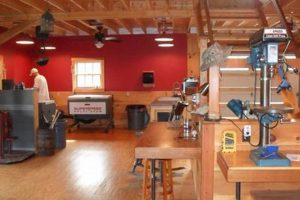
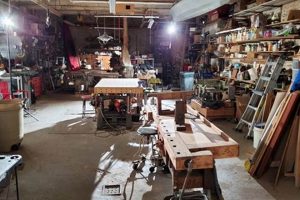
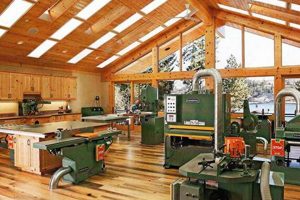
The tools and machinery essential for shaping, cutting, and joining wood fall under the umbrella of a dedicated workspace’s assets. These items range from handheld devices like saws and planes to stationary power tools such as table saws and jointers. A well-stocked environment might also incorporate clamping devices, measuring instruments, and dust collection systems.
The proper selection and utilization of these implements are paramount to achieving precision, efficiency, and safety in various construction and fabrication tasks. Historically, advancements in these resources have significantly influenced woodworking techniques and the scale of projects achievable. Access to reliable and appropriate sets directly impacts productivity and the overall quality of finished pieces.
The subsequent discussion will delve into specific categories of tools, exploring the features, applications, and considerations relevant to selecting appropriate devices for diverse operational requirements. Furthermore, safety protocols and maintenance strategies will be addressed to ensure the longevity and optimal performance of these essential resources.
Essential Guidance for Optimal Workspace Configuration
The following recommendations address critical aspects of selecting, organizing, and maintaining essential workspace resources to maximize efficiency and safety. Careful consideration of these points will contribute to enhanced project outcomes and a prolonged lifespan of valuable assets.
Tip 1: Prioritize Safety Devices: Eye protection, hearing protection, and respiratory masks are non-negotiable. Implement standard operating procedures for consistent usage. Regularly inspect and replace worn or damaged safety equipment.
Tip 2: Invest in Quality Measurement Tools: Accurate measurements are fundamental to project success. Calipers, measuring tapes, and squares should be of high quality and regularly calibrated. Ensure adequate lighting for clear visibility of markings.
Tip 3: Optimize Layout for Workflow: Arrange stationary machines to facilitate a logical material flow from rough stock to finished product. Minimize unnecessary movement and potential hazards by strategically positioning workstations.
Tip 4: Implement a Dust Collection System: Fine wood dust poses significant health risks. Invest in a dedicated dust collector or a high-efficiency particulate air (HEPA) filter system. Regularly empty dust collection bags and clean filters.
Tip 5: Maintain Sharp Cutting Edges: Dull blades and bits increase the risk of kickback and produce inferior results. Sharpen or replace cutting tools regularly. Establish a routine maintenance schedule to ensure optimal performance.
Tip 6: Secure Workpieces Effectively: Utilize clamps, vises, and jigs to firmly secure workpieces during cutting and shaping operations. Avoid using hands to stabilize materials, as this significantly increases the risk of injury.
Tip 7: Establish a Regular Maintenance Schedule: Inspect machinery for loose parts, worn belts, and lubrication needs. Adhere to manufacturer-recommended maintenance intervals to prevent breakdowns and extend the life of the equipment.
These strategies aim to cultivate a safer and more efficient operating environment, contributing to both the longevity of resources and the consistent production of high-quality finished goods. Proactive measures are essential for mitigating risks and maximizing the potential of these crucial workspace assets.
The subsequent sections will explore more granular details regarding specific machinery types and their associated operational considerations.
1. Power Tool Precision

The efficacy of woodworking shop tools hinges significantly on the precision they afford. Power tools, integral to woodworking shop equipment, represent a substantial investment; their value is directly proportional to their capacity to execute cuts, shaping, and joinery with minimal deviation from specified dimensions. A table saw, for instance, must deliver consistently square and accurately sized components for furniture construction. A jointer’s ability to create perfectly flat and square edges is essential for subsequent glue-ups. Inaccurate machinery yields substandard results, increasing material waste and labor costs, and potentially compromising structural integrity in finished goods. Therefore, power tool precision is not merely a desirable attribute but a fundamental requirement for professional-grade output.
Calibration and maintenance are paramount in preserving power tool precision. A misaligned fence on a table saw, for example, will produce angled cuts, rendering the workpieces unusable for projects demanding orthogonal geometry. Similarly, dull planer blades create uneven surfaces, necessitating additional sanding and diminishing the overall quality of the material. Regularly inspecting and adjusting power tools to meet factory specifications, coupled with diligent blade sharpening or replacement, ensures that the equipment consistently performs to its intended capabilities. This preventative approach minimizes errors and maximizes efficiency across diverse operations.
Power tool precision is a critical determinant of woodworking shop equipment’s overall effectiveness. Neglecting precision leads to diminished product quality and heightened operational expenses. Prioritizing calibration, maintenance, and the selection of high-quality machinery are essential steps in realizing the full potential of power tools and achieving consistent, professional-level results. The symbiotic relationship between tool accuracy and workmanship underscores its importance within the broader framework of woodworking practices.
2. Hand Tool Versatility

Hand tool versatility constitutes a significant element of comprehensive woodworking shop equipment. The inherent adaptability of these tools allows for a broad range of operations, often exceeding the capabilities of specialized power equipment in certain scenarios. This inherent capacity provides a crucial buffer in situations where power failures occur or when intricate, detailed work necessitates a finer touch. Furthermore, hand tools require no electrical power, making them suitable for remote job sites or environmentally conscious practices. Their reliance on human skill fosters a deeper understanding of wood properties and manipulation techniques.
Consider the example of shaping a complex curve on a furniture component. While a router with specialized jigs can achieve this, a spokeshave or drawknife offers greater control and responsiveness, particularly when working with figured wood grain. Similarly, fine-tuning joinery for a tight, gap-free fit often benefits from the precise adjustments attainable with chisels and hand planes. The versatility of hand tools extends to their portability; a small kit of essential hand tools can be readily transported to address repairs or modifications on-site, a feat impractical with stationary power equipment.
In summary, hand tool versatility complements and extends the capabilities of power woodworking tools. Recognizing the practical significance of hand tool proficiency within a workshop setting allows woodworkers to adapt to diverse project demands, maintain operational resilience, and cultivate a nuanced understanding of their craft. The integration of both power and hand tools maximizes efficiency and precision, ensuring a robust and adaptable operational environment.
3. Safety Device Necessity
The integration of safety devices is not merely an adjunct to woodworking shop equipment; it is a foundational element dictating the operational viability and ethical integrity of any workspace devoted to shaping wood. The inherent hazards associated with woodworking machinery, including high-speed rotating blades, projectile debris, and fine particulate matter, necessitate the proactive deployment of protective measures. These measures encompass, but are not limited to, eye protection, hearing protection, respiratory safeguards, and machine-specific guards and interlocks. Their absence or improper utilization directly correlates with an elevated risk of injury, ranging from minor lacerations to life-altering disabilities. Examples such as the shattering of improperly seasoned wood during sawing operations underscore the need for robust eye protection, while prolonged exposure to machine noise necessitates hearing conservation measures. The practical significance of acknowledging safety device necessity lies in its ability to mitigate predictable risks, fostering a sustainable and responsible operational environment.
The effectiveness of safety devices hinges not only on their provision but also on their consistent and appropriate application. Policies mandating the use of personal protective equipment (PPE), coupled with comprehensive training on machine operation and hazard recognition, are essential components of a safety-conscious culture. Regular inspection and maintenance of safety devices, such as ensuring the functionality of blade guards and emergency stop mechanisms, are equally critical. Furthermore, the selection of appropriate PPE for specific tasks is paramount; a dust mask designed for general particulate filtration is inadequate for protection against the volatile organic compounds released during certain finishing processes. The practical application of safety principles extends beyond mere compliance with regulatory standards; it reflects a commitment to the well-being of individuals engaged in woodworking activities.
In conclusion, the necessity of safety devices within the context of woodworking shop equipment transcends simple regulatory compliance. It is an ethical imperative rooted in the acknowledgment of inherent occupational hazards. Consistent implementation of safety protocols, coupled with ongoing training and equipment maintenance, is crucial for minimizing risk and fostering a sustainable operational environment. Failure to prioritize safety device necessity carries significant consequences, ranging from individual injury to organizational liability. Therefore, it must be considered an inseparable and non-negotiable aspect of any woodworking endeavor.
4. Material Handling Capacity
Material handling capacity, as a critical aspect of efficient woodworking operations, directly influences the productivity and safety within a woodworking shop environment. The movement of raw lumber, partially completed projects, and finished goods necessitates appropriate equipment and strategies to minimize manual labor, prevent damage to materials, and optimize workflow. Insufficient material handling capabilities can create bottlenecks, leading to project delays and increased operational costs. Conversely, a well-designed material handling system enhances efficiency and contributes to a safer working environment. Examples range from simple hand trucks and carts for moving lumber to more sophisticated conveyor systems in larger-scale operations. The capacity to efficiently manage material flow is inextricably linked to the overall performance of a woodworking shop, thus constituting an essential component of effective woodworking shop equipment planning.
Consider the logistical challenges of processing large panels of plywood or solid wood stock. Without appropriate material handling tools, such as panel carts or vacuum lifters, workers face increased physical strain and a higher risk of injury. Moreover, the potential for damage to the materials themselves rises significantly when handled manually. The adoption of mechanical lifting devices and specialized carts reduces these risks, enabling smoother and safer material movement. Furthermore, an optimized layout incorporating designated pathways and storage areas minimizes unnecessary material movement, reducing both time and potential damage. Implementing roller stands for outfeed support on saws and planers also represents a practical application, enhancing control and preventing workpiece instability during machining processes.
In summary, material handling capacity is an indispensable factor in determining the overall effectiveness of woodworking shop equipment. Its influence extends to productivity, safety, and material preservation. Deficiencies in material handling infrastructure can lead to operational inefficiencies and increased risks, while a well-planned system contributes to a more streamlined, safer, and ultimately more profitable woodworking enterprise. Prioritizing material handling solutions during the planning and outfitting of a woodworking shop is therefore a crucial investment that yields significant long-term benefits.
5. Workspace Organization

Effective workspace organization is not merely an aesthetic consideration within a woodworking shop environment. It represents a critical determinant of operational efficiency, safety, and the longevity of woodworking shop equipment. A well-organized space directly minimizes hazards, streamlines workflow, and facilitates proper maintenance, thereby maximizing productivity and reducing potential equipment downtime.
- Equipment Placement for Workflow
Strategic arrangement of machinery and tools optimizes material flow and minimizes unnecessary movement. Placing frequently used equipment in readily accessible locations reduces time wasted searching for items and lessens the likelihood of accidents resulting from navigating cluttered spaces. A logical layout ensures that raw materials progress smoothly through the various stages of processing without creating bottlenecks or hazards. For example, situating a jointer and planer adjacent to a lumber storage area streamlines initial stock preparation.
- Dedicated Storage Solutions
Implementing designated storage areas for tools, hardware, and materials is crucial for maintaining order and preventing damage. Utilizing tool chests, cabinets, and shelving systems not only protects equipment from dust and impact but also facilitates quick and easy access. Clear labeling of storage containers and compartments ensures that items are returned to their designated locations, preventing misplaced tools and wasted time. A well-organized storage system promotes efficient inventory management and reduces the risk of running out of essential supplies.
- Dust and Debris Management
Woodworking operations generate significant amounts of dust and debris, which can pose health risks and contribute to equipment wear. A dedicated dust collection system is essential for maintaining a clean and safe working environment. Regular cleaning of floors, work surfaces, and machinery prevents the accumulation of dust and debris, reducing the risk of fire hazards and respiratory problems. Implementing designated waste disposal areas for wood scraps and sawdust further contributes to a tidy and organized workspace.
- Maintenance Accessibility
Workspace organization should facilitate easy access to equipment for routine maintenance and repairs. Ensuring adequate clearance around machinery allows for thorough inspection and lubrication. Storing maintenance tools and supplies in a readily accessible location promotes prompt attention to minor issues before they escalate into major problems. Clear pathways to electrical panels and other utility connections are essential for ensuring safe and efficient maintenance operations.
The facets of workspace organization outlined above are intricately linked to the effective utilization and maintenance of woodworking shop equipment. A well-organized workspace fosters a culture of efficiency, safety, and responsibility, contributing to enhanced productivity and the prolonged lifespan of valuable assets. Conversely, a disorganized workspace poses significant risks and undermines the overall effectiveness of woodworking operations.
6. Maintenance Regimen

A comprehensive maintenance regimen is fundamental to the longevity, safety, and consistent performance of woodworking shop equipment. The absence of scheduled upkeep precipitates accelerated wear, compromised accuracy, and elevated risk of operational failure, resulting in increased costs and potential hazards.
- Lubrication and Friction Reduction
Regular lubrication of moving parts, such as bearings, gears, and slides, minimizes friction and prevents premature wear. Accumulated friction generates heat, accelerates component degradation, and increases power consumption. Application of appropriate lubricants, adhering to manufacturer specifications, ensures smooth operation and extends the lifespan of critical machinery components. Examples include lubricating the spindle bearings of a router or the ways of a lathe.
- Blade Sharpening and Replacement
Dull cutting edges on saws, planers, and jointers compromise cut quality, increase the risk of kickback, and place undue stress on motor components. Routine sharpening or replacement of blades maintains optimal cutting performance, reduces motor strain, and enhances user safety. The frequency of sharpening or replacement depends on usage intensity and the type of material being processed. Regularly inspecting blade condition and addressing dullness promptly is critical.
- Dust Collection System Maintenance
Effective dust collection is crucial for both worker health and equipment longevity. Clogged filters and ductwork reduce airflow, diminishing the system’s ability to remove fine particulate matter. Regular cleaning or replacement of filters and inspection of ductwork for obstructions ensures optimal dust collection efficiency, mitigating respiratory hazards and preventing dust accumulation on machinery components. Neglecting dust collection maintenance can lead to motor overheating and reduced equipment lifespan.
- Inspection and Adjustment
Periodic inspection of woodworking shop equipment for loose fasteners, worn belts, and misaligned components is essential for identifying and addressing potential issues before they escalate. Adjusting machine settings, such as fence alignment on a table saw or infeed/outfeed tables on a jointer, ensures accuracy and precision in woodworking operations. Regular inspection and adjustment contribute to consistent performance and prevent costly repairs resulting from neglected mechanical problems.
These maintenance activities are intrinsic to the reliable operation of woodworking shop equipment. Consistent adherence to a scheduled maintenance regimen not only safeguards the investment in machinery but also promotes a safe and efficient working environment, ultimately contributing to the quality and profitability of woodworking endeavors.
7. Accuracy Instruments

The correlation between precision measuring devices and woodworking machinery is foundational to achieving predictable and repeatable results in fabrication. Tools classified as accuracy instruments, including but not limited to calipers, measuring tapes, squares, and levels, serve as essential complements to woodworking shop equipment. Their primary function is to establish and verify dimensional consistency throughout the manufacturing process. The inherent accuracy of these instruments directly impacts the final dimensions, structural integrity, and aesthetic appeal of completed projects. For instance, a precisely calibrated caliper is crucial for determining the exact thickness of a workpiece before final assembly, ensuring a flush fit between adjoining components. Similarly, a high-quality square is indispensable for creating right-angled joints that are both structurally sound and visually pleasing. Therefore, the integration of accurate measuring tools is not merely ancillary but an intrinsic component of a fully functional workspace.
The application of accuracy instruments extends beyond simple measurement. They are indispensable for calibrating and maintaining the accuracy of power tools. A dial indicator, for example, can be used to align the fence of a table saw, ensuring that cuts are consistently parallel to the blade. A precision level is critical for adjusting the tables of jointers and planers, guaranteeing that surfaces are uniformly flat and square. Without these instruments, even the most advanced woodworking machinery is susceptible to producing inaccurate results. Furthermore, accuracy instruments play a critical role in the construction of jigs and fixtures, which are essential for replicating complex shapes and performing specialized operations. In this context, their ability to establish precise reference points and dimensions is paramount to achieving repeatable and predictable outcomes.
In conclusion, the dependence of high-quality woodworking on accuracy instruments cannot be overstated. Their influence permeates every stage of the fabrication process, from initial dimensioning to final assembly. The absence of reliable measuring tools introduces significant variability and compromises the precision and quality of finished work. While the selection and utilization of accuracy instruments may present challenges in terms of initial investment and operator training, the long-term benefits in terms of improved accuracy, reduced waste, and enhanced project quality far outweigh these considerations. Therefore, they must be regarded as integral components of any comprehensive woodworking shop equipment inventory.
Frequently Asked Questions About Woodworking Shop Equipment
This section addresses common inquiries regarding the selection, maintenance, and safe operation of essential tools and machinery used in woodworking.
Question 1: What constitutes the essential woodworking shop equipment for a beginner?
A foundational setup typically includes a table saw, jointer, planer, drill press, bandsaw, and an assortment of hand tools such as chisels, hand planes, and measuring instruments. This configuration provides versatility for a wide range of woodworking projects.
Question 2: How frequently should woodworking shop equipment undergo maintenance?
Maintenance frequency varies depending on usage intensity and equipment type. However, a general guideline is to lubricate moving parts monthly, sharpen blades quarterly, and conduct a comprehensive inspection annually.
Question 3: What safety precautions are paramount when operating woodworking machinery?
Eye protection, hearing protection, and respiratory protection are non-negotiable. Additionally, machine guards should be in place and functioning correctly, and operators must receive thorough training on safe operating procedures.
Question 4: What factors should influence the selection of a dust collection system for a woodworking shop?
Considerations include the size of the shop, the volume of dust generated, and the filtration efficiency of the system. A system with sufficient airflow and a HEPA filter is recommended for optimal dust removal.
Question 5: How does the quality of woodworking shop equipment impact project outcomes?
Higher-quality equipment typically offers greater precision, durability, and reliability, resulting in improved accuracy, reduced material waste, and increased efficiency. Investing in quality equipment often translates to superior finished products.
Question 6: What are the implications of neglecting routine maintenance on woodworking shop equipment?
Neglecting maintenance can lead to reduced performance, increased risk of equipment failure, and potential safety hazards. Regular maintenance extends the lifespan of equipment and ensures consistent operation.
Proper understanding of these aspects ensures efficient and safe operation of woodworking resources. Prioritizing safety, maintenance, and quality optimizes the long-term productivity of any woodworking enterprise.
The subsequent sections will delve into resources for skill development within woodworking environments.
Conclusion
The preceding exploration has illuminated the multifaceted nature of woodworking shop equipment, emphasizing its crucial role in shaping raw materials into functional and aesthetically pleasing objects. The discourse has highlighted the significance of precision, versatility, safety, efficient material handling, organized workspaces, diligent maintenance, and accurate measurement in maximizing the effectiveness of these resources. It is apparent that woodworking shop equipment represents more than a collection of tools; it embodies a system wherein each component must function harmoniously to achieve optimal results.
The responsible selection, operation, and maintenance of woodworking shop equipment are not merely matters of practicality but also reflections of a commitment to craftsmanship, safety, and sustainability. Continued attention to these principles will ensure the longevity of this vital equipment and the continued advancement of woodworking as both a practical skill and an art form. The pursuit of excellence in woodworking demands a continuous investment in knowledge, skill, and the careful management of these essential resources.