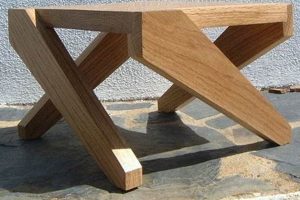
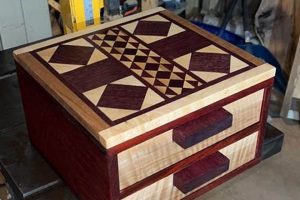
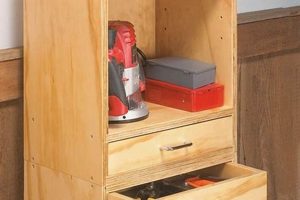
The creation and sale of wooden items that require minimal initial investment but yield significant returns represents a viable business avenue for many. Examples include small decorative items, practical household organizers, or personalized gifts, all crafted with inexpensive materials and basic tools.
This approach to woodworking offers numerous advantages, including reduced financial risk, faster project completion times, and the potential for substantial profit margins. Historically, woodworking has provided a supplemental income stream for individuals and families, and this model continues to be relevant in the modern marketplace, particularly with the rise of online marketplaces and direct-to-consumer sales.
The following discussion will explore specific project ideas suited to this model, outline strategies for sourcing affordable materials, and provide guidance on effective marketing techniques to maximize profitability. Emphasis will be placed on projects that require minimal skill and can be produced quickly, thereby optimizing both time and resources.
Maximizing Returns Through Strategic Woodworking
The following strategies are designed to optimize the profitability of woodworking endeavors by minimizing costs and maximizing revenue generation.
Tip 1: Material Selection: Prioritize readily available and inexpensive wood species such as pine, fir, or pallet wood. Explore local lumberyards for discounted or off-cut pieces.
Tip 2: Project Simplification: Focus on designs that minimize material waste and require minimal assembly. Simple geometric shapes and straightforward construction techniques are preferable.
Tip 3: Efficient Finishing: Opt for cost-effective finishing methods such as staining, painting, or simple oil finishes. Avoid expensive varnishes or lacquers unless specifically requested by a customer.
Tip 4: Jig Utilization: Construct jigs and templates to improve accuracy and repeatability, reducing errors and material waste. Standardized jigs accelerate the production process.
Tip 5: Batch Production: Fabricate multiple units of the same item simultaneously to leverage economies of scale. Batch production streamlines the workflow and minimizes setup time.
Tip 6: Strategic Pricing: Calculate the cost of materials and labor accurately, and then apply a markup that reflects the perceived value of the finished product. Research competitor pricing to establish a competitive rate.
Tip 7: Online Presence: Establish a presence on online marketplaces such as Etsy or Facebook Marketplace to reach a wider customer base. High-quality photographs and detailed product descriptions are crucial.
Tip 8: Customer Engagement: Foster customer loyalty by providing excellent service and addressing inquiries promptly. Positive customer reviews and referrals can significantly boost sales.
Adhering to these recommendations can significantly enhance the financial viability of woodworking projects, resulting in increased profitability and a more sustainable business model.
The subsequent section will address strategies for scaling woodworking operations and diversifying product offerings.
1. Material Sourcing
The selection and acquisition of raw materials constitutes a foundational element in the pursuit of woodworking projects that are both inexpensive to produce and capable of generating significant profit. Strategic material sourcing directly influences the overall cost structure and, consequently, the potential profit margins of any woodworking enterprise.
- Reclaimed Wood Utilization
Reclaimed wood, sourced from deconstructed buildings, old furniture, or discarded pallets, offers a cost-effective alternative to purchasing new lumber. This approach reduces material expenses and imparts a unique aesthetic to finished products, potentially increasing their market value. However, reclaimed wood requires careful inspection and preparation to ensure structural integrity and absence of contaminants.
- Local Lumberyard Partnerships
Establishing relationships with local lumberyards can provide access to discounted lumber, off-cuts, and overstocked materials. Negotiating bulk discounts and building rapport with suppliers are essential components of effective material sourcing. This strategy necessitates a proactive approach to identifying and securing favorable pricing opportunities.
- Alternative Wood Species Selection
Substituting expensive hardwoods with readily available and less costly softwoods, such as pine or fir, can significantly reduce material costs. While softwoods may require different finishing techniques, they offer a viable option for projects where structural strength is not paramount. The careful selection of appropriate wood species based on project requirements is crucial for cost optimization.
- Salvaged Material Integration
Incorporating salvaged materials, such as discarded hardware, metal scraps, or repurposed components, into woodworking projects can further reduce expenses. This approach necessitates creativity and resourcefulness in identifying and adapting salvaged items for functional or decorative purposes. Salvaged materials can add unique character and value to finished products while minimizing material costs.
These multifaceted approaches to material sourcing collectively contribute to the feasibility of crafting woodworking projects with minimal upfront investment while maximizing the potential for substantial financial returns. Efficient procurement and strategic utilization of materials are essential for achieving a sustainable and profitable woodworking venture.
2. Design Simplicity

Design simplicity plays a critical role in the viability of woodworking projects aimed at generating high profits while maintaining low initial costs. The complexity of a design directly impacts material usage, production time, and skill requirements, all of which influence the overall cost-effectiveness of a project.
- Reduced Material Waste
Simplified designs minimize material waste by utilizing standard lumber dimensions efficiently and reducing the need for intricate cuts or complex joinery. For example, a simple rectangular shelf requires less material and generates less scrap compared to a more elaborate, curved design. This direct reduction in material usage translates to lower production costs and higher profit margins.
- Decreased Production Time
Simple designs inherently require less time to construct. Fewer steps, simpler joinery techniques, and a reduced number of components contribute to faster production cycles. A basic wooden box, for instance, can be assembled far more quickly than a dovetailed drawer with intricate inlays. This decreased production time allows for a higher volume of output, increasing overall profitability.
- Lower Skill Requirement
Projects with simple designs generally require less specialized woodworking skills. Basic cutting, sanding, and assembly techniques are often sufficient for producing aesthetically pleasing and functional items. A simple birdhouse, for example, can be constructed with minimal prior experience. This lower skill threshold allows for the utilization of less expensive labor or enables individuals with limited woodworking experience to participate, further reducing production costs.
- Scalability and Standardization
Simplified designs facilitate scalability and standardization of the production process. The use of consistent dimensions, readily available materials, and easily replicable construction techniques allows for the efficient manufacturing of large quantities of identical items. A set of basic wooden coasters, for example, can be produced in large batches using standardized templates and processes, leading to increased efficiency and higher profitability.
The adoption of design simplicity across all stages of the woodworking process, from initial concept to final assembly, is crucial for achieving the desired balance between low production costs and high profit margins. By prioritizing efficiency, minimizing waste, and simplifying construction, woodworking entrepreneurs can maximize their returns and establish a sustainable business model.
3. Efficient Production

Efficient production methodologies are central to the creation of woodworking projects that yield high profit margins while maintaining low initial costs. The ability to streamline manufacturing processes directly impacts resource utilization, labor expenses, and overall output capacity, thereby determining the economic viability of such projects.
- Optimized Workflow Design
A well-designed workflow minimizes unnecessary steps and movement during the production process. The arrangement of tools and materials, the sequencing of tasks, and the implementation of ergonomic principles are critical components. For example, a dedicated sanding station with dust collection reduces cleanup time and improves air quality, leading to increased productivity and reduced labor costs. An optimized workflow translates directly into faster production cycles and reduced expenses.
- Jig and Fixture Utilization
Jigs and fixtures provide repeatable accuracy and consistency in woodworking operations. These tools simplify complex tasks, reduce the likelihood of errors, and accelerate the production process. A simple jig for cutting tenons, for instance, ensures consistent dimensions and reduces the need for individual measurements. The use of jigs and fixtures minimizes material waste and labor time, leading to significant cost savings and increased output.
- Standardized Processes
Standardized processes involve the creation and implementation of documented procedures for each stage of production. This ensures consistency, reduces variability, and facilitates training. For instance, a written protocol for applying a particular finish ensures uniform results and minimizes errors. The use of standardized processes streamlines operations, reduces defects, and improves overall efficiency.
- Batch Processing Techniques
Batch processing involves producing multiple units of the same item simultaneously. This approach leverages economies of scale and reduces setup time. Setting up a saw for multiple identical cuts, rather than making individual cuts for each item, saves time and effort. Batch processing streamlines workflow, reduces the frequency of tool changes, and maximizes output, leading to lower production costs and higher profits.
In summary, the implementation of efficient production methodologies, including optimized workflow design, jig and fixture utilization, standardized processes, and batch processing techniques, is paramount for achieving the desired balance between low production costs and high profit margins in woodworking endeavors. These strategies minimize waste, reduce labor expenses, and maximize output, ultimately enhancing the economic viability of such projects.
4. Strategic Pricing

Strategic pricing is a critical component in the pursuit of woodworking projects that aim for low initial costs and high profit margins. Effective pricing strategies ensure that the final product’s value is appropriately recognized and monetized, maximizing profitability while remaining competitive within the target market.
- Cost-Plus Pricing Evaluation
Cost-plus pricing involves calculating the total cost of materials, labor, and overhead, then adding a predetermined markup percentage to determine the selling price. This method ensures that all expenses are covered and a profit is realized. For example, if a wooden box costs $10 in materials and $5 in labor, a 50% markup would result in a selling price of $22.50. Accurate cost tracking is crucial for successful cost-plus pricing; underestimated expenses can erode profit margins.
- Value-Based Pricing Considerations
Value-based pricing sets prices according to the perceived value of the product to the customer, rather than solely on production costs. This strategy is particularly effective for unique or handcrafted items where customers are willing to pay a premium for quality and design. A handcrafted wooden pen, for instance, might command a higher price than a mass-produced plastic pen, even if the production cost is similar. Effective value-based pricing requires a deep understanding of customer preferences and market trends.
- Competitive Pricing Analysis
Competitive pricing involves researching the prices of similar products offered by competitors and setting prices accordingly. This strategy is essential for maintaining market share and attracting price-sensitive customers. If several vendors sell similar wooden cutting boards, the price must be competitive to attract buyers. Competitive pricing often requires adjustments to cost structures or product differentiation strategies to maintain profitability.
- Psychological Pricing Techniques
Psychological pricing utilizes pricing strategies that appeal to customers’ perceptions and emotions. For instance, setting a price at $9.99 instead of $10 can create the perception of a lower price point, even though the difference is minimal. Bundling products together at a discounted price can also increase sales volume. Implementing psychological pricing techniques requires careful consideration of target market behavior and cultural norms.
These pricing methodologies serve as a foundation for establishing profitability in woodworking ventures. The judicious application of these principles, coupled with astute cost management and a nuanced understanding of market dynamics, enables the realization of woodworking projects that exhibit both low cost and high profit potential.
5. Targeted Marketing

The success of low cost high profit woodworking projects hinges significantly on effective targeted marketing. A generalized marketing approach often proves inefficient, dissipating resources and yielding minimal returns. The core principle involves identifying specific customer segments most likely to purchase particular wooden products and then directing marketing efforts exclusively toward those segments. This precise approach maximizes conversion rates while minimizing advertising expenditure, a critical factor in maintaining a low-cost business model. For instance, marketing handcrafted wooden toys through parenting blogs and social media groups focused on child development proves more effective than broad-spectrum advertising campaigns.
Effective targeted marketing necessitates a comprehensive understanding of the product and the potential customer. Factors such as age, income, lifestyle, and geographic location influence purchasing decisions. Data analytics plays a crucial role in identifying these patterns. Online platforms offer tools to track customer behavior and tailor advertising accordingly. Furthermore, understanding the unique selling proposition of the wooden products is vital. If the products are eco-friendly, marketing should target environmentally conscious consumers. A direct consequence of successful targeted marketing is increased sales volume and brand recognition within the defined customer segment, ultimately leading to higher profitability despite lower marketing costs.
In summary, targeted marketing represents a cornerstone of low cost high profit woodworking projects. By concentrating marketing efforts on specific, receptive customer segments, businesses can optimize their marketing budget, increase sales conversion rates, and establish a loyal customer base. This targeted approach not only enhances profitability but also fosters brand recognition and sustainable growth within the competitive woodworking market. Overcoming the challenge of identifying and accurately targeting the ideal customer requires ongoing analysis and adaptation of marketing strategies.
6. Customer Service

Customer service constitutes a pivotal, often underestimated, component of low cost high profit woodworking projects. While production efficiency and material sourcing are crucial, exemplary customer service can significantly amplify profitability by fostering repeat business and positive word-of-mouth referrals. A direct correlation exists between positive customer interactions and increased sales volume. For example, a prompt response to a customer inquiry regarding custom sizing or finish options can directly lead to a purchase. Conversely, negative experiences, such as delayed responses or unresolved issues, can deter potential customers and damage brand reputation.
The financial implications of poor customer service are substantial. Acquiring a new customer typically costs more than retaining an existing one. Satisfied customers are more likely to make repeat purchases and recommend the business to others, effectively reducing marketing expenses. A woodworking business specializing in personalized wooden gifts, for instance, can cultivate customer loyalty by offering free gift wrapping, handwritten thank-you notes, or prompt resolution of any issues related to craftsmanship. These small gestures can create a positive impression, leading to increased customer retention and positive online reviews, further attracting new customers organically. In essence, superior customer service becomes a cost-effective marketing tool, enhancing brand image and driving sales.
In summary, customer service is not merely an ancillary function but an integral driver of profitability in low cost high profit woodworking ventures. By prioritizing responsiveness, personalization, and effective problem-solving, woodworking businesses can cultivate customer loyalty, reduce marketing costs, and ultimately achieve higher profit margins. The long-term sustainability of such projects is inextricably linked to the quality of customer service provided. Challenges in providing excellent service, such as limited staff or resources, can be addressed through efficient communication strategies and a commitment to exceeding customer expectations whenever possible.
7. Scalability Potential
Scalability potential represents a critical determinant in the long-term viability of woodworking projects aiming for low initial costs and high profit margins. The capacity to expand production and adapt to increasing demand directly influences the sustainability and revenue-generating capacity of such ventures.
- Automation and Technology Integration
The incorporation of automated machinery and computer-aided design (CAD) technologies can significantly enhance production capacity. While initial investment may be required, the long-term reduction in labor costs and increased output volume can justify the expense. For example, a CNC router can automate intricate cutting tasks, enabling the production of complex designs at a faster rate. The strategic implementation of technology can facilitate scalability without compromising cost-effectiveness.
- Outsourcing and Subcontracting
Outsourcing specific tasks or subcontracting production to external vendors can alleviate capacity constraints and reduce the need for extensive in-house expansion. This approach allows businesses to focus on core competencies while leveraging the expertise and resources of specialized providers. For instance, finishing or assembly tasks can be outsourced to external partners, freeing up internal resources for design and marketing. Careful selection and management of outsourcing partners are crucial for maintaining quality and cost control.
- Inventory Management and Logistics
Efficient inventory management and streamlined logistics processes are essential for handling increased production volumes. Implementing inventory tracking systems and optimizing supply chain operations can minimize storage costs and ensure timely delivery of products to customers. For example, utilizing just-in-time inventory management techniques can reduce the need for large storage facilities and minimize the risk of obsolescence. Effective logistics management is critical for scaling operations without incurring excessive costs.
- Product Line Diversification
Expanding the product line to include related items or complementary offerings can attract a wider customer base and increase revenue streams. Diversification can also mitigate the risk associated with reliance on a single product or market segment. For instance, a woodworking business specializing in wooden toys could expand its product line to include wooden furniture or home decor items. Careful market research and product development are essential for successful diversification efforts.
These facets of scalability potential collectively contribute to the long-term success of woodworking projects seeking low initial costs and high profit margins. The ability to adapt to changing market conditions and expand production capacity is paramount for achieving sustainable growth and maximizing profitability. Strategic planning and proactive investment in scalable infrastructure are essential for realizing the full potential of such ventures.
Frequently Asked Questions
This section addresses frequently asked questions regarding the establishment and management of woodworking projects designed to maximize profitability while minimizing initial investment.
Question 1: What constitutes a “low cost” woodworking project?
A “low cost” woodworking project is defined by minimal expenditure on raw materials, tools, and equipment. Emphasis is placed on utilizing readily available resources, reclaimed materials, and cost-effective production techniques.
Question 2: How is “high profit” defined in this context?
“High profit” signifies a substantial return on investment, wherein the revenue generated from the sale of finished goods significantly exceeds the total cost of production. Profit margins are a key performance indicator.
Question 3: What are some examples of woodworking projects that fit this model?
Examples include, but are not limited to, small decorative items, wooden toys, personalized gifts, and functional household organizers. These projects typically require minimal material and labor input.
Question 4: What is the most significant factor impacting profitability in these projects?
Efficient material sourcing is paramount. Securing inexpensive or reclaimed materials directly reduces production costs and increases potential profit margins.
Question 5: Is specialized woodworking experience required to undertake these projects?
While experience is beneficial, many projects are designed to be accessible to individuals with basic woodworking skills. Emphasis is placed on simplified designs and straightforward construction techniques.
Question 6: How important is marketing in ensuring the success of these projects?
Effective marketing is crucial. Targeted advertising and online sales platforms are essential for reaching potential customers and generating sales revenue.
In summary, the success of low cost high profit woodworking projects hinges on a combination of efficient resource management, simplified production techniques, and strategic marketing efforts. Diligence in these areas is essential for maximizing profitability.
The following section will provide case studies of successful woodworking projects that exemplify this model.
Conclusion
The preceding analysis has demonstrated the viability of low cost high profit woodworking projects as a sustainable business model. Strategic sourcing of materials, simplified designs, efficient production methods, and targeted marketing are essential components for maximizing profitability. Effective customer service further contributes to long-term success by fostering customer loyalty and positive referrals.
The principles outlined provide a framework for aspiring woodworkers to establish financially viable enterprises. Continued innovation, adaptation to market trends, and a commitment to quality are crucial for sustained success in the competitive landscape of woodworking businesses. The potential for economic growth through skilled craftsmanship remains significant.