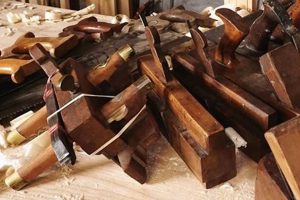
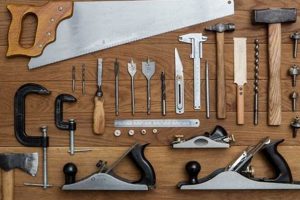
Items crafted for shaping wood, possessing both functional utility and characteristics that appeal to enthusiasts, form a distinct category within the realm of antique and vintage objects. Examples include finely crafted hand planes, intricately designed saws, and specialized measuring instruments, often sought after for their craftsmanship, historical significance, or rarity.
The accumulation of these objects offers several advantages. It provides a tangible link to historical craftsmanship methods, preserving knowledge of techniques less prevalent in modern manufacturing. Furthermore, such acquisitions can represent a sound investment, as the value of particular specimens often appreciates over time due to increased scarcity and collector demand. Historically, the evolution of these implements mirrors the development of woodworking as a craft and industry, reflecting changes in design, materials, and production processes.
Subsequent sections will delve into specific types, factors influencing valuation, methods for authentication, and strategies for preserving items within this fascinating area of interest.
Tips for Identifying and Maintaining Collectable Woodworking Tools
This section provides guidance on identifying genuine items and preserving their condition. Proper diligence in these areas maximizes both the enjoyment and potential financial return associated with acquiring these objects.
Tip 1: Research Extensively. Before acquiring any piece, conduct thorough research on its manufacturer, production period, and common variations. Reference guides, online databases, and specialist forums are invaluable resources.
Tip 2: Assess Condition Carefully. Examine the item for signs of excessive wear, damage, or non-original components. Original finishes and markings significantly enhance value. Minor imperfections, however, may be acceptable and contribute to the item’s character.
Tip 3: Verify Markings and Stamps. Authentic pieces frequently feature maker’s marks, patent dates, or other identifying stamps. These markings should be clear, consistent with known examples, and free from signs of alteration.
Tip 4: Understand Material Composition. The type of wood, metal, or other materials used in construction can be indicative of the item’s age and origin. Familiarize oneself with materials commonly employed by different manufacturers during specific periods.
Tip 5: Consider Rarity and Demand. Scarce or highly sought-after items generally command higher prices. Factors such as limited production runs, unusual features, or association with prominent figures can influence collectability.
Tip 6: Store Properly. Protect items from environmental damage by storing them in a dry, climate-controlled environment. Avoid exposure to direct sunlight, extreme temperatures, and excessive humidity.
Tip 7: Clean Conservatively. Gentle cleaning may be necessary to remove surface dirt or grime. Avoid abrasive cleaners or harsh chemicals that could damage original finishes or markings. Use appropriate conservation methods for metal and wooden components.
Adhering to these tips assists in making informed acquisition decisions and prolonging the lifespan of items within collections. Attentive care preserves their historical and monetary value.
The following sections will further examine specific examples and emerging trends within this area.
1. Rarity

The scarcity of certain woodworking implements significantly influences their desirability and subsequent value within the collector’s market. Rarity arises from various factors that limit the availability of specific items, transforming them from commonplace tools into highly prized possessions.
- Limited Production Runs
Tools manufactured in small quantities, often due to experimental designs, specialized functions, or short production periods, are inherently rare. Examples include early prototypes from established manufacturers or items produced solely for a specific niche market. The scarcity stemming from limited production directly correlates with increased collector interest and higher valuations.
- Unique or Short-Lived Designs
Woodworking implements featuring unconventional designs or those manufactured for only a brief period often become rare due to their limited distribution and eventual obsolescence. An example is a tool designed for a specific, now-discontinued, woodworking technique. The limited availability makes these items sought after by collectors interested in the evolution of tool design and function.
- Manufacturer-Specific Scarcity
Tools produced by manufacturers that operated for a short duration or faced limited distribution channels can become rare. If a company specialized in a particular type of tool, their few surviving pieces can be highly prized. The reputation of the maker combined with limited quantities results in enhanced collectibility.
- Survival Rate
Even tools initially produced in significant quantities can become rare over time due to loss, damage, or disposal. The harsh working conditions to which woodworking implements were often subjected contribute to the relatively low survival rate of older examples. Those that have survived in reasonable condition are particularly valued.
These facets of rarity intersect to determine the desirability of woodworking implements among collectors. The interplay of limited production, unique designs, manufacturer history, and survival rates contribute to the allure and investment potential associated with these items.
2. Condition
The state of preservation profoundly influences the desirability and valuation of woodworking implements within the collectors’ market. Condition serves as a critical indicator of an item’s history, previous use, and the extent to which it retains original features. Damage, excessive wear, or alterations diminish an item’s appeal and monetary value. For instance, a pristine Stanley No. 45 combination plane with original Japanning and complete cutter sets commands a significantly higher price than a heavily rusted or incomplete example. This disparity underscores the critical importance of condition assessment.
Specific aspects of condition warrant careful scrutiny. The integrity of wooden components, such as handles and bodies, is paramount. Cracks, splits, or woodworm damage detract significantly from value. Similarly, the condition of metal parts, including blades, screws, and adjustment mechanisms, requires evaluation. Rust, pitting, or broken components compromise functionality and reduce collector interest. The presence of original finishes, such as lacquer or paint, enhances desirability, provided they are well-preserved. Replacements or modifications invariably lower the item’s value, as they detract from its historical authenticity. A Lie-Nielsen tool, known for its craftsmanship, when sold at auction, is carefully graded by condition. A near-mint, untouched example can fetch a premium.
Accurate condition assessment requires careful examination and a degree of expertise. Factors such as the item’s age and intended use must be considered when evaluating imperfections. Minor wear consistent with age may be acceptable, while significant damage is always detrimental. Understanding the original manufacturing processes and materials used in construction aids in distinguishing between genuine wear and later alterations. While restoration can sometimes enhance the appearance of an implement, it also carries the risk of diminishing its originality and collector value. A balance between preservation and restoration is essential for maintaining the long-term value of a collection.
3. Provenance
Provenance, in the context of woodworking implements sought by collectors, signifies the documented history of ownership and custody of a particular item. This record establishes a chain of evidence tracing the tool from its creation to its present location, and, if available, may include details regarding its use, past owners, and significant events associated with its history. This history directly impacts the item’s collectability; a well-documented and verifiable history typically enhances its desirability and monetary worth.
The influence of provenance can be observed in numerous instances. For example, a hand plane once owned and used by a renowned furniture maker, such as James Krenov, would command a significantly higher price than an identical plane lacking such a connection. The association with a historically significant figure imparts added value, transforming the tool from a mere object into a tangible link to a pivotal figure within the craft. Similarly, a tool recovered from a historically significant workshop or estate, with verifiable documentation, gains increased importance. Without verifiable provenance, establishing such connections proves challenging, thereby limiting its collectable appeal. Provenance acts as a form of authentication, reinforcing the object’s historical context and justifying its premium valuation.
Conversely, a lack of provenance or an incomplete ownership history can substantially detract from an item’s perceived value. Without credible documentation, potential buyers may harbor concerns regarding authenticity, origins, and the possibility of undisclosed damage or alterations. The challenges associated with establishing provenance underscore the importance of maintaining thorough records and conducting careful research before acquiring woodworking implements intended for collection. Understanding the practical significance of provenance empowers collectors to make informed decisions, mitigating risks and maximizing the potential appreciation of their holdings. This documentation serves as a key aspect in determining an object’s historical and cultural significance.
4. Manufacturer

The manufacturer serves as a crucial determinant in the collectability of woodworking implements. The reputation, historical significance, and production quality associated with a particular manufacturer directly influence the desirability and value of its products among collectors. Prestigious manufacturers, renowned for innovation or superior craftsmanship, often command premium prices for their tools. Examples include Stanley, Lie-Nielsen, and Record, each associated with distinct periods and styles of toolmaking. The longevity and consistency of a manufacturer’s output often establish a legacy that resonates with collectors seeking reliable and historically significant pieces. Scarcity related to manufacturers that operated briefly or produced limited quantities further enhances collectability. The manufacturer, therefore, becomes a key identifier and guarantor of an item’s inherent value.
The impact of the manufacturer extends beyond mere branding; it encapsulates the engineering, materials, and production techniques employed. A tool from a well-regarded manufacturer, known for using high-quality steel or innovative designs, provides assurance of its durability and functionality. This assurance is vital for collectors who often seek tools that are not only aesthetically pleasing but also represent the pinnacle of their era’s technological capabilities. For instance, a pre-1940s Stanley plane, recognized for its precision and robust construction, exemplifies this connection. Such tools, even after decades of use, retain their value due to the manufacturer’s commitment to quality. Analyzing the manufacturer’s history, patents, and production methods offers insights into the tool’s design and functionality, enriching its overall collectability.
In conclusion, the manufacturer is a foundational element in evaluating collectable woodworking implements. It provides a lens through which to assess quality, historical context, and potential value. Recognizing the significance of the manufacturer enables informed collecting, ensuring that acquisitions are not only visually appealing but also represent enduring examples of craftsmanship and innovation. Understanding this connection also mitigates the risk of acquiring counterfeit or misrepresented items, further highlighting the practical importance of manufacturer identification in this specialized field. The manufacturer’s name becomes synonymous with the tool’s intrinsic qualities and enduring appeal.
5. Functionality

The capacity for effective operation remains a significant, though sometimes nuanced, factor influencing the collectability of woodworking implements. While pristine, unused examples command attention, the potential for active use often enhances an item’s appeal to a specific subset of collectors. A fully functional tool represents a tangible link to historical craftsmanship and offers the opportunity to recreate traditional woodworking techniques. For instance, a vintage dovetail saw with a sharp, well-set blade not only holds historical value but also allows a modern woodworker to experience the precision and control of hand-cut joinery. The intersection of historical interest and practical application elevates the tool’s collectability.
However, the relationship between functionality and collectability is not linear. Over-restoration or excessive modification aimed at improving functionality can inadvertently diminish an item’s historical authenticity and reduce its value to purist collectors. Conversely, tools rendered entirely unusable due to severe damage or missing components often possess limited appeal, save for their potential use as display pieces or sources of spare parts. The ideal balance lies in maintaining original functionality while preserving the tool’s historical character. A carefully sharpened and properly tuned hand plane, retaining its original patina and markings, exemplifies this harmonious blend. The capacity to perform its intended task without compromising its historical integrity positions it as a highly desirable collectable.
Ultimately, the significance of functionality varies depending on the collector’s specific interests and intentions. Some prioritize pristine condition and historical accuracy above all else, while others actively seek tools that can be used to revive traditional woodworking practices. Understanding this spectrum of preferences is essential for both collectors and dealers. The interplay between functionality and collectability necessitates a careful assessment of each item’s condition, potential for restoration, and relevance to the collector’s specific needs. By acknowledging this nuanced relationship, it becomes possible to appreciate the multifaceted value inherent in these tangible remnants of woodworking history. The pursuit of functionality within collectable tools often becomes a means of connecting directly with the traditions of the past.
6. Materials

The composition of woodworking implements significantly influences their desirability and value among collectors. The selection and quality of materials used in construction serve as indicators of the tool’s age, intended use, and manufacturer’s standards. Consequently, material analysis forms a crucial aspect of assessing the collectability of these items.
- Wood Composition
The type and grade of wood used for handles, bodies, and other components provide valuable information. Dense hardwoods like rosewood or ebony often indicate higher-quality tools, while softer woods might suggest mass production or lower-end models. The presence of specific wood grains or finishes can further identify the tool’s origin and period of manufacture. For example, a hand plane with a Brazilian rosewood handle typically commands a higher price due to the wood’s scarcity and aesthetic appeal.
- Metal Alloys
The types of metal used in blades, screws, and other functional parts are critical determinants of a tool’s durability and performance. High-carbon steel blades, known for their hardness and edge retention, are prized by collectors. Brass or bronze components, used for their corrosion resistance and aesthetic qualities, also enhance an item’s value. The presence of specific alloys or manufacturing techniques can indicate the tool’s age and manufacturer. A Sheffield steel blade, for instance, is a hallmark of quality and craftsmanship.
- Finishes and Coatings
Original finishes, such as Japanning, lacquer, or paint, contribute significantly to a tool’s authenticity and value. The condition and type of finish provide clues about the tool’s history and preservation. Intact, well-preserved finishes are highly desirable, while evidence of excessive wear or improper restoration can detract from an item’s worth. The specific type of paint or coating used can also help identify the tool’s manufacturer and production period. A pristine, original Japanned finish on a Stanley plane is a valuable asset.
- Fasteners and Fittings
The materials and construction of fasteners, such as screws, nuts, and bolts, offer further insights into a tool’s age and quality. Hand-forged screws or specific types of threaded fasteners can indicate early manufacturing periods. The presence of original, matching hardware enhances an item’s authenticity and value. Replacements or mismatched fasteners can diminish its collectability. A hand-tapped screw on an early hand plane demonstrates attention to detail and quality craftsmanship, thereby increasing collector interest.
In conclusion, the materials used in woodworking implements serve as vital indicators of their history, quality, and collectability. Understanding the nuances of wood composition, metal alloys, finishes, and fasteners enables collectors to make informed assessments and appreciate the craftsmanship inherent in these historical artifacts. The presence of specific materials, or their quality, can significantly enhance or detract from the desirability of these tools, influencing their position within the collector’s market.
7. Historical Significance
Historical significance acts as a primary catalyst for the collectability of woodworking implements. The degree to which a tool embodies or reflects pivotal developments in woodworking techniques, manufacturing processes, or societal trends directly impacts its desirability among collectors. A tool’s association with a notable historical event, figure, or technological advancement transforms it from a mere object into a tangible artifact representing a particular era or innovation. For example, a hand plane manufactured by a company instrumental in the Industrial Revolution embodies the shift from artisanal production to mass manufacturing, thereby possessing inherent historical value.
The importance of historical significance becomes evident when considering the valuation of specific tools. A pre-1900 Stanley Bailey plane, particularly one bearing a rare or short-lived manufacturing mark, typically commands a higher price than a more common, later model. The plane’s association with a specific period of Stanley’s manufacturing history, coupled with its relative scarcity, elevates its collectability. Similarly, tools associated with specific trades or industries that have since declined, such as shipbuilding or wheelwrighting, gain historical significance as remnants of disappearing crafts. These tools serve as tangible links to past methods and skills, preserving knowledge that might otherwise be lost. The preservation of this history directly benefits researchers, craftspeople, and future generations who seek to understand woodworking’s evolution.
Comprehending the historical significance of woodworking implements enables collectors to make informed acquisition decisions, prioritizing items that represent pivotal moments in woodworking history. However, assessing historical significance requires careful research and contextual understanding. Factors such as the tool’s design, materials, manufacturing techniques, and association with specific events or individuals must be considered. The challenge lies in discerning genuine historical importance from mere novelty or aesthetic appeal. By diligently examining these aspects, collectors can build collections that not only possess monetary value but also contribute to the preservation and understanding of woodworking’s rich heritage. The ongoing effort to document and understand these objects allows us to appreciate the profound impact of woodworking on society and technology.
Frequently Asked Questions
The following questions address common inquiries regarding the acquisition, preservation, and valuation of woodworking implements sought by collectors. These questions are intended to provide clarity on key aspects of this specialized field.
Question 1: What constitutes a “collectable woodworking tool” as opposed to a simply old one?
A collectable woodworking tool possesses attributes beyond mere age. These attributes include rarity, excellent condition, documented provenance, manufacturer reputation, functionality (though not always essential), quality materials, and demonstrable historical significance. An old tool lacking these qualities may hold sentimental value but not necessarily collectable value.
Question 2: How does one determine the authenticity of a supposedly rare woodworking implement?
Authenticity verification requires meticulous research. One should examine maker’s marks, patent dates, and construction techniques, comparing them to documented examples. Consulting specialist forums, reference guides, and expert opinions is advisable. Red flags include inconsistent markings, non-original components, and a lack of verifiable provenance.
Question 3: What environmental conditions are most detrimental to the preservation of collectable woodworking implements?
Fluctuations in temperature and humidity pose significant risks. High humidity promotes rust on metal parts and wood rot. Direct sunlight can fade finishes and warp wooden components. Ideal storage conditions involve a stable, climate-controlled environment with low humidity and minimal exposure to light.
Question 4: Is restoration always beneficial for the value of a collectable woodworking tool?
Restoration’s impact on value is complex. While careful cleaning and minor repairs may enhance appearance, over-restoration or modifications can diminish authenticity and reduce collector interest. Preservation of original finishes and markings is generally preferable. Professional conservation, if undertaken, should prioritize reversibility.
Question 5: What resources are available for learning more about specific manufacturers or types of woodworking tools?
Several resources exist, including online databases (e.g., type-study websites), specialist forums (e.g., dedicated collector communities), reference books (e.g., guidebooks on antique tools), and museum collections (e.g., woodworking museums). Networking with experienced collectors and attending tool auctions or shows can also provide valuable insights.
Question 6: How does one establish a fair market value for a woodworking tool intended for sale?
Determining fair market value requires assessing condition, rarity, provenance, and comparable sales data. Online auction archives (e.g., completed eBay listings), auction house records, and dealer catalogs provide pricing benchmarks. Obtaining appraisals from qualified experts can offer a more precise valuation. Consider prevailing market trends and collector demand when setting a price.
These FAQs provide a framework for understanding the key considerations within the realm of items that woodworking professionals and enthusiasts collect. Further exploration of these topics is encouraged for informed participation in this specialized area.
The following section delves into specific examples of highly sought-after examples.
Conclusion
The preceding exploration has elucidated the multifaceted nature of collectable woodworking tools. Factors such as rarity, condition, provenance, manufacturer, functionality, materials, and historical significance collectively determine an item’s desirability and value within the collector’s market. The interplay of these elements underscores the complexity of evaluating and appreciating these historical artifacts.
Continued research and careful appraisal are essential for informed acquisition and responsible preservation. As custodians of these tangible links to the past, collectors contribute to the ongoing appreciation and understanding of woodworking’s rich heritage. The study of these objects remains a vital endeavor for both enthusiasts and scholars alike.