Modern woodworking benefits significantly from advancements in technology and design, leading to evolving tool types. These innovations address the need for increased precision, efficiency, and safety in various woodworking tasks. Examples include computer numerical control (CNC) routers for intricate cuts, dust collection systems for healthier work environments, and cordless power tools offering greater mobility and convenience.
The adoption of updated equipment and methodologies is crucial for maintaining competitiveness in the woodworking industry. Benefits extend to reduced material waste, faster project completion times, and improved overall project quality. Historically, woodworking relied on manual labor and basic hand tools. Contemporary practices leverage engineering and design to create sophisticated machinery that enhances both the craftsman’s ability and the final product.
The following sections will delve into specific areas impacted by these evolutions, exploring the characteristics of key technologies, the impact of enhanced safety features, and the changing demands placed on professional woodworkers.
This section provides insights into maximizing efficiency and precision through effective utilization of current generation woodworking implements. Adherence to these guidelines will contribute to improved project outcomes and a safer working environment.
Tip 1: Prioritize Safety Training. Comprehensive instruction on the operation and safety protocols of any new implement is essential before initial use. Refer to manufacturer’s guidelines and seek professional training when possible to mitigate risks associated with improper handling.
Tip 2: Invest in Quality Sharpening Equipment. Sharp cutting edges are paramount for precision work and user safety. Maintain a consistent sharpening regimen for all blades and bits, employing appropriate jigs and honing tools to ensure optimal performance.
Tip 3: Implement Dust Collection Systems. Effective dust extraction is crucial for both respiratory health and maintaining visibility during operation. Install appropriate dust collection systems and use personal protective equipment such as respirators when necessary.
Tip 4: Optimize Workspace Ergonomics. Arrange the work area to minimize strain and maximize efficiency. Position tools and materials within easy reach, and use adjustable work surfaces to accommodate varying project requirements.
Tip 5: Calibrate Tools Regularly. Precision tools require periodic calibration to maintain accuracy. Establish a routine for checking and adjusting settings on equipment such as saws, routers, and jointers.
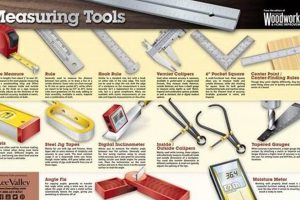
Tip 6: Leverage Digital Measurement Tools. Digital calipers, angle finders, and laser levels provide highly accurate measurements, reducing the margin for error and improving the overall quality of finished pieces.
Tip 7: Explore CNC Technology. For repetitive or complex designs, consider integrating computer numerical control (CNC) machinery into the workflow. CNC routers and laser cutters can significantly enhance precision and efficiency.
These guidelines serve as a foundation for responsible and effective woodworking. Consistent application of these principles will result in improved project quality, reduced risk, and increased productivity.
The article will now proceed to examine the challenges and opportunities associated with adopting emerging technologies in woodworking.
1. Precision

The demand for accuracy is a driving force behind many current implementations and represents a key differentiator between legacy methods and contemporary practices. Advanced power tools, particularly those incorporating digital control, offer levels of accuracy previously unattainable with manual techniques. For example, CNC routers can execute intricate designs to tolerances of within a fraction of a millimeter. This level of detail is crucial for projects requiring tight fits, such as dovetail joints in fine furniture or complex architectural millwork.
The impact of enhanced accuracy extends beyond aesthetics. Precise cuts minimize material waste, reducing costs and promoting sustainability. Furthermore, properly calibrated tools contribute to structural integrity by ensuring components fit together as designed. Consider the construction of a complex wooden staircase: accurately milled treads and risers ensure consistent dimensions and proper load distribution, contributing to the staircase’s long-term stability. The consequence of even minor inaccuracies can compound over time, leading to premature wear or even structural failure.
In summary, accuracy is not merely a desirable attribute but a functional necessity in modern woodworking. It contributes to both the aesthetic appeal and structural integrity of finished products. Challenges remain in terms of the initial investment required for advanced equipment and the need for specialized training to operate and maintain these tools effectively. However, the long-term benefits of enhanced accuracy, including reduced material waste, improved project quality, and increased customer satisfaction, make such investments worthwhile for woodworking professionals.
2. Efficiency

The integration of contemporary equipment significantly impacts efficiency within woodworking operations, representing a key advantage over traditional, manual methods. This enhanced efficiency encompasses time savings, reduced material waste, and optimized labor allocation. Contemporary equipment achieves improved productivity through enhanced speed, automated processes, and ergonomic design considerations.
- Power Tool Optimization
Cordless power tools, featuring increased battery life and improved motor technology, offer a notable increase in efficiency. The absence of cords provides greater mobility, reducing setup time and facilitating seamless transitions between tasks. Examples include cordless routers for on-site trim work, cordless saws for quick material breakdown, and cordless drills for rapid fastening. This agility translates to faster project completion and reduced downtime.
- Automated Material Processing
Computer Numerical Control (CNC) machinery enables automated material processing, significantly reducing the time required for repetitive or complex cuts. CNC routers and laser cutters can execute intricate designs with minimal operator intervention, freeing up skilled labor for other tasks. This automated process minimizes the risk of human error and ensures consistent accuracy across multiple units, leading to improved product uniformity and reduced waste.
- Dust Collection Systems
Effective dust collection systems contribute to efficiency by maintaining a cleaner and healthier work environment. Removing airborne particulate matter improves visibility, allowing for more precise cuts and reduced material defects. Furthermore, a cleaner workspace minimizes cleanup time and reduces the risk of equipment malfunctions caused by dust accumulation. Integrated dust collection further streamlines workflows.
- Ergonomic Design
Contemporary implements emphasize ergonomic design, reducing physical strain on operators and improving overall productivity. Features such as adjustable handles, vibration dampening systems, and lightweight materials contribute to reduced fatigue and improved operator comfort. This results in fewer work-related injuries, decreased absenteeism, and improved employee morale, all of which contribute to increased overall efficiency.
In summation, implements optimize resource utilization within woodworking operations, leading to tangible improvements in productivity and profitability. The synergistic effect of power tool enhancements, automation, effective dust management, and ergonomic design considerations contributes to a more streamlined and efficient woodworking process. The economic benefits and process efficiency gains necessitate the adaption of these implements to maintain competitiveness.
3. Safety

The integration of safety features within contemporary woodworking implements represents a critical evolution in the field. The objective is to mitigate the inherent risks associated with woodworking processes, reducing the likelihood of injuries and promoting a safer working environment. Modern designs incorporate both active and passive safety mechanisms to address a wide range of potential hazards.
- Enhanced Guarding Systems
Modern saws and other cutting tools feature advanced guarding systems that minimize the risk of contact with moving blades. These guards are designed to be adjustable, allowing for a wide range of cutting tasks while maintaining a high level of protection. Examples include riving knives on table saws to prevent kickback and blade guards on miter saws to shield the operator from accidental contact. The presence of these features significantly reduces the potential for severe cuts and lacerations.
- Integrated Dust Collection
Airborne dust poses a significant health hazard in woodworking environments. Contemporary tools often feature integrated dust collection ports that can be connected to vacuum systems, effectively removing dust particles at the source. This reduces the risk of respiratory problems, such as asthma and other lung conditions, and minimizes the potential for eye irritation. Furthermore, improved visibility due to reduced dust levels contributes to greater accuracy and safer operation.
- Electronic Safety Controls
Many state-of-the-art implements incorporate electronic safety controls to prevent accidental activation and improve overall operational safety. Features such as emergency stop buttons, blade brakes, and overload protection circuits help to minimize the risk of injury in the event of a malfunction or operator error. These controls are designed to be easily accessible and intuitive, allowing for quick and decisive action in emergency situations.
- Vibration Reduction Technology
Prolonged exposure to vibration from power tools can lead to hand-arm vibration syndrome (HAVS), a debilitating condition affecting the nerves, blood vessels, and joints. Advanced woodworking implements incorporate vibration reduction technology to minimize the transmission of vibrations to the operator’s hands and arms. This helps to reduce the risk of HAVS and improve operator comfort, allowing for longer periods of use without experiencing adverse health effects.
The advancements in safeguarding represent a substantial improvement over legacy equipment. The incorporation of such elements is essential for prioritizing worker well-being. Ongoing development continues in tandem with a greater awareness of safety standards. These innovations collectively contribute to safer and more responsible working practices. Furthermore, ongoing research and development efforts are focused on further enhancing safety features and promoting a culture of safety within the woodworking community.
4. Automation

The integration of automation into woodworking represents a significant shift, impacting precision, efficiency, and the skillset required of woodworkers. The adoption of automated machinery streamlines repetitive tasks, enhances design complexity, and optimizes material utilization.
- CNC Machining
Computer Numerical Control (CNC) machining is a cornerstone of automation in woodworking. CNC routers, mills, and lathes utilize pre-programmed instructions to execute complex cuts and shapes with high accuracy and repeatability. This technology is employed in diverse applications, from crafting intricate furniture components to mass-producing identical parts for construction projects. Its adoption necessitates a shift in skillset from manual dexterity to computer literacy and machine programming.
- Robotic Finishing Systems
Automated finishing systems employ robotic arms equipped with spray guns or other applicators to apply coatings to wooden surfaces. These systems offer consistent finish quality, reduced material waste, and improved operator safety by minimizing exposure to potentially harmful chemicals. These systems are employed in the high-volume production of cabinets, doors, and other architectural elements. Programming and maintenance of these systems require specialized technical knowledge.
- Automated Material Handling
Automated material handling systems utilize conveyors, robotic arms, and automated storage and retrieval systems to move materials through the woodworking process. This reduces manual labor, minimizes material damage, and improves workflow efficiency. Examples include automated board sorting systems in lumber mills and automated panel loading systems in furniture factories. The implementation of such systems requires careful planning and integration with existing processes.
- Parametric Design Software Integration
Parametric design software allows woodworkers to create complex designs that can be easily modified and adapted to different dimensions or specifications. When integrated with automated manufacturing equipment, these systems enable the efficient production of custom or highly variable products. This approach is particularly useful in architectural millwork and custom furniture applications, where design flexibility is paramount. Mastery of parametric design principles and software interfaces is essential for leveraging this technology.
The integration of automation, as demonstrated by CNC machinery, robotic finishing systems, automated material handling, and parametric design software, represents a fundamental change in woodworking practices. While requiring new skills and significant initial investment, these technologies offer the potential for increased precision, efficiency, and design complexity, thereby transforming the role of the woodworker from a manual craftsperson to a skilled technician and designer.
5. Ergonomics
The integration of ergonomic design principles into woodworking implements represents a significant trend driven by the need to mitigate physical strain and enhance user well-being. Traditional woodworking practices often involved repetitive motions, awkward postures, and heavy lifting, leading to musculoskeletal disorders (MSDs) among woodworkers. Modern equipment design seeks to address these issues through features that promote comfort, reduce force exertion, and minimize vibration. For example, power tools now incorporate adjustable handles, vibration-dampening systems, and lightweight materials to lessen the physical burden on operators. The effect is not merely increased comfort but also a reduction in lost workdays due to injury and an improvement in overall productivity.
The practical application of ergonomics extends beyond the tool itself to encompass the entire workspace. Adjustable-height workbenches allow woodworkers to maintain a neutral posture, minimizing strain on the back and shoulders. Vacuum clamping systems reduce the need for manual clamping, decreasing hand fatigue and improving precision. The thoughtful layout of the workspace, with tools and materials readily accessible, further contributes to a more ergonomic environment. Real-life examples include furniture manufacturers who have redesigned their assembly lines to incorporate ergonomic principles, resulting in a demonstrable decrease in worker compensation claims and an increase in production efficiency. The woodworking industry, by recognizing the importance of ergonomics, fosters a safer and more sustainable work environment.
In conclusion, the application of ergonomic principles to enhances worker safety, decreases physical stress, and optimizes overall productivity. Although implementation may require upfront investments in equipment and workspace modifications, the long-term benefits are substantial, promoting a healthier and more sustainable woodworking practice. Addressing the challenges of integrating ergonomic design contributes to a positive outcome for both workers and woodworking businesses.
6. Dust Control
Effective dust control represents an indispensable component of woodworking practices. Airborne particulate matter generated during cutting, sanding, and shaping processes poses significant health risks to woodworkers, including respiratory illnesses and skin irritations. Furthermore, dust accumulation can impair visibility, reducing accuracy and increasing the likelihood of accidents. Contemporary woodworking equipment emphasizes integrated dust extraction systems to mitigate these hazards. Examples include dust collection ports on power tools, connecting to vacuum systems that remove dust at the source. Benchtop systems that filter the air are also used.
The presence of effective dust control extends beyond immediate health and safety concerns. By maintaining a cleaner working environment, systems help to improve the performance and longevity of machinery. Dust accumulation within tool mechanisms can cause malfunctions and reduce efficiency, requiring more frequent maintenance and repairs. Furthermore, effective dust control improves the quality of finished products by preventing dust particles from contaminating coatings and finishes. One example of this is the use of downdraft tables when sanding, so particles are immediately moved away.
Implementation of these systems requires an understanding of dust collection principles and the selection of appropriate equipment. While initial investment costs exist, the long-term benefits of reduced health risks, improved safety, enhanced equipment performance, and superior product quality outweigh these costs. The implementation of comprehensive dust control strategies is an integral aspect of responsible and sustainable woodworking practices.
7. Digital Integration
The incorporation of digital technologies represents a fundamental shift in woodworking, impacting design, manufacturing, and operational efficiency. Contemporary equipment integrates seamlessly with digital workflows, enhancing precision and enabling capabilities previously unattainable.
- CAD/CAM Software Integration
Computer-Aided Design (CAD) and Computer-Aided Manufacturing (CAM) software form the core of digital integration in woodworking. CAD software allows for the creation of detailed 2D and 3D models of woodworking projects, while CAM software translates these designs into instructions for CNC machinery. Examples include designing complex joinery in CAD and then generating toolpaths for a CNC router to execute the design precisely. This integration minimizes manual labor, reduces errors, and allows for the creation of intricate designs with ease.
- Digital Measurement Tools
Traditional measurement techniques are being augmented by digital tools offering enhanced accuracy and efficiency. Laser measuring devices, digital calipers, and electronic angle finders provide precise measurements, eliminating the subjectivity of manual readings. For example, a digital caliper can accurately measure the thickness of a board to within a fraction of a millimeter, ensuring tight fits in joinery. The use of these tools minimizes errors and improves the overall quality of finished products.
- Cloud-Based Collaboration Platforms
Cloud-based platforms facilitate seamless collaboration among designers, engineers, and woodworkers, regardless of their geographical location. These platforms enable the sharing of design files, project specifications, and manufacturing instructions in real-time. For example, a designer can upload a CAD model to a cloud platform, and a woodworker can access the file and begin manufacturing the project immediately. This streamlined communication reduces delays and improves overall project coordination.
- Smart Tool Connectivity
Emerging tools feature connectivity, enabling data collection and performance monitoring. This information facilitates preventative maintenance, optimizing tool performance and lifecycle. Examples include tools with integrated sensors that provide data on usage patterns, alerting users to potential issues or the need for maintenance. This proactive approach reduces downtime and ensures that tools are always operating at peak efficiency.
These facets collectively exemplify the transformative influence of digital integration on woodworking. The convergence of digital design, precise measurement, collaborative platforms, and smart tool technology enhances accuracy, streamlines workflows, and expands the creative possibilities for woodworkers. Adaption will become increasingly crucial for competitiveness and innovation within the industry.
Frequently Asked Questions
This section addresses common inquiries regarding the adoption and utilization of contemporary woodworking implements, providing clarity and addressing potential misconceptions.
Question 1: What constitutes a ‘trend’ within woodworking implements?
The term signifies advancements that substantively improve efficiency, safety, or precision. A implement’s inclusion is predicated on demonstrable technological advancement impacting the practice.
Question 2: How does investment in advanced implements impact a woodworking business’s profitability?
While initial investment may be considerable, advanced implements contribute to reduced labor costs, minimized material waste, and increased production throughput, ultimately boosting profitability. Careful cost-benefit analysis is recommended.
Question 3: Is specialized training required to operate modern woodworking machinery effectively?
Yes, specialized training is generally essential. Proficiency in operating advanced equipment requires understanding its functionality, safety protocols, and maintenance procedures. Manufacturers often provide training resources.
Question 4: What are the primary safety considerations when integrating machinery into a woodworking shop?
Key safety considerations include comprehensive operator training, implementation of dust collection systems, adherence to manufacturer’s safety guidelines, and regular maintenance of safety mechanisms.
Question 5: How does one determine the appropriate level of automation for a woodworking operation?
The appropriate level of automation depends on factors such as production volume, design complexity, and labor costs. A thorough assessment of operational needs and potential return on investment is essential.
Question 6: Is retrofitting older woodworking implements with modern safety features a viable option?
Retrofitting is possible in some cases, but careful consideration must be given to the implement’s age, condition, and compatibility with aftermarket safety devices. Consultation with a qualified technician is advised.
In summation, adopting contemporary equipment requires careful planning, training, and adherence to safety protocols. However, the potential benefits in terms of productivity, efficiency, and safety make these investments worthwhile for those seeking to maintain a competitive edge.
The subsequent section will address some of the ongoing advancements and future directions within the woodworking space.
Trend Woodworking Tools
This article has examined current woodworking implements, elucidating their characteristics and effects on industry practices. A comprehensive overview of contemporary techniques has been provided, underscoring the significant roles of precision, efficiency, safety, automation, ergonomics, dust control, and digital integration. It has been demonstrated that adoption of new technology requires careful cost-benefit analysis, safety mindfulness, and commitment to continued education and professional development.
Continued observation and adaptation of technology will influence the future. Ongoing exploration and investment are crucial for long-term competitiveness and innovation within the woodworking sector. The synthesis of skilled craftsmanship with the integration of implement continues to redefine standards and expectations.
![Essential Woodworking Tools Japanese Guide [2024] | Step-by-Step Guides, Tools & Inspiration to Build Beautiful Wooden Decor on a Budget](https://woodfromhome.com/wp-content/uploads/2026/04/th-364-300x200.jpg "Essential Woodworking Tools Japanese Guide [2024] Step-by-Step Guides, Tools & Inspiration to Build Beautiful Wooden Decor on a Budget")