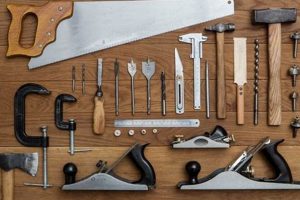
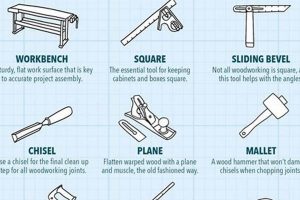
Precision instruments designed for shaping and crafting wood with accuracy and efficiency are essential components in any woodworking endeavor. These instruments, often manufactured with meticulous attention to detail, allow for exacting measurements and cuts, critical for achieving desired results in furniture making, cabinetry, and other wood-based projects. Consider, for instance, the use of a finely calibrated marking gauge to score a precise line along a piece of lumber before cutting a dovetail joint.
The value of accurate measuring and marking equipment in woodworking cannot be overstated. Employing high-quality tools reduces the likelihood of errors, minimizing material waste and saving time. Furthermore, the use of such implements ensures consistency across multiple pieces, leading to a more professional and aesthetically pleasing finished product. Historical precedence shows that reliance on superior tools has long been a hallmark of master craftsmen.
The following sections will delve into the specific attributes of premium woodworking tools, focusing on the design features, materials, and application techniques that make them indispensable for both professional woodworkers and hobbyists. We will also examine the factors to consider when selecting the appropriate tools for various woodworking tasks.
Essential Guidance for Precision Woodworking
The following tips are designed to enhance the accuracy and efficiency of woodworking projects through the proper application of precision measuring and marking instruments.
Tip 1: Employ Calibrated Instruments: Regularly verify the calibration of squares, rules, and gauges. Minor deviations can accumulate, leading to significant inaccuracies in larger projects. For example, a slightly out-of-square layout square used repetitively will compound errors.
Tip 2: Prioritize Sharpness in Marking Tools: Utilize marking knives and finely pointed pencils to create crisp, well-defined lines. A dull marking tool produces imprecise lines, resulting in potential fitting issues. Regularly sharpen marking knives to maintain optimal performance.
Tip 3: Implement Double-Checking Procedures: Always verify measurements and layouts before commencing cuts or joinery. This practice minimizes the risk of costly mistakes and reduces material waste. A second measurement can confirm initial accuracy.
Tip 4: Utilize Appropriate Lighting: Ensure adequate and even illumination in the workspace. Poor lighting can distort perception and hinder the accurate reading of scales and markings. Task lighting focused on the workpiece is recommended.
Tip 5: Secure Workpiece Stability: Maintain a stable workpiece during measurement and marking operations. Movement can introduce inaccuracies and lead to skewed lines. Clamping or securing the workpiece minimizes this risk.
Tip 6: Apply Consistent Pressure: When using marking tools, exert consistent pressure to achieve uniform line depth and visibility. Inconsistent pressure can result in varying line thickness, complicating subsequent cutting or joinery operations.
Tip 7: Store Instruments Properly: Protect precision instruments from damage and environmental factors. Store squares, rules, and gauges in dedicated cases or drawers to prevent warping, corrosion, and impact damage.
By adhering to these guidelines, woodworkers can significantly improve the precision and quality of their projects, reducing errors and maximizing material utilization.
The subsequent sections will explore advanced techniques and specialized instruments that further enhance woodworking accuracy and efficiency.
1. Precision Measurement

Precision measurement constitutes a foundational element in woodworking, directly influencing the accuracy and quality of finished products. Accurate dimensions, angles, and alignments are paramount for proper joinery, structural integrity, and aesthetic appeal. The reliability of woodworking rests substantially on the precision of the instruments employed.
- Scale Accuracy
Scale accuracy refers to the degree to which a measuring instrument correctly reflects the true dimension being measured. A high level of scale accuracy, essential for instruments, minimizes errors in layout and cutting. For instance, a layout square with an inaccurate scale will lead to skewed lines and misaligned joints, compromising the overall integrity of the project. Calibration standards and manufacturing processes dictate the scale accuracy of a tool.
- Repeatability
Repeatability denotes the ability of an instrument to consistently produce the same measurement when applied to the same object multiple times. High repeatability assures consistent results across multiple operations, which is particularly important when duplicating parts or creating multiple identical components. A gauge with poor repeatability can result in variations in dimensions, leading to fitting problems during assembly.
- Resolution
Resolution represents the smallest increment that an instrument can accurately measure. A high-resolution instrument allows for finer adjustments and greater precision in measurement. A ruler with 1/64-inch graduations offers a higher resolution than one with only 1/16-inch graduations, enabling more precise marking and cutting. Higher resolution is crucial for intricate woodworking projects requiring exacting tolerances.
- Calibration Stability
Calibration stability describes an instrument’s ability to maintain its accuracy over time and under varying environmental conditions. Instruments with high calibration stability require less frequent recalibration, ensuring consistent and reliable performance. Fluctuations in temperature and humidity can affect the accuracy of measuring tools; instruments with robust calibration stability are less susceptible to these influences.
In summary, scale accuracy, repeatability, resolution, and calibration stability are vital attributes that contribute to precision measurement in woodworking. These attributes, exemplified in instruments, enable woodworkers to achieve the exacting standards necessary for high-quality craftsmanship, contributing to the overall value and utility of finished woodworking products.
2. Material Quality

The selection of materials employed in manufacturing woodworking implements directly impacts their performance, longevity, and overall value. Superior materials contribute to increased durability, resistance to wear and corrosion, and enhanced precision. The correlation between material quality and functionality dictates the instrument’s ability to withstand the rigors of a woodworking environment and maintain accuracy over time. For instance, a square crafted from hardened steel is significantly less prone to bending or warping compared to one made from a softer alloy, thereby preserving its angular precision during repeated use. Therefore, material composition directly affects the usable life and operational effectiveness.
Instruments subject to constant use and potential exposure to moisture or abrasive materials necessitate a robust construction using corrosion-resistant alloys or treated surfaces. Consider a marking gauge where the stem and head are constructed from high-carbon steel, precisely machined and then hardened. This construction ensures minimal wear on the stem and a stable, consistent marking surface for the head, translating to accurate and repeatable measurements. The economic implications are substantial; inferior materials necessitate more frequent replacements, leading to higher long-term costs. Thus, initial investment in high-quality instruments reflects cost efficiency over time.
In summary, the selection of appropriate materials is pivotal for the design and manufacturing of reliable woodworking instruments. Hardened and tempered steel, corrosion-resistant alloys, and dimensionally stable composites enhance the performance, durability, and lifespan of these instruments. Understanding the influence of material quality is crucial for woodworkers seeking to invest in tools that deliver consistent accuracy and withstand the demands of the craft, resulting in enhanced productivity and improved quality of finished woodwork.
3. Durability

Durability, as a characteristic of precision instruments, directly affects the longevity and consistent performance of woodworking. Implements must withstand repeated use, potential impacts, and environmental factors such as humidity and temperature fluctuations. A lack of robustness in the construction materials or manufacturing processes can result in premature failure, inaccuracies, and increased costs due to replacement or repair. For example, a poorly tempered steel square may lose its precise 90-degree angle after only moderate use, compromising its utility and necessitating replacement. Durable instruments maintain their accuracy and functionality over an extended period, offering a reliable return on investment. The selection of appropriate materials, hardening processes, and protective coatings are essential for enhancing the resilience of woodworking tools.
The use of high-carbon steel alloys, coupled with precise machining and tempering, provides increased resistance to wear, deformation, and corrosion. Hardening processes, such as cryogenics, further enhance the material’s inherent strength and resistance to abrasion. Corrosion-resistant coatings, such as chrome plating or powder coating, protect vulnerable surfaces from environmental factors. For example, a marking knife constructed from cryogenically treated steel and honed to a fine edge will retain its sharpness and dimensional stability far longer than one made from conventional steel. This results in consistently clean, precise marking and a reduced need for frequent sharpening or replacement. The inclusion of robust mechanical features, such as secure locking mechanisms and reinforced joints, further contributes to long-term reliability and prevents premature failure.
In summary, durability is a critical attribute that defines the performance and value of woodworking instruments. The selection of materials, hardening processes, and protective coatings directly impacts an instrument’s resistance to wear, corrosion, and deformation. By prioritizing durability, woodworkers can ensure a consistent, reliable performance and minimize the lifecycle costs associated with frequent replacements or repairs. The use of durable implements contributes to increased productivity, reduced material waste, and improved overall quality of finished woodwork.
4. Versatility
Versatility, in the context of woodworking instruments, denotes the capacity of a single tool to perform multiple functions or adapt to a range of tasks. The more versatile a tool is, the greater its utility and efficiency within the woodworking process. Instruments, are often designed with versatility in mind, aiming to provide woodworkers with adaptable solutions that minimize the need for numerous specialized tools.
- Multi-Functional Design
Multi-functional instruments incorporate several distinct measurement and marking capabilities into a single unit. A combination square, for instance, serves as a square, depth gauge, height gauge, and marking gauge. This design reduces the number of tools required for basic layout and measurement tasks, streamlining the woodworking process. The compact nature of these instruments also conserves workspace, which is particularly beneficial in smaller shops.
- Adaptable Components
Adaptable components allow a tool to be reconfigured for different applications. Interchangeable heads or blades can transform a single instrument into a variety of specialized tools. For example, a universal bevel protractor can be fitted with different blades to measure various angles, or with an extension arm for longer measurements. This adaptability increases the tool’s overall value and reduces the need for separate, single-purpose instruments.
- Range of Measurement
An instrument’s measurement range defines the scope of dimensions it can accurately measure. A versatile instrument offers a broad measurement range, accommodating a diverse range of project sizes and complexities. A rule or tape measure with both metric and imperial scales provides adaptability for different measurement systems. Similarly, a digital caliper with a wide jaw opening can measure both small and large objects with equal precision.
- Application Flexibility
Application flexibility describes the capacity of an instrument to be used effectively in various woodworking disciplines. A versatile instrument is suitable for a wide array of tasks, including furniture making, cabinetry, carving, and joinery. Its design accommodates various materials and techniques, making it an indispensable tool for both amateur and professional woodworkers. An adjustable bevel, for example, can be used to set angles for both hand-cut dovetails and machine-made miters, demonstrating its broad applicability.
The multi-faceted nature, adaptable components, broad measurement range, and application flexibility collectively determine the versatility. Woodworkers seeking to maximize efficiency and minimize clutter prioritize instruments capable of performing diverse tasks. Such tools offer a cost-effective solution by reducing the need for specialized instruments and increasing the overall value of the tool collection.
5. Ergonomics
Ergonomics, the science of designing and arranging items used so that people interact with them most efficiently and safely, bears a direct influence on the usability and effectiveness of instruments. Poorly designed implements can lead to user fatigue, discomfort, and, in severe cases, repetitive strain injuries. Conversely, ergonomic designs enhance user comfort, reduce physical strain, and improve overall productivity. The integration of ergonomic principles into instrument design minimizes the physical demands on the woodworker, leading to more accurate and consistent results. The shape of a handle, the balance of the tool, and the placement of control surfaces are all critical considerations in ergonomic design. For example, a marking gauge with a handle contoured to fit the natural shape of the hand reduces grip fatigue, allowing the user to maintain consistent pressure and achieve more precise markings.
Manufacturers, increasingly recognize the importance of ergonomics in woodworking instruments. Design elements may include textured grips for enhanced control, lightweight materials for reduced fatigue, and strategically positioned markings for easy visibility. A well-balanced tool requires less effort to control and maneuver, reducing the risk of errors and improving overall efficiency. Real-world applications demonstrate the benefits of ergonomic design. Woodworkers using ergonomically designed hand saws report reduced muscle strain and improved cutting accuracy compared to using traditional saws with less emphasis on ergonomics. Similarly, layout squares with comfortable, non-slip grips enable more accurate and repeatable measurements, leading to improved joinery and overall project quality.
In conclusion, ergonomics is an essential component of instrument design that significantly impacts the user’s comfort, productivity, and long-term physical health. By incorporating ergonomic principles, manufacturers can create woodworking instruments that are not only accurate and durable but also user-friendly and safe. Understanding the connection between ergonomics and instrument design is crucial for woodworkers seeking to optimize their workflow, reduce physical strain, and improve the quality of their finished products. The increasing adoption of ergonomic design principles in woodworking is indicative of a growing awareness of the importance of user-centered design in the pursuit of precision and efficiency.
6. Calibration
Calibration, a process by which the accuracy of a measuring instrument is verified and adjusted to align with accepted standards, is paramount for optimal performance in woodworking. The inherent precision sought in woodworking relies heavily on the accuracy of tools, making calibration an indispensable consideration.
- Traceability to Standards
Traceability to recognized standards, such as those maintained by national metrology institutes, ensures that implements are aligned with universally accepted units of measurement. This alignment is critical for maintaining consistency across projects and facilitating interoperability when collaborating with other woodworkers or adhering to specific design specifications. Without traceability, errors can accumulate, leading to significant deviations from intended dimensions.
- Frequency of Calibration
The frequency with which tools should be calibrated depends on factors such as usage intensity, environmental conditions, and the tool’s inherent stability. High-use tools in demanding environments may require more frequent calibration than those used sparingly in controlled settings. Regular calibration intervals are necessary to detect and correct any drift in accuracy that may occur over time, ensuring reliable performance.
- Calibration Procedures
Calibration procedures vary depending on the type of instrument and the level of accuracy required. Simple tools, such as rules and squares, can be calibrated using master gauges or precision reference surfaces. More complex instruments, such as digital calipers or levels, may require specialized equipment and trained technicians. Adherence to established calibration protocols is essential for obtaining reliable results and maintaining tool integrity.
- Impact of Environment
Environmental factors, such as temperature fluctuations and humidity levels, can influence the accuracy of instruments. Thermal expansion and contraction can alter the dimensions of metal tools, while humidity can affect the stability of wooden components. Calibration should be performed under controlled environmental conditions to minimize these influences and ensure accurate results. Storage practices that protect implements from extreme environmental exposure can also help to maintain calibration stability.
The consistent application of these calibration principles directly enhances the reliability of tools and the overall quality of woodworking projects. Implementing a robust calibration program, tailored to the specific requirements of each instrument and the working environment, is essential for any woodworker committed to precision and accuracy. The benefits of calibration extend beyond dimensional accuracy, fostering confidence in the integrity of the finished product and promoting efficient use of materials.
Frequently Asked Questions
The following section addresses common inquiries regarding instruments designed for shaping and crafting wood, with a focus on their selection, maintenance, and application within the woodworking profession.
Question 1: What distinguishes professional-grade from consumer-grade tools?
Professional-grade implements typically exhibit superior material quality, tighter manufacturing tolerances, and greater durability compared to consumer-grade counterparts. This translates to enhanced precision, longer lifespan, and improved performance under demanding conditions.
Question 2: How frequently should measuring instruments be calibrated?
Calibration frequency depends on usage intensity and environmental conditions. High-use tools in variable environments may require calibration every few months. Less frequently used tools in stable environments may only require annual calibration.
Question 3: What are the primary benefits of using hardened steel instruments?
Hardened steel instruments offer increased resistance to wear, deformation, and corrosion compared to those made from softer alloys. This results in improved accuracy, longer lifespan, and reduced need for replacement.
Question 4: How does ergonomic design contribute to woodworking precision?
Ergonomic design reduces user fatigue and discomfort, enabling more consistent pressure and control during measurement and marking operations. This translates to improved accuracy and reduced risk of errors.
Question 5: What are the essential maintenance procedures for woodworking tools?
Essential maintenance includes regular cleaning, lubrication of moving parts, sharpening of cutting edges, and proper storage to protect against moisture and impact damage.
Question 6: How does one select the appropriate tool for a specific woodworking task?
Tool selection should be based on the specific requirements of the task, including the level of precision required, the material being worked, and the overall complexity of the project.
Accuracy, durability, and proper maintenance are crucial for achieving optimal results in woodworking. The implementation of sound tool selection and care practices enhances the quality and longevity of woodworking projects.
The following sections will explore case studies and practical applications of instruments in woodworking.
Conclusion
The preceding exploration has underscored the pivotal role of instruments in achieving precision and quality in woodworking. Elements such as precision measurement, material quality, durability, versatility, ergonomics, and calibration have been detailed, revealing their interconnected influence on the efficacy of implements designed for woodworking. A robust understanding of these characteristics equips woodworkers to make informed decisions, maximizing both efficiency and the quality of finished woodwork.
Continued adherence to the principles of meticulous tool selection, diligent maintenance, and consistent calibration ensures the sustained viability of woodworking endeavors. In a discipline where accuracy is paramount, the judicious application of these principles is not merely beneficial but essential for realizing enduring standards of craftsmanship. This informed approach will foster greater productivity and minimize waste in any woodworking endeavor.