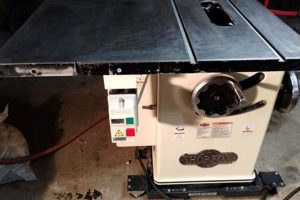
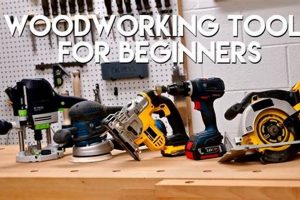
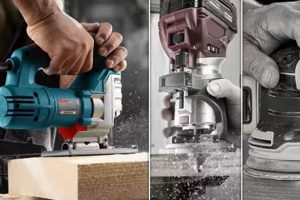
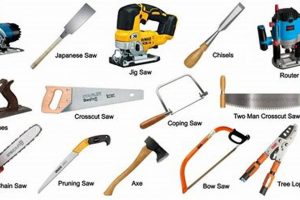
These devices integrate multiple functions traditionally performed by separate stationary machines into a single unit. An example includes a machine that combines a table saw for ripping and crosscutting with a jointer for flattening board faces and edges, thereby consolidating several operations into a smaller footprint.
The significance of this consolidation lies in its space-saving advantages, making it particularly suitable for workshops with limited area. The utility of such tools extends to reducing capital expenditure by offering multiple functionalities within a single purchase. Historically, these multi-functional devices have evolved to meet the demands of both hobbyist woodworkers and professionals seeking efficiency in smaller workspaces.
The subsequent sections will delve into the various types of these tools, their operational characteristics, factors to consider when selecting a unit, and essential safety precautions for their effective and safe utilization.
Optimizing the Use of Combination Woodworking Machines
This section provides guidance on maximizing the effectiveness and longevity of combination woodworking equipment through optimized usage and maintenance practices.
Tip 1: Prioritize Accurate Setup: Precision in initial setup is paramount. Ensure all components, such as fences and blades, are aligned according to manufacturer specifications. Deviations can compromise cut quality and safety.
Tip 2: Implement a Consistent Maintenance Schedule: Regular cleaning of dust and debris is essential. Lubricate moving parts as recommended by the manufacturer. Inspect and replace worn belts, blades, or cutters to maintain optimal performance.
Tip 3: Employ Appropriate Dust Collection: Effective dust extraction is crucial for both operator health and machine longevity. Utilize a dedicated dust collection system to remove sawdust and shavings generated during operation.
Tip 4: Utilize Proper Feed Rates: Avoid forcing material through the machine. Maintain a consistent and controlled feed rate appropriate for the material being processed. Excessive force can lead to motor strain and reduced cut quality.
Tip 5: Secure Workpiece Support: Employ auxiliary supports, such as outfeed tables and roller stands, to stabilize long or heavy workpieces. Proper support prevents material from binding or kicking back during cutting operations.
Tip 6: Adhere to Material Limitations: Respect the machine’s specifications regarding maximum material thickness and width. Attempting to process materials exceeding these limitations can damage the equipment and create hazardous situations.
Tip 7: Conduct Test Cuts Regularly: Before undertaking any significant project, perform test cuts on scrap material. This allows for verification of setup accuracy and ensures desired results are achievable.
Consistently implementing these best practices ensures both the precision and longevity of combination woodworking machines, ultimately contributing to safer and more efficient woodworking operations.
The subsequent section will offer considerations for choosing the most suitable model for specific woodworking needs and project requirements.
1. Space Optimization

Space optimization is a primary driver behind the adoption of woodworking combo tools. Traditional woodworking requires multiple stationary machines, each occupying a significant footprint. Workshops, particularly those in residential settings or smaller commercial spaces, often face limitations in available area. The acquisition of individual machines can rapidly consume valuable space, hindering workflow and maneuverability. Combo tools address this challenge by integrating multiple functions into a single unit, effectively reducing the overall spatial requirements for a fully equipped woodworking shop.
The impact of space optimization extends beyond mere square footage. By consolidating operations, combo tools streamline workflow and minimize the need to navigate between multiple machines. This translates to increased efficiency and reduced operator fatigue. Consider a small-scale cabinetmaking operation. Without a combo tool, separate machines for sawing, jointing, and planing would consume a large area. The use of a multi-function machine allows the same operations to be performed in a fraction of the space, improving overall workshop ergonomics and productivity.
In summary, the link between space optimization and woodworking combo tools is direct and consequential. By reducing the spatial requirements of a woodworking shop, these tools facilitate greater productivity and efficiency, particularly in environments where space is a constraint. While other factors, such as cost and versatility, also contribute to the decision to adopt combo tools, space optimization remains a paramount consideration for many woodworkers.
2. Cost Efficiency

Acquiring woodworking tools represents a significant capital investment. Individual stationary machines, each dedicated to a specific function, necessitate substantial financial outlay. Woodworking combo tools offer a potentially more cost-effective alternative by consolidating multiple operations into a single purchase. The initial investment in a combination machine is often less than the cumulative cost of acquiring separate machines for sawing, jointing, planing, and other common woodworking tasks. This reduction in upfront cost makes woodworking more accessible, particularly for hobbyists, small businesses, and educational institutions with limited budgets. For example, a small custom furniture shop might choose a combination machine to handle jointing, planing, and sawing, rather than purchasing individual units, reducing initial investment by an estimated 30-50%.
The cost efficiencies associated with combo tools extend beyond the initial purchase price. Reduced floor space translates directly into lower rental or mortgage costs for commercial workshops. Furthermore, a single motor powering multiple functions often consumes less electricity than several individual motors, leading to savings on utility bills. Maintenance costs can also be lower, as there is only one machine to service and repair, rather than several. However, it’s crucial to factor in potential downtime. If a combo tool malfunctions, all integrated functions are rendered unusable, potentially disrupting workflow more significantly than the failure of a single-purpose machine. The cost of specialized repairs could also be higher for complex multi-functional units.
In conclusion, woodworking combo tools can offer significant cost efficiencies compared to purchasing individual machines. This advantage stems from lower initial investment, reduced floor space requirements, potentially lower utility and maintenance costs. However, businesses must carefully consider potential downsides, such as increased downtime during repairs and the cost of specialized service, to accurately assess the long-term financial benefits. Understanding these nuances enables woodworkers to make informed decisions aligned with their budget constraints and operational needs, optimizing return on investment.
3. Versatility

The inherent design of woodworking combo tools directly addresses the need for versatility in woodworking operations. Unlike single-function machines, these tools integrate multiple capabilities, such as sawing, jointing, planing, and sometimes even shaping, into a unified platform. This integration allows woodworkers to perform a wider range of tasks with a single machine, reducing the need for numerous specialized devices. The cause-and-effect relationship is straightforward: the multi-functional design causes an increase in operational versatility.
Versatility is a critical component because it empowers woodworkers to tackle diverse projects without investing in and accommodating a large inventory of single-purpose machines. Consider a small woodworking business specializing in custom furniture. Such a business might require the ability to mill lumber, create joinery, and shape edges. A combo tool consolidating these functions enables the business to handle varied customer orders with greater efficiency and reduced capital expenditure. The practical significance lies in enabling woodworkers to adapt to changing project demands and customer preferences without being constrained by equipment limitations.
Understanding the connection between versatility and woodworking combo tools is essential for making informed purchasing decisions. While combo tools offer a wider range of capabilities, it’s crucial to assess whether the integrated functions adequately meet specific project requirements. For instance, a combo tool might offer jointing and planing, but the capacity of the planer may be insufficient for large-scale projects. The challenge lies in balancing the desire for versatility with the need for adequate performance across all integrated functions. In summary, the versatility of woodworking combo tools provides significant advantages, but careful evaluation of individual project needs is paramount.
4. Power Requirements

The operational functionality of woodworking combo tools is inextricably linked to their power requirements. The multi-functional nature of these tools, integrating operations such as sawing, jointing, and planing, necessitates a robust power supply to drive multiple components simultaneously or in quick succession. Insufficient power can lead to performance degradation, motor overheating, and potential equipment failure. A direct consequence of inadequate power is reduced efficiency and the inability to process materials within specified parameters. For example, a combo tool designed to plane a board up to 12 inches wide may struggle or stall if the motor lacks the necessary power to handle the load consistently, illustrating a clear cause-and-effect relationship. The electrical capacity of the workshop, including voltage and amperage, must align with the tool’s specifications to ensure safe and effective operation.
The significance of understanding power requirements extends to the selection process. Prospective buyers must carefully assess the tool’s motor specifications, including horsepower and voltage, and compare these requirements to the available power supply in their workshop. Ignoring these details can result in costly electrical modifications or the inability to operate the tool altogether. Furthermore, the power requirements of a combo tool can influence operating costs. A machine with a more powerful motor, while capable of handling a wider range of tasks, may consume more electricity, leading to higher utility bills. Consider a small custom cabinet shop deciding between two models: one with a 1.5 horsepower motor and another with a 2 horsepower motor. While the latter offers greater cutting capacity, it also demands more power and could increase electricity consumption by 20%, necessitating a cost-benefit analysis.
In summary, power requirements represent a critical consideration in the selection and operation of woodworking combo tools. Understanding the correlation between power supply, motor specifications, and intended usage is paramount to ensuring efficient performance, preventing equipment damage, and avoiding electrical hazards. The initial assessment of power needs, coupled with ongoing monitoring of electrical consumption, contributes to the safe and economical utilization of these versatile machines.
5. Maintenance Demands

The sustained operational efficiency of woodworking combo tools hinges significantly on consistent and comprehensive maintenance. Due to their intricate designs and the integration of multiple functions, these tools often present unique maintenance challenges compared to single-purpose machines. Addressing these demands proactively ensures longevity and minimizes downtime.
- Lubrication of Moving Parts
Combination machines incorporate numerous moving components, including bearings, gears, and slides, all susceptible to friction and wear. Regular lubrication, using manufacturer-recommended lubricants, is crucial to reducing friction, dissipating heat, and preventing premature component failure. Neglecting lubrication can lead to increased wear, reduced precision, and potential mechanical breakdowns. For instance, inadequate lubrication of the jointer’s cutterhead bearings can cause overheating and eventual bearing failure, necessitating costly repairs.
- Blade and Cutter Maintenance
The performance of sawing, jointing, and planing operations is directly dependent on the condition of the blades and cutters. Regular sharpening, alignment, and replacement of worn or damaged blades are essential for maintaining cut quality and preventing safety hazards. Dull blades require increased force, leading to motor strain and potential kickback. Furthermore, improperly aligned blades can produce inaccurate cuts, compromising the precision of woodworking projects. An example includes a dull planer blade creating a rippled surface rather than a smooth finish, rendering the workpiece unusable.
- Dust Collection System Maintenance
Effective dust collection is paramount for both operator health and machine longevity. The build-up of sawdust and debris can clog internal mechanisms, leading to overheating and reduced performance. Regular cleaning of dust collection ports, filters, and hoses is essential for maintaining optimal airflow. A blocked dust collection system can cause the motor to overheat due to restricted ventilation or lead to inaccurate cuts by obscuring the cut line.
- Belt Inspection and Replacement
Many combo tools utilize belts to transmit power from the motor to various components. Belts are subject to wear and tear, stretching, cracking, or slipping over time. Regular inspection of belts for signs of damage and timely replacement are crucial for maintaining consistent power transmission and preventing operational failures. A slipping belt on a table saw component, for example, can result in inconsistent cutting speed, leading to rough cuts and potential kickback.
The maintenance demands of woodworking combo tools are a critical consideration for any woodworking shop. Addressing these demands proactively through a consistent maintenance schedule ensures the long-term reliability and precision of these versatile machines, ultimately contributing to safer and more efficient woodworking operations. Failure to adhere to manufacturer’s recommended maintenance procedures can significantly reduce the lifespan and performance of the equipment, negating its initial cost advantages.
6. Safety Features
The operational complexity inherent in woodworking combo tools underscores the critical importance of integrated safety features. These machines, by their nature, consolidate multiple high-speed cutting operations into a single unit, thereby increasing the potential for operator injury if safeguards are absent or compromised. Consequently, the presence and proper functioning of safety mechanisms are paramount for mitigating risks. Examples of essential features include blade guards, anti-kickback pawls, emergency stop switches, and interlocks that prevent operation when safety covers are open. The cause-and-effect relationship is evident: the presence of functional safety features directly reduces the likelihood of accidents during operation. Real-life examples demonstrate the devastating consequences of bypassing or disabling these safeguards, often resulting in severe lacerations, amputations, or other serious injuries. Understanding the practical significance of these features is not merely academic; it is a fundamental aspect of responsible woodworking practice.
Further analysis reveals that effective safety features must be complemented by comprehensive operator training. The complexity of combo tools necessitates a thorough understanding of their operational procedures, potential hazards, and the proper use of safety devices. Even the most advanced safety features are rendered ineffective if the operator lacks the knowledge and skills to utilize them correctly. Consider a scenario where an operator, unfamiliar with the anti-kickback mechanism on a combination saw, attempts to force a workpiece through the blade. In such cases, the risk of kickback is significantly elevated, potentially leading to injury despite the presence of the safety device. Training should emphasize the importance of adhering to manufacturer’s guidelines, recognizing potential hazards, and responding appropriately to emergency situations. Practical application involves regular drills and simulations to reinforce safe operating procedures.
In conclusion, the integration of robust safety features into woodworking combo tools is essential for minimizing risks associated with their operation. However, the effectiveness of these features is contingent upon comprehensive operator training and a commitment to adhering to safe working practices. The challenge lies in fostering a culture of safety within the woodworking environment, where the use of safety features is not viewed as an inconvenience but as a fundamental aspect of responsible craftsmanship. By prioritizing safety, woodworkers can harness the versatility and efficiency of combo tools while safeguarding themselves and others from potential harm.
Frequently Asked Questions About Woodworking Combo Tools
This section addresses common inquiries regarding the selection, operation, and maintenance of woodworking combo tools, providing factual information to assist informed decision-making.
Question 1: What are the primary advantages of utilizing woodworking combo tools compared to individual machines?
The principal advantages encompass space optimization, reduced capital expenditure, and enhanced workflow in constrained environments. Integrated functionality minimizes the footprint required for multiple woodworking operations.
Question 2: Are woodworking combo tools suitable for professional woodworking applications?
The suitability depends on the scale and nature of the woodworking operation. While offering versatility, combo tools may not match the performance and precision of dedicated machines in high-volume or specialized tasks.
Question 3: What factors should be considered when selecting a woodworking combo tool?
Key considerations include available power supply, maximum material capacity, precision requirements, the types of integrated operations, safety features, and maintenance demands.
Question 4: How does one ensure safe operation of a woodworking combo tool?
Safe operation necessitates adherence to manufacturer’s guidelines, comprehensive operator training, consistent use of safety features, and regular maintenance of all components.
Question 5: What are the common maintenance requirements for woodworking combo tools?
Typical maintenance includes lubrication of moving parts, blade and cutter maintenance, dust collection system upkeep, and regular inspection and replacement of belts.
Question 6: Can woodworking combo tools process all types of wood?
The capacity to process different wood types is dependent on the tool’s motor power, blade sharpness, and overall construction. Hardwoods may require more robust machines with higher horsepower.
These responses provide a foundational understanding of woodworking combo tools. Further research and consultation with experienced woodworkers are recommended for specific applications.
The subsequent section will delve into real-world case studies illustrating the practical application of woodworking combo tools in various settings.
Conclusion
This exploration has illuminated the multifaceted aspects of woodworking combo tools. From space optimization and cost efficiencies to maintenance demands and critical safety considerations, these devices present a compelling solution for woodworking operations with specific constraints. A balanced perspective, however, requires acknowledging their limitations in comparison to dedicated machinery in high-volume or specialized contexts. The versatility they offer must be weighed against the potential compromises in performance for certain tasks.
Ultimately, the informed selection and responsible utilization of woodworking combo tools are paramount. Further research, adherence to safety protocols, and a commitment to ongoing maintenance are essential for maximizing their benefits and ensuring a safe and productive woodworking environment. The ongoing evolution of woodworking technologies suggests a continued refinement of these devices, promising greater precision and efficiency in the future.