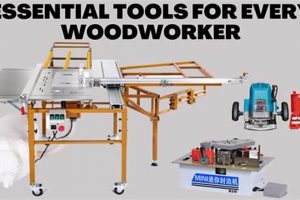
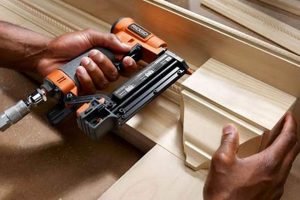
A specialized instrument designed for shaping wood, these tools create consistent and intricate edge details, curves, or decorative patterns. Examples include routers with profile bits, molding planes, and spindle shapers equipped with custom cutters, each capable of producing a specific design on the workpiece.
These implements are crucial for achieving professional-quality results in cabinetry, furniture making, and architectural millwork. Their precision enhances the aesthetic appeal of projects and contributes to structural integrity by creating precise joints. Historically, hand planes were the primary method, but modern power tools offer increased speed and repeatability.
Understanding the different types, their capabilities, and appropriate applications is essential for any woodworker seeking to elevate their craftsmanship. Considerations such as material compatibility, cutter geometry, and safety protocols are paramount for successful and safe operation.
Essential Usage Guidelines
Maximizing the effectiveness and safety of these implements requires careful attention to technique and maintenance. Adhering to best practices will yield superior results and prolong the tool’s lifespan.
Tip 1: Select the Appropriate Cutter. The profile cutter must match the desired shape and wood type. Hardwoods require cutters with greater durability and specific cutting angles.
Tip 2: Maintain Sharp Cutting Edges. Dull cutters can cause tear-out, burning, and increased strain on the tool. Regular sharpening is imperative.
Tip 3: Control Feed Rate. Feeding the wood too quickly can overload the cutter, leading to chatter, splintering, or kickback. A slow, steady feed rate is crucial.
Tip 4: Secure the Workpiece. Ensure the wood is firmly clamped or held in place to prevent movement during the shaping process. Unsecured workpieces are a significant safety hazard.
Tip 5: Use Dust Collection. Routing and shaping operations generate substantial amounts of dust. Implementing a dust collection system protects the operator’s respiratory health and improves visibility.
Tip 6: Conduct Test Cuts. Before working on the final piece, perform test cuts on scrap wood to verify the cutter’s profile and the tool’s settings.
Tip 7: Inspect for Bearing Wear. For tools utilizing bearings, regular inspection and replacement are necessary to maintain accuracy and prevent damage to the workpiece.
By adhering to these guidelines, the woodworker can achieve consistent, high-quality profiles while minimizing the risk of injury or damage to the equipment. Skillful application of these techniques contributes directly to the overall success of woodworking projects.
The subsequent sections will delve into specific applications and advanced techniques, building upon this foundational knowledge to further refine the reader’s understanding.
1. Cutting Edge Geometry

Cutting edge geometry is a fundamental determinant of a woodworking profile tool’s performance. The angles, sharpness, and overall shape of the cutting edge directly impact the tool’s ability to cleanly and efficiently remove wood. Incorrect geometry can lead to tear-out, chatter, burning, and reduced tool life. For instance, a router bit designed for creating a rounded edge must have a precisely shaped cutting edge to produce a smooth, consistent curve. Variations in the angle or sharpness will manifest as imperfections in the final profile.
The relationship extends to the material being worked. Softer woods might tolerate a more aggressive cutting angle, whereas hardwoods demand a steeper, more refined geometry to prevent splintering. Furthermore, the type of profile dictates the complexity of the cutting edge. A simple chamfer requires a straightforward angled edge, while intricate molding profiles necessitate multiple facets and curves. Maintaining the designed geometry through regular sharpening is therefore crucial for consistent results. Ignoring this aspect inevitably leads to degraded performance and compromised outcomes. The geometry also influences the amount of force required to push the tool during handcraft, as well as the power requirements for machine-driven woodworking profile tools.
In summation, the geometry of a profile tool’s cutting edge is integral to achieving accurate and high-quality results. Understanding and maintaining this geometry is not merely a technical detail, but a core element of skilled woodworking. The geometry dictates the profile created, influences safety, tool longevity and the power needed for the operation. Without proper geometry, the woodworking profile tool losses its effectiveness.
2. Material Compatibility

Material compatibility is a critical consideration in woodworking, influencing tool selection, cutting parameters, and ultimately, the quality of the finished product. The hardness, density, grain structure, and presence of abrasive elements within different wood species dictate the appropriate type and configuration of a woodworking profile tool.
- Hardness and Tool Steel Grade
The hardness of the wood necessitates matching the tool steel grade. Hardwoods such as maple and oak require high-speed steel (HSS) or carbide-tipped cutters due to their superior wear resistance. Softer woods, like pine or cedar, may be successfully shaped with carbon steel tools. Using an inadequate steel grade can result in rapid dulling, increased friction, and potential damage to both the tool and the workpiece. For example, attempting to shape ebony, a dense and abrasive hardwood, with a carbon steel tool would lead to premature failure.
- Grain Orientation and Cutter Geometry
The orientation of the wood grain relative to the cutting direction significantly impacts the quality of the profile. Cutting against the grain often leads to tear-out, especially in woods with interlocking grain patterns. Therefore, the cutter geometry must be carefully selected to minimize this effect. Shear-cutters or spiral flute bits are often preferred for difficult grain orientations, as they slice through the wood fibers rather than chopping them. As an example, shaping a profile on quartersawn oak, which has vertical grain, requires a different approach compared to shaping flatsawn oak with its tangential grain pattern.
- Resin Content and Heat Generation
The resin content of certain woods, particularly softwoods like pine and fir, can affect the cutting process. High resin content can lead to increased friction and heat buildup, which can cause the wood to burn or the tool to gum up. Proper lubrication and dust extraction are crucial to mitigate these issues. Additionally, the choice of cutter material and geometry can influence heat generation. For instance, coated carbide cutters can reduce friction and heat buildup compared to uncoated steel tools when working with resinous woods. This is crucial for delicate woodworking profile tools.
- Abrasive Elements and Tool Wear
Some wood species contain abrasive elements, such as silica or mineral deposits, which can accelerate tool wear. Exotic hardwoods like teak or wenge often fall into this category. When working with such materials, carbide-tipped cutters are essential due to their superior abrasion resistance. Regular inspection and sharpening are also critical to maintain optimal cutting performance. Using a diamond sharpening stone is advisable for maintaining the cutting edge of carbide-tipped tools used on abrasive woods.
In summary, selecting the appropriate woodworking profile tool and adjusting cutting parameters based on the material’s properties is essential for achieving clean, accurate, and efficient shaping results. Ignoring material compatibility considerations can lead to substandard profiles, premature tool wear, and potentially hazardous working conditions. Awareness of the wood’s characteristics and corresponding adjustments to the chosen tool will promote optimal outcomes and extend the lifespan of the equipment.
3. Precision and Accuracy

The functionality of a woodworking profile tool hinges directly on its capacity for precision and accuracy. Precision refers to the repeatability of the tool’s actions, consistently producing the same profile dimensions. Accuracy, conversely, indicates how closely the generated profile adheres to the intended design specifications. A tool may be precise but inaccurate, consistently producing a profile that deviates from the intended measurements. Conversely, a tool may be accurate on average but lack precision, resulting in variable profile dimensions. In woodworking, both attributes are crucial for achieving professional results. For instance, in creating a set of matching cabinet doors, a lack of precision would result in variations in the door profiles, while inaccuracy would mean the profiles do not match the overall design.
The design and manufacturing of profile tools significantly affect their inherent precision and accuracy. High-quality materials, tight tolerances, and meticulous construction are essential. For example, a router bit crafted from high-speed steel and ground to exacting specifications will deliver more precise and accurate results than a cheaply manufactured alternative. Similarly, a molding plane with a precisely shaped and sharpened blade, properly bedded in a well-fitted stock, will produce a more accurate profile than a poorly made plane. The setup and operation of the tool also contribute significantly. Accurate calibration, secure workholding, and consistent feed rates are critical for maximizing precision and accuracy. A spindle shaper, though capable of highly precise work, will produce inaccurate profiles if the fence is misaligned or the operator applies uneven pressure.
The practical implications of precision and accuracy in woodworking are considerable. Accurate joinery, seamless transitions between profiled edges, and overall aesthetic appeal depend on these factors. Projects requiring multiple matching components, such as furniture sets or architectural millwork, demand high levels of both precision and accuracy. While minor inaccuracies may be tolerable in some applications, critical dimensions or complex profiles necessitate the utmost care. In conclusion, precision and accuracy are not merely desirable attributes, but essential components of a functional woodworking profile tool. Their combined effect directly influences the quality, consistency, and overall success of woodworking endeavors.
4. Safety Protocols
The inherent nature of a woodworking profile tool necessitates rigorous adherence to established safety protocols. The high rotational speeds of power-driven tools, coupled with the sharp cutting edges, present significant potential hazards. Failure to implement and enforce appropriate safety measures can lead to severe injuries, including lacerations, amputations, and eye damage. For example, operating a router without proper guarding exposes the user to the risk of direct contact with the spinning bit, resulting in immediate and substantial harm. The absence of a dust collection system increases the risk of respiratory issues due to prolonged exposure to airborne particulate matter.
Safety protocols encompass a range of preventative measures, including the use of personal protective equipment (PPE) such as safety glasses, hearing protection, and dust masks. Proper machine setup and maintenance are also critical. Ensuring that blades are sharp, guards are in place, and workpieces are securely clamped minimizes the risk of accidents. Training and experience play a vital role in safe operation. A novice woodworker unfamiliar with the tool’s characteristics is more likely to make errors that can lead to injuries. Regular safety inspections and adherence to manufacturer’s guidelines are imperative for maintaining a safe working environment. Ignoring safety protocols can lead to a cascade of negative consequences, from workplace accidents and increased insurance costs to legal liabilities.
The implementation of comprehensive safety protocols is not merely a regulatory requirement, but an ethical imperative. Protecting the well-being of woodworkers and preventing avoidable injuries should be a primary concern. By prioritizing safety, woodworking businesses can foster a culture of responsibility and reduce the risk of accidents, ensuring a more productive and sustainable working environment. Safe and efficient use of woodworking profile tools is intrinsically linked to the proper implementation and constant oversight of safety protocols. The correlation emphasizes the need for a comprehensive approach to woodworking, where security is a fundamental element, not an afterthought.
5. Maintenance Requirements

The longevity and performance of a woodworking profile tool are directly contingent upon adherence to a comprehensive maintenance schedule. Neglecting necessary upkeep precipitates diminished accuracy, compromised safety, and ultimately, tool failure. The causal relationship is evident: infrequent sharpening leads to dull cutting edges, necessitating increased force, resulting in tear-out and potentially dangerous kickback. Regular cleaning, lubrication, and inspection are essential components of a responsible maintenance program. For example, resin buildup on a router bit reduces cutting efficiency and increases friction, causing the motor to overheat. Similarly, a molding plane with a corroded sole will produce uneven profiles and require excessive effort.
Practical maintenance extends beyond routine cleaning. Sharpening is paramount, demanding the use of appropriate honing stones and techniques specific to the tool’s geometry. Alignment and calibration must be periodically checked and adjusted to ensure accurate profiling. Bearings in routers and spindle shapers require regular lubrication to minimize friction and prevent premature failure. Wooden-bodied tools, such as molding planes, necessitate occasional waxing or oiling to prevent warping and maintain smooth operation. The specific requirements vary depending on the tool type and usage frequency. A heavily used router bit, for instance, will require more frequent sharpening than a molding plane used only occasionally. Furthermore, adherence to the manufacturer’s recommendations regarding maintenance procedures is crucial for preserving warranty coverage and ensuring optimal performance.
In conclusion, consistent and thorough maintenance is not merely an ancillary task but an integral element in the successful operation of any woodworking profile tool. It directly affects cut quality, safety, and tool lifespan. By prioritizing regular upkeep, woodworkers can mitigate the risks associated with tool malfunction, extend the tool’s service life, and achieve consistently high-quality results. The economic and practical benefits of proactive maintenance far outweigh the costs associated with neglect, making it a fundamental aspect of responsible woodworking practice. The link between maintenance requirements and the success of a woodworking profile tool is undeniable and must be observed.
Frequently Asked Questions About Woodworking Profile Tools
This section addresses common inquiries regarding the selection, application, and maintenance of shaping instruments used in woodworking. The information aims to provide clarity and guidance for users of all experience levels.
Question 1: What factors should be considered when selecting a suitable woodworking profile tool?
Selection depends on the intended profile, wood species, and required precision. Hardwoods necessitate robust tools with high-speed steel or carbide cutters. Intricate profiles demand specialized cutters and careful setup. The scale and repeatability needs also dictates the choice between hand tools and power tools.
Question 2: How frequently should woodworking profile tools be sharpened?
Sharpening frequency varies based on tool usage, wood hardness, and cutter material. Regular inspection for dullness is crucial. Dull cutters cause tear-out, burning, and increased strain. As a general guideline, sharpen before each major project or when performance degrades noticeably.
Question 3: What safety precautions are paramount when operating a woodworking profile tool?
Mandatory precautions include wearing safety glasses, hearing protection, and dust masks. Secure workpieces and maintain proper guarding on power tools. Understand the tool’s operational characteristics and adhere to manufacturer’s guidelines. Never operate a tool while fatigued or under the influence of impairing substances.
Question 4: How does wood grain direction affect the outcome when shaping a profile?
Cutting against the grain often leads to tear-out, particularly in woods with interlocked grain patterns. Employ techniques such as climb cutting or using shear-cutters to minimize this effect. Adjust feed rate and cutter geometry based on grain orientation.
Question 5: What are the common causes of inaccurate profiles when using a shaping instrument?
Inaccurate profiles often stem from dull cutters, improper tool setup, insecure workholding, and inconsistent feed rates. Material inconsistencies and tool wear also contribute. Meticulous attention to detail and careful calibration are essential for achieving accurate results.
Question 6: How can the lifespan of a woodworking profile tool be extended?
Regular cleaning, sharpening, and lubrication are crucial for extending tool lifespan. Store tools in a dry environment to prevent corrosion. Avoid forcing tools beyond their capacity. Follow manufacturer’s recommendations for maintenance and operation. Proper storage can prevent damage. The woodworking profile tools must always be kept clean for effectiveness.
This FAQ section underscores the importance of informed tool selection, diligent maintenance, and rigorous safety practices when working with woodworking shaping instruments. Attention to these factors contributes significantly to the quality and safety of woodworking projects.
The following section delves into advanced techniques and specialized applications, building upon the knowledge presented thus far.
Conclusion
The preceding examination of woodworking profile tools reveals their crucial role in achieving precision and aesthetic quality in woodcraft. Key aspects discussed include cutting edge geometry, material compatibility, safety protocols, and maintenance requirements. Mastery of these elements is essential for successful application and prolonged tool life.
Continued refinement of shaping techniques and adherence to rigorous standards will undoubtedly enhance the artistry and durability of woodworking projects. The informed application of these tools contributes significantly to the preservation and advancement of this time-honored craft, emphasizing the continued need for skilled operation and responsible upkeep. Investing in quality woodworking profile tools translates to better end result.