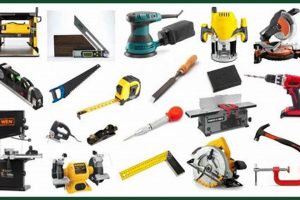
Equipment employed in contemporary woodworking practices facilitates precise and efficient material processing. Examples include computer numerical control (CNC) routers, laser cutters, and advanced power tools that integrate digital controls. These implements enable complex designs and repeatable accuracy, surpassing the capabilities of traditional hand tools and older machinery.
The adoption of advanced equipment enhances productivity, reduces material waste, and improves safety in woodworking operations. Historically, woodworking relied on manual skill and rudimentary tools. The integration of technology has transformed the field, allowing for mass production, intricate designs, and a wider range of project possibilities. This evolution has broadened the applicability of woodworking across various industries, from construction to furniture manufacturing.
The following sections will delve into specific categories of cutting, shaping, and finishing implements, examining their functionality and application within a modern woodworking context. These topics will include an overview of digital design software essential for operating computerized equipment, and safety considerations inherent to the operation of these implements.
Essential Usage Tips
Proper handling and maintenance are crucial for optimizing performance and longevity. This section outlines several key considerations for maximizing the capabilities of said equipment.
Tip 1: Prioritize Safety Protocols: Always adhere to manufacturer-specified safety guidelines. This includes wearing appropriate personal protective equipment (PPE) such as safety glasses, hearing protection, and dust masks. Ensure that all safety guards are correctly installed and functioning before operation.
Tip 2: Implement Regular Maintenance Schedules: Establish a routine maintenance schedule to inspect and clean equipment. This may involve lubricating moving parts, sharpening blades, and verifying the accuracy of digital calibrations. Refer to the manufacturer’s manual for specific maintenance requirements.
Tip 3: Optimize Cutting Parameters: Different materials require varying cutting speeds, feed rates, and blade configurations. Experiment with these parameters to determine the optimal settings for each project. Incorrect parameters can lead to material damage, tool wear, or unsafe operation.
Tip 4: Utilize Dust Collection Systems: Wood dust poses a significant health hazard. Employ a dedicated dust collection system to effectively remove airborne particles. Regular cleaning of dust collection filters and machinery is essential for maintaining a safe working environment.
Tip 5: Leverage Digital Design Software: Employ CAD/CAM software for precise design and programming of CNC equipment. Mastering these tools enables the creation of complex geometries and optimized toolpaths, leading to increased efficiency and accuracy.
Tip 6: Properly Store and Organize Equipment: Maintain a designated storage area for all implements. This prevents damage, ensures easy access, and promotes a well-organized workspace. Labeling storage locations can further enhance efficiency.
Tip 7: Seek Professional Training: Consider enrolling in formal training programs to acquire the necessary skills and knowledge for safe and efficient operation. Professional instruction can provide valuable insights into advanced techniques and troubleshooting strategies.
Adhering to these guidelines will improve the operational effectiveness, safety, and lifespan of equipment. This, in turn, allows for consistent, high-quality woodworking results.
The subsequent section will focus on the economic considerations of investing in advanced woodworking technology, examining the return on investment and long-term cost savings.
1. Precision Enhancement

Precision enhancement, in the context of advanced woodworking implements, refers to the ability to execute cuts, shapes, and joinery with a degree of accuracy significantly exceeding that achievable with manual methods or legacy machinery. This improvement directly impacts product quality, material utilization, and overall project efficiency.
- Computer Numerical Control (CNC) Accuracy
CNC routers and milling machines utilize pre-programmed digital instructions to guide cutting tools along precise paths. This minimizes human error and allows for the creation of complex shapes and intricate details with tolerances often measured in thousandths of an inch. In furniture manufacturing, CNC equipment enables the production of identical components, ensuring consistent assembly and structural integrity.
- Laser Cutting Precision
Laser cutters employ a focused beam of light to vaporize material, resulting in exceptionally clean and accurate cuts. This is particularly valuable for delicate or intricate designs, such as inlays or marquetry. Laser cutting minimizes material waste due to its narrow kerf, leading to cost savings and improved resource utilization.
- Digitally Calibrated Measurement Systems
Modern tools frequently incorporate digital measurement systems that provide real-time feedback on dimensions and angles. These systems eliminate the potential for human error in manual measurements, ensuring accurate cuts and joinery. Table saws with digital angle readouts, for example, allow for precise bevel cuts, crucial in cabinet making and trim work.
- Repeatability and Consistency
Advanced woodworking machinery enables the production of identical parts with minimal variation. This repeatability is essential for mass production and ensures consistency across multiple units of the same design. The ability to consistently reproduce complex components reduces rework and improves the overall quality control process.
These facets of precision enhancement, driven by the utilization of advanced woodworking technology, contribute to reduced material waste, improved product quality, and increased efficiency. The investment in these implements translates to long-term cost savings and an enhanced competitive advantage within the woodworking industry.
2. Operational Efficiency

Operational efficiency, within the context of implements employed in woodworking, denotes the optimization of workflows, resource utilization, and production timelines. Contemporary tools significantly contribute to enhancing efficiency metrics within woodworking operations.
- Automated Material Handling
Automated systems for loading, unloading, and transferring materials between workstations reduce manual labor and processing time. Examples include automated feeder systems for CNC routers and robotic arms for material placement. These systems minimize downtime and improve the flow of materials, resulting in increased throughput.
- Computer-Aided Design/Computer-Aided Manufacturing (CAD/CAM) Integration
The seamless integration of CAD/CAM software with computerized woodworking equipment allows for the direct translation of digital designs into machine instructions. This eliminates the need for manual programming and reduces the risk of errors. This capability enables faster prototyping, shorter production runs, and customized designs with minimal effort.
- Reduced Setup Times
Advanced woodworking machinery often features automated tool changers and pre-programmable settings, which minimize setup times between different operations. This is particularly beneficial for batch production or projects involving multiple operations. The reduction in setup time allows for more efficient utilization of equipment and reduces overall production lead times.
- Integrated Dust Collection Systems
Modern implements commonly feature integrated dust collection systems, which remove airborne particles and maintain a cleaner working environment. This eliminates the need for manual cleanup and reduces the risk of health hazards. Effective dust collection also improves visibility, resulting in increased accuracy and reduced errors.
The various facets of operational efficiency, enabled by the implementation of contemporary woodworking implements, result in reduced labor costs, improved material utilization, and shortened production cycles. These factors contribute to increased profitability and enhanced competitiveness within the woodworking industry.
3. Safety Augmentation

Safety augmentation, within the context of contemporary woodworking implements, represents a critical advancement over traditional practices. Advanced features and design elements integrated into modern implements serve to mitigate risks inherent in woodworking operations, thereby fostering a safer working environment and minimizing potential for injury.
- Automated Shut-Off Systems
Many implements now incorporate automated shut-off systems that trigger in response to specific events, such as contact with skin or obstructions in the cutting path. These systems drastically reduce the severity of potential injuries by rapidly stopping the machine’s operation. For instance, table saws with blade-stopping technology can detect contact with a user’s hand and retract the blade within milliseconds, minimizing the extent of the cut. This feature directly addresses the risk of severe lacerations and amputations associated with table saw operation.
- Integrated Dust Collection
Respirable wood dust poses a significant health hazard, leading to respiratory problems and potentially carcinogenic effects. Modern implements often feature integrated dust collection systems that effectively capture airborne particles at the source. These systems reduce worker exposure to hazardous dust, mitigating the risk of long-term health complications. Examples include sanders with integrated vacuum attachments and CNC routers equipped with dust hoods and collection systems. These features not only protect worker health but also improve visibility and reduce cleanup time.
- Ergonomic Design and Vibration Dampening
Prolonged use of power tools can lead to musculoskeletal disorders and hand-arm vibration syndrome. Modern implements are often designed with ergonomic considerations to minimize strain and fatigue. Features such as vibration dampening handles and adjustable work surfaces reduce the risk of these conditions. Lightweight construction and optimized grip designs further enhance user comfort and control, reducing the likelihood of accidents caused by fatigue or loss of grip.
- Enhanced Guarding and Enclosures
Contemporary implements often incorporate enhanced guarding and enclosures to prevent accidental contact with moving parts. Machine guards are designed to protect operators from flying debris and contact with cutting tools. Enclosed CNC routers, for example, provide a physical barrier between the operator and the cutting area, minimizing the risk of injury. These features represent a significant improvement over older machinery with inadequate or missing guarding, reducing the likelihood of accidental contact with hazardous components.
These facets of safety augmentation represent a significant advancement in woodworking practices. The integration of these features into contemporary implements directly contributes to a safer working environment, reduced risk of injury, and improved worker health. The investment in implements featuring these safety enhancements represents a commitment to worker well-being and a reduction in potential liability associated with workplace accidents.
4. Design Complexity
The ability to realize intricate designs is inextricably linked to the utilization of implements employed in advanced woodworking. Complexity, encompassing elaborate geometries, precise joinery, and detailed ornamentation, presents a substantial challenge when employing manual techniques. The advent of sophisticated machinery has fundamentally altered the capacity to execute complex designs efficiently and accurately. Equipment such as Computer Numerical Control (CNC) routers, laser cutters, and specialized shaping tools enable the creation of components previously unattainable or prohibitively expensive to produce. This capacity for complex design serves as a core component of operations involved in advanced woodworking. Real-world examples include the creation of custom architectural millwork, intricate furniture pieces with curvilinear elements, and detailed musical instruments. The practical significance of understanding this connection resides in the ability to expand creative possibilities, improve production efficiency, and achieve higher levels of aesthetic refinement.
Modern woodworking implements facilitate complex designs through several mechanisms. Firstly, CAD/CAM (Computer-Aided Design/Computer-Aided Manufacturing) software allows designers to create precise digital models of complex objects. This digital model then serves as a blueprint for CNC equipment, guiding cutting tools with exceptional accuracy. Secondly, the repeatability of computerized implements ensures that complex components can be replicated consistently, minimizing errors and rework. Thirdly, advanced joinery techniques, such as mortise and tenon joints cut with CNC precision, allow for strong and aesthetically pleasing connections in complex assemblies. Lastly, the ability to work with diverse materials, including composites and exotic hardwoods, further expands the scope for complex design applications.
In summary, the relationship between intricate designs and advanced woodworking technology is symbiotic. Advanced machinery enables the creation of complex designs, while the demand for complex designs drives the innovation and development of more sophisticated equipment. Challenges remain in mastering the technical skills required to operate and program these implements effectively. Nevertheless, the capacity to execute complex designs represents a core advantage of advanced woodworking, allowing for the creation of innovative products and the realization of ambitious creative visions.
5. Material Versatility

Material versatility, in the context of implements employed in contemporary woodworking, signifies the capacity to process a wide spectrum of materials beyond traditional hardwoods and softwoods. The expanded range of workable materials is a direct consequence of advancements in implement design, control systems, and cutting tool technology, significantly broadening the scope of woodworking applications.
- Composite Material Processing
Modern woodworking tools, specifically CNC routers and specialized cutting tools, facilitate the processing of composite materials such as medium-density fiberboard (MDF), particleboard, and plywood with increased efficiency and precision. These materials, often utilized in cabinetry and furniture construction, require specialized cutting parameters to minimize chipping and delamination. The ability to process composite materials expands design options and reduces material costs.
- Acrylic and Plastic Fabrication
Laser cutters and CNC milling machines enable the fabrication of acrylic and plastic components for diverse applications, including signage, displays, and decorative elements. These materials require precise control of cutting speed and power to prevent melting or cracking. The integration of these materials into woodworking projects expands the aesthetic possibilities and functional attributes of finished products.
- Non-Ferrous Metal Machining
Certain modern woodworking implements, particularly CNC milling machines with appropriate tooling, are capable of machining non-ferrous metals such as aluminum and brass. This capability allows for the creation of custom hardware, decorative accents, and structural components within woodworking projects. The integration of metal elements adds durability, visual contrast, and functional enhancements.
- Exotic Hardwood Utilization
Advanced sawing and shaping tools, equipped with carbide-tipped blades and precision control systems, enable the efficient processing of exotic hardwoods with varying densities and grain patterns. These hardwoods, sourced from sustainable forests, offer unique aesthetic characteristics and increased durability. The ability to work with these materials expands design possibilities and allows for the creation of high-end furniture and architectural elements.
The enhanced material versatility enabled by contemporary woodworking implements allows for the creation of innovative designs, the integration of diverse materials, and the optimization of material selection for specific applications. This expanded material palette contributes to increased product functionality, aesthetic appeal, and overall project value.
Frequently Asked Questions
The following section addresses common inquiries regarding the acquisition, operation, and maintenance of contemporary woodworking implements. The information presented is intended to provide clarity and guidance for professionals and serious hobbyists.
Question 1: What constitutes a “modern” woodworking tool, and how does it differ from traditional equipment?
Modern woodworking tools are characterized by their integration of advanced technologies such as digital controls, computer numerical control (CNC), laser cutting, and enhanced safety features. They differ from traditional equipment in their capacity for precision, automation, and material versatility. Traditional equipment relies primarily on manual operation and mechanical adjustments, limiting their capacity for complex designs and repeatable accuracy.
Question 2: What are the primary advantages of investing in contemporary woodworking tools?
The primary advantages include increased productivity, improved accuracy, enhanced safety, reduced material waste, and the capacity to execute complex designs. These advantages translate to long-term cost savings, improved product quality, and a competitive edge in the woodworking industry.
Question 3: What are the essential safety precautions to observe when operating modern woodworking tools?
Essential safety precautions include wearing appropriate personal protective equipment (PPE) such as safety glasses, hearing protection, and dust masks. Strict adherence to manufacturer-specified operating procedures is paramount. Regular inspection and maintenance of safety features, such as guards and shut-off systems, are crucial. Comprehensive training on equipment operation is also essential.
Question 4: What is the typical lifespan of contemporary woodworking equipment, and what factors influence its longevity?
The lifespan of equipment varies depending on the specific tool, its usage frequency, and the quality of maintenance. Regular maintenance, proper lubrication, and adherence to recommended operating parameters can significantly extend the lifespan of woodworking tools. Investing in high-quality equipment from reputable manufacturers is also a key factor in ensuring longevity.
Question 5: What is the anticipated return on investment (ROI) for upgrading to modern woodworking tools?
The ROI depends on several factors, including the scale of the operation, the type of products manufactured, and the efficiency gains achieved. In general, businesses can expect to see a return on investment through increased productivity, reduced labor costs, improved material utilization, and the ability to command higher prices for high-quality, complex products. A comprehensive cost-benefit analysis is recommended before making any significant investment.
Question 6: What level of training is required to effectively operate and maintain sophisticated woodworking equipment?
The level of training required varies depending on the complexity of the equipment and the operator’s prior experience. Basic power tools may require minimal training, while CNC routers and laser cutters necessitate specialized training in CAD/CAM software, machine programming, and maintenance procedures. Formal training programs offered by manufacturers or vocational schools are recommended for operators of sophisticated equipment.
Understanding these aspects is crucial for responsible and effective utilization of advanced implements in woodworking. The subsequent section will delve into resources for training and skill development in this evolving field.
The following section will explore available training resources to further understand “modern woodworking tools”.
Modern Woodworking Tools
This exploration has presented a comprehensive overview of modern woodworking tools, underscoring their impact on precision, efficiency, safety, design complexity, and material versatility. The integration of digital technologies and advanced engineering has transformed traditional woodworking practices, enabling greater productivity, accuracy, and creative possibilities. The responsible adoption and skillful application of these implements are essential for success in contemporary woodworking endeavors.
As technology continues to evolve, the landscape of woodworking will undoubtedly undergo further transformation. Continuous education, adherence to safety protocols, and a commitment to quality craftsmanship will remain paramount. The future of woodworking hinges on the ability to effectively harness the power of modern implements while preserving the artistic integrity and enduring value of handcrafted objects.