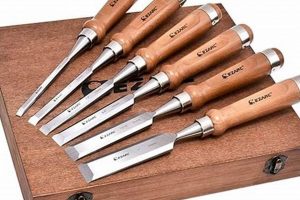
The essential instruments required for commencing the craft of shaping wood vary depending on the complexity of the intended projects. A fundamental set typically includes measuring devices for accuracy, sawing implements for cutting stock, shaping tools for refining forms, and fastening devices for assembly. Example: A beginner might start with a measuring tape, hand saw, chisel, and hammer.
Acquiring the appropriate instruments provides numerous advantages, encompassing enhanced project precision, improved efficiency, and the potential for executing a broader range of designs. Historically, woodworking instruments were rudimentary, gradually evolving into the specialized and sophisticated equipment available today, demonstrating the craft’s ongoing refinement.
The following discussion will delineate the specific types of instruments necessary for introductory projects, categorize them by function, and offer guidance on selecting quality items within budgetary constraints. Considerations for safety and maintenance will also be addressed, ensuring a sound foundation for future woodworking endeavors.
Instrument Acquisition Guidance
The procurement of appropriate instruments forms a cornerstone of successful woodworking. Careful consideration of project scope, budget, and desired quality levels is paramount.
Tip 1: Prioritize Measuring Instruments: Accurate measurements are fundamental. A quality measuring tape, combination square, and marking gauge are essential for precise cuts and joinery.
Tip 2: Invest in a Versatile Saw: A hand saw with fine teeth serves as a versatile starting point. Consider a crosscut saw for cutting against the grain and a rip saw for cutting with the grain.
Tip 3: Acquire Sharp Chisels: A set of chisels in varying widths is crucial for shaping, paring, and creating joinery. Sharpness is paramount for safety and efficiency; honing equipment is a necessary adjunct.
Tip 4: Select a Durable Hammer: A claw hammer provides the leverage necessary for driving nails and dismantling structures. Choose a weight appropriate for the scale of the projects undertaken.
Tip 5: Consider a Block Plane: A block plane excels at smoothing edges and end grain. This tool greatly enhances the quality of finish and joinery.
Tip 6: Emphasize Safety Equipment: Safety glasses, ear protection, and a dust mask are non-negotiable. Safeguarding against potential hazards is crucial for sustained participation in the craft.
Tip 7: Opt for Quality over Quantity: Purchasing fewer high-quality instruments is preferable to acquiring numerous inferior items. Quality instruments offer superior performance and longevity.
The adherence to these guidelines provides a solid foundation for instrument acquisition. Subsequent sections will address maintenance and advanced tool options as skill levels progress.
1. Measuring precision

Measuring precision forms a critical prerequisite when initiating woodworking projects; it fundamentally dictates the accuracy of cuts, the integrity of joinery, and the overall success of the endeavor. The absence of precise measurements directly results in misaligned components, structural weaknesses, and a diminished aesthetic quality. Consequently, the instruments required for woodworking must inherently facilitate accurate measurement as a primary function.
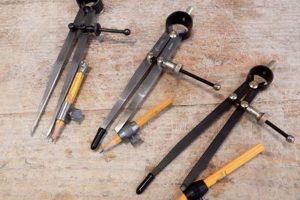
The indispensable implements for achieving measuring precision include a high-quality measuring tape, a combination square, a marking gauge, and potentially digital calipers for more exacting applications. Consider the construction of a basic picture frame: imprecise measurements can cause gaps between the frame members, an uneven or warped appearance, and a failure to securely hold the artwork. Accurate measurements, conversely, enable tight, flush joints and a professionally finished product. Similarly, in furniture construction, even minor discrepancies accumulate, resulting in wobbly legs, misaligned drawers, and compromised structural stability.
Therefore, the initial investment in accurate measuring instruments represents a prudent allocation of resources. Ensuring these implements are properly calibrated and meticulously employed throughout the project minimizes errors, reduces material waste, and ultimately contributes to a superior outcome. The pursuit of woodworking proficiency necessitates a foundational understanding of measurement principles and the unwavering application of precise techniques.
2. Effective sawing

Effective sawing stands as a cornerstone of woodworking, demanding not only skill but also the correct tools to achieve desired results. The ability to accurately and efficiently cut wood dictates the feasibility of project designs, the quality of joinery, and the overall structural integrity of finished pieces. This necessity mandates careful consideration when determining the essential implements for a woodworking workspace.
- Saw Selection Based on Cut Type
Different saws are optimized for specific types of cuts. Crosscut saws excel at cutting against the grain, while rip saws are designed for cutting along the grain. A backsaw, often used with a miter box, facilitates precise angle cuts for joinery. Understanding these distinctions and possessing the appropriate saw for each task is critical for efficient and accurate sawing. The result of using a wrong type of saw in the wood working can be very bad, for example, to use crosscut saw to rip cut can be very tiresome.
- Saw Blade Characteristics
The characteristics of a saw blade, including its tooth count (TPI – teeth per inch), tooth geometry, and set (the amount the teeth are bent outwards), significantly influence the cut quality. Higher TPI blades produce smoother cuts but remove material more slowly, while lower TPI blades cut faster but leave a rougher surface. The appropriate selection of blade characteristics is dependent on the type of wood being cut and the desired finish. In the wood working tools context, blades are very important.
- Saw Maintenance and Sharpening
A dull saw blade necessitates increased force, leading to inaccurate cuts, tear-out, and potential safety hazards. Regular sharpening and maintenance are essential for maintaining optimal performance. This involves using files and specialized tools to restore the blade’s cutting edge and ensuring the saw’s overall condition. Woodworking without proper maintained saw can be very danger.
- Use of Jigs and Guides
Jigs and guides provide support and accuracy during sawing operations. A miter box aids in making precise angle cuts, while a rip fence guides the saw along a straight line for ripping boards. The utilization of these aids enhances cut quality, improves efficiency, and reduces the likelihood of errors. Jigs and guides are also considered important.
Therefore, selecting the appropriate sawing tools, understanding blade characteristics, maintaining sharpness, and utilizing jigs and guides are all indispensable components of effective sawing. Mastery of these elements, combined with skill, enables the creation of precise cuts necessary for successful woodworking projects. Neglecting these aspects results in substandard outcomes and potential safety risks. It is essential to learn all of tools needed to the start, so we are able to start doing the project by the end.
3. Accurate shaping

Accurate shaping constitutes a pivotal phase in woodworking, significantly influencing the final aesthetic and functional properties of a project. The successful realization of intended designs hinges on the precision with which wood is formed. Therefore, the tools employed for this stage must inherently support controlled material removal and the creation of defined contours.
- Chisels and Their Variants
Chisels, both hand-held and powered, serve as fundamental instruments for shaping wood. Bench chisels, with their flat blades, are employed for paring and creating mortises. Carving chisels, possessing specialized profiles, enable the creation of intricate details. A dull chisel compromises control, leading to imprecise cuts and potential injury. Their implications are very great for woodworking.
- Planes and Their Application
Planes, including block planes, smoothing planes, and scrub planes, allow for the controlled removal of thin layers of wood. Block planes excel at shaping end grain, while smoothing planes create flawless surfaces. Scrub planes rapidly remove material for initial shaping. The ability to adjust blade depth is crucial for achieving desired results. Planes make woodworking a little bit easier.
- Spokeshaves for Curved Forms
Spokeshaves, with their curved blades, are specifically designed for shaping curved surfaces, such as chair legs and spindles. The users hands control the depth and direction of the cut, necessitating a steady hand and sharp blade. Variations exist for concave and convex surfaces. The quality of spoke shares also has effect.
- Rasps and Files for Refinement
Rasps and files facilitate the refinement of shapes and the removal of imperfections. Rasps, with their coarse teeth, rapidly remove material, while files, with their finer teeth, create smooth surfaces. These instruments are particularly useful for shaping intricate details and preparing surfaces for finishing. After using this, the result is very smooth.
In summary, accurate shaping requires a diverse array of tools, each designed for specific tasks and levels of precision. The effective application of these instruments, combined with skill and experience, is essential for realizing intended designs and achieving a professional finish. Careful tool selection and maintenance are paramount for ensuring consistent performance and safe operation. The correct knowledge about using tools is also very important.
4. Secure fastening
Secure fastening represents a critical stage in woodworking, ensuring structural integrity and long-term stability of projects. The implements employed in this process directly influence the strength and durability of connections, necessitating careful consideration when determining the essential tools for woodworking.
- Screwdrivers and Drills
Screwdrivers, both manual and powered, along with drills, are essential for driving screws, a ubiquitous fastening method in woodworking. The selection of the appropriate screwdriver or drill bit is crucial for preventing damage to the screw head and ensuring a secure connection. Variable speed drills offer increased control, particularly when working with delicate materials. A Phillips head is very common for a screw driver.
- Hammers and Nail Sets
Hammers, while traditionally associated with older construction methods, remain relevant for driving nails in specific woodworking applications. Nail sets are used to countersink nails, concealing them beneath the surface for a cleaner appearance. The weight and balance of the hammer should be appropriate for the size of the nails being used to avoid bending. The result with nail sets is very appealing.
- Clamps and Their Varieties
Clamps are indispensable for applying pressure during glue-ups, ensuring tight and uniform joints. Pipe clamps, bar clamps, and spring clamps offer varying degrees of clamping force and versatility. The selection of the appropriate clamp depends on the size and shape of the project. It is also one of the essential wood working tool.
- Fasteners and Their Properties
The selection of appropriate fasteners, including screws, nails, and adhesives, is dictated by the specific requirements of the project. Screw type (e.g., wood screws, drywall screws) should be chosen based on the material being joined. Adhesives, such as wood glue, provide additional strength and gap-filling properties. Some woods also require a fastener that is corrosive resistance to prevent staining.
- Wood glue application
The proper wood glue application is very important, the amount of glues to the surface, and also the types of the wood glue you use. Different wood glue provides different level of binding.
Therefore, secure fastening necessitates a diverse array of tools and materials, each contributing to the strength and stability of the final product. The correct application of these implements, combined with an understanding of fastening principles, is essential for ensuring that woodworking projects withstand the test of time. An understanding for the right method to fastening the wood is also very important for the starter.
5. Surface preparation

Surface preparation, a foundational component of woodworking, establishes the quality and longevity of a finished piece. The execution of subsequent finishing processes, such as staining, painting, or varnishing, is directly affected by the condition of the wood surface. Inadequate preparation leads to uneven finishes, adhesion problems, and a compromised aesthetic outcome. Therefore, knowledge of surface preparation techniques and the implements required are indispensable in woodworking.
The tools necessary for surface preparation encompass a range of abrasive instruments, including sandpaper of varying grits, hand planes, scrapers, and, in certain instances, power sanders. The selection of appropriate abrasives hinges on the initial condition of the wood and the desired level of smoothness. For instance, rough-sawn lumber necessitates the use of coarse-grit sandpaper to remove imperfections, followed by progressively finer grits to refine the surface. Hand planes, particularly smoothing planes, allow for the creation of flawlessly flat surfaces, while scrapers excel at removing minor blemishes and burnishing the wood. The lack of a tool can make the woodworking project not ideal. In practice, consider the preparation of a tabletop for staining. If the surface is not properly sanded to remove planer marks or scratches, the stain will highlight these imperfections, resulting in an uneven and unprofessional appearance. Conversely, meticulous sanding with progressively finer grits yields a smooth, uniform surface that accepts the stain evenly, enhancing the wood’s natural grain.
Surface preparation is not merely an ancillary step but an integral part of the woodworking process. The commitment to proper preparation, utilizing the appropriate tools and techniques, directly translates into superior finish quality and the creation of durable, aesthetically pleasing pieces. Failure to adequately prepare the surface invariably results in a compromised final product, underscoring the significance of this often-overlooked phase. For the woodworker, is important to be very attention to every details.
6. Safety provision

The integration of safety protocols within woodworking practices is paramount, influencing not only the selection of woodworking implements but also the operational methodologies employed. A comprehensive safety strategy minimizes risks and enhances the overall efficacy of woodworking endeavors.
- Eye Protection Selection and Usage
Eye protection, specifically safety glasses or face shields, constitutes a primary defense against projectiles generated during cutting, shaping, and sanding operations. The selection of appropriate eye protection is contingent upon the specific task being undertaken. For instance, when using power tools such as routers or sanders, a full face shield offers enhanced protection compared to standard safety glasses. Non-compliance with eye protection protocols leads to potential eye injuries, including corneal abrasions and permanent vision impairment.
- Respiratory Protection Measures
Woodworking generates airborne particulates, including sawdust and volatile organic compounds (VOCs) from finishes, posing respiratory hazards. Respiratory protection measures, ranging from disposable dust masks to respirators equipped with particulate filters or vapor cartridges, mitigate exposure to these contaminants. The selection of appropriate respiratory protection hinges on the concentration and nature of airborne contaminants. Extended exposure to woodworking dust without adequate respiratory protection contributes to respiratory ailments, including asthma and chronic bronchitis. Proper implementation of this provision provides a safer and comfortable woodworking environment.
- Hearing Protection Practices
Power tools, such as routers, planers, and saws, generate significant noise levels, potentially inducing noise-induced hearing loss (NIHL). Hearing protection devices, including earplugs and earmuffs, attenuate noise levels, safeguarding auditory health. The selection of appropriate hearing protection is predicated on the decibel levels generated by the woodworking equipment. Consistent adherence to hearing protection protocols minimizes the risk of NIHL, ensuring long-term auditory well-being.
- Machine Guarding and Operational Procedures
Power tools incorporate inherent hazards, necessitating the implementation of machine guarding and adherence to operational procedures. Machine guards, such as blade guards on saws and bit guards on routers, prevent accidental contact with moving components. Strict adherence to operational procedures, including proper setup, adjustment, and material handling techniques, minimizes the risk of injury. Bypassing machine guards or neglecting operational procedures elevates the risk of severe injuries, including lacerations, amputations, and fatalities. Using proper machine guarding provide another layer of safety.
- First aid and emergency plan.
Having a full set of first aid tools, and also a plan to respond to a possible emergency. These measurements can help prevent a death from happening.
Integrating these facets of safety protocols into woodworking practices fosters a safer and more productive environment. The selection and consistent utilization of appropriate safety equipment, coupled with adherence to established operational procedures, minimizes the risk of injury and ensures the long-term well-being of woodworking practitioners. The presence of safety equipment is also very important for professional wood worker.
7. Maintenance scheduling

The longevity and operational effectiveness of woodworking implements directly correlate with adherence to a structured maintenance schedule. The phrase “what tools do you need to start woodworking” inherently encompasses not only the initial acquisition of equipment but also the sustained care necessary for their proper functioning. The cause-and-effect relationship is straightforward: neglected maintenance results in degraded performance, increased risk of malfunction, and ultimately, a diminished lifespan of the tools. This, in turn, impacts the quality of woodworking projects and increases the potential for workplace injuries. A dull saw blade, for example, necessitates greater force to achieve a cut, leading to inaccuracies and a heightened probability of kickback. A neglected chisel, similarly, will lose its edge, making it difficult to achieve clean, precise shaping. The importance of maintenance as an integral component of “what tools do you need to start woodworking” lies in preserving the initial investment and ensuring consistent results.
A practical maintenance schedule should encompass several key areas: cleaning, lubrication, sharpening, and calibration. Cleaning removes accumulated dust, resin, and debris that can impede tool performance and accelerate corrosion. Lubrication of moving parts reduces friction and wear, prolonging their lifespan. Sharpening of cutting edges, such as those found on saws, chisels, and planes, is crucial for maintaining optimal cutting efficiency and safety. Calibration of measuring instruments ensures accuracy and prevents errors in project dimensions. Implementing such a schedule requires designated time and resources, including appropriate cleaning agents, lubricants, sharpening stones, and calibration equipment. A woodworker crafting fine furniture, for example, would diligently sharpen their chisels after each project to maintain a crisp edge and ensure clean, precise joinery. Similarly, a cabinetmaker would regularly lubricate the bearings of their power saw to ensure smooth, accurate cuts and prevent motor burnout.
In conclusion, a comprehensive understanding of “what tools do you need to start woodworking” extends beyond initial purchase to encompass the ongoing maintenance necessary for their optimal performance and longevity. A structured maintenance schedule, encompassing cleaning, lubrication, sharpening, and calibration, is not merely a supplementary activity but an essential element of responsible tool ownership. Neglecting maintenance not only compromises the quality of woodworking projects but also increases the risk of injury and accelerates tool degradation. Adhering to a proactive maintenance regime ensures that the initial investment in woodworking implements yields long-term returns and contributes to a safe and productive working environment.
Frequently Asked Questions
This section addresses prevalent inquiries concerning the fundamental implements required for initiating woodworking projects, providing clarity on selection, utilization, and maintenance.
Question 1: Does the type of wood being worked influence tool selection?
Yes, the density and grain structure of the wood significantly impact tool selection. Hardwoods necessitate sharper, more robust tools compared to softwoods. Dense hardwoods like maple require tools specifically designed for durability, while softwoods such as pine can be worked with less demanding implements.
Question 2: Is it preferable to purchase tool sets or individual instruments?
The decision to acquire tool sets or individual instruments depends on budgetary constraints and project scope. Tool sets offer an economical entry point but may compromise on quality. Selecting individual instruments allows for prioritizing quality within specific functional categories.
Question 3: How crucial is the sharpness of cutting instruments?
The sharpness of cutting instruments is paramount for both safety and precision. Dull tools necessitate increased force, elevating the risk of slippage and injury. Sharp instruments provide clean cuts, reducing tear-out and improving the overall quality of woodworking projects.
Question 4: What safety precautions are indispensable when using woodworking tools?
Indispensable safety precautions include wearing eye protection, respiratory protection, and hearing protection. Implementing machine guards, adhering to operational procedures, and maintaining a clean workspace are also critical for mitigating potential hazards.
Question 5: How frequently should woodworking instruments undergo maintenance?
The frequency of maintenance depends on tool usage and environmental conditions. Cutting instruments should be sharpened regularly, while moving parts require periodic lubrication. Calibration of measuring instruments should occur at predetermined intervals to ensure accuracy.
Question 6: What is the significance of clamping in woodworking?
Clamping is crucial for applying uniform pressure during glue-ups, ensuring tight and durable joints. The selection of appropriate clamps is dictated by the size and shape of the project, and the clamping force required for effective bonding.
The answers provided aim to clarify common uncertainties surrounding essential woodworking instruments. Informed decision-making contributes to safe and successful woodworking endeavors.
The subsequent article section will explore advanced tool options and their applications within specialized woodworking techniques.
Conclusion
This exposition has delineated the foundational aspects of “what tools do you need to start woodworking,” emphasizing the imperative of appropriate instrument selection, safety protocols, and diligent maintenance. The preceding discussion underscored the interconnectedness of measuring precision, sawing effectiveness, shaping accuracy, fastening security, and surface preparation in realizing successful woodworking outcomes.
The pursuit of woodworking proficiency necessitates a commitment to continuous learning and skill development. As aspiring woodworkers advance, the acquisition of specialized instruments and mastery of advanced techniques will inevitably expand creative potential. This foundation, built upon a firm understanding of essential tools, will empower individuals to transform raw materials into enduring and functional works of art.