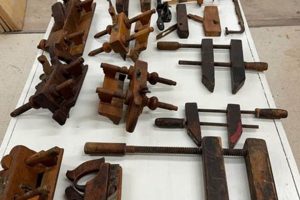
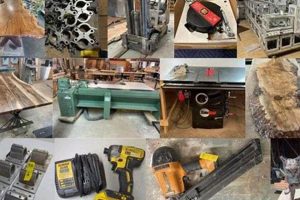
Computer-aided design and manufacturing methods have revolutionized numerous industries, and woodworking is no exception. Specialized instruments, integrated with advanced software, enable the creation of intricate designs and precise cuts in wood. An example includes CNC routers capable of executing complex patterns, offering a departure from traditional hand-tool techniques.
Adopting these technologies offers several advantages, including increased efficiency, improved accuracy, and the capacity to produce complex geometries that would be difficult or impossible to achieve manually. Historically, woodworking relied heavily on skilled artisans. Now, technology allows for democratization, where individuals with limited experience can achieve professional results. The reduced material waste, resulting from precise cuts, contributes to sustainable practices.
The following sections will explore the specific categories of equipment, software options, and practical applications available to those interested in integrating these technologies into their woodworking projects, as well as considerations for safety and workflow optimization.
Optimizing Applications
The following tips offer guidance for maximizing the effectiveness and efficiency of advanced manufacturing equipment in woodworking endeavors.
Tip 1: Software Proficiency is Crucial: Invest time in mastering the relevant software programs. Understanding the CAD/CAM environment is essential for creating designs and generating the toolpaths necessary for automated cutting. Begin with tutorials and practice projects to build a solid foundation.
Tip 2: Material Selection Impacts Performance: Different wood species exhibit varying characteristics in terms of density, grain, and moisture content. These factors can significantly affect the cutting parameters and the final product quality. Conduct test cuts to optimize settings for each material.
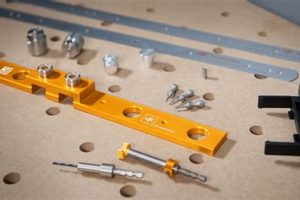
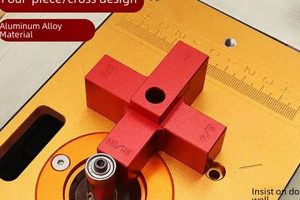
Tip 3: Secure Workholding Prevents Errors: Proper clamping and fixturing are paramount for ensuring stable material during the cutting process. Inadequate workholding can lead to vibrations, inaccuracies, and even damage to the cutting tool. Consider vacuum tables or specialized jigs for optimal support.
Tip 4: Tool Selection is Task-Specific: Various cutting tools are designed for specific applications, such as roughing, finishing, or engraving. Using the appropriate tool for each task will improve efficiency, reduce wear, and enhance the overall quality of the finished product. Consult manufacturer specifications and user reviews to make informed choices.
Tip 5: Dust Collection is Non-Negotiable: Efficient dust collection is essential for maintaining a clean and safe working environment. Airborne dust poses a health hazard and can interfere with the proper functioning of automated equipment. Invest in a high-quality dust collection system and ensure it is properly maintained.
Tip 6: Regular Maintenance Extends Lifespan: Consistent maintenance of automated equipment prevents downtime and ensures optimal performance. This includes lubricating moving parts, cleaning debris, and inspecting for wear and tear. Adhering to manufacturer-recommended maintenance schedules is crucial for longevity.
Tip 7: Prioritize Safety Protocols: Operating automated woodworking equipment involves inherent risks. Enforce strict safety protocols, including the use of personal protective equipment, proper machine guarding, and emergency stop procedures. Regular safety training is essential for all operators.
Implementing these strategies will lead to improved precision, enhanced productivity, and a safer, more efficient workflow. Consistent application of these tips will result in higher-quality finished products and a more rewarding woodworking experience.
With a focus on best practices established, the following section will address advanced techniques.
1. Precision Cutting

Precision cutting, in the context of advanced woodworking equipment, represents a paradigm shift from traditional manual methods. It facilitates the creation of complex designs and the accurate replication of parts, critical for projects demanding high tolerances and intricate details.
- CNC Router Accuracy
CNC routers utilize computer-controlled movements to guide cutting tools with exceptional precision. This accuracy, often measured in thousandths of an inch, allows for the consistent reproduction of intricate shapes and designs. In furniture manufacturing, for example, CNC routers ensure that each component of a chair or table is identical, resulting in a seamless assembly and structurally sound end product.
- Laser Cutting Fine Detail
Laser cutting offers an alternative approach to precision, employing a focused beam of light to vaporize material. This technology is particularly well-suited for creating intricate details and fine engravings on wood surfaces. Applications include personalized gifts, decorative panels, and architectural models, where exceptional detail is paramount.
- Software-Driven Toolpaths
The precision of these methods is intrinsically linked to the software used to generate toolpaths. Computer-Aided Manufacturing (CAM) software translates digital designs into precise instructions for the cutting equipment. Optimized toolpaths minimize material waste, reduce cutting time, and ensure the desired level of accuracy is achieved.
- Material Consistency
While advanced manufacturing equipment offers unparalleled precision, material properties can still influence the final outcome. Variations in wood density, grain orientation, and moisture content can affect the cutting process. Careful material selection and appropriate adjustments to machine settings are essential for maintaining consistent results.
The facets of accuracy, detail, software integration, and material considerations underscore the critical role that advanced instruments play in woodworking. Precision cutting not only enables the creation of complex designs but also enhances efficiency, reduces waste, and elevates the overall quality of finished products, reinforcing the value of their implementation.
2. Software Integration

Software integration constitutes a fundamental aspect of modern woodworking, enabling the translation of conceptual designs into tangible objects through advanced instruments. The seamless interaction between design software and manufacturing equipment dictates the precision, efficiency, and complexity achievable in woodworking projects.
- CAD/CAM Translation
Computer-Aided Design (CAD) software allows for the creation of detailed 3D models, while Computer-Aided Manufacturing (CAM) software translates these designs into instructions that automated equipment can understand. This process involves defining toolpaths, cutting parameters, and material properties to optimize the manufacturing process. For instance, a CAD design of a complex furniture joint can be converted by CAM software into precise instructions for a CNC router, ensuring accurate execution.
- G-Code Generation
G-code serves as the programming language that communicates instructions to automated equipment, such as CNC routers and laser cutters. CAM software generates G-code based on the design and chosen cutting parameters. This code dictates the precise movements of the cutting tool, including its position, speed, and depth of cut. Errors in G-code can lead to inaccurate cuts, material waste, and even damage to the equipment. Therefore, thorough review and verification of G-code are essential.
- Simulation and Optimization
Advanced software provides simulation capabilities that allow users to preview the cutting process before it is executed on the actual material. This feature enables the identification and correction of potential issues, such as tool collisions or inefficient toolpaths. Optimization algorithms within the software can further refine the toolpaths to minimize cutting time and material waste. The use of simulation and optimization tools significantly reduces the risk of errors and enhances overall efficiency.
- Machine Control Interfaces
Machine control interfaces serve as the bridge between the software and the physical equipment. These interfaces provide real-time monitoring of the cutting process, allowing operators to adjust parameters as needed and respond to unexpected events. Features such as emergency stop buttons, feed rate overrides, and spindle speed controls are essential for safe and efficient operation. A well-designed machine control interface enhances the operator’s ability to manage the woodworking process effectively.
The interconnectivity established through software integration represents a cornerstone of advanced woodworking practices. The ability to create intricate designs, translate them into precise machine instructions, simulate the manufacturing process, and control the equipment in real-time is what makes modern woodworking tools so powerful and versatile. This integration allows for increased efficiency, improved accuracy, and the realization of complex designs that were previously unattainable.
3. Material Optimization

Material optimization, in the context of advanced woodworking equipment, entails a systematic approach to maximizing the efficient utilization of wood resources while concurrently achieving desired structural and aesthetic characteristics. This process is intrinsically linked to the capabilities of advanced woodworking instruments, which offer a level of precision and control previously unattainable with traditional methods. The convergence of sophisticated machinery and informed material selection directly impacts project costs, waste reduction, and the overall quality of the finished product.
The capacity of advanced woodworking tools to execute intricate designs and precise cuts necessitates a thorough understanding of material properties. For instance, CNC routers, laser cutters, and similar equipment require the user to define parameters based on the specific wood species being utilized. Factors such as density, hardness, grain orientation, and moisture content influence cutting speed, tool selection, and overall performance. Optimization can involve strategies like nesting parts to minimize waste from a sheet of plywood, or selecting specific grain patterns to maximize structural integrity in load-bearing components. An illustrative example is the production of curved furniture elements using layered, bent wood; optimized material selection ensures the wood bends without cracking or splintering.
The integration of material optimization strategies with the operational capabilities of advanced woodworking tools facilitates a shift towards sustainable and efficient manufacturing practices. Challenges remain in standardizing material property data across various wood species and ensuring accurate input into design and manufacturing software. However, ongoing advancements in sensor technology and data analytics hold promise for further refining the process. The understanding and effective implementation of material optimization are essential for realizing the full potential of technologically advanced woodworking equipment, ensuring resource conservation and high-quality outcomes.
4. Automation Capabilities

Automation capabilities, integrated within the realm of advanced woodworking equipment, represent a significant evolution from traditional, labor-intensive methods. These capabilities enhance efficiency, precision, and repeatability, enabling the production of complex designs with minimal manual intervention.
- CNC Routing and Milling
Computer Numerical Control (CNC) routing and milling represent core automation capabilities. These processes use computer-controlled machines to execute precise cuts, carvings, and shaping operations on wood materials. CNC technology allows for the creation of intricate designs and complex geometries that would be extremely difficult or impossible to achieve manually. Furniture components, architectural moldings, and decorative panels are commonly produced using CNC automation.
- Robotic Arm Integration
Robotic arms can be integrated into woodworking workflows to automate tasks such as material handling, sanding, and finishing. These robots are programmed to perform repetitive actions with consistent accuracy and speed, reducing the need for manual labor and improving overall efficiency. In mass production environments, robotic arms can significantly increase throughput and reduce production costs.
- Automated Material Feeding Systems
Automated material feeding systems streamline the process of loading and positioning wood materials for machining. These systems use conveyors, sensors, and robotic mechanisms to ensure a consistent and precise supply of materials to the cutting equipment. Automated feeding systems minimize downtime, reduce material waste, and improve the overall efficiency of the woodworking process. An example includes automated systems feeding sheets of plywood into CNC cutting stations.
- Software-Driven Toolpath Generation
The automation of woodworking processes relies heavily on sophisticated software for generating toolpaths. Computer-Aided Manufacturing (CAM) software translates digital designs into precise instructions for automated equipment. Optimized toolpaths minimize cutting time, reduce material waste, and improve the surface finish of the finished product. The seamless integration of design and manufacturing software is essential for realizing the full potential of automation capabilities.
The implementation of automation capabilities within woodworking represents a strategic investment towards increased efficiency, improved precision, and enhanced productivity. As technology continues to advance, the integration of automation will likely become increasingly prevalent, shaping the future of woodworking practices. The combination of skillful craftsmanship with the precision of automated technologies creates opportunity for greater design freedom, reduced production costs, and high-quality products.
5. Design Complexity
The capacity to realize intricate and unconventional forms in woodworking is directly enabled by advanced manufacturing instruments. These tools eliminate constraints previously imposed by manual techniques, allowing for the creation of complex geometries and detailed ornamentation. The relationship is causal: advanced machinery diminishes limitations on design intricacy.
Design complexity, therefore, becomes a critical element in realizing the full potential of modern woodworking equipment. Consider the fabrication of complex curved furniture components. Traditional methods involve laborious hand-shaping or steam bending, processes limited in precision and repeatability. Computer-controlled routers, on the other hand, can execute intricate three-dimensional curves specified by digital models, leading to accurate and consistent results. The architectural sector also benefits, where complex facade elements and custom moldings are efficiently produced.
Successfully leveraging design complexity necessitates a comprehensive understanding of both digital design tools and the capabilities of the manufacturing equipment. Challenges remain in optimizing toolpaths for complex geometries and managing the increased data volumes associated with highly detailed models. However, the ability to translate intricate digital designs into tangible objects unlocks significant creative possibilities and positions “3d woodworking tools” as integral components of modern design and manufacturing workflows.
6. Safety Compliance

The integration of advanced manufacturing instruments into woodworking introduces specific safety considerations that necessitate strict adherence to established protocols. Safety compliance becomes paramount to mitigate risks associated with high-speed machinery, automated processes, and potential exposure to hazardous materials.
- Machine Guarding Systems
Advanced woodworking equipment often incorporates sophisticated machine guarding systems designed to protect operators from moving parts, flying debris, and other potential hazards. These systems may include interlocks, light curtains, and physical barriers that prevent access to the machine’s operational area during cutting. Proper installation, maintenance, and use of machine guarding systems are essential for ensuring operator safety. Bypassing or disabling these safeguards presents a significant risk of injury.
- Emergency Stop Procedures
Clearly defined emergency stop procedures are critical for halting machine operation in the event of an unexpected event or safety concern. Emergency stop buttons should be readily accessible and clearly labeled on all advanced woodworking equipment. Regular training on emergency stop procedures is essential for all operators. The prompt and effective use of emergency stop procedures can prevent or minimize the severity of accidents.
- Dust Collection and Ventilation
The operation of “3d woodworking tools” often generates significant quantities of airborne dust, which can pose a health hazard to operators. Effective dust collection and ventilation systems are necessary to remove dust particles from the air and maintain a safe working environment. These systems should be properly sized and maintained to ensure adequate air flow and filtration. Respirators or other personal protective equipment may be required in situations where dust exposure cannot be adequately controlled through engineering controls.
- Personal Protective Equipment (PPE)
The use of appropriate personal protective equipment (PPE) is essential for minimizing the risk of injury when working with advanced woodworking equipment. PPE may include safety glasses, hearing protection, respirators, gloves, and appropriate clothing. The specific PPE requirements will vary depending on the task being performed and the potential hazards present. Operators should be trained on the proper selection, use, and maintenance of PPE.
The multifaceted nature of safety compliance when operating advanced manufacturing equipment underscores the need for a comprehensive and proactive approach. By prioritizing safety measures, woodworking operations can minimize the risk of accidents, protect the health and well-being of workers, and ensure a sustainable and productive working environment. The long-term benefits of investing in safety far outweigh the costs of neglecting these critical aspects of equipment operation.
Frequently Asked Questions
The following questions address common concerns and provide clarification regarding the capabilities, applications, and safety considerations associated with modern woodworking tools.
Question 1: What distinguishes advanced woodworking equipment from traditional tools?
Advanced equipment, such as CNC routers and laser cutters, integrates computer control for enhanced precision, repeatability, and the ability to create complex designs. Traditional tools rely on manual operation, limiting intricacy and accuracy.
Question 2: Is specialized training required to operate advanced woodworking equipment safely?
Yes. Safe operation demands thorough training on the specific equipment, encompassing software control, machine operation, emergency procedures, and the proper use of safety devices. Failure to train operators adequately increases the risk of accidents.
Question 3: Can advanced woodworking equipment be used with all types of wood?
While versatile, different wood species possess varying properties that influence cutting parameters. Dense hardwoods require slower cutting speeds and robust tooling compared to softwoods. Material testing and parameter adjustments are essential for optimal results.
Question 4: What is the role of software in advanced woodworking processes?
Software serves as the interface between design and manufacturing. CAD/CAM programs translate digital designs into machine instructions, dictating toolpaths, cutting speeds, and other parameters. Software proficiency is vital for realizing the equipment’s capabilities.
Question 5: How does “3d woodworking tools” impact material waste?
Advanced equipment, particularly when coupled with nesting software, minimizes material waste through optimized cutting layouts. Precise cuts also reduce the need for rework, further decreasing waste compared to manual methods.
Question 6: What are the primary safety considerations when using advanced woodworking equipment?
Key safety considerations include proper machine guarding, effective dust collection, the use of personal protective equipment (PPE), and adherence to established safety protocols. Neglecting these precautions elevates the risk of injury and health hazards.
In summary, advanced woodworking equipment offers significant advantages in precision, efficiency, and design complexity, but requires specialized training, careful material selection, and unwavering adherence to safety protocols.
Having addressed these frequently asked questions, the next section will delve into case studies…
Conclusion
This exploration has detailed the capabilities, applications, and essential considerations associated with “3d woodworking tools.” From precision cutting and software integration to material optimization, automation, design complexity, and safety compliance, the integration of these technologies represents a significant advancement in woodworking practices. The effective utilization of these instruments hinges on a comprehensive understanding of their operational principles and a commitment to best practices.
As technology continues to evolve, the adoption of “3d woodworking tools” will likely reshape the landscape of woodworking, offering new avenues for innovation and efficiency. Further investigation and implementation of these advanced techniques are crucial for those seeking to push the boundaries of design and manufacturing within this field, ensuring both productivity and safety remain paramount.