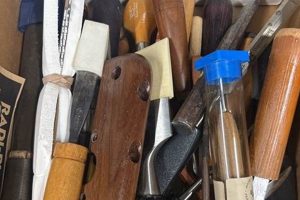
The worth ascribed to aged implements used for shaping wood depends on a confluence of factors. Rarity, condition, manufacturer, historical significance, and desirability among collectors all contribute to determining its monetary and sentimental price. An example is a finely crafted 18th-century hand plane from a renowned maker, complete with original markings and minimal wear; this could command a significantly higher price than a mass-produced model in poor condition.
Understanding the factors affecting these items is crucial for both seasoned collectors and individuals inheriting such items. An understanding allows for informed decisions regarding purchase, sale, preservation, and insurance. These items offer tangible links to craftsmanship from past eras, reflecting evolving technologies and societal values. Moreover, their survival is a testament to the enduring appeal of handcrafted objects and the skills required to produce them.
The following sections will delve into specific categories of these items, explore methods for accurate assessment, discuss key manufacturers and their impact, and provide guidance on preserving these pieces for future generations. This exploration aims to provide a comprehensive understanding of factors influencing appraisal of woodworking implements.
Guidance on Assessing Antique Woodworking Implements
The following guidance assists in evaluating aged implements for shaping wood. These tips address crucial aspects of identifying, assessing, and ultimately understanding the associated worth.
Tip 1: Research the Manufacturer: Identify the maker. Tools from well-known and respected manufacturers often command higher prices. Reference historical catalogs and online resources to verify authenticity and production dates.
Tip 2: Assess Condition Carefully: Evaluate the item’s condition meticulously. Minor wear consistent with age is acceptable, but significant damage, rust, or missing parts drastically reduce worth. Original finish and intact markings are highly desirable.
Tip 3: Identify Rarity Factors: Determine if the item is rare. Limited production runs, specialized tools, or those with unique features are more valuable. Consult collector guides and auction records to gauge rarity.
Tip 4: Examine Markings and Stamps: Inspect for clear and legible markings. Faded or altered stamps suggest possible alterations or reproductions. Document all markings for future reference.
Tip 5: Evaluate Wood Quality: If wooden components are present, assess wood quality. Rare or exotic woods, free from cracks or rot, enhance appeal. Original handles and totes should be examined for signs of alteration or replacement.
Tip 6: Consider Provenance: Documenting the item’s history, if possible, contributes positively. Tools with traceable provenance, especially those associated with historical figures or significant events, garner increased attention.
Tip 7: Seek Expert Appraisal: Engage with a qualified appraiser specializing in antique tools. A professional appraisal provides an unbiased assessment, factoring in current market trends and comparable sales data.
Following these guidelines enables a more informed appraisal of aged implements for shaping wood. Careful consideration of these factors ensures accurate valuation for purposes of sale, insurance, or preservation.
The subsequent section will explore strategies for preserving the condition of these valuable artifacts, ensuring their continued appreciation for generations to come.
1. Rarity

Rarity is a primary driver of price for aged implements used for shaping wood. A tool produced in limited quantities, whether due to experimental designs, short production runs, or specific wartime constraints on materials, invariably commands a higher price than a common counterpart. This is a direct consequence of supply and demand: with fewer examples available, competition among collectors intensifies. For example, a Spiers smoothing plane, particularly one with unique customization or features, is significantly more scarce than a standard Stanley plane, leading to a substantial disparity in market price. The limited availability makes the Spiers plane a sought-after piece, consequently increasing its worth.
Understanding the connection between scarcity and worth is crucial for collectors and dealers. Identification of a rare tool requires meticulous research, often involving historical catalogs, patent records, and consultation with expert appraisers. The pursuit of rare items drives a significant segment of the antique tool market. Consider early examples of patented combination tools, which often faced limited production due to manufacturing challenges or lack of market adoption. These tools, while perhaps not functionally superior to more common models, are valued highly due to their unique place in the history of tool development and their limited presence in the marketplace.
In summary, the scarcity of a tool, be it due to production volume, design variations, or historical circumstances, has a pronounced effect on its price within the collectible market. The recognition and documentation of rare attributes are fundamental aspects of valuation and preservation efforts. While determining the true worth remains a complex undertaking, recognizing scarcity provides a crucial foundation for understanding the dynamics of this marketplace.
2. Condition

The state of preservation significantly influences the worth of aged implements used for shaping wood. The relationship is direct: better condition generally corresponds to a higher valuation. Damage, rust, missing parts, or modifications negatively impact worth, potentially rendering an otherwise desirable item significantly less valuable. For example, a Disston D-8 handsaw, complete with its original etch and in excellent condition, will command a substantially higher price than the same saw with a broken handle, heavy pitting, or a missing medallion. The presence of original components and minimal wear is paramount.
The assessment of condition requires careful examination. Minor wear consistent with age and use is often acceptable, even desirable, as it demonstrates authenticity. However, damage that compromises the tool’s functionality or detracts from its aesthetic appeal significantly lowers its worth. The presence of original finishes, such as japanning on planes or varnish on wooden handles, also adds value. Restoration efforts can improve condition, but must be undertaken carefully to avoid diminishing the item’s authenticity. Aggressive cleaning, re-painting with non-original colors, or replacement of original parts with modern substitutes can negatively affect the item’s desirability to collectors. The preservation of original features, even in a somewhat worn state, is frequently preferable to a poorly executed restoration.
In summary, the physical state of an implement is a crucial determinant of its worth. Understanding the nuances of condition assessment, including recognizing acceptable wear versus detrimental damage, is essential for both buyers and sellers. While restoration can play a role in preserving these items, maintaining originality remains a priority to maximize their value. Collectors prioritize well-preserved examples, emphasizing the importance of meticulous care and appropriate storage conditions for retaining long-term appreciation.
3. Manufacturer

The identity of the manufacturer exerts a significant influence on the worth ascribed to aged implements used for shaping wood. Certain manufacturers, owing to superior craftsmanship, innovative designs, and historical significance, command a premium in the collector’s market. For example, tools produced by Stanley, a company renowned for its quality and extensive product line, are often more desirable than those from lesser-known or regional makers. This disparity arises from Stanley’s consistent output, enduring legacy, and the relative abundance of information available regarding their products, facilitating authentication and appraisal.
The practical significance of understanding the manufacturer’s role extends to informed purchasing and selling decisions. Collectors frequently specialize in tools from specific manufacturers, seeking out rare or well-preserved examples to enhance their collections. Recognizing the manufacturer’s mark is crucial in assessing both authenticity and quality. A discerning collector is able to differentiate between a genuine example from a sought-after manufacturer and a counterfeit or later reproduction. Moreover, the manufacturer’s reputation influences pricing, with tools from historically significant makers often commanding higher prices at auction and in private sales. The availability of detailed catalogs and historical records further reinforces the manufacturer’s contribution to item appreciation.
In summary, the manufacturer’s identity represents a foundational element in determining the valuation of aged implements for shaping wood. Historical reputation, production quality, and the availability of supporting documentation all contribute to the perceived worth of a particular tool. Understanding the influence of the manufacturer enables informed collecting practices, accurate appraisals, and ultimately, the preservation of these historical artifacts for future generations. The manufacturer’s legacy continues to shape the collectors market.
4. Historical Significance
The historical significance of aged implements used for shaping wood exerts a substantial influence on their assessed worth. Tools linked to pivotal historical events, figures, or technological advancements often command higher prices than comparable items lacking such connections. This is because the artifact transcends its purely functional role, becoming a tangible representation of a particular era or achievement. The association with a recognized historical event or individual imbues the object with a narrative, elevating its desirability among collectors and museums.
Examples of this phenomenon are readily apparent. A woodworking plane once owned and used by a known master craftsman or a tool employed in the construction of a historically significant structure, such as a landmark building, inherently possesses greater historical interest. Correspondingly, these artifacts tend to hold increased commercial worth due to provenance. Records documenting the tool’s history or a verifiable link to a specific event or figure enhance the artifact’s investment value. Collectors are frequently drawn to such items, seeking to acquire not just a functional tool but also a piece of history. The impact of the historical connection is especially evident in public auctions, where tools with verifiable historical significance consistently achieve higher prices.
In conclusion, historical significance serves as a crucial determinant of valuation for antique woodworking implements. Provenance, association with notable figures or events, and contribution to technological advancement all contribute to an item’s overall desirability and, consequently, its financial worth. Recognizing and documenting these historical links is essential for accurate appraisal and ensures the preservation of these artifacts as valuable historical assets. The study of historical associations offers both monetary and cultural enrichment.
5. Collector demand

The valuation of aged woodworking implements is intrinsically linked to the level of collector interest. Heightened demand, driven by factors such as aesthetic appeal, historical context, or perceived investment potential, directly correlates with elevated prices. Conversely, a decline in collector enthusiasm leads to diminished prices. This relationship is not static; fluctuations in the market, changes in collector preferences, and the discovery of previously unknown examples influence valuation. For instance, a surge in interest in a particular type of hand plane, perhaps spurred by a woodworking revival or influential publication, would create increased demand, impacting market dynamics and causing price hikes.
The understanding of prevailing collector sentiments is important for both sellers and buyers. Assessing current trends necessitates constant review of auction results, dealer inventories, and online forums where collectors exchange information. Identifying emerging interests or fading trends allows market participants to make informed decisions regarding purchases and sales. The concept of “supply and demand” operates in a nuanced manner within this context. A tool may be rare, but if collector interest is minimal, its worth will remain relatively low. An example is specialized tools for obscure woodworking techniques; while perhaps scarce, they may lack the universal appeal needed to generate significant collector enthusiasm and, thus, maintain high prices.
In summary, collector interest acts as a primary catalyst in shaping the worth of aged woodworking implements. This influence is manifested through dynamic market adjustments reflecting changing preferences and increased competition for coveted items. Remaining attuned to collector motivations and marketplace developments is essential for both valuing and managing antique tool collections effectively. The overall appreciation of these implements depends as much on cultural trends as on intrinsic characteristics like condition and rarity.
Frequently Asked Questions
The following addresses commonly encountered questions regarding the valuation of aged implements for shaping wood. This section provides informative answers intended for both experienced collectors and those new to the field.
Question 1: What constitutes an “antique” woodworking tool?
There is no universally accepted definition, but generally, an implement at least 100 years old is considered an antique. Factors such as historical significance and collectibility may also influence the classification.
Question 2: How can the authenticity of an antique woodworking tool be verified?
Authenticity verification involves scrutinizing manufacturer’s marks, comparing the tool with documented examples, and consulting with experts. Provenance, if available, is also a critical factor.
Question 3: Does rust automatically diminish an antique woodworking tool’s worth?
The presence and extent of rust certainly influences appraisal. Light surface rust may be acceptable, but extensive corrosion that compromises the tool’s integrity significantly reduces its value.
Question 4: Are restored woodworking tools more valuable than unrestored ones?
Not necessarily. A well-executed restoration can enhance worth, but improper techniques or non-original replacement parts may decrease value. Maintaining originality is generally preferable.
Question 5: Where can reliable information on antique woodworking tool prices be found?
Auction records, dealer catalogs, and price guides offer insights, but prices vary based on condition, rarity, and market demand. Consulting with an experienced appraiser provides the most accurate assessment.
Question 6: Is it wise to clean an antique woodworking tool before seeking an appraisal?
Caution is advised. Light cleaning to remove loose dirt is acceptable, but avoid harsh chemicals or abrasive methods. Improper cleaning can damage the finish and diminish value. Consulting an expert before cleaning is advisable.
These FAQs highlight the intricate facets influencing valuation. Understanding these issues enables a more informed approach to acquiring, preserving, and appraising these historical items.
The subsequent section explores actionable strategies for preserving the integrity of these implements, safeguarding their desirability for future enthusiasts.
antique woodworking tools value
The preceding exploration has detailed critical factors influencing antique woodworking tools value. Rarity, condition, manufacturer reputation, historical significance, and prevailing collector demand collectively determine the worth of these historical artifacts. Comprehensive evaluation of these elements is crucial for accurate appraisal, facilitating informed decisions regarding purchase, sale, and long-term preservation.
Understanding the multifaceted influences on value ensures the enduring appreciation of these tangible links to craftsmanship and industrial history. Continued diligence in research, conservation, and ethical trade practices is essential to safeguarding the antique woodworking tools value for future generations of collectors and historians. The long-term survival of these implements as valued artifacts depends on sustained effort to document and preserve their heritage.
![Top-Rated: Best Brand of Woodworking Tools Guide [2024] | Step-by-Step Guides, Tools & Inspiration to Build Beautiful Wooden Decor on a Budget](https://woodfromhome.com/wp-content/uploads/2026/05/th-69-300x200.jpg "Top-Rated: Best Brand of Woodworking Tools Guide [2024] Step-by-Step Guides, Tools & Inspiration to Build Beautiful Wooden Decor on a Budget")