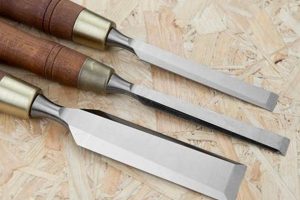
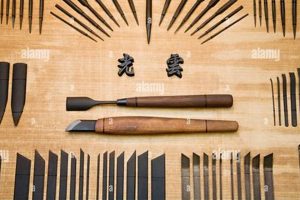
Implements employed in the creation of refined wooden objects represent a diverse category, encompassing both hand-powered and machine-driven instruments. Examples include saws for dimensioning stock, chisels for shaping details, and planes for achieving smooth surfaces. These instruments facilitate precision and artistic expression in working with wood.
The appropriate selection and skillful application of these instruments is crucial for achieving desired outcomes in woodworking projects. Historically, reliance was placed predominantly on hand tools, requiring extensive training and practice. Modern advancements have introduced power tools that enhance efficiency and precision, although mastery of hand tools remains valuable for intricate work and nuanced control.
The following sections will delve into specific types of instruments, exploring their applications, maintenance, and selection criteria to assist practitioners in enhancing their woodworking capabilities.
Enhancing Woodworking Projects
The following are observations regarding effective utilization of instruments designed for the creation of fine woodworking projects. Adherence to these principles will promote enhanced precision, safety, and project longevity.
Tip 1: Instrument Sharpness: Maintaining a keen edge on cutting tools is paramount. Dull instruments necessitate excessive force, increasing the risk of material damage and user injury. Regularly sharpen planes, chisels, and saws.
Tip 2: Grain Direction Awareness: Always consider the grain direction of the wood being worked. Planing or chiseling against the grain results in tear-out, compromising the surface finish. Observe the grain pattern before initiating cuts.
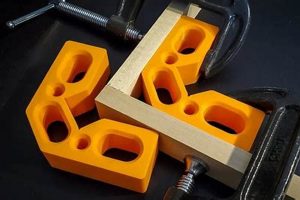
Tip 3: Secure Workholding: Ensuring the workpiece is firmly secured minimizes vibration and slippage. Utilize vises, clamps, and bench dogs to stabilize the material during sawing, planing, and shaping operations.
Tip 4: Measured Application of Force: Excessive force is often counterproductive. Allow the instrument’s sharpness and design to perform the cutting action. Avoid forcing tools, which can lead to inaccuracies and potential damage.
Tip 5: Precision Measurement and Marking: Accurate measurements and clear markings are essential for achieving desired dimensions and joinery. Employ precision measuring tools, such as calipers and marking gauges, and utilize sharp pencils or knives for marking lines.
Tip 6: Gradual Material Removal: In most instances, removing material in small increments is preferable to attempting large cuts. This approach allows for greater control and reduces the likelihood of errors.
Tip 7: Regular Instrument Maintenance: Proper maintenance extends the lifespan and performance of instruments. Clean tools after each use, lubricate moving parts, and store them in a dry environment to prevent rust and corrosion.
These guidelines, when integrated into the woodworking process, promote efficient and safe operation, ultimately contributing to the creation of high-quality, enduring projects.
The subsequent sections will expand on specific aspects of project execution, including joinery techniques and finishing methods.
1. Precision
The correlation between implement quality and achievable accuracy in woodworking is direct and unequivocal. Instruments engineered for high precision, such as finely machined planes, accurate measuring devices, and saws with minimal kerf, are essential for achieving tight-fitting joinery and adherence to specified dimensions. Lack of precision introduces cumulative errors, leading to structural instability or aesthetic compromises in finished pieces. For example, imprecise cuts in dovetail joints can result in gaps that necessitate filling or rework, diminishing the overall quality of the final product.
Calibration and meticulous setup are critical components of precision woodworking. Even the most advanced instrument yields suboptimal results if improperly calibrated or utilized. A marking gauge set incorrectly, a dull blade, or a miter saw with an inaccurate fence will invariably lead to errors. Woodworkers who prioritize precision regularly check and adjust their instruments, demonstrating a commitment to accuracy in every stage of the process. The use of templates and jigs further enhances precision, particularly when replicating complex shapes or intricate joinery.
Ultimately, the pursuit of precision necessitates a comprehensive understanding of both the capabilities and limitations of the implements employed. A skilled woodworker selects instruments appropriate for the task at hand and applies them with care and attention to detail. While modern power tools can significantly increase efficiency, achieving true precision often requires a blend of machine work and hand tool techniques, demanding a high degree of skill and experience. The relationship is thus symbiotic, where superior instruments and skilled operators converge to produce work of exceptional quality.
2. Sharpness

Sharpness represents a fundamental characteristic influencing the performance and safety of implements utilized in fine woodworking. The degree of edge acuity directly impacts cutting efficiency, surface finish quality, and the overall control exerted by the user. Dull implements necessitate increased force, leading to compromised precision and heightened risk of workpiece damage or user injury.
- Cutting Efficiency
The primary benefit of a keen edge is the reduction in force required to sever wood fibers. A sharp chisel, for instance, cleanly slices through the material, leaving a smooth surface and requiring minimal effort. Conversely, a dull chisel crushes the wood, resulting in a rough surface and demanding significant force, which can compromise control.
- Surface Finish Quality
Implements with sharp edges produce cleaner cuts, resulting in superior surface finishes. Planing with a sharp blade yields a smooth, glass-like surface that requires minimal sanding. A dull plane, however, tears the wood fibers, leaving a rough, uneven surface. The resultant surface imperfections directly impact the quality of subsequent finishing processes.
- User Control and Safety
Sharp implements provide greater control during woodworking operations. The user can direct the tool with precision, achieving the intended cut with minimal deviation. Dull tools, conversely, tend to wander or slip, increasing the risk of accidental cuts or damage to the workpiece. A well-honed edge enables the user to anticipate the tool’s behavior, promoting safer working practices.
- Tool Longevity and Maintenance
Paradoxically, maintaining sharpness can extend the lifespan of an implement. A sharp edge removes material efficiently, minimizing wear and tear on the tool body. Regular honing and sharpening, while requiring dedicated effort, prevent the excessive force and friction that can ultimately damage or deform the cutting edge. Thus, proactive maintenance is integral to ensuring the continued performance and longevity.
The pursuit and maintenance of sharpness are therefore indispensable aspects of fine woodworking. Regular honing, sharpening, and proper edge alignment are essential practices for maximizing performance, ensuring user safety, and achieving the desired quality in finished pieces. The application of appropriate sharpening techniques, coupled with consistent maintenance, ensures that implements retain their cutting edge, enabling efficient and controlled woodworking operations.
3. Ergonomics

Ergonomics, the science of designing and arranging items to optimize human interaction, assumes paramount importance in the context of instruments designed for fine woodworking. The physical demands associated with prolonged use of these instruments necessitate careful consideration of design features that promote comfort, reduce strain, and prevent musculoskeletal disorders.
- Handle Design and Grip
The shape, size, and material composition of instrument handles directly affect grip strength, hand fatigue, and overall control. Handles should be designed to fit comfortably in the hand, minimizing pressure points and allowing for a secure grip without excessive force. Materials such as hardwood, shaped to contour to the hand, or synthetic materials with textured surfaces, provide enhanced grip and reduce slippage. Improper handle design can lead to carpal tunnel syndrome or other repetitive strain injuries.
- Weight and Balance
The weight and balance of woodworking instruments influence the amount of force required for operation and the degree of control exerted by the user. Excessive weight contributes to fatigue, while poor balance can lead to inaccurate cuts and increased risk of injury. Instruments should be designed with a center of gravity that promotes stability and minimizes the need for compensatory movements. Lighter-weight implements are generally preferable for prolonged use, particularly when performing delicate tasks.
- Reach and Accessibility
The physical layout of a workspace and the accessibility of instruments directly impact posture and movement patterns. Woodworkers should arrange their workbenches and tool storage systems to minimize reaching, bending, and twisting. Frequently used implements should be readily accessible, while less frequently used items can be stored further away. Proper workspace organization reduces strain and improves overall efficiency.
- Vibration Dampening
Powered instruments, such as routers and sanders, generate vibration that can contribute to hand-arm vibration syndrome (HAVS). Ergonomic design incorporates vibration-dampening materials and features to minimize the transmission of vibration to the user’s hands and arms. Anti-vibration gloves and other personal protective equipment can further reduce the risk of HAVS.
These facets of ergonomic design in woodworking instruments are not merely aesthetic considerations but are essential components of a safe and efficient working environment. Prioritizing ergonomics through thoughtful instrument selection and workspace design contributes to the long-term health and well-being of woodworkers, enabling them to pursue their craft with greater comfort, control, and longevity. The integration of ergonomic principles into implement design directly impacts the quality of work and the sustainability of the craft itself.
4. Maintenance

The longevity and effectiveness of implements employed in fine woodworking are inextricably linked to consistent and appropriate maintenance practices. The failure to adequately maintain cutting, shaping, and measuring instruments directly precipitates a decline in performance, an increase in safety hazards, and a shortened lifespan for the implements themselves. A dull chisel, for example, necessitates increased force to achieve the desired cut, elevating the risk of slippage and potential injury. Similarly, a poorly calibrated measuring device introduces inaccuracies that can compromise the structural integrity and aesthetic appeal of the finished product. Maintenance, therefore, represents a crucial investment in the durability and precision of a woodworking practice.
Effective maintenance encompasses several key elements, including regular cleaning, sharpening, lubrication, and storage. Cleaning after each use removes accumulated resin, dust, and debris, preventing corrosion and preserving the integrity of moving parts. Sharpening maintains the cutting edge of blades and chisels, ensuring efficient and controlled material removal. Lubrication reduces friction in moving parts, preventing wear and tear and ensuring smooth operation. Proper storage protects instruments from moisture, temperature fluctuations, and physical damage. A handsaw left exposed to the elements, for instance, is susceptible to rust and warping, rendering it unusable over time. The implementation of a structured maintenance schedule ensures that instruments remain in optimal working condition, minimizing downtime and maximizing performance.
In conclusion, the commitment to diligent maintenance protocols is not merely an optional undertaking, but an essential component of responsible woodworking practice. Neglecting maintenance diminishes instrument performance, compromises safety, and accelerates wear, ultimately leading to increased costs for replacement and repair. By prioritizing regular cleaning, sharpening, lubrication, and storage, woodworkers can ensure the continued effectiveness, safety, and longevity of their implements, thereby preserving their investment and upholding the standards of their craft.
5. Versatility
The adaptability of woodworking instruments significantly influences the range of projects a craftsman can undertake and the efficiency with which diverse tasks are executed. Instruments with a broad range of applications can reduce the overall investment in specialized implements, streamline workflows, and enhance problem-solving capabilities in the face of unforeseen challenges.
- Multi-Functionality
Certain implements are designed to perform multiple operations, offering a cost-effective alternative to acquiring numerous specialized tools. A combination square, for example, can function as a measuring device, a marking gauge, and a square, providing a versatile solution for various layout tasks. Similarly, a spokeshave can be used for shaping both convex and concave surfaces, reducing the need for separate tools for each type of curve.
- Adaptability through Accessories
The versatility of certain instruments can be expanded through the use of interchangeable accessories. Routers, for instance, can be fitted with a wide variety of bits to perform different cutting, shaping, and joinery operations. Similarly, power drills can be used for driving screws, drilling holes, and sanding surfaces through the use of appropriate attachments. This modular approach allows for greater flexibility and reduces the overall number of dedicated instruments required.
- Scalability and Project Suitability
Highly versatile implements may possess the ability to adapt to differing project scales. A set of chisels of various sizes can be used for both delicate carving and rough stock removal. Likewise, some handplanes are designed to be adjusted to accomodate smoothing or roughing tasks. In contrast, highly specialized instruments may be designed for narrow tasks, limiting their applicability to particular jobs.
- User Skill and Application
The skill of the woodworker directly influences the versatility that can be derived from a given instrument. A craftsman with extensive experience may be able to adapt a basic tool to perform a wider range of tasks than a novice user. Mastery of sharpening techniques, for example, allows a woodworker to fine-tune the cutting performance of a chisel or plane, expanding its capabilities. The capacity to adapt tool use enhances versatility significantly.
The value of woodworking instruments is inextricably linked to their potential. Versatile tools can prove essential for those looking to produce various projects with little space or budget. Ultimately, the optimal balance between specialized implements and versatile instruments depends on the individual woodworker’s skill level, project requirements, and budget constraints. A diversified collection of implements promotes both proficiency and adaptability in the craft of woodworking.
6. Durability

Durability, in the context of instruments utilized in fine woodworking, constitutes a critical attribute that directly influences both the long-term cost-effectiveness and the sustainability of a woodworking practice. The capacity of an implement to withstand the rigors of repeated use, exposure to environmental factors, and the stresses inherent in material processing determines its service life and overall value. Implements crafted from substandard materials or lacking robust construction are prone to premature failure, necessitating frequent replacement and disrupting workflow. Conversely, instruments designed for enduring performance represent a long-term investment, minimizing replacement costs and ensuring consistent reliability over extended periods. For example, a hand plane constructed from high-quality cast iron with a properly hardened blade can provide decades of service with appropriate maintenance, while a cheaply made alternative may quickly become unusable due to warping, cracking, or blade failure. Thus, the initial investment in durable instruments often yields significant savings and enhanced productivity in the long run.
The materials selection and manufacturing processes employed in the creation of woodworking instruments are primary determinants of their durability. High-carbon steel, known for its strength and wear resistance, is frequently used in the production of blades, chisels, and saws. Hardwoods, such as maple and walnut, are often favored for handles and bodies due to their density and resistance to splitting or cracking. Precision machining and heat treatment processes further enhance the durability of critical components, ensuring dimensional stability and preventing premature wear. The joinery methods used in the construction of instruments also play a crucial role; robust joints that resist loosening or separation under stress are essential for maintaining structural integrity. Consider, for instance, a dovetail saw with a blade securely fastened to a hardwood handle using traditional dovetail joinery. Such construction methods offer exceptional resistance to impact and vibration, ensuring that the blade remains firmly in place throughout the instrument’s lifespan.
In summary, durability is not merely a desirable characteristic, but a fundamental requirement for instruments employed in fine woodworking. The selection of implements crafted from high-quality materials, manufactured using robust construction techniques, and designed for long-term performance is essential for minimizing costs, maximizing productivity, and ensuring the sustainability of a woodworking practice. While the initial investment in durable instruments may be higher, the long-term benefits in terms of reliability, reduced maintenance, and extended service life far outweigh the cost savings associated with cheaper, less durable alternatives. The understanding and prioritization of durability, therefore, represents a cornerstone of responsible instrument selection and a key to successful woodworking endeavors.
Frequently Asked Questions
The following section addresses common inquiries and clarifies misconceptions concerning instruments essential to the craft of woodworking. The information provided aims to enhance understanding and facilitate informed decision-making regarding instrument selection, utilization, and maintenance.
Question 1: What constitutes the optimal approach to sharpening blades?
The most effective approach to blade sharpening involves a multi-stage process that begins with coarse grinding to remove imperfections and establish the desired bevel angle, followed by progressive refinement using finer sharpening stones or abrasive papers. Honing is then performed to polish the cutting edge and remove any remaining burrs. The use of a sharpening jig is recommended to maintain consistent bevel angles.
Question 2: What factors determine the selection of a suitable hand plane?
The selection of an appropriate hand plane depends on the specific task at hand. Smoothing planes are designed to produce a fine surface finish, while jointer planes are used to flatten and straighten long boards. Block planes are smaller and more versatile, suitable for end-grain work and detail shaping. The size, weight, and blade angle of the plane should be considered in relation to the intended application.
Question 3: What precautions are necessary when operating power tools?
Operating power tools necessitates strict adherence to safety protocols. These protocols include wearing appropriate personal protective equipment, such as safety glasses, hearing protection, and dust masks. Workpieces must be securely clamped to prevent movement during cutting operations. Power tools should be regularly inspected for damage or malfunctions. Hands must be kept clear of moving parts, and all safety guards must remain in place.
Question 4: What materials are best suited for instrument handles?
Instrument handles are commonly constructed from hardwoods such as maple, walnut, or cherry, due to their strength, durability, and resistance to splitting. Synthetic materials, such as polymers or composites, are also used in some applications, offering enhanced grip and resistance to moisture. The selection of handle material should prioritize comfort, grip, and longevity.
Question 5: How does moisture content impact woodworking?
The moisture content of wood significantly affects its dimensional stability and workability. Wood expands and contracts as its moisture content changes, potentially leading to joint failure, warping, or cracking. Wood should be properly seasoned and acclimated to the environment in which it will be used to minimize these effects. A moisture meter can be used to measure the moisture content of wood prior to use.
Question 6: What is the significance of grain direction in woodworking?
The direction of wood grain influences its strength, workability, and surface finish. Working against the grain can lead to tear-out, splintering, or uneven surfaces. Planning or chiseling with the grain produces smoother cuts and reduces the risk of damage. Understanding grain direction is essential for achieving optimal results in woodworking operations.
The information provided in this FAQ section offers insights into aspects of woodworking instruments. Further exploration of specific instruments is highly recommended.
The subsequent section will address advanced woodworking techniques, offering guidance for experienced practitioners seeking to refine their skills.
Conclusion
This discourse has explored the diverse realm of instruments employed in the creation of fine wooden objects. Key aspects, encompassing precision, sharpness, ergonomics, maintenance, versatility, and durability, have been examined to illuminate their profound influence on project outcomes. These attributes collectively determine the capacity to achieve accurate dimensions, smooth surfaces, secure joinery, and lasting structural integrity. Selection and diligent upkeep are imperative for success.
The judicious selection and application of these items remain crucial for aspiring and seasoned craftspeople. Continued refinement of skills, coupled with a commitment to responsible instrument management, will undoubtedly elevate the standards of woodworking practice and foster enduring appreciation for the artistry inherent in the medium.
![Buy Woodworking Tools Sales Online - [Your Brand] | Step-by-Step Guides, Tools & Inspiration to Build Beautiful Wooden Decor on a Budget](https://woodfromhome.com/wp-content/uploads/2026/05/th-213-300x200.jpg "Buy Woodworking Tools Sales Online - [Your Brand] Step-by-Step Guides, Tools & Inspiration to Build Beautiful Wooden Decor on a Budget")