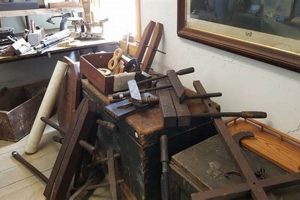
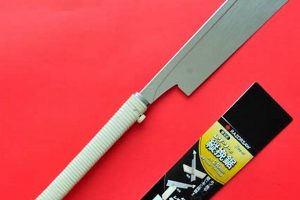
These implements, characterized by their unique designs and often meticulously crafted from high-quality materials, represent a significant aspect of traditional Japanese craftsmanship. Examples include hand planes (kanna), chisels (nomi), saws (nokogiri), and marking knives (kiridashi), each designed for specific tasks with an emphasis on precision and efficiency. The implements frequently feature laminated steel blades and handles shaped for optimal grip and control.
The importance of these artifacts lies in their reflection of a culture that valued skill, precision, and a deep understanding of materials. Their design prioritized the conservation of energy and the achievement of flawless results. Historically, they played a crucial role in the construction of homes, temples, and furniture, showcasing the high standards of Japanese carpentry. The legacy of this tradition continues to influence contemporary woodworking practices.
The following sections will delve into specific types of these historical instruments, explore the techniques employed in their manufacture and use, and provide insight into the factors influencing their value in the modern market. We will also examine the care and preservation techniques necessary to maintain their functionality and historical significance.
Preservation and Appreciation
The following points outline key considerations for preserving and appreciating traditional Japanese woodworking implements, emphasizing their historical and functional value.
Tip 1: Identify Authenticity. Thoroughly research maker’s marks and characteristics associated with specific periods and toolmakers. Consult reputable sources and experienced collectors to verify provenance and avoid reproductions.
Tip 2: Proper Storage is Essential. Store implements in a dry environment with stable temperature and humidity. This minimizes rust, warping, and deterioration of wooden components. Consider using specialized storage cases or wraps.
Tip 3: Careful Cleaning and Maintenance. Use appropriate cleaning methods. Avoid harsh chemicals. Lightly oil metal components with a rust-inhibiting oil. Regularly inspect and address any signs of corrosion or damage.
Tip 4: Respect the Original Edge. When sharpening, strive to maintain the original bevel and geometry of the blade. Use traditional sharpening stones and techniques to preserve the cutting edge’s integrity.
Tip 5: Understand the Tool’s Function. Research the specific purpose and intended use of each implement. This knowledge enhances appreciation and informs proper handling and maintenance.
Tip 6: Seek Expert Restoration. If significant damage exists, consult with a qualified restoration specialist who understands traditional Japanese woodworking techniques and materials. Amateur repairs can diminish value and functionality.
Tip 7: Document Provenance and Condition. Maintain detailed records of each implement, including its history, condition, and any restoration work performed. This documentation enhances its historical value and facilitates future appraisal or sale.
Preserving these implements requires a commitment to understanding their historical context, proper care, and skillful maintenance. By adhering to these principles, one ensures the continued appreciation and functionality of these artifacts of Japanese craftsmanship.
The following section will explore the cultural significance and the ongoing relevance of these traditional instruments in contemporary woodworking practices.
1. Material Composition

The selection and combination of materials in antique Japanese woodworking tools directly influenced their performance, longevity, and cultural value. High-quality steel, often laminated with softer iron, was essential for creating durable, sharp, and easily maintained cutting edges. The properties of the steel determine the tool’s ability to hold an edge, resist wear, and withstand the stresses of repeated use. For instance, the use of “white steel” (Shirogami) in a chisel (nomi) indicates a high carbon content, leading to exceptional sharpness but requiring careful tempering to prevent brittleness. Conversely, “blue steel” (Aogami) offers greater toughness and edge retention, making it suitable for demanding applications.
The composition of the tool body, frequently constructed from hardwoods such as white oak (shirokashi) or Japanese red oak (akagashi), also played a significant role. These woods provided stability, shock absorption, and a comfortable grip. The interaction between the metal and wood components, carefully engineered during construction, distributed stress and maximized the tool’s efficiency. For example, the plane bodies (dai) needed to be constructed from dense wood, ensuring the blade remained stable and precise during use. The quality of the wood, its grain orientation, and its seasoning all contributed to the overall performance of the plane.
Understanding the material composition provides insights into the original intent of the toolmaker and the intended application of the implement. Knowledge of the materials used aids in proper maintenance, restoration, and assessment of authenticity. The materials used, therefore, represent a critical element in evaluating and appreciating the craftsmanship inherent in these historical woodworking instruments. Improper identification or ignorance of the correct materials can lead to ineffective maintenance and reduced tool lifespan.
2. Blade Geometry

Blade geometry is paramount in assessing the functionality and value of antique Japanese woodworking tools. The angle of the blade’s bevel, the shape of the cutting edge, and the overall profile are intentionally designed to achieve specific cutting actions. For instance, a chisel (nomi) intended for mortise work will possess a thicker, more robust blade profile and a steeper bevel angle compared to a paring chisel, which requires a thinner, shallower angle for precise cuts. The intended use directly dictates the blade’s geometry.
The precision and accuracy of the blade geometry determine the tool’s effectiveness and the quality of the resulting work. A plane (kanna) with a meticulously ground and honed blade, set at the correct angle within the dai (body), will produce shavings of uniform thickness and leave a flawlessly smooth surface. Conversely, a blade with improper geometry will chatter, tear the wood fibers, or fail to achieve the desired finish. The craftsmanship evident in the blade geometry reflects the skill of the toolmaker and directly impacts the user’s ability to execute complex woodworking tasks. Examining blade geometry can reveal a tools intended use, the degree of skill required to use it, and potential damage from improper use or sharpening.
Understanding blade geometry is crucial for both collectors and users. Identifying subtle variations in blade angles and profiles allows for accurate categorization and assessment of authenticity. Knowledge of proper geometry informs sharpening techniques, ensuring that the tool maintains its original functionality and value. Ignoring the intricacies of blade geometry can lead to irreversible damage and a diminished appreciation for the artistry and engineering inherent in these historical implements. Recognizing blade geometry also allows for informed decisions regarding restoration, ensuring the tool is returned to its original intended function.
3. Toolmaker Identification
The identification of the toolmaker represents a critical element in understanding the value, authenticity, and historical context of antique Japanese woodworking tools. The maker’s mark, often subtly inscribed on the blade or body, serves as a primary identifier, providing a direct link to a specific artisan or workshop. This identification unlocks a wealth of information about the tool’s age, quality, and intended purpose. For example, tools bearing the mark of Imai, a renowned chisel maker, command a premium due to the exceptional reputation for steel quality and craftsmanship associated with his name. Without the ability to identify the toolmaker, the historical significance and potential value of the implement are significantly diminished.
The significance of toolmaker identification extends beyond mere authentication. Certain workshops or individual artisans specialized in particular types of tools or catered to specific regions. Identifying the maker can thus reveal insights into the tool’s intended use and the regional woodworking traditions it represents. For example, a plane (kanna) bearing the mark of a Kyoto-based maker might indicate a higher level of refinement and precision, reflecting the demands of that region’s woodworking style. The ability to recognize these nuances allows for a deeper appreciation of the tool’s cultural context and practical application. Furthermore, this allows for a more informed selection of tools for specific tasks, mirroring the practice of seeking out known quality from a specific maker.
In conclusion, accurate toolmaker identification is essential for collectors, historians, and woodworking enthusiasts seeking to understand and appreciate antique Japanese woodworking tools. It provides a foundation for determining authenticity, assessing value, and understanding the historical and cultural context of these implements. Challenges exist in deciphering faded or obscured marks, requiring careful examination and expertise. This knowledge, however, is crucial for preserving the legacy of these tools and the skilled artisans who created them, ensuring their continued appreciation for generations to come.
4. Historical Context

The historical context profoundly shapes the understanding and value of antique Japanese woodworking tools. The tools existence is intrinsically linked to specific periods, each marked by unique technological advancements, economic conditions, and cultural priorities, all directly influencing their design, production, and usage. For example, the relative scarcity of high-quality steel during certain eras led to the development of innovative lamination techniques, where a thin layer of hard steel was bonded to a softer iron body. This economized steel use while maximizing cutting performance. Understanding this historical constraint informs the assessment of a tool’s construction and authenticity.
Furthermore, the rise and fall of certain woodworking traditions and regional variations in tool design can only be understood through a historical lens. The Edo period (1603-1868), characterized by relative peace and economic growth, witnessed a flourishing of craftsmanship, including the development of specialized tools for intricate joinery. Conversely, periods of war or economic hardship often resulted in simpler, more utilitarian designs. These variations, reflecting the social and economic climate, are crucial in identifying and categorizing these instruments. For instance, a specific type of plane used for finishing tatami mats can be traced back to a particular region and period based on its design and construction techniques.
In essence, historical context provides a framework for interpreting the physical characteristics and cultural significance of these woodworking implements. The tools are not merely objects but tangible artifacts reflecting the technological, economic, and artistic values of their time. Ignoring the historical context diminishes the ability to accurately assess their value, appreciate their craftsmanship, and understand their role in shaping Japanese woodworking traditions. Understanding this interplay enhances collection, preservation, and appreciation efforts, linking the object to a broader understanding of Japanese history and culture.
5. Functional Condition

The functional condition of antique Japanese woodworking tools is a critical factor determining their value, usability, and historical significance. It encompasses the tool’s ability to perform its intended task effectively and safely, reflecting the cumulative effects of age, use, and maintenance. The evaluation of functional condition demands a nuanced understanding of both the tool’s original design and the potential for restoration.
- Sharpness and Edge Retention
The sharpness of the cutting edge directly impacts the tool’s performance. A well-maintained edge allows for clean, precise cuts. Evidence of frequent sharpening, the presence of nicks or chips, and the steel’s ability to retain an edge all indicate the level of care and quality of the original materials. A chisel with a dull edge, for example, will tear the wood fibers instead of cleanly severing them, hindering its usability. Improper sharpening diminishes the edge retention of steel tools.
- Structural Integrity
The tool’s structural integrity refers to the soundness of its individual components and their connection to one another. Cracks in the wooden handle of a plane, rust on the metal blade, or looseness in the joints of a saw all compromise the tool’s functionality and safety. Structural damage not only impedes the tool’s performance but also increases the risk of injury during use. Checking for rust, cracks and loose connections are necessary.
- Originality of Components
The presence of original components significantly contributes to the tool’s functional and historical value. Replacement parts, especially those of inferior quality or non-original design, can negatively impact performance and authenticity. A plane with a replacement blade, for example, might not achieve the same level of precision or produce the same quality of finish as the original. Identifying original parts requires careful examination of markings, materials, and construction techniques.
- Proper Adjustment and Calibration
Many Japanese woodworking tools, such as planes (kanna), require precise adjustment and calibration to function effectively. The ability to properly set the blade depth, adjust the mouth opening, and ensure the sole is flat directly impacts the tool’s performance. A plane that is not properly calibrated will chatter, dig into the wood, or produce uneven shavings. Tools in poor condition makes it hard to adjust and calibrate.
These factors collectively determine the functional condition of antique Japanese woodworking tools. While some degree of wear and tear is expected in antique implements, significant damage or the loss of key components can severely diminish their value and usability. A thorough assessment of these elements is essential for collectors, restorers, and woodworking enthusiasts seeking to appreciate and preserve these historical artifacts.
Frequently Asked Questions
This section addresses common inquiries regarding antique Japanese woodworking tools, providing concise and factual information to assist collectors, historians, and woodworking enthusiasts.
Question 1: What factors primarily influence the value of these implements?
Value is significantly influenced by the tool’s maker, historical period, rarity, functional condition, and the presence of original components. Tools crafted by renowned makers or originating from specific historical periods generally command higher prices.
Question 2: How can authenticity be verified?
Authenticity verification requires careful examination of maker’s marks, construction techniques, materials used, and comparison with documented examples. Consulting with experienced collectors or experts is recommended.
Question 3: What are the most common types of damage encountered in these tools?
Common damage includes rust on metal parts, cracks or warping in wooden components, dull or chipped cutting edges, and missing or replaced parts. Improper storage and use contribute significantly to these issues.
Question 4: How should these tools be properly stored to prevent deterioration?
Proper storage involves maintaining a stable environment with low humidity and controlled temperature. Tools should be cleaned and oiled regularly to prevent rust, and wooden components should be protected from excessive dryness or moisture.
Question 5: Can these antique tools still be used for woodworking?
While many antique tools can be restored to functional condition, their primary value often lies in their historical significance. If used, they require careful handling and maintenance to avoid damage. Using them may also decrease their value to collectors.
Question 6: What resources are available for learning more about these implements?
Resources include books on Japanese woodworking techniques, museum collections, online forums dedicated to antique tools, and professional organizations focused on the preservation of historical artifacts.
The information provided aims to clarify key aspects of antique Japanese woodworking tools, promoting informed appreciation and responsible preservation.
The subsequent section explores the restoration and conservation techniques applicable to these artifacts, detailing the methodologies employed to ensure their longevity and historical accuracy.
Conclusion
The preceding exploration has illuminated the multifaceted nature of antique Japanese woodworking tools. These implements, beyond their utilitarian function, represent a tangible connection to a rich history of craftsmanship, technological innovation, and cultural values. Their value lies not solely in their monetary worth but also in their capacity to inform and inspire.
The continued study, preservation, and respectful handling of these artifacts are essential to ensuring that the knowledge and skills embodied within them are not lost. By understanding their historical context, construction, and intended use, future generations can continue to appreciate the enduring legacy of Japanese woodworking and the dedication of the artisans who created these remarkable tools.
![Mastering the Care & Use of Japanese Woodworking Tools [Tips] | Step-by-Step Guides, Tools & Inspiration to Build Beautiful Wooden Decor on a Budget](https://woodfromhome.com/wp-content/uploads/2026/05/th-83-300x200.jpg "Mastering the Care & Use of Japanese Woodworking Tools [Tips] Step-by-Step Guides, Tools & Inspiration to Build Beautiful Wooden Decor on a Budget")