![DIY Woodworking: Essential Tools You Must Have [Beginner's Guide]](data:image/svg+xml;base64,PHN2ZyB4bWxucz0iaHR0cDovL3d3dy53My5vcmcvMjAwMC9zdmciIHdpZHRoPSI0NzQiIGhlaWdodD0iNTYiIHZpZXdCb3g9IjAgMCA0NzQgNTYiPjxyZWN0IHdpZHRoPSIxMDAlIiBoZWlnaHQ9IjEwMCUiIHN0eWxlPSJmaWxsOiNjZmQ0ZGI7ZmlsbC1vcGFjaXR5OiAwLjE7Ii8+PC9zdmc+ "DIY Woodworking: Essential Tools You Must Have [Beginner's Guide] Step-by-Step Guides, Tools & Inspiration to Build Beautiful Wooden Decor on a Budget")
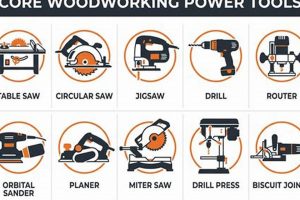
Essential instruments and equipment constitute a foundational requirement for completing woodworking projects undertaken by individuals. These items range from hand-operated implements to power-driven machinery, each serving a specific function in shaping, joining, and finishing wood. For instance, a hand saw facilitates the manual cutting of wood, while a power drill creates precise holes for fasteners.
Possessing a reliable and well-maintained collection of these fundamental items offers several advantages. It enhances project efficiency, improves the accuracy of cuts and joints, and promotes a safer working environment. Historically, the evolution of woodworking is directly linked to the refinement and diversification of the implements used. Early tools were simple and often fashioned from stone or bone, while contemporary tools incorporate advanced materials and technology.
Therefore, a detailed examination of core instruments categorized by function will follow, outlining specifications, safety considerations, and application scenarios. This breakdown provides a practical guide for individuals seeking to establish or expand their inventory of woodworking essentials.
Guidance on Essential Woodworking Implements
The following recommendations are intended to guide the selection and utilization of fundamental implements for individual woodworking endeavors. Careful consideration of these points will optimize project outcomes and foster safe work practices.
Tip 1: Prioritize Safety Equipment: Protective eyewear, hearing protection, and dust masks are non-negotiable. Consistent use mitigates the risk of injury from flying debris, excessive noise, and harmful particulate matter.
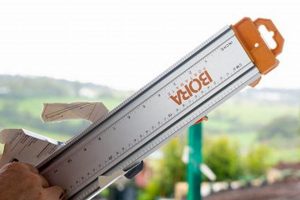
Tip 2: Invest in Accurate Measurement Tools: A quality measuring tape, combination square, and marking gauge ensure precise cuts and joinery. Accuracy in measurement directly impacts the structural integrity and aesthetic appeal of the finished piece.
Tip 3: Select Hand Saws Based on Task: A crosscut saw for cutting against the grain and a rip saw for cutting with the grain are fundamental. The appropriate saw selection optimizes cutting efficiency and reduces material waste.
Tip 4: Maintain Sharp Cutting Edges: Dull blades on saws, chisels, and planes increase the risk of slippage and require greater force, leading to potential injury. Regular sharpening is essential for safe and efficient operation.
Tip 5: Secure Workpieces Properly: Utilize clamps, vises, or bench dogs to stabilize materials during cutting, shaping, and assembly. Unsecured workpieces can shift unexpectedly, resulting in inaccurate cuts and potential injury.
Tip 6: Choose the Right Drill and Driver Bits: Select drill bits appropriate for the material being drilled and driver bits that precisely match the screw head. Improper bit selection can damage both the workpiece and the fastener.
Tip 7: Practice Joint-Making Techniques: Mastering fundamental joints, such as butt joints, lap joints, and mortise-and-tenon joints, is crucial for constructing durable and aesthetically pleasing woodworking projects. Practice on scrap material before committing to the final piece.
These points underscore the necessity of prioritizing safety, accuracy, and proper technique when working with wood. Adherence to these recommendations contributes to successful project completion and minimizes the risk of accidents.
The subsequent section will address the maintenance and storage of these items, ensuring their longevity and continued effectiveness.
1. Accuracy

Precision is a cornerstone of successful woodworking, profoundly influencing the structural integrity and aesthetic quality of completed projects. The implements employed are instrumental in achieving the necessary levels of accuracy, impacting every stage from initial measurement to final assembly. The reliability of the end product depends, in part, on the capacity of the tools to execute tasks with minimal deviation from intended specifications.
- Precise Measurement and Marking
Accuracy begins with precise measurement and marking. Tools such as calibrated measuring tapes, precision squares, and marking gauges are fundamental. Inaccurate measurements, even by small increments, can accumulate and result in misaligned joints or incorrectly sized components. For example, a 1/16-inch error in a series of cuts for a cabinet frame can lead to significant discrepancies in overall dimensions, affecting stability and appearance.
- Consistent Cutting
Maintaining consistent cutting angles and depths is crucial for creating seamless joints and uniform surfaces. Saws, chisels, and planes with properly sharpened and calibrated blades enable repeatable, precise cuts. An example is the use of a table saw with a precisely aligned fence to produce consistently sized boards for a tabletop, ensuring a level and even surface. The absence of consistent cutting leads to gaps, unevenness, and structural weakness.
- Reliable Fastening
Accurate drilling and fastening are essential for creating strong and durable connections. Drills with depth stops and properly sized drill bits ensure consistent hole depths, preventing screws from stripping or protruding. For instance, when assembling a drawer, precise drilling and screw placement are critical for smooth operation and longevity. Imprecise fastening can lead to weak joints and premature failure of the assembly.
- Ensuring Planar Surfaces and Edges
Achieving flat surfaces and straight edges is critical for many woodworking tasks, such as creating tabletops or fitting doors. Hand planes and jointers are instruments used to obtain planar surfaces and edges. For example, to properly fit a door into a frame, the edges of the door must be perfectly flat and square. Without tools that ensure planarity, the final construction may look unprofessional and may not function as intended.
The correlation between precise implements and accurate woodworking outcomes is undeniable. Reliance on substandard or improperly maintained items compromises the integrity of the project and can lead to wasted materials and increased time investment. Therefore, tools selected must be calibrated to allow the achievement of desired precision.
2. Durability

The endurance of woodworking tools is an essential consideration for both novice and experienced practitioners. The inherent nature of woodworking, involving repetitive and often forceful actions, places significant stress on implements. Therefore, the robustness of these implements directly impacts their longevity and the return on investment for the woodworker.
- Material Composition and Structural Integrity
The materials from which tools are manufactured dictate their capacity to withstand operational stresses. High-carbon steel, hardened alloys, and impact-resistant polymers are commonly employed in the construction of durable tools. Structural integrity, including the design of joints, handles, and housings, further enhances resistance to breakage and deformation. A poorly constructed handle on a chisel, for example, may splinter under repeated striking, rendering the tool unusable and potentially hazardous. Properly chosen materials, paired with reinforced structural design, ensure extended service life.
- Resistance to Corrosion and Wear
Woodworking environments often expose instruments to moisture, dust, and abrasive materials, accelerating corrosion and wear. Protective coatings, such as powder coating on metal surfaces and varnish on wooden handles, mitigate these effects. Likewise, the quality of cutting edges, particularly on saws and chisels, determines their resistance to dulling. The ability of tools to resist these environmental factors is crucial for maintaining optimal performance over time. A rusted saw blade, for example, will cut inefficiently and require excessive force, reducing accuracy and increasing the risk of injury.
- Quality of Manufacturing Processes
The manufacturing processes employed have a substantial influence on the final product’s longevity. Forged metal tools, for example, are typically stronger and more durable than cast versions due to the grain structure of the metal. Precision machining and assembly contribute to tighter tolerances and reduced wear between moving parts. Tools produced with meticulous attention to detail exhibit increased resistance to failure under stress. A poorly aligned plane blade, for instance, will chatter and produce uneven surfaces, necessitating frequent adjustments and potentially leading to premature wear of the adjustment mechanisms.
- Ergonomic Design and User Comfort
While not directly related to material properties, ergonomic design contributes to tool durability by reducing user fatigue and minimizing the likelihood of misuse. Comfortable handles and balanced weight distribution enable users to apply force more effectively, reducing the risk of overexertion and tool damage. A well-designed hand saw, for example, will allow for smoother strokes with less force, reducing stress on the blade and extending its lifespan. An uncomfortable or poorly balanced tool is more likely to be dropped or mishandled, increasing the risk of breakage.
The durability of woodworking tools is a multifaceted characteristic determined by material selection, manufacturing processes, and design considerations. Investing in robust, well-constructed implements is essential for ensuring long-term functionality, promoting safety, and maximizing the efficiency of individual woodworking endeavors. Selecting items based on these criteria contributes to a more sustainable and rewarding woodworking experience.
3. Versatility

Adaptability in woodworking instruments represents a critical attribute, particularly for individuals engaged in diverse projects with limited resources. The capacity of implements to perform multiple functions streamlines the woodworking process and optimizes tool inventory. This characteristic is essential for efficient and cost-effective woodworking practices.
- Multi-Functional Hand Tools
Certain hand implements are designed to execute a range of tasks, diminishing the necessity for specialized items. A combination square, for instance, serves as a measuring device, a marking tool, and a square, facilitating tasks from layout to joinery. Similarly, a block plane can be used for smoothing end grain, chamfering edges, and general shaping. Such tools minimize the required investment and storage space, maximizing the utility of individual implements.
- Adaptable Power Tool Systems
Power tool manufacturers increasingly offer systems with interchangeable components, expanding the functionality of individual units. A drill/driver, with the appropriate attachments, can function as a sander, a grinder, or even a reciprocating saw. This modular approach allows users to expand their capabilities without acquiring multiple dedicated power tools, thereby reducing costs and storage requirements. An example includes an oscillating multi-tool, which, with various blades, performs cutting, sanding, scraping, and grinding operations.
- Jigs and Fixtures for Enhanced Functionality
The utility of basic implements can be significantly extended through the use of jigs and fixtures. A simple shop-made jig, when used with a router, can create precise dadoes or rabbets. A clamping system can transform a standard workbench into a versatile assembly station. By incorporating auxiliary devices, fundamental tools can accomplish complex tasks, enhancing their versatility and reducing the need for specialized equipment.
- Tool Combinations for Varied Applications
Combining different implements can create solutions to unique woodworking challenges. For example, a router, in conjunction with a straight edge, can be utilized to flatten a small to medium sized slab. This combination allows users to work with unique materials without investing in heavy machinery. By combining different tools, a solution can be made with a smaller inventory of instruments.
The multi-faceted nature of versatile woodworking implements offers considerable advantages to individual practitioners. By selecting items that perform multiple functions, woodworkers can optimize their tool inventory, reduce costs, and enhance their ability to tackle a wide array of projects. Versatility ultimately promotes efficiency and adaptability in the woodworking environment.
4. Ergonomics

Ergonomic design constitutes a critical element in woodworking tools, influencing user comfort, safety, and long-term physical well-being. The repetitive motions and sustained postures inherent in woodworking place considerable strain on the musculoskeletal system. Therefore, tools that incorporate ergonomic principles mitigate the risk of injury and enhance productivity.
A primary consideration is the shape and texture of tool handles. Handles designed to conform to the natural contours of the hand, constructed from materials that provide a secure grip, reduce the force required to maintain control. For example, a hand plane with an ergonomically shaped tote allows for a more comfortable and stable grip, minimizing wrist strain during extended use. Similarly, power tools with vibration dampening features reduce the transmission of harmful vibrations to the hands and arms, mitigating the risk of conditions like hand-arm vibration syndrome. The weight distribution of a tool also plays a significant role. A balanced tool requires less effort to maneuver, reducing fatigue and the likelihood of dropped tools, which can cause injury. In the selection of any woodworking tool, a user would be wise to consider the shape of the handle, and the weight distribution of the tool to maximize efficiency while minimizing injury risk.
The positioning of controls and adjustments is another key aspect of ergonomic design. Tools with easily accessible controls allow for adjustments to be made without interrupting workflow or assuming awkward postures. For instance, a table saw with a conveniently located blade height adjustment wheel enables users to make precise cuts efficiently and safely. Furthermore, the overall design of the tool should promote natural body mechanics. Workbenches should be of an appropriate height to minimize back strain, and tools should be stored within easy reach to avoid unnecessary bending or stretching. By prioritizing ergonomic considerations in tool selection and workshop setup, woodworkers can create a safer, more comfortable, and ultimately more productive environment, thereby extending their ability to engage in woodworking activities without compromising their physical health.
5. Safety

The integration of safety considerations is not merely an adjunct to the selection of essential instruments for individual woodworking endeavors; it is a fundamental component. The potential for injury, inherent in the use of sharp-edged tools and power-driven machinery, necessitates that safety features are prioritized in the evaluation and selection process. The correlation between implement design and user safety is direct and consequential.
For instance, implements equipped with blade guards, interlocks, and emergency shut-off mechanisms reduce the risk of accidental contact with cutting surfaces. Power tools featuring anti-kickback systems minimize the potential for dangerous material ejection. Hand tools with ergonomically designed handles reduce fatigue and enhance control, thereby decreasing the likelihood of slippage or mishandling. The presence of these features transforms an otherwise hazardous task into a manageable and controlled process. Conversely, the absence of safety mechanisms increases the risk of severe injury, including lacerations, amputations, and eye damage. Real-world examples consistently demonstrate that incidents are frequently linked to the improper use of or the absence of essential safety features.
The selection of woodworking tools, therefore, must extend beyond considerations of functionality and performance to encompass a comprehensive assessment of safety attributes. Implementing safety best practices, in conjunction with utilizing items engineered with user safety in mind, minimizes the risks associated with individual woodworking projects. This conscientious approach safeguards the well-being of the woodworker and promotes a sustainable and rewarding engagement with the craft.
6. Maintenance

The longevity and optimal performance of implements selected for individual woodworking projects are inextricably linked to consistent and appropriate maintenance procedures. Tool deterioration, whether through corrosion, dulling, or mechanical malfunction, directly impairs project quality, increases operational risk, and necessitates premature replacement, thereby diminishing the initial investment’s value. Therefore, maintenance is a crucial component of ensuring the selected tools remain effective and safe. A neglected saw blade, for example, not only produces rough cuts but also demands increased force, elevating the risk of kickback and potential injury. Similarly, a chisel with a dulled edge requires excessive force, leading to reduced control and an increased chance of slippage. Regular sharpening and lubrication, on the other hand, preserve tool functionality and mitigate safety hazards.
Specific maintenance protocols vary depending on tool type and material composition. Hand tools with wooden components often require periodic cleaning and oiling to prevent cracking and warping. Metal tools must be protected from rust through the application of protective coatings and proper storage in dry environments. Power tools necessitate routine inspection of cords, switches, and moving parts, along with regular cleaning and lubrication. Ignoring these needs can lead to diminished performance and, in severe cases, complete tool failure. Consider a power drill with a seized chuck due to accumulated dust and lack of lubrication. Such a tool becomes ineffective and poses a potential safety risk if forced into operation. Proper maintenance prevents such occurrences and extends the service life of the drill.
In summary, integrating maintenance into the lifecycle of individual woodworking implements is not merely a desirable practice but a fundamental requirement for maximizing tool utility, ensuring user safety, and optimizing project outcomes. By adopting a proactive approach to tool care, woodworkers can preserve their investments, minimize the risk of accidents, and sustain a high level of craftsmanship. Neglecting tool maintenance ultimately undermines the benefits derived from even the most meticulously selected woodworking implements.
7. Affordability
The financial accessibility of implements directly influences the feasibility of individual woodworking endeavors. The initial investment in equipment can constitute a significant barrier to entry for novice woodworkers or those operating on limited budgets. Therefore, the selection of essential tools must consider cost-effectiveness without compromising functionality or safety. The acquisition of professional-grade equipment, while desirable, may not be a practical starting point. Instead, prioritizing fundamental, reliable tools that meet immediate needs is often a more prudent approach. For instance, a basic hand saw and a set of chisels, acquired at a reasonable price point, can facilitate various introductory woodworking tasks, allowing the individual to develop skills and assess long-term commitment before investing in more sophisticated machinery. The purchase of a high-end table saw, on the other hand, may represent an unnecessary expenditure for someone primarily engaged in small-scale projects.
Achieving affordability involves strategic decision-making. One strategy is to prioritize the acquisition of used or refurbished equipment. Online marketplaces and local auctions often offer viable options at reduced prices, enabling individuals to obtain quality tools while minimizing upfront costs. However, careful inspection of used tools is essential to ensure they are in safe working condition and that any necessary repairs or replacements are factored into the overall cost. Another strategy involves purchasing tools individually, focusing on acquiring the most frequently used items first and gradually expanding the collection as needed. This incremental approach allows individuals to distribute expenses over time and avoid the financial strain associated with purchasing a complete set of tools simultaneously. An individual, for example, might begin with a hand saw, measuring tape, and a few basic clamps, gradually adding more specialized tools as specific project demands arise. This focused procurement allows individuals to prioritize expenditure for the most essential items.
In conclusion, affordability is a key determinant in making woodworking accessible to a broader audience. While the allure of high-end equipment is undeniable, practical considerations dictate a balanced approach. The prioritization of essential functions, the exploration of used or refurbished options, and the incremental acquisition of tools enable individuals to embark on woodworking projects without incurring excessive financial burdens. This careful balancing of cost and capability ensures that financial limitations do not preclude participation in this rewarding craft. Recognizing the relationship between affordability and accessibility ensures the sustainability of DIY woodworking.
Frequently Asked Questions
The following addresses common inquiries regarding indispensable items for engaging in woodworking projects. These questions and answers aim to provide clarity and guidance in the selection of a foundational instrument collection.
Question 1: What constitutes the absolute minimum set of instruments required to commence woodworking projects?
A foundational set includes a measuring tape, combination square, hand saw (crosscut and rip), a set of chisels, a hand plane, a drill with assorted bits, and appropriate safety equipment. These items enable basic cutting, shaping, joining, and finishing operations.
Question 2: Are power-driven implements inherently superior to hand-operated versions for all woodworking tasks?
Power tools offer speed and efficiency for many operations; however, hand tools provide greater control and precision in certain applications, such as fine joinery or delicate shaping. The choice depends on the specific task and the desired level of craftsmanship.
Question 3: How crucial is the investment in premium-grade implements versus entry-level options?
While premium-grade equipment offers enhanced durability and performance, entry-level options can suffice for initial projects. The key is to select items that are well-made and suitable for the intended applications, regardless of price point. Upgrading can occur as skills and project demands evolve.
Question 4: What safety considerations are paramount when utilizing implements for individual woodworking projects?
Eye protection, hearing protection, and respiratory protection are non-negotiable. Additionally, securing workpieces properly and maintaining sharp cutting edges are essential for preventing injuries. Familiarity with the operational procedures and safety features of each implement is also critical.
Question 5: How frequently should woodworking implements undergo maintenance procedures?
The frequency of maintenance depends on the intensity of use and the environmental conditions. However, regular cleaning, sharpening, and lubrication are generally recommended to preserve tool functionality and extend service life. Inspecting the tool before and after using it will ensure safety measures are in place.
Question 6: Can interchangeable battery systems provide the power needed for all projects?
Modern cordless instruments provide the power for many projects. When considering these power sources, factor in how long they last and how much power they are able to give. If a large project is expected, or a heavy project, then it is recommended to consider alternatives.
These answers offer a foundational understanding of equipment selection for individual woodworking. Prioritizing safety, quality, and appropriate functionality is essential for a successful and rewarding experience.
The ensuing segment will address specific types of woodworking projects and the implement choices best suited for each.
Conclusion
This exposition has delineated the critical role of essential implements in the successful execution of individual woodworking endeavors. The discussion encompassed key attributes, including accuracy, durability, versatility, ergonomics, safety, maintenance, and affordability, providing a framework for informed tool selection. Further, practical guidance and specific project examples have illustrated the application of these principles in various woodworking scenarios.
The responsible selection and diligent maintenance of fundamental instruments are paramount to fostering a safe, efficient, and rewarding woodworking experience. The informed woodworker recognizes that the investment in quality and appropriate tools is an investment in the craft itself, enabling the realization of projects with precision and longevity. Continued learning and refinement of instrument handling techniques will further enhance the capabilities of the individual and the quality of the resultant works.