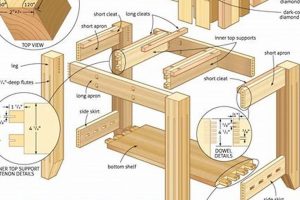
The referenced activity encompasses manageable construction tasks executed primarily with wood. These endeavors typically involve limited material usage, simplified joinery techniques, and reduced completion timelines. Examples include building small boxes, simple shelves, picture frames, or basic decorative items.
Engaging in such activities provides numerous advantages. It offers a practical introduction to woodworking tools and techniques, fosters creativity and problem-solving skills, and results in tangible, personally crafted items. Historically, the practice of creating smaller wooden objects served as a foundational step for aspiring carpenters and craftspeople, allowing them to develop essential skills before undertaking larger, more complex projects. The completion of these builds can be a source of personal satisfaction.
Further discussion will delve into specific project ideas, essential tools and materials, safety considerations, and step-by-step instructions to facilitate successful completion of introductory level woodworking tasks.
Essential Pointers for Introductory Woodworking
The following guidelines aim to assist individuals in successfully undertaking straightforward woodworking tasks. Adhering to these suggestions can mitigate potential challenges and enhance the overall experience.
Tip 1: Prioritize Safety. Comprehensive understanding of power tool operation is paramount. Always utilize appropriate personal protective equipment, including safety glasses and hearing protection.
Tip 2: Select Appropriate Wood. Softwoods like pine or fir are generally more forgiving for beginners due to their workability. Ensure the wood is free from excessive knots or warping.
Tip 3: Precise Measurement is Crucial. Employ accurate measuring tools and techniques. “Measure twice, cut once” remains a relevant adage, minimizing material waste.
Tip 4: Master Basic Joinery. Start with simple joints like butt joints or lap joints. These can be secured with glue and screws for added strength.
Tip 5: Sanding for a Smooth Finish. Progressive sanding with increasingly finer grits of sandpaper is essential. This creates a surface suitable for staining or painting.
Tip 6: Consider Pre-Planning. A detailed plan or sketch outlining dimensions and construction steps can prevent errors and streamline the building process.
Tip 7: Start Small. Choosing projects with minimal components and straightforward assembly allows individuals to gain confidence and experience.
By implementing these tips, practitioners can foster a foundation for enhanced woodworking proficiency. Patience and attention to detail remain invaluable attributes.
The subsequent segment will examine specific project proposals suitable for individuals new to the field of woodworking.
1. Simplicity

The concept of simplicity is intrinsically linked to the successful execution of basic wooden construction tasks. A direct correlation exists between the complexity of a design and the challenges encountered during the construction phase. Intricate joinery, compound angles, and numerous components necessitate advanced skills and specialized tools, thereby disqualifying them from the realm of straightforward projects. Conversely, designs characterized by clean lines, minimal parts, and straightforward assembly contribute to ease of construction. A basic example illustrating this principle is a simple wooden box. Its construction involves primarily straight cuts and butt joints, achievable with minimal experience and basic tools. The reduced complexity lowers the risk of errors and enhances the likelihood of successful completion.
The emphasis on simplicity extends beyond mere design considerations; it also impacts material selection and construction methods. Projects requiring exotic hardwoods or specialized finishes often demand techniques beyond the scope of beginner woodworkers. Simple projects, however, typically utilize readily available softwoods like pine, which are easier to cut, shape, and finish. Similarly, the use of screws and glue, as opposed to more complex joinery techniques, simplifies the assembly process. The deliberate restriction of design complexity lowers the barrier to entry, enabling more individuals to participate in the craft and experience the satisfaction of creating tangible objects.
In conclusion, simplicity serves as a cornerstone principle in introductory woodworking. It dictates the feasibility of project completion, minimizes material waste, reduces the learning curve, and fosters a sense of accomplishment. Neglecting the importance of simplicity can lead to frustration, project abandonment, and a diminished appreciation for the craft. Thus, aspiring woodworkers are encouraged to prioritize straightforward designs and construction methods as they embark on their journey, progressively increasing complexity as skills and experience develop.
2. Functionality

Functionality is a defining characteristic of successful basic woodworking tasks. The purpose the item will fulfill directly impacts design considerations, material selection, and construction methods. Objects lacking a defined function are less likely to be completed or appreciated, as the motivation for their creation diminishes. A foundational understanding of functionality ensures that time, effort, and resources are invested in producing items that serve a practical need. For example, a simple spice rack designed to organize culinary seasonings demonstrates functionality. Its dimensions are determined by the standard size of spice containers, and its construction emphasizes secure shelving to prevent spillage. This targeted approach maximizes the item’s utility within a specific context.
Further exploring the influence of functionality, consider the creation of a small bedside table. The required surface area is dictated by the items it will hold, such as a lamp, a book, or an alarm clock. The table’s height is determined by its proximity to the bed. The incorporation of a drawer adds another layer of utility, providing storage for personal items. These functional requirements shape the table’s overall design, influencing dimensions, material choices, and joinery techniques. Without a clear understanding of these requirements, the resulting table may be poorly suited to its intended purpose, rendering it less valuable. Functionality is also essential for durability. An outdoor planter box, for example, needs to be able to survive changing weather to carry its function.
In summary, functionality serves as a guiding principle in introductory woodworking. It provides direction for project planning, ensuring that the finished product fulfills a specific need or purpose. The intentional integration of functionality enhances the value and practicality of created items, fostering a sense of accomplishment and encouraging continued engagement with woodworking. Beginners should therefore carefully consider the intended function of their projects, allowing that purpose to inform every stage of the design and construction process to build better and easier projects.
3. Material Cost

The relationship between material expenditure and fundamental wooden construction tasks is significant. Lowering the cost of materials is a determining factor in project selection. Inexpensive projects tend to be simpler and involve readily available materials. Higher costs, in contrast, can limit the accessibility of such tasks, particularly for beginners with limited budgets or resources. Therefore, consideration of material prices is essential to ensure a successful and satisfying building experience. For example, a project using reclaimed wood will be far cheaper than using exotic hardwoods.
The consequence of overlooking material prices can be detrimental. Overspending on lumber, hardware, or finishing supplies reduces the project’s overall value and may discourage completion. Instead, choosing locally sourced pine over imported mahogany for a simple bookshelf minimizes costs without compromising structural integrity. Similarly, utilizing screws and glue rather than elaborate mortise-and-tenon joints reduces both material waste and labor costs. Selecting appropriate fasteners is also important to control Material cost and overall safety.
In summary, controlling expenses is essential for making introductory projects doable. By carefully choosing materials, reducing waste, and simplifying design, practitioners can make woodworking accessible and enjoyable. This approach maximizes the learning experience while minimizing the financial burden, encouraging greater participation in the craft. The lower the financial burden is, the easier these projects will be.
4. Time Investment

The duration allocated to basic wooden construction endeavors bears a direct relationship to their feasibility and successful completion. A minimal investment of time is a core attribute of accessible woodworking projects. Protracted undertakings involving numerous steps, complex assembly, or intricate finishing processes can prove discouraging, especially for individuals new to the craft. Conversely, projects requiring a relatively short time commitment are more likely to be initiated and completed, thereby fostering a sense of accomplishment and encouraging further exploration of woodworking techniques. Building a simple picture frame, for example, demands only a few hours, making it an ideal introductory project. In contrast, constructing a multi-drawer dresser could extend over several days or weeks, representing a substantial time investment that may deter beginners.
The significance of time investment extends beyond initial project selection. It also influences planning, execution, and quality control. Projects designed for rapid completion necessitate streamlined processes and efficient use of resources. This can involve selecting pre-cut lumber, utilizing power tools for faster cutting and sanding, and opting for quick-drying finishes. While prioritizing speed, it is crucial to maintain a focus on accuracy and attention to detail. Rushing through critical steps can compromise structural integrity or aesthetic appeal, negating the benefits of a reduced time investment. A well-planned birdhouse that can be assembled in an afternoon due to careful pre-cutting and simple joinery provides a practical illustration of efficient time management.
In conclusion, the time commitment required for basic woodworking tasks plays a critical role in determining their accessibility and desirability. Projects requiring minimal time are more likely to be pursued by beginners, fostering skill development and a positive association with the craft. However, prioritizing speed at the expense of quality is counterproductive. A balanced approach, emphasizing efficient planning, streamlined processes, and attention to detail, maximizes the benefits of a reduced time investment while ensuring a satisfactory outcome. The understanding and management of time investment is critical when undertaking an easy small woodworking project.
5. Skill Level
The level of proficiency a woodworker possesses is intrinsically linked to the successful execution of manageable wooden construction tasks. The appropriateness of a given undertaking hinges significantly on the alignment between project complexity and individual ability. Misalignment can lead to frustration, project abandonment, and potential safety hazards. Skill level, therefore, becomes a primary filter when selecting woodworking endeavors.
- Tool Proficiency
Competence in using various hand and power tools is a fundamental aspect of skill level. Basic projects often require proficiency with measuring tools, saws (both hand and power), drills, and sanding equipment. A novice might struggle with accurately cutting wood using a table saw, whereas an experienced woodworker would find this task routine. Consequently, uncomplicated projects often minimize reliance on advanced power tools, favoring simpler hand tools to accommodate a wider range of skill levels.
- Joinery Techniques
The ability to execute different joinery methods is another crucial determinant of skill level. Elementary projects typically employ basic joints such as butt joints, lap joints, or simple rabbet joints, secured with glue and screws. These joints require minimal precision and can be mastered with relatively little practice. More intricate joints like dovetails or mortise and tenon joints demand advanced skills and specialized tools, rendering them unsuitable for beginner projects.
- Design Comprehension
Understanding basic design principles and construction plans is essential for successful project completion. A skilled woodworker can visualize the finished product from a schematic diagram and anticipate potential challenges. A less experienced individual might struggle to interpret plans or translate them into practical steps. Therefore, elementary woodworking projects tend to feature straightforward designs with clear, concise instructions to minimize the cognitive load and promote understanding.
- Finishing Application
The application of finishes, such as stains, paints, or varnishes, is a critical step in enhancing the appearance and durability of wooden objects. A skilled woodworker can achieve a smooth, even finish, free from imperfections. A novice might encounter issues such as drips, brush marks, or uneven color distribution. Consequently, beginner projects often utilize simple finishing techniques, such as wiping stains or applying spray-on finishes, to minimize the potential for errors and ensure a satisfactory outcome.
These skill-related componentstool proficiency, mastery of joining techniques, design comprehension, and application of finishesare not isolated attributes. They form an integrated hierarchy: the mastery of basic skills is a prerequisite for the progression to more advanced techniques. The selection of “easy small woodworking projects” should, therefore, be guided by a realistic assessment of one’s current abilities and a willingness to incrementally develop expertise. Starting with a simple box, for instance, allows a beginner to learn basic cutting, joining, and finishing skills before tackling a more complex project like a small table. This staged approach to woodworking promotes skill development, minimizes frustration, and fosters a sustained engagement with the craft.
6. Safety
The realm of manageable wooden construction demands a strong emphasis on safety protocols. Even seemingly simple tasks can present inherent risks if proper precautions are disregarded. Safety is not merely a supplementary consideration but an integral component of all woodworking activities, irrespective of their complexity.
- Personal Protective Equipment (PPE)
The use of appropriate PPE is paramount in mitigating potential injuries. Safety glasses protect eyes from flying debris, while hearing protection safeguards against prolonged exposure to loud machinery. Dust masks or respirators prevent the inhalation of fine particles generated during sanding and cutting. Furthermore, appropriate footwear, such as closed-toe shoes, minimizes the risk of foot injuries.
- Tool Handling and Maintenance
Safe tool operation requires a thorough understanding of each tool’s intended use, limitations, and safety features. Before utilizing any tool, review the manufacturer’s instructions and ensure proper maintenance. Dull blades and loose connections can significantly increase the risk of accidents. Secure workpieces with clamps or vises to prevent movement during cutting or drilling.
- Workshop Environment
Maintaining a clean and organized workspace contributes significantly to a safer environment. Clear pathways minimize the risk of trips and falls. Adequate lighting ensures clear visibility, while proper ventilation reduces the concentration of dust and fumes. A well-organized workspace also facilitates efficient tool retrieval, reducing the temptation to use improper techniques.
- Material Awareness
Understanding the properties of different wood species and finishing materials is crucial for safety. Certain woods can cause allergic reactions or respiratory irritation. Finishes often contain volatile organic compounds (VOCs) that pose health hazards if inhaled. Read and adhere to safety data sheets (SDS) for all materials utilized in the woodworking process.
Adherence to these safety facets directly enhances the feasibility and enjoyment of beginner-level wooden construction projects. Prioritizing safety not only minimizes the risk of injuries but also fosters a culture of responsible craftsmanship. Safety should always be the first consideration for every woodworking project regardless of size or difficulty.
Frequently Asked Questions
The following addresses commonly raised inquiries regarding the initiation and execution of straightforward woodworking projects. These responses aim to provide clarity and guidance, fostering a safer and more informed experience.
Question 1: What constitutes a simple wooden construction task?
A simple construction task is characterized by minimal components, basic joinery techniques, the utilization of readily available materials, and a relatively short completion timeline. Examples include building small boxes, picture frames, or simple shelves.
Question 2: What are the essential tools required for beginner-friendly woodworking?
Essential tools typically encompass a measuring tape, a combination square, a hand saw or circular saw, a drill, sandpaper, clamps, and a selection of screws and wood glue. The specific tools needed vary depending on the project.
Question 3: What types of wood are best suited for introductory projects?
Softwoods such as pine, fir, or poplar are generally recommended due to their workability and affordability. These woods are easier to cut, sand, and finish compared to hardwoods.
Question 4: How can one ensure personal safety while engaging in woodworking?
Safety can be ensured through the consistent use of personal protective equipment (PPE), proper tool handling techniques, and the maintenance of a clean and organized workspace. Thoroughly familiarize oneself with the operating instructions of each tool prior to use.
Question 5: How does design complexity influence the difficulty of a project?
Increased design complexity necessitates advanced skills, specialized tools, and a greater investment of time and effort. Simple designs with straight lines and minimal components are generally more suitable for beginners.
Question 6: How is project time commitment related to project selection?
Projects requiring a shorter time commitment are often more appealing to beginners, as they provide a sense of accomplishment and encourage continued engagement. Complex projects with extended timelines can be discouraging for individuals new to woodworking.
In summation, approaching basic woodworking with a focus on safety, simplicity, and a clear understanding of project requirements increases the likelihood of a successful and rewarding experience.
The subsequent section provides project ideas that are especially suited to those new to woodworking.
easy small woodworking projects
This analysis has comprehensively explored the attributes, prerequisites, and considerations involved in “easy small woodworking projects.” It has emphasized factors such as simplicity, functionality, material cost, time investment, and skill level. Prioritization of safety has also been underscored as a paramount concern.
The successful completion of these undertakings provides a foundational skill set applicable to more complex constructions. Continued engagement with woodworking, focusing on incremental skill development and meticulous attention to detail, yields both tangible results and personal enrichment. Further exploration of advanced techniques and design principles is encouraged.