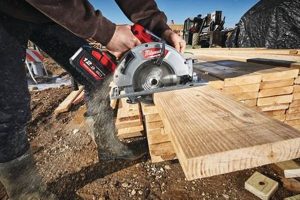
Essential electrically-powered implements significantly enhance the efficiency and precision of woodworking projects. These tools, designed for cutting, shaping, joining, and finishing wood, allow for complex tasks to be completed with greater ease and speed than traditional hand tools. A circular saw, for example, enables rapid and accurate straight cuts in sheet goods, while a power drill facilitates the creation of consistent, clean holes and the efficient driving of screws.
The adoption of such equipment revolutionized woodworking, accelerating project completion times and enabling greater accuracy in intricate designs. Their utilization results in increased productivity, reduced physical strain on the craftsman, and the ability to achieve repeatable, high-quality results. Historically, the integration of electric motors into traditional woodworking processes represented a major advancement, transforming the craft from a largely manual endeavor to a mechanized one.
The selection and proper maintenance of appropriate implements are crucial for any woodworking shop. The following sections will delve into specific types, offering insights into their functions, capabilities, and best practices for their safe and effective operation. Careful consideration should be given to factors such as project requirements, budget constraints, and the operator’s skill level when choosing these vital pieces of equipment.
Essential Woodworking Implement Strategies
The following guidelines address effective utilization and maintenance of vital electrically-powered implements to ensure project success and longevity of the equipment.
Tip 1: Prioritize Safety Protocols: Always wear appropriate personal protective equipment, including safety glasses, hearing protection, and a dust mask. Understand and adhere to manufacturer’s safety guidelines before operating any device.
Tip 2: Maintain Sharp Cutting Edges: Dull blades or bits significantly increase the risk of kickback and reduce the quality of the cut. Regularly inspect and sharpen or replace cutting components.
Tip 3: Implement Dust Collection Systems: Wood dust poses a significant health hazard. Connect sanding and cutting implements to a dust collector or vacuum system to minimize airborne particulate matter.
Tip 4: Secure Workpieces Effectively: Utilize clamps, vises, or other work-holding devices to prevent movement during cutting, sanding, or drilling operations. This enhances precision and minimizes the risk of injury.
Tip 5: Perform Routine Maintenance: Regularly clean and lubricate moving parts according to the manufacturer’s recommendations. Inspect cords and plugs for damage and replace them as needed.
Tip 6: Understand Material Properties: Different wood species exhibit varying densities and grain patterns. Adjust implement settings, such as speed and feed rate, to accommodate the specific characteristics of the material being worked.
Tip 7: Invest in Quality Equipment: While budget constraints are a consideration, purchasing durable, well-constructed implements from reputable manufacturers typically results in longer lifespan and improved performance.
Consistent application of these strategies ensures a safer, more efficient, and higher-quality woodworking experience. Adherence to safety protocols and proactive maintenance practices are paramount.
The subsequent sections will provide further insights into specific implement types and their optimal applications.
1. Essential Functionality

Essential Functionality, when considered in the context of electrically-powered woodworking implements, refers to the core capabilities that enable these tools to perform their intended tasks effectively and efficiently. The usefulness of any such device hinges on its ability to reliably and precisely execute its designed function, contributing directly to the success of woodworking projects. A closer examination of specific facets elucidates this concept.
- Material Removal Rate
This facet describes the tool’s capacity to remove wood at a given rate, directly impacting project completion time. For example, a table saw’s ability to rip long boards quickly and accurately demonstrates its material removal rate. An insufficient rate impedes progress, while an excessive rate can compromise precision and increase the risk of errors.
- Cutting Precision and Accuracy
Accuracy in cutting is critical for achieving desired dimensions and ensuring proper fit of components. A miter saw, for instance, allows for precise angle cuts necessary for constructing frames and intricate joinery. Deviations from specified measurements compromise structural integrity and aesthetic appeal.
- Surface Finishing Capability
Certain devices, such as random orbital sanders, are designed to create smooth, consistent surfaces in preparation for finishing. Their essential functionality lies in their ability to remove imperfections and prepare the wood for stains, paints, or other protective coatings. Poor surface preparation detracts from the final product’s overall quality.
- Joinery Facilitation
Some implements are specifically designed to aid in the creation of strong and precise joints. A biscuit joiner, for example, enables the creation of hidden joints that enhance the structural integrity of assembled pieces. Efficient joinery functionality ensures robust and lasting constructions.
These facets, while distinct, are interconnected and contribute to the overall effectiveness of electrically-powered woodworking implements. The selection of appropriate tools, taking into consideration the required functions for specific projects, is paramount. Furthermore, the consistent and reliable performance of these functions is essential for achieving high-quality results and maximizing productivity in woodworking endeavors.
2. Safety Mechanisms

Safety mechanisms are integral components of essential electrically-powered woodworking implements. The integration of these features is not merely an optional addition; it directly mitigates the inherent risks associated with high-speed cutting, shaping, and material removal processes. A direct cause-and-effect relationship exists between the presence of functional safety features and the reduction of workplace accidents. For example, a table saw equipped with a blade guard and anti-kickback pawls reduces the likelihood of hand injuries and workpiece ejection, respectively. The absence of such mechanisms significantly elevates the potential for harm.
These safeguards manifest in diverse forms across various implements. Power drills often incorporate variable speed controls and clutches to prevent over-driving screws and potential damage to materials or injury to the user. Sanders are frequently designed with enclosed housings and dust collection ports to minimize exposure to harmful airborne particles. The effectiveness of these mechanisms relies on both proper design and user adherence to recommended operational procedures. Disabling or bypassing safety features to enhance speed or convenience negates their intended protective function and substantially increases the risk of accidents. Real-world examples consistently demonstrate a correlation between disregarded safety protocols and elevated incident rates in woodworking environments.
The practical significance of understanding and utilizing safety mechanisms lies in the preservation of user well-being and the optimization of project outcomes. By prioritizing safety through adherence to established guidelines and the consistent use of implemented safeguards, the likelihood of accidents is reduced, enabling efficient and high-quality woodworking. Furthermore, the responsible operation of electrically-powered woodworking implements contributes to a safer and more sustainable working environment, reducing potential costs associated with injuries, equipment damage, and project delays. The selection of suitable implements should, therefore, prioritize those equipped with comprehensive and reliable safety features.
3. Precision Control
Precision control, in the context of electrically-powered woodworking implements, constitutes the ability to consistently and accurately govern the tool’s operation to achieve desired results. It is an essential attribute, directly impacting the quality, efficiency, and safety of woodworking projects. The degree of control afforded by an implement is directly proportional to the achievable accuracy of cuts, shapes, and joints. For instance, a router with adjustable speed and depth settings allows for fine-tuned shaping and detail work, whereas a drill press enables perpendicular holes to be bored with minimal deviation. Imprecise control, conversely, leads to errors, wasted materials, and potential hazards.
The connection between precise control and successful woodworking is exemplified by tasks requiring tight tolerances and intricate joinery. Consider the creation of dovetail joints, a hallmark of fine woodworking. Achieving seamless dovetails demands meticulous control over the depth and angle of cuts, which can be facilitated by tools with calibrated guides and stable platforms. Similarly, when constructing cabinets or furniture, accurate measurements and consistent cuts are essential for ensuring structural integrity and aesthetic appeal. Electrically-powered implements offering features such as micro-adjustments, digital readouts, and vibration dampening contribute significantly to enhanced control and improved outcomes.
Effective utilization of electrically-powered woodworking implements necessitates an understanding of the tool’s control mechanisms and their impact on the final product. Challenges can arise from factors such as tool instability, variations in material density, and the operator’s skill level. Overcoming these challenges requires careful selection of implements with appropriate control features, diligent practice, and a commitment to maintaining equipment in optimal condition. The pursuit of precise control, therefore, aligns directly with the broader goal of producing high-quality, durable, and aesthetically pleasing woodworking creations.
4. Durability Factors

Durability factors are paramount when considering essential electrically-powered woodworking implements. The lifespan and reliability of such tools directly influence their cost-effectiveness and the overall productivity of woodworking operations. A tool that frequently requires repair or replacement diminishes efficiency and increases long-term expenses, negating any initial cost savings. Material selection, motor design, and construction quality are key determinants of longevity. High-grade steel components, robust motor windings, and reinforced housings contribute to a tool’s ability to withstand the rigors of regular use. Conversely, implements constructed with inferior materials or lacking adequate protective features are prone to premature failure, resulting in downtime and project delays. An example is a circular saw with a poorly constructed base plate that becomes misaligned over time, compromising cut accuracy and potentially leading to hazardous operating conditions.
The operational environment further impacts the relevance of robustness factors. A woodworking shop characterized by heavy use and demanding projects requires implements built to withstand significant stress and wear. Tools exposed to excessive dust or vibration necessitate enhanced sealing and vibration dampening features to prevent damage to internal components. Furthermore, adherence to recommended maintenance procedures plays a vital role in maximizing a tool’s lifespan. Regular cleaning, lubrication, and replacement of worn parts can significantly extend the operational duration of essential implements. A well-maintained power drill, for instance, can provide years of reliable service, while a neglected one may succumb to motor failure or component wear within a significantly shorter timeframe.
In conclusion, the importance of durability factors in electrically-powered woodworking implements cannot be overstated. Considering material quality, construction design, and environmental conditions, alongside adherence to maintenance protocols, ensures a favorable return on investment and promotes a safe and productive woodworking environment. Prioritizing long-term durability over short-term cost savings is a prudent approach for any woodworking professional or enthusiast seeking reliable and cost-effective performance.
5. Versatility Options
The concept of versatility options, when applied to electrically-powered woodworking implements, pertains to the range of tasks a single tool can effectively perform. The presence of such options elevates the value and utility of such items, transforming them from single-purpose devices into multi-functional assets within a woodworking shop. A direct correlation exists between the number of tasks an implement can perform and its overall contribution to project efficiency. For example, a multi-tool equipped with interchangeable heads for sawing, sanding, and scraping reduces the need for multiple specialized tools, thereby conserving space and reducing capital expenditure. A lack of versatility limits the tool’s application, potentially requiring the purchase of additional, single-purpose implements to complete a project.
The benefits of embracing versatility options are multifaceted. In smaller workshops, where space is at a premium, the ability to consolidate multiple functions into fewer devices proves invaluable. Furthermore, the reduced need to switch between tools streamlines workflow and minimizes downtime, resulting in increased productivity. Consider the application of a variable-speed router, capable of shaping edges, cutting dados, and creating intricate designs. Its adaptability to various tasks allows for a seamless transition between different phases of a project, eliminating the need for specialized shaping implements. Similarly, a drill press equipped with a sanding drum accessory can be utilized for both drilling precise holes and smoothing curved surfaces, demonstrating its extended utility. The practical selection of implements with expanded capabilities enables woodworkers to adapt to diverse project requirements without necessitating a significant investment in additional equipment.
In summary, the incorporation of versatility options in electrically-powered woodworking implements significantly enhances their practical value and operational efficiency. The ability to perform multiple tasks with a single tool reduces costs, conserves space, and streamlines workflow. While specialized implements may still be necessary for specific applications, those exhibiting versatility options offer a distinct advantage in terms of adaptability and overall contribution to woodworking endeavors. The strategic selection of such tools, coupled with an understanding of their capabilities, empowers woodworkers to address a wide range of project requirements with greater efficiency and resourcefulness.
6. Maintenance Procedures
The implementation of structured maintenance procedures is critical to the longevity, performance, and safety of essential electrically-powered woodworking implements. Neglecting routine upkeep can lead to diminished accuracy, increased risk of malfunction, and potential safety hazards, ultimately compromising project quality and user well-being.
- Blade and Bit Maintenance
Sharp cutting edges are crucial for efficient material removal and precise cuts. Dull blades or bits increase the risk of kickback, splintering, and motor strain. Regular sharpening, cleaning, and occasional replacement of these components are essential. For example, a dull saw blade on a table saw requires greater force to push material through, increasing the risk of injury and resulting in a rougher cut. Regular blade maintenance ensures consistent, clean cuts and reduces the potential for hazardous situations.
- Motor Inspection and Care
The electric motor is the heart of most implements. Overheating, unusual noises, or reduced power output indicate potential problems. Regular cleaning to remove dust and debris, inspection of brushes (if applicable), and ensuring proper ventilation are necessary. A clogged motor housing can lead to overheating, shortening the motor’s lifespan. Routine inspection and cleaning prevent premature failure and maintain optimal performance.
- Cord and Connection Integrity
Damaged power cords pose a significant electrical hazard. Inspect cords for cuts, abrasions, or exposed wiring before each use. Ensure that connections are secure and free from corrosion. A frayed power cord on a router presents a risk of electric shock. Regular inspection and replacement of damaged cords are vital for user safety and prevent equipment damage.
- Lubrication of Moving Parts
Moving parts require lubrication to reduce friction, prevent wear, and ensure smooth operation. Apply appropriate lubricants to bearings, gears, and other moving components as specified by the manufacturer. Lack of lubrication can lead to increased friction, overheating, and eventual seizure of moving parts. Regularly lubricating the height adjustment mechanism on a drill press ensures smooth and accurate operation, preventing binding and potential damage.
Consistent adherence to these maintenance procedures extends the lifespan, enhances the performance, and ensures the safe operation of essential electrically-powered woodworking implements. Neglecting these practices increases the risk of equipment failure, project delays, and potential injuries. A proactive approach to maintenance is, therefore, a fundamental aspect of responsible woodworking practice.
7. Cost-Effectiveness
Cost-effectiveness, in the context of essential electrically-powered woodworking implements, represents a balance between initial investment, operational expenses, and the long-term value derived from these tools. It is not solely about acquiring the least expensive equipment, but rather selecting implements that offer the most utility and reliability for their price point, while minimizing ongoing costs. The ramifications of disregarding cost-effectiveness extend beyond immediate budgetary concerns; poorly chosen tools can lead to increased material waste, project delays, and a higher frequency of repairs or replacements. For example, purchasing an inexpensive circular saw with a weak motor may initially seem economical, but its inability to consistently cut through thicker hardwoods results in wasted lumber and the eventual need to upgrade to a more robust model.
The importance of cost-effectiveness becomes particularly evident when assessing the operational expenses associated with these implements. Power consumption, blade or bit replacements, and maintenance requirements all contribute to the overall cost of ownership. Tools with energy-efficient motors, durable cutting components, and easily accessible parts for maintenance provide long-term savings despite potentially higher upfront costs. A real-world application is observed in the selection of a variable-speed random orbital sander. While a cheaper model may be available, its higher electricity usage and shorter lifespan of sanding pads ultimately diminish its cost-effectiveness compared to a more efficient and durable alternative. Proper cost-benefit analysis therefore necessitate consideration of the entire lifespan of the tool.
Understanding the principles of cost-effectiveness in tool selection allows woodworkers to make informed purchasing decisions that optimize their investment and maximize the efficiency of their operations. This understanding involves evaluating the long-term value of implements, accounting for both upfront costs and ongoing expenses. Challenges can arise from misleading marketing claims or a lack of accessible information on tool performance and reliability. However, by conducting thorough research, consulting user reviews, and prioritizing durability and operational efficiency, woodworkers can effectively navigate these challenges and select essential electrically-powered implements that provide the best value for their needs.
Frequently Asked Questions About Essential Electrically-Powered Woodworking Implements
The following section addresses common inquiries and misconceptions surrounding electrically-powered woodworking implements, offering concise and informative responses.
Question 1: Is it necessary to acquire all essential electrically-powered woodworking implements simultaneously?
No. A phased approach is recommended, prioritizing tools based on project requirements and skill level. Start with fundamental implements such as a circular saw, drill, and sander, gradually expanding the collection as needed. This allows for a more manageable investment and ensures proficiency with each device before acquiring additional equipment.
Question 2: What are the primary safety considerations when operating these implements?
Wearing appropriate personal protective equipment, including safety glasses, hearing protection, and a dust mask, is paramount. Thoroughly review and adhere to manufacturer’s safety guidelines before each use. Ensure that all safety features, such as blade guards and emergency stops, are functional and properly utilized.
Question 3: How often should maintenance procedures be performed on electrically-powered woodworking implements?
Maintenance frequency varies depending on usage intensity and environmental conditions. However, regular inspection and cleaning should be performed after each use. Lubrication of moving parts and sharpening of cutting edges should be conducted periodically, as specified in the manufacturer’s instructions.
Question 4: What factors should be considered when selecting the appropriate power source for these implements?
Voltage and amperage requirements must be compatible with the available power supply. For portable implements, consider the battery voltage and capacity. Ensure that extension cords are of appropriate gauge to handle the amperage draw of the tool, preventing voltage drop and potential damage.
Question 5: Are there alternatives to purchasing new electrically-powered woodworking implements?
Refurbished or used equipment can offer a cost-effective alternative, provided that the tools are thoroughly inspected for functionality and safety. Verify the condition of critical components, such as motors, cords, and cutting edges, and ensure that all safety features are intact. Purchase from reputable sources to minimize the risk of acquiring defective or unsafe equipment.
Question 6: How does the type of wood affect the selection and operation of these implements?
Different wood species exhibit varying densities and grain patterns, requiring adjustments to implement settings. Hardwoods require slower feed rates and sharper cutting edges compared to softwoods. Adjust speed, depth of cut, and blade selection to accommodate the specific properties of the material being worked to ensure optimal results and prevent damage to the implement or workpiece.
Effective and safe utilization of essential electrically-powered woodworking implements requires diligent attention to both operational procedures and maintenance practices. Prioritizing safety and adhering to manufacturer guidelines is of utmost importance.
The subsequent section will delve into specific types, offering insights into their functions, capabilities, and best practices for their safe and effective operation.
Conclusion
The preceding analysis has illuminated the critical aspects of “must have woodworking power tools,” emphasizing their indispensable role in modern woodworking. From functionality and safety to precision, durability, versatility, maintenance, and cost-effectiveness, each facet contributes to the overall efficiency and quality of woodworking endeavors. A thorough understanding of these components enables informed decisions regarding equipment selection, operation, and maintenance.
The acquisition and responsible utilization of these implements represent a significant investment in both productivity and safety. Continued advancements in technology promise further enhancements in the capabilities and user-friendliness of these tools. A commitment to ongoing education and adherence to best practices will ensure that woodworkers can harness the full potential of their equipment, resulting in both exceptional craftsmanship and a safe working environment.
![Best Handmade Woodworking Tools [Guide] & More! | Step-by-Step Guides, Tools & Inspiration to Build Beautiful Wooden Decor on a Budget](https://woodfromhome.com/wp-content/uploads/2026/04/th-224-300x200.jpg "Best Handmade Woodworking Tools [Guide] & More! Step-by-Step Guides, Tools & Inspiration to Build Beautiful Wooden Decor on a Budget")