A wall-mounted storage solution designed specifically for organizing and securing woodworking implements is an essential component of an efficient workshop. These units typically feature shelves, drawers, and pegboards tailored to accommodate a variety of hand tools, power tools, and related accessories, optimizing vertical space utilization. Examples range from simple, open-shelf designs to more elaborate, enclosed cabinets with locking mechanisms.
The significance of such a storage system lies in its capacity to enhance workshop safety, improve workflow, and extend the lifespan of valuable tools. By elevating tools off the workbench and floor, the risk of accidental damage or injury is minimized. A dedicated storage area promotes a more organized and productive working environment, facilitating quicker access to needed implements and reducing search time. Historically, craftsmen have employed wall-mounted storage as a means of preserving their tools and maintaining an orderly workspace, traditions that continue to inform modern woodworking practices.
The subsequent sections will delve into the various types of this storage solution, offering guidance on material selection, construction techniques, installation considerations, and customization options, allowing for a tailored fit to individual workshop needs and spatial constraints.
Essential Considerations for Wall-Mounted Woodworking Tool Storage
Effective implementation of a wall-mounted woodworking tool storage system requires careful planning and execution. The following tips provide guidance to ensure a functional and durable installation.
Tip 1: Material Selection is Crucial. The choice of material directly impacts the structural integrity and longevity of the unit. Hardwoods such as maple or oak offer superior strength and resistance to wear, while plywood provides a cost-effective and dimensionally stable alternative. Particleboard is generally not recommended due to its susceptibility to moisture damage and limited weight-bearing capacity.
Tip 2: Accurate Weight Assessment is Paramount. Before installation, estimate the total weight of the tools and materials that will be stored. This assessment dictates the required load-bearing capacity of the mounting hardware and the structural reinforcement needed within the cabinet itself. Overestimating the weight capacity is advisable to ensure a safety margin.
Tip 3: Secure Wall Attachment is Mandatory. Utilize appropriate fasteners suitable for the wall construction. For drywall or plaster walls, anchor into wall studs whenever possible. If studs are not accessible, employ heavy-duty drywall anchors or toggle bolts capable of supporting the calculated weight. Avoid relying solely on drywall screws, as they provide insufficient holding power.
Tip 4: Consider Ergonomic Placement. Position the cabinet at a height that allows for comfortable access to frequently used tools. This minimizes strain and promotes efficient workflow. The specific height will vary depending on the individual’s stature and working habits.
Tip 5: Optimize Internal Organization. Design the interior layout to accommodate the specific tools to be stored. Utilize pegboards, custom-built shelves, and drawer dividers to maximize space utilization and prevent tools from shifting during opening and closing. Consider incorporating dedicated storage for smaller items such as screws, nails, and drill bits.
Tip 6: Implement a Dust Control Strategy. Woodworking environments generate significant amounts of dust. Incorporate features such as sealed doors and drawers to minimize dust accumulation within the cabinet. Regularly cleaning the interior and exterior surfaces will further prolong the lifespan of the tools and the cabinet itself.
Tip 7: Incorporate Adequate Lighting. If the cabinet is located in a poorly lit area, consider integrating internal or external lighting to improve visibility and facilitate tool selection. LED lighting offers energy efficiency and long lifespan.
Proper execution of these tips will result in a secure, efficient, and durable wall-mounted woodworking tool storage system, enhancing the overall functionality and safety of the workshop.
The following sections will explore advanced design considerations and aesthetic enhancements to further optimize the user experience.
1. Accessibility

Within the context of a wall-mounted woodworking tool cabinet, accessibility directly influences workflow efficiency and overall user satisfaction. The ease with which tools can be retrieved and returned to their designated positions is a critical factor in optimizing productivity and minimizing wasted time in the workshop.
- Placement Height and Reach
The vertical positioning of the cabinet significantly impacts accessibility. Mounting the unit too high necessitates reaching and straining, potentially leading to fatigue or injury. Conversely, a cabinet positioned too low may require excessive bending, similarly hindering ease of use. The optimal height should align with the user’s average reach, ensuring comfortable and unobstructed access to the stored tools. For example, a cabinet mounted at eye level for a user of average height minimizes both reaching and bending.
- Internal Organization and Layout
The internal configuration of the cabinet directly affects the speed and ease of tool retrieval. A well-organized layout, utilizing features such as labeled shelves, designated compartments, and readily visible pegboards, facilitates quick identification and access to specific tools. Conversely, a cluttered or poorly organized interior necessitates searching and sorting, wasting valuable time and potentially damaging tools. For example, clearly labeled drawers for different types of screws and nails improves accessibility compared to a single, jumbled container.
- Door and Opening Mechanisms
The design of the cabinet’s doors or opening mechanisms can either enhance or impede accessibility. Doors that swing wide open and remain securely in position provide unobstructed access to the interior. Conversely, doors that are difficult to open, require constant holding, or obstruct access to certain areas can significantly reduce usability. Similarly, drawers should glide smoothly and extend fully to allow for easy retrieval of items stored at the back. For example, a cabinet with self-closing hinges may inadvertently hinder access if they require excessive force to keep open.
- Lighting and Visibility
Adequate lighting within and around the cabinet is essential for clear visibility of the stored tools. Poorly lit interiors necessitate straining to identify specific items, hindering accessibility. The integration of internal lighting, such as LED strips, or strategic placement of external lighting can significantly improve visibility and facilitate quick and accurate tool selection. For example, a cabinet with internal LED lighting allows for easy identification of tools even in a dimly lit workshop.
In summary, accessibility is a multifaceted consideration that encompasses physical positioning, internal organization, opening mechanisms, and lighting. Optimizing these elements within a hanging woodworking tool cabinet is crucial for maximizing workflow efficiency, minimizing wasted time, and promoting a more productive and enjoyable woodworking experience.
2. Weight Capacity

Weight capacity represents a critical parameter in the design and implementation of any wall-mounted woodworking tool cabinet. It dictates the maximum load the structure can safely bear, directly impacting its durability, safety, and suitability for its intended purpose. Exceeding the specified weight capacity can result in structural failure, posing a significant risk of damage to tools and potential injury to individuals.
- Material Selection and Structural Integrity
The materials used in the cabinet’s construction significantly influence its weight-bearing capabilities. Hardwoods, such as maple or oak, offer greater strength and rigidity compared to softer woods or composite materials like particleboard. The thickness and construction methods, including joinery techniques and the use of reinforcing elements, further contribute to the overall structural integrity and, consequently, the weight capacity. A cabinet constructed from thin plywood with simple butt joints will inherently have a lower weight capacity than one made from solid hardwood with dovetail joinery.
- Mounting Hardware and Wall Structure
The selection of appropriate mounting hardware and the structural characteristics of the wall to which the cabinet is attached are equally crucial. Fasteners must be capable of withstanding the combined weight of the cabinet and its contents. Anchoring into wall studs provides the most secure attachment. If studs are not accessible, heavy-duty drywall anchors or toggle bolts must be employed, ensuring they are rated for the intended load. A cabinet with a high weight capacity that is inadequately mounted to the wall will still be prone to failure.
- Distribution of Load and Internal Design
The manner in which the weight is distributed within the cabinet’s interior also affects its overall stability and weight capacity. Evenly distributing the load across shelves and drawers minimizes stress on individual components. Incorporating internal dividers and supports can further enhance weight-bearing capabilities. Concentrating heavy items in one area of the cabinet can lead to localized stress and potential structural weakness.
- Safety Factor and Long-Term Performance
A properly designed cabinet incorporates a safety factor, meaning that its actual weight capacity exceeds the anticipated maximum load. This margin of safety accounts for potential overloads, material degradation over time, and unforeseen stresses. Regularly inspecting the cabinet and mounting hardware for signs of wear or damage is essential to ensure continued safe operation. Neglecting maintenance can compromise the weight capacity and increase the risk of failure.
In conclusion, weight capacity is a multifaceted consideration that encompasses material selection, mounting methods, load distribution, and safety margins. A comprehensive understanding of these factors is paramount to designing, constructing, or selecting a hanging woodworking tool cabinet that is both safe and functional, ensuring its long-term reliability within the demands of a woodworking environment.
3. Spatial Efficiency

Spatial efficiency, in the context of a woodworking environment, directly correlates with maximizing usable workspace while minimizing clutter and disorganization. The application of wall-mounted storage solutions, specifically the utilization of a woodworking tool cabinet, is fundamentally tied to optimizing spatial efficiency within a workshop setting. This approach capitalizes on vertical space, freeing up valuable floor area and workbench surfaces.
- Vertical Space Utilization
The primary contribution of a hanging woodworking tool cabinet to spatial efficiency stems from its ability to leverage vertical space. Traditional floor-standing cabinets occupy a significant footprint, often hindering movement and restricting workspace. A wall-mounted unit elevates tools and materials, effectively utilizing previously unused areas. For instance, a cabinet positioned above a workbench frees up the entire surface below for active projects.
- Footprint Reduction
By eliminating the need for a floor-standing structure, a hanging tool cabinet directly reduces the physical footprint within the workshop. This is particularly beneficial in smaller workshops or garages where space is at a premium. The reduction in footprint translates to increased maneuverability and a less congested working environment. A compact hanging cabinet can house a considerable number of tools without encroaching on essential workspace.
- Organization and Decluttering
A dedicated storage solution, such as a wall-mounted tool cabinet, promotes organization and reduces clutter, which are key elements of spatial efficiency. By providing designated spaces for each tool, it minimizes the accumulation of misplaced items on work surfaces. This organized approach facilitates quicker access to tools and streamlines workflow. A well-organized cabinet reduces search time and prevents tools from being lost or damaged.
- Workflow Optimization
Spatial efficiency, achieved through the use of a hanging woodworking tool cabinet, directly contributes to improved workflow. By keeping tools readily accessible and within easy reach, it minimizes interruptions and maximizes productive time. A strategically positioned cabinet allows a woodworker to seamlessly transition between tasks without having to navigate a cluttered or disorganized workspace. A tool cabinet located adjacent to a primary work area streamlines the entire woodworking process.
Therefore, the effective implementation of a hanging woodworking tool cabinet directly enhances spatial efficiency within a workshop environment. By utilizing vertical space, reducing footprint, promoting organization, and optimizing workflow, it maximizes the usability of available space and contributes to a more productive and enjoyable woodworking experience.
4. Material Durability

Material durability is a paramount consideration in the context of a hanging woodworking tool cabinet. The structural integrity and longevity of the cabinet are directly influenced by the inherent properties of the materials employed in its construction. The woodworking environment typically exposes the cabinet to fluctuating humidity levels, potential impacts from tools, and the abrasive effects of sawdust and wood shavings. Consequently, the selection of durable materials is essential to ensure the cabinet withstands these environmental stressors and maintains its functionality over an extended period. A cabinet constructed from inferior materials, such as low-density fiberboard, is inherently susceptible to moisture damage, warping, and premature failure, resulting in the need for frequent repairs or replacement. In contrast, the selection of high-quality hardwood, like maple or oak, provides superior resistance to wear and tear, ensuring the cabinet maintains its structural integrity and aesthetic appeal for years to come.
The practical implications of material durability extend beyond the immediate lifespan of the cabinet. A durable cabinet minimizes the risk of structural failure, preventing potential damage to valuable tools stored within. Furthermore, a robust construction contributes to the overall safety of the workshop environment by reducing the likelihood of the cabinet detaching from the wall due to material fatigue. The initial investment in durable materials often translates to long-term cost savings by minimizing maintenance expenses and eliminating the need for frequent replacements. For example, a cabinet constructed with solid wood joinery and finished with a durable protective coating will resist the gradual weakening and deterioration common with less robust constructions, thereby preserving the cabinet’s load-bearing capacity and overall structural integrity.
In conclusion, material durability is an indispensable component of a hanging woodworking tool cabinet, directly impacting its longevity, safety, and economic value. Prioritizing the selection of durable materials is a crucial investment that ensures the cabinet can withstand the demands of a woodworking environment, providing reliable and secure storage for valuable tools while minimizing the risk of structural failure and promoting a safe and efficient workspace. Ignoring the importance of material durability compromises the functionality and lifespan of the cabinet, ultimately resulting in increased costs and potential safety hazards.
5. Mounting Security

Mounting security is a non-negotiable aspect of any hanging woodworking tool cabinet. The structural integrity of the installation directly impacts the safety of the workshop environment and the longevity of both the cabinet and its contents. Failure to ensure adequate mounting security can result in catastrophic failure, leading to damage to tools, potential injury, and significant financial loss.
- Selection of Appropriate Fasteners
The choice of fasteners is paramount to achieving secure mounting. Factors to consider include the weight of the loaded cabinet, the type of wall construction (e.g., drywall, plaster, concrete), and the shear strength of the fastener itself. Screws must be of sufficient length and gauge to penetrate deeply into structural framing members whenever possible. When stud mounting is not feasible, heavy-duty drywall anchors or toggle bolts designed for significant load-bearing capacity must be employed. The use of undersized or inappropriate fasteners compromises the entire installation, regardless of the quality of the cabinet itself.
- Proper Wall Anchoring Techniques
Correct anchoring techniques are equally critical. When mounting to studs, pre-drilling pilot holes prevents wood splitting and ensures a secure screw connection. When using drywall anchors, proper installation according to the manufacturer’s instructions is essential. Over-tightening or improper alignment can weaken the anchor’s holding power. For concrete walls, specialized anchors and drilling techniques are required to achieve a reliable and permanent connection. A poorly executed anchoring job undermines the effectiveness of even the strongest fasteners.
- Load Distribution and Reinforcement
The manner in which the cabinet’s weight is distributed across the mounting points influences the overall stability of the installation. Uneven weight distribution can concentrate stress on specific fasteners, increasing the risk of failure. Reinforcing the cabinet’s back panel with additional bracing can help to distribute the load more evenly. Additionally, ensuring that the mounting points are aligned with structural framing members provides maximum support. Neglecting load distribution and reinforcement strategies can lead to localized stress fractures and eventual failure of the mounting system.
- Regular Inspection and Maintenance
Mounting security is not a static condition; it requires periodic inspection and maintenance to ensure continued integrity. Regularly checking the tightness of fasteners and inspecting for signs of wall damage or cabinet movement is essential. Loose fasteners should be tightened or replaced as needed. Any evidence of wall damage, such as cracks or crumbling drywall, should be addressed promptly. Proactive maintenance can prevent minor issues from escalating into major structural problems. Failure to conduct regular inspections can allow mounting security to degrade over time, eventually leading to a catastrophic failure.
In summary, mounting security is a multi-faceted issue encompassing fastener selection, anchoring techniques, load distribution, and ongoing maintenance. A failure in any of these areas can compromise the integrity of a hanging woodworking tool cabinet installation, posing a risk to both tools and personnel. A proactive and diligent approach to mounting security is essential for ensuring a safe and functional workshop environment.
6. Organizational Layout

The effectiveness of a hanging woodworking tool cabinet is inextricably linked to its organizational layout. The arrangement of internal storage components, such as shelves, drawers, and pegboards, directly dictates the accessibility, safety, and overall efficiency of the cabinet. A poorly conceived organizational layout diminishes the cabinet’s utility, rendering it a mere container rather than a functional tool management system. Conversely, a well-designed layout maximizes storage capacity, minimizes clutter, and streamlines workflow. For example, a cabinet with randomly placed shelves and no designated tool holders would likely result in a disorganized jumble, hindering quick access and increasing the risk of damage. An intentionally designed cabinet, however, could feature custom-sized compartments for specific tools, ensuring each item has a designated place, thus promoting efficient retrieval and return.
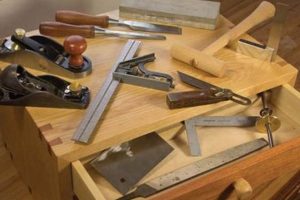
The relationship between organizational layout and the practical utility of a hanging woodworking tool cabinet can be further elucidated by examining real-world examples. Consider a cabinet designed for storing hand planes. A strategic layout would incorporate individual cradles or shelves specifically sized to accommodate each plane, preventing them from rubbing against each other and damaging the cutting edges. Drawers could be implemented to house honing stones and sharpening equipment, ensuring these essential accessories are readily available. Conversely, a cabinet with a haphazard layout might result in the planes being piled on top of each other, dulling the blades and potentially causing damage to the delicate wooden bodies. This emphasizes how the organizational layout directly impacts tool preservation and workflow optimization. The spatial design should also factor in frequency of use; commonly used tools should be placed in readily accessible locations, while less frequently used items can be stored in more remote or less convenient areas.
In summary, the organizational layout is not merely an aesthetic consideration but a fundamental component of a functional hanging woodworking tool cabinet. A thoughtfully designed layout maximizes storage capacity, protects tools from damage, and enhances workflow efficiency. The success of a woodworking tool cabinet hinges on a carefully considered organizational strategy that aligns with the specific tools being stored and the user’s individual work habits. Challenges in achieving an optimal layout may include limited space, a diverse range of tool sizes and shapes, and evolving storage needs. Despite these challenges, prioritizing organizational layout is essential to unlocking the full potential of a hanging woodworking tool cabinet and creating a productive and safe workspace.
7. Tool Protection

The implementation of a hanging woodworking tool cabinet serves as a proactive measure for tool protection, mitigating various forms of damage that can compromise functionality and longevity. Exposure to environmental elements, accidental impacts, and improper storage contribute to tool degradation, necessitating strategic solutions. A hanging cabinet provides a controlled environment, shielding tools from dust, moisture, and direct sunlight, each of which can accelerate corrosion, rust, and warping. The design of the cabinet, incorporating features such as enclosed compartments and secure fastening mechanisms, physically protects tools from accidental falls and impacts, preventing damage to delicate cutting edges and calibrated surfaces. For example, storing precision measuring instruments within a padded drawer of a hanging cabinet safeguards against inaccurate readings resulting from impacts. The absence of such a protective measure increases the likelihood of tool damage, leading to costly repairs or replacements and disrupting workflow.
The selection of appropriate materials for the cabinet’s construction further enhances tool protection. Wood, being a natural insulator, helps regulate temperature fluctuations within the cabinet, reducing the risk of condensation and subsequent corrosion. Furthermore, the use of felt-lined drawers and custom-fitted tool holders prevents tools from rubbing against each other, minimizing scratches and surface wear. In contrast, storing tools loosely in a drawer or on an open shelf exposes them to constant friction, accelerating wear and increasing the potential for damage. The strategic placement of the cabinet within the workshop also plays a crucial role in tool protection. Positioning the cabinet away from high-traffic areas and sources of vibration minimizes the risk of accidental impacts and further contributes to a controlled and stable environment for tool storage. Consideration of these factors ensures that the cabinet serves as a comprehensive protective barrier, safeguarding valuable woodworking implements from a range of potential threats.
In summary, the connection between tool protection and the implementation of a hanging woodworking tool cabinet is undeniable. By providing a controlled environment, physical shielding, and strategically chosen construction materials, the cabinet actively mitigates the risks of damage associated with environmental exposure, accidental impacts, and improper storage. Recognizing the significance of tool protection as an integral component of the cabinet’s design and implementation is essential for preserving the functionality, accuracy, and longevity of valuable woodworking tools, ultimately enhancing the efficiency and quality of woodworking projects. Ignoring this connection leads to preventable tool damage, increased maintenance costs, and a diminished woodworking experience.
Frequently Asked Questions
This section addresses common inquiries and clarifies key aspects regarding the selection, installation, and maintenance of hanging woodworking tool cabinets.
Question 1: What factors determine the appropriate size of a hanging woodworking tool cabinet?
The size of the cabinet is contingent upon the available wall space, the quantity and dimensions of the tools to be stored, and the desired level of organization. A comprehensive inventory of tools, coupled with an assessment of wall space limitations, will inform the optimal cabinet dimensions.
Question 2: What materials offer the best combination of durability and affordability for constructing a hanging woodworking tool cabinet?
Plywood, particularly Baltic birch plywood, represents a balance between structural integrity and cost-effectiveness. It exhibits dimensional stability, resistance to warping, and sufficient strength to support a substantial tool load. Hardwoods offer superior durability but are generally more expensive.
Question 3: What is the recommended method for securely mounting a hanging woodworking tool cabinet to a wall?
Locating and anchoring into wall studs is the most secure mounting method. When stud mounting is not feasible, heavy-duty drywall anchors or toggle bolts, rated for the anticipated load, should be employed. Adherence to the manufacturer’s installation instructions is paramount.
Question 4: How can the interior of a hanging woodworking tool cabinet be optimally organized to maximize storage efficiency?
Customized storage solutions, such as fitted shelves, dedicated drawers, and pegboards, tailored to the specific tools to be stored, maximize storage efficiency. Labeling compartments and implementing a logical organizational system further enhances accessibility.
Question 5: What steps can be taken to minimize dust accumulation within a hanging woodworking tool cabinet?
Sealed doors and drawers effectively minimize dust intrusion. Regular cleaning of the interior surfaces with a damp cloth is recommended. The application of an anti-static coating can further reduce dust attraction.
Question 6: How can the weight capacity of a hanging woodworking tool cabinet be accurately determined?
The weight capacity is primarily determined by the materials used in construction and the strength of the mounting hardware. Consulting engineering load tables for specific materials and adhering to the manufacturer’s specifications for mounting hardware provides a reliable estimate. A safety factor should be incorporated to account for potential overloads.
Effective implementation of a hanging woodworking tool cabinet necessitates careful planning, material selection, secure mounting, and thoughtful organization. Prioritizing these aspects ensures a safe, efficient, and durable storage solution.
The subsequent section will explore advanced customization options and design modifications for hanging woodworking tool cabinets.
Conclusion
The preceding sections have explored the multifaceted considerations surrounding the implementation of a hanging woodworking tool cabinet. From material selection and mounting security to organizational layout and tool protection, the efficacy of this storage solution hinges upon a holistic approach that prioritizes both structural integrity and functional design. The hanging woodworking tool cabinet, when properly executed, transcends the role of mere storage, becoming an integral component of an efficient and safe woodworking environment.
The informed application of these principles will yield a durable and practical system for tool management. Further exploration of advanced design modifications and customization options is encouraged to optimize the tool cabinet to specific workshop needs. Prioritizing safety and efficiency remains paramount in the ongoing pursuit of enhanced woodworking practices.