



Instruments employed in the craft of shaping wood through rotational cutting are essential for creating symmetrical, decorative, and functional objects. These implements, manipulated against a spinning workpiece, allow for the removal of material to achieve a desired form. A common application involves fashioning items like bowls, spindles, and furniture components.
The utility of these specialized implements resides in their capacity to produce intricate designs and consistent forms with relative efficiency. Historically, their development has paralleled advancements in lathe technology, resulting in a diverse array of shapes and sizes designed for specific tasks. Their application enhances productivity and enables the creation of objects that would be difficult or impossible to produce by hand alone.
The subsequent sections will delve into specific types of these implements, examining their proper usage, maintenance, and selection criteria for diverse applications and skill levels. Considerations will include factors such as steel quality, handle design, and sharpening techniques, all crucial for achieving optimal results in rotational wood shaping.
Guidance on Rotational Wood Shaping Implements
The following points offer guidance on the selection, maintenance, and usage of implements critical for achieving precision and safety in the rotational wood shaping process.
Tip 1: Steel Quality Assessment: Prioritize implements crafted from high-speed steel (HSS) or powdered metal alloys. These materials maintain sharpness longer and are more resistant to heat buildup compared to carbon steel, leading to improved cutting performance and extended lifespan.
Tip 2: Handle Ergonomics: Opt for handles constructed from hardwood or composite materials that provide a secure and comfortable grip. The handle’s shape and length should correspond to the user’s hand size and the specific task, minimizing fatigue and maximizing control.
Tip 3: Sharpening Frequency: Establish a consistent sharpening schedule using appropriate grinding and honing techniques. Dull implements require more force to cut, increasing the risk of catches and potential injury. Regular sharpening maintains optimal cutting efficiency and promotes safer operation.
Tip 4: Proper Tool Rest Positioning: Position the implement support as close as possible to the workpiece and at the correct height, typically slightly above the lathe’s centerline. Secure the support firmly to prevent movement and ensure stable implement control during cutting operations.
Tip 5: Cutting Angle and Technique: Employ a shearing cut, presenting the implement at a slight angle to the wood grain. Avoid digging the implement straight into the wood, as this can cause catches or splintering. Practice consistent and controlled movements to achieve smooth and accurate cuts.
Tip 6: Regular Inspection: Routinely examine implements for signs of damage, such as cracks, chips, or loose handles. Replace or repair any damaged implements immediately to prevent potential hazards and maintain optimal performance.
Tip 7: Utilize Appropriate Safety Gear: Always wear appropriate personal protective equipment, including eye protection and a dust mask or respirator. These precautions mitigate the risk of injury from flying debris and inhalation of wood dust.
The effective application of these implements relies on a combination of proper tool selection, meticulous maintenance, and adherence to safe operating procedures. These practices are paramount for achieving high-quality results and ensuring the safety of the operator.
Subsequent discussions will examine advanced techniques and specialized applications within the field of rotational wood shaping.
1. Cutting-edge geometry

The configuration of the cutting edge on rotational wood shaping implements fundamentally dictates their performance and suitability for specific tasks. The angles, curves, and overall shape of the edge determine how efficiently the implement removes material, the surface finish it produces, and the level of control the user can maintain.
- Bevel Angle and Its Impact on Cutting Action
The bevel angle, the angle formed between the cutting edge and the tool’s face, directly influences the sharpness and aggressiveness of the cut. A steeper bevel angle creates a more robust edge suitable for roughing operations but requires more force. A shallower angle produces a keener edge for fine detailing but is more susceptible to damage. Understanding the appropriate bevel angle for a given task is crucial for effective material removal and tool longevity.
- Nose Shape and Its Effect on Surface Finish
The nose shape, or the curvature of the cutting edge, influences the surface finish produced. A rounded nose, common on roughing gouges, allows for smooth, sweeping cuts that remove large amounts of material. A pointed or flat nose, found on detail implements, facilitates precise shaping and intricate detailing. The proper selection of nose shape is essential for achieving the desired surface quality and aesthetic.
- Grind Profile and Its Role in Tool Control
The grind profile, the overall shape of the cutting edge and the surrounding area, affects the tool’s handling characteristics and stability. A properly ground implement will track smoothly along the wood, resist catching, and provide consistent cutting action. A poorly ground implement can be unpredictable and difficult to control, increasing the risk of accidents and compromising the quality of the workpiece.
- Clearance Angle and Its Influence on Friction
The clearance angle, the angle between the back of the implement and the workpiece, minimizes friction and prevents the implement from rubbing against the wood. Insufficient clearance can lead to excessive heat buildup, premature dulling of the cutting edge, and reduced control. Maintaining an adequate clearance angle is essential for efficient cutting and prolonged tool life.
In summary, the various facets of cutting-edge geometry are intertwined, and a comprehensive understanding of their interplay is vital for maximizing the performance and safety of rotational wood shaping implements. The careful selection and maintenance of appropriate edge geometries are hallmarks of skilled practitioners and contribute directly to the creation of high-quality, aesthetically pleasing wood objects.
2. Steel Composition

The selection of steel for rotational wood shaping implements directly impacts their performance, durability, and overall suitability for the craft. The specific alloy composition dictates the implement’s ability to maintain a sharp edge, resist wear, and withstand the stresses encountered during wood removal.
- High-Speed Steel (HSS) and Edge Retention
HSS alloys, characterized by tungsten, molybdenum, chromium, and vanadium content, exhibit superior hardness and heat resistance compared to carbon steel. This composition allows HSS implements to retain a sharp cutting edge for extended periods, minimizing the need for frequent sharpening. The increased edge retention is particularly crucial for demanding operations involving hardwoods or prolonged use.
- Carbon Steel and Sharpening Ease
Carbon steel variants offer ease of sharpening and are capable of achieving a very keen edge. However, their lower hardness and heat resistance result in more frequent sharpening requirements. They are often favored for initial training or for applications involving softer woods where edge retention is less critical.
- Powdered Metallurgy Steels and Wear Resistance
Powdered metallurgy (PM) steels, produced through a specialized process of compacting and sintering metal powders, offer exceptional wear resistance and toughness. These alloys, often containing high levels of vanadium and other carbide-forming elements, exhibit superior performance in abrasive environments. PM steel implements are typically more expensive but offer increased longevity and reduced maintenance requirements.
- Cryogenic Treatment and Hardness Enhancement
Cryogenic treatment, involving subjecting the steel to extremely low temperatures, can further enhance its hardness and wear resistance. This process promotes the formation of fine carbides within the steel microstructure, resulting in improved cutting performance and extended tool life. Cryogenically treated implements represent a premium option for discerning woodworkers seeking optimal performance and durability.
In summary, the choice of steel composition for rotational wood shaping implements should be based on a careful consideration of factors such as intended use, wood type, budget, and desired level of performance. Selecting the appropriate steel alloy is essential for achieving optimal results and ensuring the longevity of these critical instruments.
3. Handle ergonomics

Handle design profoundly impacts the usability and safety of rotational wood shaping implements. The interface between the tool and the operator’s hand dictates the level of control, precision, and comfort achieved during shaping operations. An ergonomically sound handle minimizes strain, reduces fatigue, and maximizes the effective transmission of force from the user to the cutting edge. Conversely, a poorly designed handle can contribute to discomfort, reduced accuracy, and increased risk of injury. An example is using a spindle gouge with a short, cylindrical handle during a long turning session, potentially leading to hand cramping and reduced control, thereby increasing the likelihood of a catch.
Considerations in handle ergonomics include material selection, shape, length, and surface texture. Hardwoods like maple or ash, as well as composite materials, offer durability and resistance to wear. Handle shape influences grip security and hand positioning; contours that conform to the natural curves of the hand promote a more comfortable and controlled grip. Length affects leverage and reach; longer handles provide increased leverage for roughing operations, while shorter handles offer enhanced maneuverability for detailed work. Surface texture, whether through knurling, texturing, or finishing, enhances grip and reduces the risk of slippage, particularly when hands are sweaty or dusty. These elements work in concert to affect the overall quality of the tool.
Understanding the connection between handle design and tool performance is crucial for practitioners seeking to optimize their rotational wood shaping experience. Selecting implements with ergonomically designed handles not only enhances comfort and reduces fatigue but also improves precision, control, and overall safety. The implementation of ergonomic designs serves to mitigate risks associated with repetitive motions and sustained exertion, contributing to the longevity and sustainability of the craft. Therefore, investing in implements featuring thoughtfully engineered handles represents a strategic investment in the operator’s well-being and the quality of their work.
4. Sharpening proficiency

Maintaining and restoring the cutting edges of rotational wood shaping implements is paramount for achieving optimal performance, precision, and safety. Proficiency in sharpening techniques directly influences the quality of the finished product, the efficiency of material removal, and the lifespan of the implements themselves.
- Grinding Wheel Selection and Its Impact on Edge Geometry
The choice of grinding wheel material, grit size, and profile significantly affects the outcome of the sharpening process. Aluminum oxide wheels are commonly used for general-purpose grinding, while CBN (cubic boron nitride) or diamond wheels offer superior performance with hardened steels. The correct grit size ensures efficient material removal without overheating or damaging the edge. Wheel profile shapes, such as flat or radiused, are selected based on the desired cutting-edge geometry of the implement. Incorrect wheel selection can lead to uneven bevels, reduced edge sharpness, or premature wear of the grinding wheel.
- Honing Techniques and the Refinement of Cutting Edges
Honing involves using fine-grit stones or strops to remove microscopic imperfections and burrs from the cutting edge, resulting in a razor-sharp finish. This process improves the implement’s cutting efficiency and reduces the likelihood of tear-out or chipping. Proper honing techniques, including maintaining the correct angle and applying consistent pressure, are essential for achieving a polished and durable edge. Neglecting honing can leave the edge rough and prone to dulling quickly.
- Angle Control and Its Influence on Cutting Performance
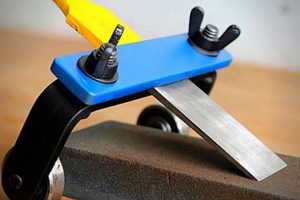
Maintaining the correct bevel angle during sharpening is critical for ensuring optimal cutting performance and tool longevity. A consistent angle allows the implement to slice cleanly through the wood fibers, producing a smooth surface finish and minimizing the force required. Deviations from the correct angle can result in a weak or ineffective cutting edge, leading to increased effort and potential workpiece damage. Jigs and fixtures are often used to assist in maintaining consistent angles during sharpening.
- Burr Removal and Its Importance for Edge Sharpness
The grinding process typically creates a small burr, or wire edge, on the back of the implement. This burr must be removed to achieve a truly sharp cutting edge. Methods for burr removal include using a honing stone, a strop, or a specialized deburring tool. Failing to remove the burr results in a fragile and ineffective edge that will quickly dull during use. Proper burr removal is a crucial step in the sharpening process, and is the most important element to proper sharpening.
In conclusion, proficiency in sharpening encompasses a range of skills and techniques that are indispensable for the effective use of rotational wood shaping implements. By mastering the selection of appropriate sharpening tools, honing techniques, angle control, and burr removal, practitioners can ensure that their implements are always in optimal condition, resulting in improved performance, enhanced safety, and superior quality woodworking.
5. Lathe compatibility

The successful application of rotational wood shaping implements hinges critically on their compatibility with the lathe being used. This compatibility encompasses a range of factors that affect the stability, precision, and safety of the wood shaping process. Mismatched implements and lathes can lead to compromised results and potential hazards.
- Shank Size and Lathe Tool Rest Dimensions
The shank diameter of a wood shaping implement must correspond appropriately with the dimensions of the lathe’s tool rest. An undersized shank may not be adequately supported, leading to vibration and reduced control. Conversely, an oversized shank may not fit properly in the tool rest, preventing secure positioning and increasing the risk of movement during operation. Proper matching of shank size and tool rest dimensions is essential for stable and controlled cutting.
- Implement Length and Lathe Swing Capacity
The overall length of a wood shaping implement, when combined with the size of the workpiece, must be compatible with the lathe’s swing capacity (the maximum diameter that can be turned). Using an implement that extends beyond the lathe’s capacity can result in collisions with the lathe bed or other components, potentially damaging the machine or causing injury. Careful consideration of implement length in relation to lathe swing is vital for safe operation.
- Implement Weight and Lathe Stability
The weight of a wood shaping implement, particularly larger roughing gouges or heavier hollowing implements, can affect the stability of the lathe. Lightweight lathes may vibrate excessively when used with heavy implements, compromising precision and potentially causing instability. Matching the implement weight to the lathe’s capacity and construction is important for maintaining stability and achieving consistent results.
- Tool Rest Design and Implement Support
Different lathe tool rest designs may be better suited for specific types of wood shaping implements. For example, a banjo-style tool rest with a narrow base may be adequate for small spindle implements but insufficient for supporting larger bowl gouges during heavy cuts. The tool rest design should provide adequate support and stability for the type of implement being used. Some advanced toolrests have indexible arms for extended reaches or specialized tasks.
In conclusion, achieving optimal results and ensuring safe operation with rotational wood shaping relies on a comprehensive evaluation of lathe compatibility. Factors such as shank size, implement length, weight, and tool rest design must be considered to ensure a stable, controlled, and efficient wood shaping process. Proper matching of implements and lathes is a hallmark of skilled practitioners and a key factor in the creation of high-quality, safely produced wood objects.
6. Material application

The selection and application of specific materials in conjunction with rotational wood shaping implements are integral to the outcome of any woodworking project. The characteristics of the chosen material directly influence the selection of shaping implements, the techniques employed, and the final aesthetic qualities of the finished piece.
- Wood Density and Tool Selection
The density of the wood species dictates the type of implement best suited for the task. Denser hardwoods, such as maple or ebony, require implements with high-speed steel (HSS) or powdered metallurgy (PM) blades to maintain sharpness and resist wear. Softer woods, like pine or basswood, can be effectively shaped with carbon steel implements, though more frequent sharpening may be necessary. Utilizing an inappropriate implement for the material density can result in inefficient cutting, tool damage, or a compromised finish.
- Grain Orientation and Cutting Techniques
The orientation of the wood grain relative to the cutting edge of the implement significantly impacts the surface finish and the ease of shaping. Working with the grain typically produces a smoother cut and minimizes tear-out, while cutting against the grain can result in a rougher surface and increased risk of splintering. Understanding grain direction and adapting cutting techniques accordingly are essential for achieving a consistent and aesthetically pleasing result. For example, creating a bowl from wood with a swirling grain pattern demands nuanced tool control and a keen awareness of grain direction to prevent catches and maintain a smooth curve.
- Material Moisture Content and Shaping Stability
The moisture content of the wood influences its dimensional stability and ease of shaping. Wet or “green” wood is easier to shape but is prone to warping or cracking as it dries. Dry wood is more stable but requires sharper implements and greater force to cut. Careful consideration of moisture content and appropriate drying techniques are necessary to minimize distortion and ensure the longevity of the finished piece. A novice turner attempting to shape a green bowl without accounting for shrinkage may find that the finished product warps excessively as it dries, negating their efforts.
- Material Defects and Shaping Strategies
The presence of knots, checks, or other defects within the wood necessitates careful planning and adaptation of shaping strategies. Implements must be selected and techniques modified to navigate around defects and minimize their impact on the final form. For instance, a large knot in a spindle blank might require using a more robust gouge and employing a shearing cut to prevent tear-out and maintain a smooth surface. Ignoring defects can result in tool damage, workpiece failure, or an aesthetically compromised finished product. Seasoned turners will often integrate inherent defects into the design of their work.
In summation, effective material application in rotational wood shaping necessitates a comprehensive understanding of the material’s properties and their interaction with the chosen implements. By carefully considering factors such as wood density, grain orientation, moisture content, and material defects, practitioners can optimize their shaping techniques, minimize risks, and achieve aesthetically pleasing and structurally sound results. The skillful integration of material knowledge with implement mastery is a hallmark of accomplished woodworkers.
7. Safety practices

The operation of rotational wood shaping implements demands a rigorous adherence to established safety protocols. The inherent dangers associated with high-speed rotation, sharp cutting edges, and the potential for flying debris necessitate a proactive and informed approach to risk mitigation. Neglecting safety practices introduces significant potential for personal injury and damage to equipment. The forceful ejection of a workpiece due to a catch, for example, underscores the immediate need for protective measures and vigilant operational oversight.
The connection between effective safety protocols and the successful utilization of rotational wood shaping tools is direct and causal. Appropriate personal protective equipment (PPE), including eye protection and respiratory protection, is essential to safeguard against flying particles and wood dust inhalation. Maintaining a clean and organized workspace minimizes tripping hazards and ensures unimpeded access to emergency shut-off mechanisms. Regular inspection of implements for damage or wear is crucial for preventing tool failure during operation. Furthermore, a thorough understanding of the lathe’s operating manual and adherence to recommended speed settings are paramount for preventing catastrophic events.
The integration of stringent safety practices is not merely an adjunct to the craft of wood shaping; it is an intrinsic component. Diligence in applying these practices safeguards the operator, protects the equipment, and ultimately promotes a more productive and fulfilling woodworking experience. The consequences of neglecting safety, however, extend from minor cuts and abrasions to severe injuries and equipment damage, reinforcing the necessity of unwavering adherence to established safety guidelines.
Frequently Asked Questions
This section addresses common inquiries and misconceptions regarding instruments employed in rotational wood shaping. The information presented aims to provide clarity and promote safe and effective utilization of these implements.
Question 1: What distinguishes a bowl gouge from a spindle gouge?
Bowl gouges, designed for shaping the interiors and exteriors of bowls, exhibit a deeper flute and a more robust construction to withstand the stresses of transverse turning. Spindle gouges, conversely, possess a shallower flute and are intended for shaping spindles between centers, where the forces are primarily longitudinal. Utilizing a spindle gouge for bowl turning is not recommended due to the increased risk of catches and tool failure.
Question 2: How often should rotational wood shaping implements be sharpened?
Sharpening frequency depends on factors such as wood density, cutting technique, and steel composition. As a general guideline, implements should be sharpened whenever a noticeable decline in cutting performance is observed. A dull implement requires increased force to cut, increasing the risk of catches and compromising the surface finish.
Question 3: What is the purpose of a diamond hone for these instruments?
Diamond hones are used for refining the cutting edge after grinding, removing microscopic imperfections and burrs that can affect cutting performance. Honing produces a razor-sharp edge that slices cleanly through wood fibers, minimizing tear-out and improving the surface finish. Diamond hones are particularly effective for hardened steels that resist traditional honing methods.
Question 4: What safety precautions should be observed when using rotational wood shaping implements?
Essential safety precautions include wearing appropriate eye protection to guard against flying debris and respiratory protection to prevent inhalation of wood dust. The implement support must be positioned close to the workpiece and securely fastened to prevent movement. Work should progress with controlled cuts, avoiding excessive force or aggressive angles that can lead to catches.
Question 5: What role does steel composition play in the performance of these instruments?
Steel composition profoundly affects the implement’s ability to maintain a sharp edge, resist wear, and withstand the stresses of cutting. High-speed steel (HSS) alloys exhibit superior hardness and heat resistance compared to carbon steel, resulting in improved cutting performance and extended tool life. Powdered metallurgy (PM) steels offer exceptional wear resistance for demanding applications.
Question 6: How does handle length influence the control and safety of these instruments?
Handle length affects leverage and maneuverability. Longer handles provide increased leverage for roughing operations and shaping larger workpieces. Shorter handles offer enhanced maneuverability for detailed work and intricate shaping. The handle length should correspond to the user’s hand size and the specific task, optimizing control and minimizing fatigue.
Proficient utilization of rotational wood shaping instruments rests upon a foundation of knowledge, skill, and consistent adherence to safety protocols. The information presented here serves as a guide for practitioners seeking to enhance their understanding and mastery of this craft.
Future sections will explore specific applications and advanced techniques within the domain of rotational wood shaping.
Conclusion
The preceding sections have presented a comprehensive overview of implements employed in rotational wood shaping, emphasizing the critical interplay between material properties, tool design, and operator technique. Factors such as steel composition, cutting-edge geometry, handle ergonomics, and lathe compatibility have been explored in detail, underscoring their individual and collective influence on the quality, efficiency, and safety of the woodworking process. Proper sharpening practices and stringent adherence to safety protocols have been identified as indispensable elements of skilled craftsmanship.
Continued advancements in materials science and manufacturing techniques promise to further refine the capabilities of these instruments, enhancing their performance and expanding the possibilities for creative expression in wood. A commitment to ongoing education and a dedication to mastering the fundamental principles outlined herein are essential for practitioners seeking to excel in this demanding and rewarding art form. A thorough comprehension and skillful application of these principles enable the creation of functional and aesthetically refined wood objects, contributing to the rich legacy of woodworking.



![Best Multi Tool Woodworking Station [Guide] | Step-by-Step Guides, Tools & Inspiration to Build Beautiful Wooden Decor on a Budget](https://woodfromhome.com/wp-content/uploads/2026/04/th-259-300x200.jpg "Best Multi Tool Woodworking Station [Guide] Step-by-Step Guides, Tools & Inspiration to Build Beautiful Wooden Decor on a Budget")