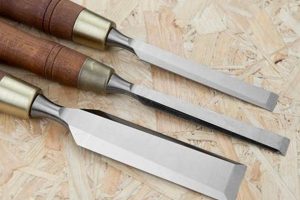
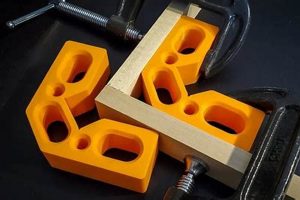
Leitz is a manufacturer specializing in equipment used for shaping and cutting wood. This equipment encompasses a broad range of products, including saw blades, cutter heads, and tooling systems tailored for various woodworking applications. These tools find common use in furniture production, cabinet making, and construction, enabling precision and efficiency in processing wooden materials.
The importance of such equipment lies in its ability to enhance productivity and improve the quality of finished wood products. Precision tooling contributes to minimizing waste, reducing the need for rework, and ensuring consistent results across large production runs. Historically, advancements in cutting tool technology have played a critical role in the evolution of woodworking practices, enabling more complex designs and streamlined manufacturing processes.
This article will explore the specific types of cutting equipment offered, their applications within diverse woodworking sectors, and factors to consider when selecting the appropriate solution for a given project or manufacturing environment. Further analysis will address maintenance requirements and best practices to prolong equipment lifespan and ensure optimal performance.
Tips for Maximizing Performance with Precision Woodworking Equipment
The following tips are designed to optimize the utilization and longevity of high-precision woodworking equipment, leading to increased efficiency and superior results in wood processing operations.
Tip 1: Select the Correct Tool Geometry: Matching the cutting tool geometry to the specific wood species and application is paramount. Hardwoods necessitate different angles and carbide grades compared to softwoods or composite materials. Consult manufacturer specifications for optimal performance.
Tip 2: Implement Regular Tool Inspection: Consistent inspection of cutting edges for wear, damage, or buildup is critical. Dull or damaged tools degrade cut quality, increase power consumption, and can pose safety hazards. Scheduled inspection intervals should be established based on tool usage and material type.
Tip 3: Adhere to Recommended Operating Parameters: Precise adherence to recommended feed rates and spindle speeds, as specified by the manufacturer, is crucial for achieving optimal cut quality and extending tool life. Deviation from these parameters can lead to premature wear, breakage, or compromised surface finishes.
Tip 4: Employ Appropriate Chip Extraction Systems: Effective chip extraction is essential for maintaining consistent cutting performance and preventing overheating of the tool and workpiece. A properly designed and maintained dust collection system ensures efficient chip removal and reduces the risk of fire.
Tip 5: Utilize Proper Lubrication and Cooling: Certain woodworking applications benefit from the use of lubricants or coolants to reduce friction, dissipate heat, and improve surface finish. Select lubricants compatible with both the tooling and the wood species being processed, and adhere to recommended application procedures.
Tip 6: Implement a Rigorous Sharpening Program: Establishing a schedule for professional sharpening of cutting tools is essential for maintaining consistent performance and extending tool life. Employ a qualified sharpening service with the necessary expertise and equipment to restore tools to their original specifications.
Tip 7: Ensure Proper Machine Calibration and Maintenance: The accuracy and stability of woodworking machinery are critical for achieving precise cuts and preventing tool damage. Regular calibration of machinery, along with adherence to a preventive maintenance schedule, is essential for maintaining optimal performance.
By diligently implementing these tips, woodworking operations can significantly enhance the performance, longevity, and overall value of their precision cutting equipment.
The subsequent sections will delve into specific application scenarios and advanced techniques for further optimizing woodworking processes.
1. Precision Cutting
Precision cutting, a cornerstone of modern woodworking, relies heavily on the capabilities of specialized equipment. The equipment is engineered to deliver consistent, accurate results across a variety of wood types and applications. The link between the equipment and precision cutting lies in the design, materials, and manufacturing processes employed to create these tools.
- Tool Geometry and Material Science
The geometry of a cutting tool, including factors such as cutting angle, rake angle, and clearance angle, directly impacts the quality of the cut. High-precision tools utilize advanced material science to select optimal carbide grades and coatings that resist wear and maintain sharpness over extended periods. For example, a tool designed for hardwood cutting will possess a steeper cutting angle and a more durable carbide composition than one intended for softwood.
- Manufacturing Tolerances and Quality Control
The manufacturing process for precision tools demands adherence to extremely tight tolerances. Variations in dimensions, even on the micron scale, can compromise cutting accuracy and surface finish. Rigorous quality control measures, including advanced inspection techniques and statistical process control, are implemented to ensure consistency and minimize deviations from design specifications. For instance, a saw blade must exhibit consistent tooth height and spacing to produce a smooth, even cut.
- Machine Integration and System Compatibility
The performance of a cutting tool is inextricably linked to the machine in which it is used. Precision cutting requires proper machine calibration, vibration damping, and spindle speed control. System compatibility ensures that the tool is appropriately matched to the machine’s capabilities and that both components work in harmony to achieve optimal results. For example, a high-speed router bit requires a router capable of maintaining precise spindle speeds and minimizing vibration.
- Application-Specific Design
Precision cutting is not a one-size-fits-all proposition. Different woodworking applications require tools designed to meet specific needs. Factors such as wood species, cutting depth, and desired surface finish influence tool selection. Specialized tools, such as those designed for dado cutting, rabbeting, or profiling, are engineered to optimize performance for those particular tasks. The design tailored to a specific application will yield superior results compared to a general-purpose tool.
The facets discussed underscore the significance of advanced design, manufacturing, and application considerations. The synergy between these elements is essential for achieving precision cutting in woodworking. By carefully selecting and maintaining their equipment, woodworkers can enhance productivity, minimize waste, and produce high-quality finished products.
2. Material Compatibility

Material compatibility, in the context of woodworking, refers to the interaction between the cutting tool and the material being processed. The correct selection of cutting equipment is critical to achieving optimal performance, preventing premature tool wear, and ensuring the quality of the finished product. The tools used must be carefully matched to the properties of the wood or composite material being cut.
- Carbide Grade and Hardness
The grade and hardness of the carbide used in cutting tool construction significantly impact its performance across different wood species. Hardwoods, such as oak and maple, necessitate tools with higher carbide grades to resist abrasion and maintain sharpness. Conversely, softer woods, like pine or cedar, may be efficiently processed with tools featuring lower carbide grades. Utilizing an inappropriate carbide grade can lead to rapid tool wear, increased cutting forces, and compromised surface finishes. For example, attempting to cut exotic hardwoods with a tool designed for softwoods will result in blunted edges and increased splintering.
- Cutting Geometry and Tooth Configuration
The geometry of the cutting edge and the configuration of the teeth on saw blades or cutter heads are optimized for specific material types. Tools designed for cutting solid wood often feature different rake angles and gullet depths than those intended for processing composite materials such as MDF or particleboard. Using the wrong geometry can result in tear-out, chipping, and excessive heat buildup. For instance, a saw blade with an aggressive hook angle may produce a rough cut when used on veneered plywood, while a blade with a shallower hook angle may provide a cleaner cut with less damage to the veneer.
- Coating and Surface Treatment
Coatings and surface treatments applied to cutting tools can enhance their performance and longevity when working with certain materials. Coatings such as titanium nitride (TiN) or diamond-like carbon (DLC) reduce friction, prevent material buildup, and increase wear resistance. These coatings are particularly beneficial when processing abrasive materials or working with resinous woods. A tool with a specialized coating may maintain its sharpness for a longer period, resulting in increased productivity and reduced downtime for tool changes.
- Thermal Properties and Heat Dissipation
The thermal properties of both the cutting tool and the workpiece play a crucial role in material compatibility. Excessive heat buildup during cutting can lead to tool deformation, material burning, and reduced cut quality. Tools must be designed to efficiently dissipate heat, and appropriate cutting parameters, such as feed rate and spindle speed, must be selected to minimize thermal stress. For example, cutting a thick hardwood at an excessive feed rate can generate significant heat, potentially leading to tool failure or scorching of the wood.
Consideration of material compatibility is an essential aspect of woodworking practices. By selecting the correct tool for the specific material being processed, woodworkers can optimize performance, reduce waste, and produce high-quality finished products.
3. Tool Geometry

Tool geometry, referring to the precise angles and shapes of cutting edges, forms a critical element in the functionality and performance of Leitz woodworking tools. The design of these geometric features directly impacts the efficiency, accuracy, and quality of woodworking operations performed with Leitz equipment. Understanding the relationship between tool geometry and specific woodworking applications is essential for optimizing outcomes.
- Cutting Angle and Material Interaction
The cutting angle, defined as the angle between the cutting edge and the workpiece, governs the way a tool interacts with wood fibers. A steeper cutting angle is typically employed for harder materials, facilitating efficient chip removal and minimizing tear-out. Leitz tools offer various cutting angles optimized for different wood species and composite materials. Improper selection can lead to increased cutting forces, reduced tool life, and compromised surface finish.
- Rake Angle and Chip Formation
The rake angle, the angle between the cutting face and a line perpendicular to the cutting direction, influences chip formation and cutting force. A positive rake angle promotes aggressive cutting action and reduces power consumption, while a negative rake angle provides increased strength and durability. Leitz offers tools with varying rake angles tailored to specific machining processes and material characteristics. The relationship between rake angle and chip formation is essential for optimal surface quality and tool performance.
- Clearance Angle and Friction Reduction
The clearance angle, the angle between the back of the cutting edge and the workpiece, minimizes friction and prevents rubbing. Adequate clearance is essential for reducing heat buildup, preventing tool wear, and ensuring a clean cut. Leitz designs its tools with optimized clearance angles to enhance efficiency and extend tool life. Insufficient clearance can lead to increased friction, heat generation, and premature tool failure.
- Shear Angle and Surface Finish
The shear angle, the angle between the cutting edge and a plane perpendicular to the cutting direction, affects the smoothness of the cut surface. A higher shear angle promotes a slicing action, producing a cleaner and more refined finish. Leitz utilizes shear angles in select tools to minimize tear-out and improve surface quality, particularly in challenging wood species. Proper management of the shear angle is a key factor in achieving desired surface characteristics.
The interplay between these geometric features defines the overall performance characteristics of Leitz woodworking tools. By carefully considering the specific application and material properties, users can select tools with appropriate geometry to maximize efficiency, precision, and surface quality. The correlation between tool geometry and performance underscores the importance of proper tool selection and maintenance in achieving optimal woodworking outcomes with Leitz equipment.
4. Maintenance Protocols

Adherence to rigorous maintenance protocols directly influences the performance, longevity, and safety of woodworking equipment. For Leitz woodworking tools, specific maintenance procedures are essential to preserving their precision and operational efficiency. Implementing a structured maintenance program helps to mitigate downtime, reduce repair costs, and ensure consistent quality in woodworking applications.
- Regular Cleaning and Lubrication
Accumulation of wood dust, resin, and debris can negatively impact the function of moving parts and cutting surfaces. Regular cleaning, using appropriate solvents and brushes, is essential to prevent these accumulations. Lubrication of bearings, spindles, and other critical components minimizes friction, reduces wear, and ensures smooth operation. Neglecting these basic tasks can lead to premature failure and increased maintenance costs. For example, failing to clean a Leitz saw blade can result in increased heat buildup and reduced cutting efficiency.
- Sharpening and Edge Maintenance
The sharpness of cutting edges directly affects the quality of the cut and the power consumption of the tool. Regular sharpening of saw blades, router bits, and cutter heads is necessary to maintain optimal performance. Utilizing specialized sharpening equipment and techniques preserves the original geometry of the cutting edge. Neglecting sharpening leads to increased cutting forces, rough surfaces, and potential damage to the tool and workpiece. Specifically, dull Leitz cutter heads will produce uneven surfaces and require more sanding.
- Inspection and Component Replacement
Periodic inspection of Leitz woodworking tools is critical for identifying worn or damaged components. Inspecting bearings for play, checking for cracks or deformities, and assessing the condition of wear parts allows for timely replacement before a major failure occurs. Implementing a proactive replacement schedule minimizes downtime and prevents secondary damage. For instance, worn bearings in a Leitz spindle can lead to vibration and inaccurate cuts, potentially damaging both the tool and the material.
- Calibration and Alignment Verification
Precise calibration and alignment are fundamental to achieving accurate and consistent results with Leitz woodworking tools. Regular verification of spindle alignment, fence parallelism, and table flatness ensures that the tool operates within specified tolerances. Deviations from proper alignment can lead to dimensional inaccuracies, poor surface finishes, and increased material waste. Periodically calibrating a Leitz CNC router is essential for maintaining its precision and repeatability.
These maintenance protocols, when consistently applied, contribute significantly to maximizing the value and extending the service life. By prioritizing preventive maintenance, woodworking operations can minimize disruptions, maintain consistent quality, and ensure the reliable performance required for demanding woodworking applications. The proper execution of these protocols safeguards the investment made and facilitates efficient and productive use.
5. Performance Optimization

Performance optimization, with respect to Leitz woodworking tools, is intrinsically linked to the attainment of maximum efficiency, precision, and longevity from these specialized pieces of equipment. The relationship is causal: implementing strategies to optimize performance directly translates to tangible benefits in woodworking operations. It signifies achieving the best possible output in terms of cut quality, speed, and tool life, while minimizing waste and downtime. This optimization hinges on a thorough understanding of tool capabilities, material properties, and application-specific requirements.
Performance enhancement is a multifaceted component of Leitz woodworking tools. Proper tool selection, based on the material being processed and the desired outcome, constitutes the initial step. Subsequent steps involve adherence to recommended operating parameters, including feed rates and spindle speeds. Rigorous maintenance practices, encompassing regular cleaning, sharpening, and inspection, play a crucial role in sustaining performance. For example, consider a Leitz diamond-tipped saw blade used for cutting abrasive composite materials. Without regular cleaning to remove resin buildup, the blade’s cutting efficiency will diminish, leading to increased heat generation and accelerated wear. Similarly, failing to properly calibrate a Leitz CNC router will compromise its accuracy and repeatability, resulting in dimensional inaccuracies and increased scrap rates. The significance of performance optimization extends beyond individual tool usage; it is integral to the overall efficiency and profitability of woodworking businesses.
The challenges associated with performance optimization often stem from a lack of understanding of tool capabilities or insufficient attention to maintenance protocols. Overcoming these challenges requires a commitment to ongoing training, the implementation of robust maintenance schedules, and the adoption of data-driven decision-making. Ultimately, performance optimization is not a one-time event but a continuous process of improvement. By embracing a holistic approach to performance management, woodworking operations can unlock the full potential of Leitz woodworking tools and achieve sustainable competitive advantages.
6. Application Specificity

Application specificity is a fundamental consideration in the effective utilization of Leitz woodworking tools. The term refers to the precise matching of tool design and capabilities to the particular requirements of a given woodworking task. The cause-and-effect relationship is direct: selecting a tool specifically designed for an application leads to improved efficiency, accuracy, and surface quality, while using an inappropriate tool can result in substandard results, increased tool wear, and potential safety hazards. Application specificity is not merely a desirable attribute; it is an essential component of maximizing the value and performance of these instruments.
Consider, for example, the task of creating intricate profiles on cabinet doors. A general-purpose router bit may be capable of removing material, but a Leitz profiling cutter head, designed specifically for this purpose, will deliver a significantly superior finish with less tear-out and greater dimensional accuracy. Similarly, when cutting melamine-faced particleboard, a standard saw blade will often produce chipping along the cut edges. A Leitz saw blade with a specialized tooth geometry and scoring blades, engineered for minimizing chipping in laminated materials, will yield a clean, professional-grade cut. These examples illustrate the practical significance of understanding the specific capabilities and limitations of different tools.
The practical significance of understanding application specificity also extends to tool maintenance and longevity. Using a tool within its intended application range reduces stress on the cutting edges and components, thereby extending its service life and minimizing the need for premature replacement. Moreover, selecting the appropriate tool often translates to reduced power consumption, lower noise levels, and a safer working environment. The understanding of application requirements, coupled with informed tool selection, is paramount for achieving optimal performance and realizing the full potential of Leitz woodworking tools.
Frequently Asked Questions About Leitz Woodworking Tools
The following addresses commonly asked questions regarding Leitz woodworking tools. The intention is to provide clear, concise information about their functionality, maintenance, and application.
Question 1: What factors influence the selection of a Leitz saw blade for a specific wood type?
The selection process should consider wood hardness, grain orientation, and desired finish. Harder woods necessitate blades with more teeth and a higher rake angle. Blades intended for softwood often feature fewer teeth and a more aggressive cutting angle. Grain orientation dictates the blade’s tendency to cause tear-out. Fine-toothed blades mitigate tear-out when cutting against the grain.
Question 2: How often should Leitz router bits be sharpened?
Sharpening frequency is dependent on usage and material. High-volume production environments require more frequent sharpening. A noticeable decrease in cut quality or increased resistance during cutting indicates a need for immediate sharpening. Visual inspection for edge wear is also advised.
Question 3: What is the recommended method for cleaning Leitz cutter heads?
Remove resin buildup using a solvent compatible with the cutter head material. A stiff brush can aid in removing stubborn deposits. Avoid abrasive cleaners, as they can damage the cutting edges. Following cleaning, apply a light coat of lubricant to prevent corrosion.
Question 4: What spindle speed is optimal for using Leitz diamond-tipped tooling?
Optimal spindle speed varies based on the tool diameter and material being cut. Consult the tool manufacturer’s specifications for recommended speed ranges. Exceeding the maximum speed can result in tool damage and potential safety hazards.
Question 5: How does the geometry of Leitz tooling impact the surface finish on hardwoods?
Cutting geometry directly influences the surface finish. A higher shear angle produces a cleaner cut with less tear-out. A steeper cutting angle facilitates efficient chip removal. Careful selection of tool geometry is critical for achieving desired surface quality on hardwoods.
Question 6: What are the storage recommendations for Leitz woodworking tools?
Store tools in a dry, protected environment to prevent corrosion and damage. Individual tool holders or cases are recommended to prevent contact between cutting edges. Avoid storing tools in direct sunlight or extreme temperatures.
Consistent with these protocols is essential for longevity and consistent performance. Implementing these strategies can extend the usefulness and ensure the continued performance of Leitz equipment.
The subsequent section discusses safety practices when utilizing the equipment.
The Enduring Significance of leitz woodworking tools
This exploration has illuminated the crucial role of cutting equipment in contemporary woodworking practices. Aspects from material compatibility to maintenance protocols have been explored, underlining the necessity of informed selection and diligent application. Such equipment represents a considerable investment, and its effective utilization directly impacts both the quality of the finished product and the overall efficiency of woodworking operations.
Continued advancements in equipment design and material science promise further enhancements in precision and productivity. A commitment to ongoing education and adherence to industry best practices will remain essential for woodworkers seeking to fully leverage the capabilities offered. The informed application of this equipment constitutes a cornerstone of success in the demanding field of woodworking.


![Buy Woodworking Tools Sales Online - [Your Brand] | Step-by-Step Guides, Tools & Inspiration to Build Beautiful Wooden Decor on a Budget](https://woodfromhome.com/wp-content/uploads/2026/05/th-213-300x200.jpg "Buy Woodworking Tools Sales Online - [Your Brand] Step-by-Step Guides, Tools & Inspiration to Build Beautiful Wooden Decor on a Budget")