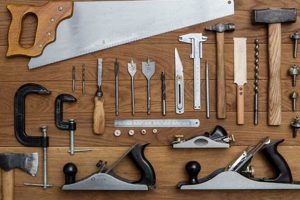
A Shopsmith is a multi-purpose woodworking machine designed to perform functions typically requiring several individual tools. This equipment offers capabilities such as sawing, drilling, sanding, and turning, all consolidated into a single unit. A common example is the Shopsmith Mark V, a model known for its versatility within small workshops or for woodworkers seeking a space-saving solution.
The advantage of this type of woodworking equipment lies in its ability to maximize workshop space and reduce the need for multiple standalone machines. Historically, its appeal stems from offering a complete woodworking solution for hobbyists and small businesses at a potentially lower overall cost than purchasing individual tools. Its compact design and multifaceted functionality have contributed to its sustained relevance in the woodworking community.
The subsequent sections will detail the specific features, operational techniques, and maintenance requirements associated with this unique woodworking approach. An overview of available accessories and potential project applications will further illuminate the potential of this all-in-one system.
Essential Tips for Utilizing Shopsmith Woodworking Machines
The following guidelines are intended to optimize the operation and longevity of Shopsmith equipment, ensuring both precision and safety in woodworking projects.
Tip 1: Prioritize Safety Protocols: Adherence to safety manuals is paramount. Always wear appropriate eye and ear protection. Disconnect the power source prior to performing any maintenance or adjustments.
Tip 2: Regular Maintenance is Crucial: Lubricate moving parts according to the manufacturer’s recommendations. Inspect belts and pulleys for wear and replace them as needed to prevent malfunctions.
Tip 3: Proper Alignment is Essential: Verify alignment of the headstock, table, and other components. Misalignment can lead to inaccurate cuts and potential damage to the machine.
Tip 4: Utilize Appropriate Speed Settings: Select the correct speed setting for the specific operation and material being worked. Excessive speed can cause burning or kickback.
Tip 5: Secure Workpieces Firmly: Always use appropriate clamps or holding devices to secure workpieces to the table. This minimizes the risk of movement and enhances accuracy.
Tip 6: Understand Accessory Compatibility: Not all accessories are compatible with every Shopsmith model or function. Consult the owner’s manual to ensure proper attachment and operation.
Tip 7: Practice Controlled Feeding: Avoid forcing material through the machine. Allow the tool to cut at its own pace to prevent overload and ensure a clean finish.
Adhering to these guidelines will contribute to the safe, efficient, and prolonged use of Shopsmith equipment, maximizing its value in a woodworking environment.
The subsequent section will explore advanced techniques and project ideas, further demonstrating the capabilities of this versatile woodworking system.
1. Versatility

Versatility, in the context of Shopsmith woodworking tools, denotes the capacity of a single machine to perform multiple woodworking operations traditionally requiring several distinct tools. This adaptability is a primary characteristic that defines this equipment and influences its application across a range of woodworking projects.
- Multi-Operational Capability
The core of Shopsmith’s versatility lies in its ability to function as a saw, drill press, lathe, and sander. A Shopsmith machine can transition between these modes, enabling users to execute diverse tasks on a single platform. For example, a user might initially saw a board to size, then immediately switch to drilling holes for hardware, all without changing machines.
- Adjustable Speed and Power
Versatility extends to the machine’s adjustable speed settings. Different woodworking operations require varying speeds for optimal performance. Shopsmith equipment allows users to fine-tune speed settings, accommodating various materials and project requirements. Softwoods might require higher speeds for sanding, while hardwoods may benefit from lower speeds during lathe operations.
- Accessory Integration
The Shopsmith system supports a range of accessories that further expand its versatility. These attachments enable specialized tasks, such as jointing, shaping, and routing. For instance, a jointer attachment allows users to create flat, square edges on lumber, while a molding head enables the creation of decorative profiles.
- Project Scalability
Versatility translates to the ability to handle projects of varying scale and complexity. From basic furniture construction to intricate wood turning, the Shopsmith system can accommodate diverse woodworking needs. This scalability makes it suitable for both hobbyists and small-scale professional woodworkers.
The interconnectedness of these facets underscores the comprehensive versatility offered by Shopsmith woodworking tools. This adaptability not only enhances workflow efficiency but also broadens the range of projects that can be undertaken within a single workshop footprint, making it an appealing option for woodworkers seeking a multi-functional solution.
2. Space Efficiency

The inherent design of Shopsmith woodworking tools directly addresses the limitations of workshop space. Traditional woodworking typically requires individual machines for sawing, drilling, sanding, and turning, each demanding a dedicated footprint. The Shopsmith, by consolidating these functions into a single unit, significantly reduces the overall space requirement. This consolidation is not merely a matter of convenience; it represents a critical advantage for hobbyists, small workshops, and educational settings where square footage is often at a premium. The cause-and-effect relationship is straightforward: the multi-functional design leads directly to enhanced space efficiency. A real-life example is a small apartment workshop, where the alternative to a Shopsmith might be foregoing certain woodworking capabilities entirely due to spatial constraints. The practical significance lies in enabling woodworking activities in environments where they would otherwise be infeasible.
The benefits of space efficiency extend beyond the simple reduction in occupied area. A more compact workshop can facilitate improved workflow and organization. For example, with fewer machines to navigate around, the woodworker can move more freely and efficiently between tasks. Furthermore, the space saved can be repurposed for material storage or assembly areas, optimizing the overall utilization of the workshop. The Shopsmiths ability to fold or reconfigure into different operational modes further enhances its space-saving potential when not in use. This contrasts sharply with stationary, single-purpose machines that permanently occupy their designated space, regardless of whether they are actively being used.
In summary, space efficiency is a fundamental and defining characteristic of Shopsmith woodworking tools. It is not simply a secondary benefit but a core design principle that directly impacts the practicality and accessibility of woodworking. While there may be challenges in mastering the operation of a multi-functional machine, the space-saving advantages often outweigh these considerations, particularly in environments where optimizing available space is paramount. This design philosophy has allowed Shopsmith equipment to maintain relevance in a market increasingly focused on compact and versatile solutions.
3. Multi-Functionality

The defining attribute of Shopsmith woodworking tools is their multi-functionality, a design principle that integrates several essential woodworking operations into a single machine platform. The effect is a consolidation of workshop capabilities, reducing the need for multiple, single-purpose tools. Multi-functionality is not a peripheral feature but the core essence of Shopsmith equipment. An illustrative example is the Shopsmith Mark V, which combines sawing, drilling, sanding, and turning functionalities. Its practical significance resides in enabling users to perform a broad spectrum of woodworking tasks within a constrained space and budget.
This multi-functional design necessitates a careful consideration of trade-offs. While a Shopsmith offers versatility, each individual function may not achieve the performance level of a dedicated, specialized machine. For instance, a dedicated cabinet saw might offer greater precision and power for heavy-duty ripping operations. However, the Shopsmith compensates for this potential compromise by providing a comprehensive suite of capabilities. This allows the user to transition seamlessly between different phases of a project without reconfiguring equipment or occupying additional workspace. The ability to quickly convert from a drill press to a lathe, for example, streamlines workflow and enhances project flexibility.
In summary, multi-functionality is the cornerstone of Shopsmith woodworking tools, directly impacting their utility and appeal. The potential challenges in achieving specialized performance are offset by the inherent space-saving and cost-effective advantages of combining multiple functions into one unit. This design philosophy continues to shape the Shopsmith’s role in woodworking, particularly for hobbyists and small workshops seeking a versatile and adaptable solution.
4. Cost-Effectiveness
Cost-effectiveness, in the context of Shopsmith woodworking tools, is a multifaceted consideration extending beyond initial purchase price. The core argument for cost-effectiveness stems from the consolidation of multiple woodworking functionssawing, drilling, sanding, turninginto a single machine. The cause is the multi-functional design; the effect is a potential reduction in the overall capital expenditure required to equip a workshop. A real-life example illustrates this point: a hobbyist setting up a small shop might face the choice between purchasing a Shopsmith or individual machines for each function. The Shopsmith, while perhaps not inexpensive, could represent a lower total investment compared to acquiring separate tools. The practical significance is that it opens woodworking opportunities to individuals with limited budgets or space.
However, a complete assessment of cost-effectiveness necessitates examining factors beyond initial investment. Longevity, maintenance requirements, and versatility each play a role. Shopsmiths, if properly maintained, exhibit durability, spreading the cost over an extended period. Maintenance costs, including replacement parts and servicing, must be factored into the overall equation. Furthermore, the machine’s versatility, its ability to adapt to a broad range of projects, contributes to its long-term value. A Shopsmith capable of handling diverse tasks may obviate the need for additional specialized tools, further enhancing cost-effectiveness. Conversely, limitations in specific functionalities compared to dedicated machines must also be acknowledged.
In summary, the cost-effectiveness of Shopsmith woodworking tools is a function of the multi-functional design, purchase price, longevity, maintenance expenses, and versatility. While the initial investment might be substantial, the potential for long-term savings through consolidation and adaptability contributes to its overall value. A comprehensive understanding of these factors is essential for determining whether a Shopsmith represents a cost-effective solution for a given woodworking application.
5. Maintenance Needs

Sustained functionality of Shopsmith woodworking tools necessitates adherence to a structured maintenance protocol. These machines, due to their multi-functional design, require diligent attention to multiple components and operational aspects. Neglecting maintenance can lead to diminished performance, reduced lifespan, and potential safety hazards.
- Lubrication Requirements
Moving parts within Shopsmith equipment require regular lubrication to minimize friction and prevent wear. The frequency and type of lubricant depend on the specific component and the intensity of usage. Headstock bearings, drive sleeves, and quill mechanisms demand consistent lubrication to ensure smooth operation and prevent premature failure. Insufficient lubrication manifests as increased noise, reduced precision, and potential damage to internal components.
- Belt and Pulley Inspection and Replacement
Power transmission in Shopsmiths relies on belts and pulleys. Regular inspection for wear, cracks, and proper tension is critical. Damaged or worn belts can slip, reducing power transfer and affecting the accuracy of operations like sawing or turning. Replacement of belts and pulleys should adhere to manufacturer specifications to maintain optimal performance and prevent mechanical stress on the system.
- Alignment and Adjustment Procedures
Maintaining proper alignment between components, such as the headstock, table, and fence, is essential for accurate woodworking. Misalignment can lead to imprecise cuts, uneven sanding, and increased strain on the machine. Regular adjustments, using appropriate tools and following manufacturer guidelines, are necessary to ensure accurate operation across all functionalities.
- Motor Maintenance and Cleaning
The motor, the driving force behind Shopsmith equipment, requires periodic cleaning and inspection. Accumulated dust and debris can impede airflow and lead to overheating, reducing motor efficiency and lifespan. Brushes should be inspected and replaced as needed. Motor maintenance contributes directly to the reliable and sustained performance of the Shopsmith system.
Effective maintenance is integral to realizing the long-term value and operational potential of Shopsmith woodworking tools. Consistent adherence to recommended maintenance schedules not only ensures optimal performance but also mitigates the risk of costly repairs and enhances user safety.
6. Safety Considerations
Operating Shopsmith woodworking tools demands a rigorous understanding and consistent application of safety protocols. The multi-functional nature of these machines necessitates a heightened awareness of potential hazards, as the user transitions between various operational modes.
- Guarding Systems and Operational Modes
Shopsmith equipment incorporates guarding systems designed to protect the operator during specific operations. However, these guards are often operation-specific and may require adjustment or removal when transitioning between functions. For example, a blade guard used during sawing might obstruct lathe operations and must be removed. Operators must meticulously adjust or reinstall guards according to the selected function to mitigate the risk of injury. Failure to do so constitutes a significant safety hazard.
- Material Handling and Securing Procedures
Safe material handling is paramount when using Shopsmith machines. Improperly secured workpieces can be ejected at high speeds, posing a severe risk. Clamps, vises, and other holding devices must be used appropriately to stabilize the material during cutting, drilling, or turning. The size and type of workpiece dictate the necessary securing method. Overlooking this aspect can result in loss of control and potential injury.
- Personal Protective Equipment (PPE) Requirements
The use of appropriate PPE is non-negotiable when operating Shopsmith equipment. Eye protection, in the form of safety glasses or a face shield, is mandatory to shield against flying debris. Hearing protection is equally critical, as the noise levels generated during certain operations can exceed permissible exposure limits. Respirators or dust masks are necessary to prevent inhalation of fine particles produced during sanding or sawing. Consistent adherence to PPE requirements minimizes the risk of long-term health consequences and immediate injury.
- Power Disconnection and Maintenance Safety
Prior to performing any maintenance, adjustments, or accessory changes, the power source must be disconnected. This prevents accidental activation of the machine, which can lead to severe injury. Waiting for all moving parts to come to a complete stop before making adjustments is also crucial. Neglecting these precautions can result in entanglement with moving components, resulting in significant harm.
These safety considerations are not mere suggestions but essential practices for the safe and responsible operation of Shopsmith woodworking tools. A thorough understanding of the machine’s functionalities, coupled with strict adherence to safety protocols, is imperative to mitigate the inherent risks associated with woodworking.
7. Project Applications

The utility of Shopsmith woodworking tools is ultimately defined by the range and type of projects they can facilitate. The machine’s multi-functional design and available accessories directly influence the scope of potential applications. A comprehensive understanding of these applications is essential for evaluating the suitability of Shopsmith equipment for specific woodworking needs.
- Furniture Construction
Shopsmith tools are applicable to various furniture-making projects, ranging from simple tables and chairs to more complex cabinets and shelving units. The sawing, drilling, and sanding capabilities enable the preparation of individual components. The lathe functionality allows for the creation of decorative elements such as table legs and spindles. The limitations may arise when dealing with large or heavy stock, where a dedicated cabinet saw or jointer might offer greater efficiency and precision.
- Wood Turning
The Shopsmith’s lathe function facilitates a wide array of wood-turning projects, including bowls, pens, and decorative spindles. Variable speed control allows for adapting to different wood types and project requirements. The size and power of the lathe impose constraints on the maximum dimensions of workpieces. Large-scale turning projects might necessitate a dedicated lathe with a greater swing capacity.
- Home Improvement and Repair
The multi-functional nature of Shopsmith tools makes them useful for various home improvement and repair tasks. These tools can be employed for tasks such as creating custom trim, repairing damaged furniture, or building shelving. The ability to quickly switch between different functions streamlines the workflow. The portability of some Shopsmith models further enhances their suitability for on-site repair work.
- Craft and Hobby Projects
Shopsmith tools are applicable for a variety of craft and hobby projects, including model making, toy construction, and decorative woodworking. The precision and control afforded by these machines allow for intricate detailing. The versatility of the Shopsmith enables experimentation with different techniques and materials. These tools may be particularly suitable for hobbyists with limited workshop space.
The project applications of Shopsmith woodworking tools are diverse, ranging from furniture construction to home repair and hobby projects. The multi-functional design allows for a wide range of tasks, although limitations may arise when dealing with large-scale or highly specialized operations. The suitability of Shopsmith equipment for a given project depends on a careful consideration of the project’s specific requirements and the tool’s capabilities.
Frequently Asked Questions Regarding Shopsmith Woodworking Tools
The following section addresses common inquiries pertaining to Shopsmith woodworking tools, providing concise and informative responses based on technical specifications and operational considerations.
Question 1: What is the primary advantage of utilizing Shopsmith woodworking tools compared to individual, specialized machines?
The primary advantage lies in space efficiency and versatility. A Shopsmith consolidates multiple woodworking functions into a single unit, reducing the footprint required for a fully equipped workshop. This is particularly beneficial in confined spaces or for users seeking a cost-effective entry point into woodworking.
Question 2: What specific woodworking operations can be performed with Shopsmith equipment?
Shopsmith woodworking tools typically offer sawing, drilling, sanding, and turning capabilities. Specific models and accessories may expand this range to include jointing, shaping, and routing. The precise functionalities depend on the configuration and attachments used.
Question 3: What are the key maintenance requirements for ensuring the longevity of Shopsmith machines?
Key maintenance requirements encompass regular lubrication of moving parts, inspection and replacement of belts and pulleys, ensuring proper alignment of components, and cleaning the motor to prevent overheating. Adherence to manufacturer-recommended maintenance schedules is crucial.
Question 4: What safety precautions should be observed when operating Shopsmith equipment?
Safety precautions include utilizing appropriate guarding systems for the selected operation, securing workpieces firmly, wearing personal protective equipment (PPE) such as eye and ear protection, and disconnecting the power source prior to performing maintenance or adjustments. A thorough understanding of the owner’s manual is essential.
Question 5: Are Shopsmith woodworking tools suitable for professional woodworking applications?
While Shopsmith equipment can be utilized in professional settings, it’s performance trade-offs in some specialized functions may limit it in high-volume or highly demanding professional applications. Its suitability depends on the specific requirements and workload of the professional shop.
Question 6: What factors should be considered when evaluating the cost-effectiveness of Shopsmith equipment?
Factors to consider include the initial purchase price, the cost of accessories, ongoing maintenance expenses, the longevity of the machine, and its versatility in handling various woodworking projects. A comprehensive assessment should account for the long-term value proposition.
In conclusion, Shopsmith woodworking tools offer a unique blend of versatility and space efficiency, presenting a viable option for various woodworking applications. However, thorough understanding of their capabilities, limitations, and maintenance requirements is crucial for informed decision-making.
The subsequent section will summarize the key benefits and considerations associated with Shopsmith woodworking tools, providing a consolidated overview for prospective users.
Shopsmith Woodworking Tools
This exploration has detailed the multifaceted nature of Shopsmith woodworking tools, emphasizing their versatility, space efficiency, multi-functionality, and cost-effectiveness, alongside the crucial aspects of maintenance and safety. These attributes, considered collectively, define the position of Shopsmith equipment within the woodworking landscape. The analysis has highlighted the trade-offs inherent in a multi-functional design, particularly in comparison to specialized, single-purpose machines, while underscoring the benefits for space-constrained environments and budget-conscious woodworkers.
Ultimately, the decision to adopt Shopsmith woodworking tools necessitates a thorough evaluation of individual needs and project requirements. This assessment must account for the machine’s capabilities, limitations, and the user’s commitment to proper maintenance and safety protocols. A considered approach will determine whether Shopsmith equipment represents a suitable and sustainable solution for achieving specific woodworking objectives, shaping the landscape of workshops for years to come.

![Shop Antique Japanese Woodworking Tools Today - [Era Name] Gems! | Step-by-Step Guides, Tools & Inspiration to Build Beautiful Wooden Decor on a Budget](https://woodfromhome.com/wp-content/uploads/2026/04/th-350-300x200.jpg "Shop Antique Japanese Woodworking Tools Today - [Era Name] Gems! Step-by-Step Guides, Tools & Inspiration to Build Beautiful Wooden Decor on a Budget")