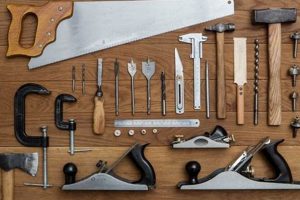
The implements designed for young individuals to engage in woodworking activities encompass a range of scaled-down and safety-focused equipment. These items, frequently constructed with durable materials and ergonomic considerations, enable the shaping, joining, and finishing of wood by children. A small saw with a protected blade and a lightweight hammer are representative examples.
Providing access to appropriately sized and safe equipment fosters creativity, problem-solving skills, and hand-eye coordination in young users. The historical precedent for introducing children to woodworking lies in apprenticeship models and educational philosophies emphasizing practical skills. These activities contribute to a child’s understanding of materials, construction techniques, and spatial reasoning.
The subsequent sections will delve into specific tool types, safety considerations, appropriate project selection, and the educational benefits associated with participation in these hands-on activities.
Guidance on Equipping Young Woodworkers
Careful selection and usage of equipment are paramount to ensure a safe and enriching woodworking experience for children. The following guidelines provide direction for adults overseeing such activities.
Tip 1: Prioritize Safety Gear: Protective eyewear is non-negotiable. Hand protection, such as gloves, is advisable, particularly when handling rough materials. A properly fitted apron minimizes clothing contamination.
Tip 2: Begin with Soft Woods: Pine or balsa wood offer ease of manipulation for initial projects. These materials reduce the force required for cutting and shaping, lessening the risk of injury.
Tip 3: Ensure Proper Tool Size: Oversized or unwieldy equipment presents a safety hazard. Implementations specifically designed for smaller hands offer enhanced control and reduce strain.
Tip 4: Supervise Constantly: Direct adult supervision is mandatory, especially during the initial stages of instruction. Guidance on proper technique and safe tool handling is crucial.
Tip 5: Maintain Sharp Blades: Counterintuitively, dull implements are more dangerous. Sharp implements require less force, resulting in cleaner cuts and reduced likelihood of slippage. Sharpening should be conducted by an adult.
Tip 6: Secure the Workpiece: Utilizing clamps or a vise to firmly secure the wood minimizes movement during cutting and shaping. This practice enhances precision and reduces the risk of accidental cuts.
Tip 7: Emphasize Slow and Steady Movements: Rushing the process increases the chance of errors and injuries. Encourage deliberate and controlled movements when operating any type of tool.
Adherence to these guidelines cultivates a secure environment, promoting both skill development and a positive introduction to the craft. Safety remains the foremost consideration.
The following sections will address project selection and age-appropriate learning trajectories.
1. Safety
The paramount consideration in the context of equipment for young woodworkers is safety. The design, selection, and usage of tools must prioritize the minimization of potential hazards. The correlation between safe implements and a positive learning experience is direct: Reduced risk translates to increased confidence and sustained engagement. For instance, a coping saw with a blunted tip minimizes puncture injuries compared to a standard saw. Ensuring equipment adheres to established safety standards is crucial for mitigating harm during activities.
The implementation of safety measures extends beyond tool characteristics. The supervision of adults competent in woodworking techniques is crucial for preventing misuse and addressing unforeseen circumstances. Education regarding proper handling, storage, and maintenance of equipment forms an essential component of safety protocols. Regular inspections for damage or wear are critical for ensuring continuing safe usage. A dull knife used by a child, for example, can result in accident because the child may need to push it with a lot of force to make it work, hence, increases the risk of slippage and subsequent injury.
In conclusion, the integration of safety considerations into every facet of instruction is non-negotiable. From the selection of scaled-down and safe equipment to the strict enforcement of safety protocols, establishing a secure environment fosters both competence and a sustained appreciation for the craft, preventing potential accidents and nurturing a lifelong interest in woodworking. It is critical to understand, the safe the learning environment is, the better the learning experience can be.
2. Durability

The longevity of implements designated for young woodworkers directly correlates with their cost-effectiveness and safety profile. Equipment intended for repeated use by children necessitates robust construction capable of withstanding frequent handling and occasional misuse. Inferior materials or weak construction lead to premature failure, increasing the risk of injury and necessitating frequent replacements. For example, a plastic-handled screwdriver subjected to excessive force may shatter, creating sharp fragments that pose a hazard. Thus, selecting equipment constructed from high-quality materials is not merely an economic consideration, but a safety imperative.
The inherent connection between the robustness of implements and the scope of achievable projects further underscores its importance. A flimsy saw may struggle to cut through hardwoods or thick materials, limiting the types of projects a child can undertake. Conversely, durable equipment fosters creativity and exploration, allowing for the execution of more complex and rewarding projects. Consider the difference between a hammer with a loosely attached head and one with a securely fastened handle; the former presents a risk of the head detaching during use, whereas the latter provides stability and control. The choice of material and construction directly influences the range of possibilities available to the young woodworker.
In summary, the integration of durable materials and sound construction techniques into the manufacturing of equipment for young individuals participating in woodworking is essential. It minimizes the likelihood of breakage, mitigates the risk of injury, and expands the potential for creativity and learning. Prioritizing quality over cost-cutting measures proves to be a prudent investment in the safety and developmental experience of young woodworkers.
3. Ergonomics

Ergonomics, the science of designing equipment and workspaces to fit the user, is a crucial factor in equipment intended for young woodworkers. Ill-fitting tools can lead to discomfort, fatigue, and, in more severe cases, musculoskeletal strain or injury. A child attempting to use a full-sized adult hammer, for example, may struggle to maintain control due to the weight and handle size, increasing the risk of a glancing blow or repetitive strain injuries. The selection of equipment designed with ergonomic principles in mind directly affects safety, efficiency, and long-term physical well-being. Thus, manufacturers and educators must acknowledge and address the specific ergonomic requirements of child users.
The practical application of ergonomics in woodworking equipment for children encompasses several key features. Smaller handle diameters allow for a secure grip, reducing the force required to maintain control. Lightweight materials minimize fatigue during extended use. Balanced tool designs reduce strain on the wrist and forearm. Furthermore, the shapes of handles and grips should be contoured to fit the natural curves of a child’s hand. A small saw with an ergonomically designed handle, for instance, allows a child to apply force efficiently without excessive wrist flexion, leading to cleaner cuts and reduced fatigue. Proper design promotes effective and comfortable usage, encouraging continued participation and skill development.
In summary, ergonomics represents a foundational element in ensuring safe and effective woodworking experiences for children. The careful consideration of handle size, weight, balance, and overall tool design mitigates the risk of injury, promotes comfort, and enhances performance. The incorporation of ergonomic principles into the design and selection of equipment is not merely a matter of convenience, but a necessary investment in the physical well-being and skill development of young woodworkers.
4. Functionality

Functionality, in the context of equipment designed for young woodworkers, refers to the degree to which a tool effectively and reliably performs its intended purpose. This consideration extends beyond mere operational capability to encompass ease of use, precision, and suitability for the developmental stage of the child. Equipment that fails to adequately perform its function can lead to frustration, discouragement, and, potentially, unsafe usage practices.
- Cutting Efficiency
The capacity of a saw or knife to cleanly and efficiently sever wood fibers is paramount. A dull or poorly designed blade necessitates excessive force, increasing the risk of slippage and injury. A coping saw intended for intricate cuts must possess a blade with sufficient sharpness and flexibility to navigate curves without binding or breaking. Failure to achieve efficient cutting undermines the intended project and compromises safety.
- Joining Precision
Tools used for joining wood pieces, such as hammers and clamps, must facilitate accurate and secure connections. A hammer with an unbalanced head may result in misdirected blows, damaging the workpiece or causing injury. Clamps with insufficient clamping force fail to hold pieces securely, leading to misalignment and weakened joints. The ability to achieve precise and durable connections is crucial for the successful completion of woodworking projects.
- Shaping and Smoothing
Implements designed for shaping and smoothing wood surfaces, such as rasps and sandpaper, must effectively remove material while providing control over the final form. A rasp with excessively coarse teeth may tear the wood fibers, leaving a rough and uneven surface. Sandpaper with insufficient grit may fail to achieve the desired level of smoothness. Effective shaping and smoothing contribute to the aesthetic quality and tactile properties of the finished product.
- Measurement Accuracy
Tools used for measuring and marking, such as rulers and squares, must provide accurate and consistent results. An inaccurate ruler can lead to miscalculations, resulting in incorrectly sized pieces and misaligned joints. A square that is not perfectly true will produce angled cuts, compromising the structural integrity of the project. Precise measurement is essential for achieving accurate dimensions and consistent results.
These facets of functionality, when carefully considered, directly influence the safety, efficacy, and educational value of equipment designed for young woodworkers. Tools that perform their intended functions reliably and efficiently empower children to achieve their creative goals, fostering a sense of accomplishment and encouraging continued exploration of the craft. Conversely, equipment that fails to meet these standards can hinder progress, create frustration, and potentially compromise safety.
5. Suitability

The concept of suitability, when applied to equipment intended for young woodworkers, encompasses the degree to which a tool aligns with a child’s developmental stage, physical capabilities, and cognitive understanding. Appropriate alignment is paramount for ensuring safety, fostering skill development, and maintaining engagement with the craft.
- Age Appropriateness
A tool’s design and functionality must correspond to the cognitive and motor skills of the child using it. A complex tool requiring advanced dexterity or abstract reasoning would be unsuitable for a younger child. For example, a preschool-aged child might begin with simple hammering exercises using a large, lightweight hammer and soft wood, whereas a preteen might be capable of using a small hand saw to make straight cuts. Age-appropriateness prevents frustration and reduces the risk of injury by matching the demands of the tool to the child’s existing capabilities.
- Physical Dimensions and Ergonomics
The size and weight of a tool must be proportionate to the child’s physical stature and strength. An oversized or unwieldy tool can be difficult to control, leading to fatigue, improper technique, and potential accidents. Ergonomic considerations, such as handle size and grip shape, should also be factored in to ensure comfortable and efficient use. A small-diameter screwdriver with a textured grip, for instance, is far more suitable for a child’s hand than a standard-sized screwdriver with a smooth handle.
- Complexity of Operation
The operational demands of a tool should be commensurate with the child’s cognitive understanding and ability to follow instructions. A tool with numerous settings or intricate mechanisms may be overwhelming and confusing, leading to improper use and potential hazards. A simple hand drill with a single speed setting is more suitable for a beginner than a power drill with variable speed and torque settings. The level of operational complexity should gradually increase as the child gains experience and proficiency.
- Project Complexity
The projects undertaken using equipment for young woodworkers must align with their skill level and understanding of woodworking principles. Starting with simple projects, such as assembling pre-cut pieces or creating basic shapes, allows children to develop fundamental skills and build confidence. Attempting complex projects before mastering basic techniques can lead to frustration, discouragement, and potentially unsafe practices. The gradual progression of project complexity fosters a sense of accomplishment and encourages continued learning.
The careful consideration of age appropriateness, physical dimensions, operational complexity, and project complexity ensures that equipment intended for young woodworkers is not only safe and effective but also conducive to a positive and enriching learning experience. Suitability, therefore, is a critical determinant of success in fostering a lifelong appreciation for the craft.
6. Maintenance

The longevity and safety of woodworking equipment designed for children are directly contingent upon consistent and appropriate maintenance practices. Neglecting this aspect can lead to diminished tool performance, increased risk of injury, and ultimately, a shortened lifespan for the implements. For example, allowing rust to accumulate on a saw blade not only impedes its cutting efficiency but also weakens the metal, potentially causing it to break during use. Therefore, a proactive maintenance regimen is crucial for preserving the integrity and functionality of children’s woodworking tools.
Maintenance encompasses a range of activities tailored to the specific tool type and material composition. Metal components require periodic cleaning and lubrication to prevent corrosion and ensure smooth operation. Wooden handles may need occasional sanding and sealing to prevent splintering and maintain a comfortable grip. Sharpening blades, though ideally performed by an adult, is essential for maintaining cutting efficiency and reducing the force required to operate the tool, thereby minimizing the risk of slippage. A dull chisel, for instance, demands significantly more force to use, increasing the likelihood of uncontrolled movement and potential injury. Consistent inspection for damage, such as loose screws or cracked handles, allows for timely repairs and prevents further degradation.
In summation, integrating regular maintenance into the usage of woodworking equipment intended for children constitutes a vital element of responsible practice. It not only extends the lifespan of the tools and preserves their operational effectiveness but, more importantly, ensures the ongoing safety of young users. Establishing a culture of maintenance instills a sense of responsibility and respect for tools, contributing to a more enriching and secure learning environment.
7. Education
The incorporation of woodworking implements into the educational framework provides tangible benefits to young learners, fostering skill development and cognitive growth that extend beyond the immediate context of the activity. Imparting knowledge concerning tool usage, safety protocols, and material properties constitutes a foundational element of responsible engagement with such equipment. Instruction regarding the proper handling of a chisel, for example, prevents injury and promotes effective carving techniques. Furthermore, education in this domain imparts an understanding of geometric principles, spatial reasoning, and problem-solving strategies. Constructing a wooden box necessitates accurate measurement, precise cutting, and careful assembly, thereby reinforcing mathematical concepts and enhancing spatial awareness. Education, therefore, serves as a critical conduit for transforming potentially hazardous implements into vehicles for learning and development.
The educational component of woodworking extends beyond technical skills to encompass aspects of design, aesthetics, and historical context. Introducing children to different woodworking styles, techniques, and the work of renowned craftspeople cultivates an appreciation for artistic expression and cultural heritage. Analyzing the joinery techniques employed in antique furniture, for instance, offers insights into the evolution of craftsmanship and the relationship between form and function. Furthermore, integrating sustainable practices into woodworking education promotes environmental awareness and responsible resource management. Teaching children to select sustainably harvested wood and minimize waste fosters a sense of environmental stewardship and encourages ethical consumption. The blend of technical instruction, artistic exploration, and historical awareness transforms woodworking into a holistic educational experience.
In conclusion, the integration of education into the use of woodworking equipment for children is not merely an adjunct but a fundamental prerequisite. It mitigates risks, enhances skill development, fosters creativity, and promotes environmental responsibility. By prioritizing education, adults can transform potentially hazardous tools into instruments of learning, empowerment, and personal growth, equipping young individuals with valuable skills and a lifelong appreciation for the craft.
Frequently Asked Questions
The following section addresses common inquiries and misconceptions regarding equipment intended for young participants in woodworking activities. The information provided aims to clarify safety concerns, selection criteria, and educational benefits.
Question 1: At what age is a child typically ready to begin using woodworking tools?
The appropriate age varies depending on the child’s maturity, coordination, and ability to follow instructions. Supervised introduction can begin as early as five years old with very simple tools like a small hammer and soft wood. More complex tools, such as saws, should be introduced later, typically around ages eight to ten, with direct adult supervision.
Question 2: What are the most essential safety precautions to observe when children are using woodwork tools?
Mandatory safety measures include the consistent use of safety eyewear, close adult supervision, instruction on proper tool handling, and the provision of appropriately sized tools. A well-lit and organized workspace is also essential for minimizing hazards.
Question 3: What type of wood is most suitable for beginners?
Softwoods, such as pine and balsa, are generally recommended for beginners due to their ease of cutting and shaping. These materials require less force, reducing the risk of injury and promoting success in early projects.
Question 4: How can the risk of splinters be minimized?
Selecting wood that is free of knots and splinters is crucial. Sanding all surfaces, edges, and corners with fine-grit sandpaper removes sharp points. The consistent use of gloves can also provide an additional layer of protection.
Question 5: What constitutes proper storage of woodworking tools?
Tools should be stored in a designated area, out of reach of younger children. Sharp tools should be sheathed or placed in protective cases. Organizing tools in a tool box or on a wall-mounted rack promotes accessibility and prevents damage.
Question 6: How often should children’s woodworking tools be inspected for damage?
Tools should be inspected before each use for signs of damage, such as loose handles, cracked blades, or dull cutting edges. Damaged tools should be repaired or replaced immediately to prevent injury.
The information provided in this FAQ section offers guidance for safely introducing children to the craft of woodworking. Adhering to these principles fosters a positive and enriching experience.
The subsequent section will provide a summary of the benefits associated with engaging children in woodworking activities.
Children’s Woodwork Tools
This exploration of equipment specifically designed for young individuals participating in woodworking activities has underscored crucial aspects of safety, durability, ergonomics, functionality, suitability, maintenance, and education. The analysis has illuminated the importance of selecting implements that align with a child’s developmental stage and physical capabilities, while also adhering to rigorous safety standards. Furthermore, the examination has highlighted the educational value inherent in woodworking, fostering problem-solving skills, spatial reasoning, and an appreciation for craftsmanship.
The careful consideration of these factors is paramount for ensuring a positive and enriching experience for young woodworkers. The responsible selection, usage, and maintenance of children’s woodwork tools not only mitigate potential risks but also cultivate a lifelong passion for the craft, contributing to the development of valuable skills and a sense of accomplishment that extends far beyond the workshop.