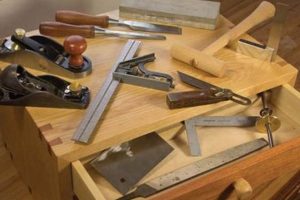
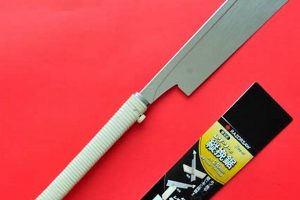
Devices employed in conjunction with a wood lathe to shape and refine wooden workpieces fall into a distinct category of implements. These specialized instruments are essential for executing a variety of cuts, including roughing, shaping, smoothing, and detail work. Examples include gouges for removing large amounts of material, skews for creating smooth surfaces, parting tools for separating sections, and specialized scrapers for finishing operations.
The use of these implements offers significant advantages in the creation of symmetrical and decorative wooden objects. Historically, these devices have been crucial in furniture making, instrument crafting, and artistic woodworking, enabling the production of complex forms with precision and efficiency. Their continued development reflects ongoing improvements in material science and ergonomic design, enhancing both the quality of the finished product and the user’s experience.
The selection and proper application of these instruments are fundamental to achieving desired outcomes in woodturning. Subsequent sections will delve into specific categories of these implements, examining their design characteristics, optimal usage techniques, and maintenance requirements to ensure longevity and performance.
Essential Usage Guidance
The effective and safe utilization of wood-turning implements is paramount for achieving optimal results and minimizing potential hazards within the workshop environment. The following recommendations offer guidance on proper selection, application, and maintenance of these instruments.
Tip 1: Sharpening is Crucial: Maintain a keen edge on all implements. Dull tools require excessive force, leading to potential workpiece damage or tool slippage. Regularly sharpen with appropriate honing equipment.
Tip 2: Tool Rest Placement: Position the tool rest close to the workpiece to minimize leverage and vibration. Adjust the rest frequently as the diameter of the turning decreases.
Tip 3: Cutting Angle: Employ the correct cutting angle for each tool type. A gouge, for instance, requires a sweeping motion to avoid catches. The skew should be presented at a shallow angle for a shearing cut.
Tip 4: Speed Control: Adjust the lathe speed according to the workpiece size and material. Larger diameter pieces require slower speeds. Experiment to find the optimal setting for each phase of the turning process.
Tip 5: Secure Workpiece Mounting: Ensure the workpiece is securely mounted to the lathe. A loose or improperly mounted piece can become a projectile. Verify the tailstock pressure is adequate.
Tip 6: Wear Appropriate Safety Gear: Always wear safety glasses or a face shield to protect against flying debris. A dust mask or respirator is recommended to prevent inhalation of wood dust.
Tip 7: Gradual Material Removal: Remove material gradually. Avoid attempting to remove large amounts of wood in a single pass. This reduces strain on both the implement and the lathe.
Adherence to these guidelines will contribute to increased efficiency, improved workpiece quality, and enhanced safety during wood-turning operations. Prioritizing these best practices ensures the longevity of both the implements and the user.
Subsequent discussions will focus on advanced techniques and troubleshooting common challenges encountered in wood-turning.
1. Sharpness

Sharpness is a fundamental attribute influencing the performance and safety of implements employed in woodturning. A keen edge enables efficient material removal, minimizes tear-out, and reduces the force required to execute cuts. Consequently, the degree of sharpness directly impacts the quality of the finished workpiece and the overall woodturning experience.
- Cutting Efficiency and Material Removal
A sharp edge severs wood fibers cleanly, resulting in efficient material removal and reduced effort on the part of the operator. Conversely, a dull edge compresses or tears the fibers, leading to increased resistance and a rougher surface finish. The ability to readily remove material contributes directly to the speed and precision of shaping and refining wooden forms.
- Surface Finish Quality
The sharpness of an implement directly influences the surface finish achieved. Sharp implements produce clean, smooth cuts, minimizing the need for subsequent sanding or finishing operations. A dull implement, conversely, leaves a rougher, more uneven surface that requires additional processing to achieve a desirable texture and appearance. This is particularly critical when achieving fine details or precise dimensions.
- Safety Considerations
Counterintuitively, sharp implements enhance safety. Dull implements require greater force, increasing the likelihood of the implement slipping or catching on the workpiece. This sudden loss of control can result in injury to the operator or damage to the workpiece. Sharp implements, requiring less force and offering greater control, reduce the risk of such incidents.
- Tool Control and Precision
Sharpness is directly correlated with enhanced tool control and precision. A keen edge allows the operator to execute precise cuts with minimal effort, enabling the creation of intricate details and complex forms. Dull tools require more force and are more prone to wandering or vibrating, making precise cuts challenging to achieve.
The maintenance of sharpness is therefore paramount. Regular honing and sharpening are essential to ensure optimal performance, enhance safety, and maximize the lifespan of these implements. Neglecting sharpness compromises the quality of the output and increases the risk of accidents. The selection of appropriate sharpening techniques and equipment is a crucial aspect of maintaining these implements for woodturning.
2. Tool Geometry

The configuration of cutting edges and overall form, designated as tool geometry, constitutes a critical determinant of performance in wood-turning implements. Different geometries are specifically designed for distinct operations, each maximizing efficiency and precision in material removal. The geometry directly influences the type of cut achieved, the surface finish, and the control exerted by the operator. A gouge, characterized by its curved profile, facilitates roughing operations and shaping curved surfaces. Conversely, a skew chisel, with its angled blade, excels at creating smooth, flat surfaces and refined details. A parting tool, having a narrow, rectangular shape, is employed to separate sections of the workpiece. The selection of a particular geometry must align with the intended task to ensure optimal results.
The impact of tool geometry extends beyond mere function. Improper geometry selection can lead to inefficient material removal, increased risk of catches and chatter, and a compromised surface finish. For example, attempting to use a skew chisel for roughing operations is likely to result in excessive chatter and an uneven surface. Similarly, using a gouge with an overly aggressive grind can lead to catches and potential damage to the workpiece. Successful woodturning relies on a thorough understanding of how different geometries interact with wood fibers under various cutting conditions. Experienced woodturners often modify standard geometries to suit specific needs or to optimize performance for particular wood species. These modifications, achieved through careful grinding and honing, demonstrate the significant role of geometry in achieving desired outcomes.
In summation, tool geometry represents a crucial element within the broader context of implements for use with a wood lathe. Its influence pervades all aspects of the woodturning process, from initial shaping to final finishing. A comprehensive understanding of geometry, coupled with the ability to select and maintain implements with appropriate configurations, constitutes a cornerstone of proficient woodturning practice. Mastering this element presents a significant challenge, yet it remains essential for achieving high-quality results and safe operation.
3. Material Composition

The selection of materials utilized in the construction of implements for wood lathes directly impacts performance, durability, and suitability for various woodturning tasks. The composition of the cutting edge and the overall tool body dictates its ability to maintain sharpness, resist wear, and withstand the forces generated during the woodturning process.
- High-Speed Steel (HSS)
HSS is a prevalent material for woodturning implements due to its excellent wear resistance and ability to maintain a sharp edge at elevated temperatures. This is particularly important when turning hardwoods or engaging in prolonged cutting operations. HSS retains its hardness even when heated, reducing the frequency of sharpening compared to carbon steel. Examples include M2, M4, and M42 grades of HSS, each offering varying degrees of hardness and toughness. The higher alloy content contributes to enhanced durability and longevity.
- Carbon Steel
Carbon steel offers an alternative material choice, known for its ability to achieve a very keen edge and ease of sharpening. However, carbon steel is more susceptible to wear and requires more frequent sharpening compared to HSS. Its lower cost makes it an attractive option for beginners or for implements used primarily on softer woods. Additionally, carbon steel is more prone to corrosion if not properly maintained. Examples include O1 and W1 tool steels, which are often heat-treated to enhance their hardness and durability.
- Carbide-Tipped Tools
Carbide-tipped implements represent a significant advancement, offering exceptional wear resistance and extended edge life. Carbide inserts are brazed onto a steel shank, providing a cutting edge that can withstand prolonged use without requiring frequent sharpening. These are particularly well-suited for abrasive materials or high-volume production environments. While the initial cost is higher, the longevity and reduced maintenance requirements often justify the investment. Examples include various grades of tungsten carbide, each selected based on its hardness, toughness, and resistance to wear.
- Cryogenic Treatment
Certain manufacturers subject their implements to cryogenic treatment. This process involves cooling the steel to extremely low temperatures, resulting in a denser microstructure and improved wear resistance. Cryogenic treatment can enhance the performance of both HSS and carbon steel implements, extending their edge life and reducing the frequency of sharpening. While not a material composition itself, it is a treatment method that influences the final properties of the steel.
The selection of an appropriate material composition for implements used on wood lathes should be predicated on the specific requirements of the woodturning application. Considerations include the type of wood being turned, the volume of material to be removed, the desired surface finish, and the budget constraints. Understanding the characteristics of each material allows woodturners to optimize their tool selection for both performance and longevity. The ongoing development of new materials and treatments continues to refine the capabilities of these implements and enhance the woodturning experience.
4. Handle Ergonomics

The design of handles on implements used in conjunction with wood lathes, designated as handle ergonomics, directly influences operator comfort, control, and safety. Poorly designed handles can induce fatigue, reduce precision, and increase the risk of injury. Ergonomically sound handles, conversely, promote efficient force transmission, minimize strain, and enhance the overall woodturning experience. For example, a handle that is too short or too thin may require excessive gripping force, leading to hand fatigue and reduced control. Conversely, a handle that is properly sized and shaped allows the operator to maintain a secure grip without undue exertion.
Material selection also plays a significant role in handle ergonomics. Wood, known for its shock-absorbing qualities and comfortable feel, remains a popular choice. Synthetic materials, such as polymers and composites, offer durability and resistance to moisture and chemicals, but may require careful shaping to ensure comfort. Handle length and diameter are critical dimensions. A handle that is too short may limit leverage and control, while one that is too long may be unwieldy. Similarly, a handle that is too thin may cause hand fatigue, while one that is too thick may be difficult to grip securely. The optimal dimensions vary depending on the size of the operator’s hand and the specific application.
The practical significance of understanding handle ergonomics in implements for wood lathes extends to improved workpiece quality and reduced risk of musculoskeletal disorders. By prioritizing ergonomic design, manufacturers can create implements that are both effective and comfortable to use. Woodturners, in turn, can enhance their skills, reduce fatigue, and minimize the potential for long-term injuries. Therefore, handle ergonomics should be considered an integral component of implement design, contributing directly to the success and safety of woodturning operations.
5. Proper Application

Effective utilization of wood-turning implements is contingent upon a comprehensive understanding of their intended application. The correct employment of each implement, considering factors such as cutting angle, speed, and feed rate, is critical for achieving desired results and maintaining safety. Inadequate application can lead to workpiece damage, implement failure, or operator injury.
- Correct Cutting Angle
The angle at which the cutting edge engages the workpiece significantly affects the cutting action and surface finish. A gouge, for example, requires a sweeping motion with the bevel rubbing against the wood to achieve a clean cut. Presenting the gouge at an incorrect angle can result in catches or tear-out. The skew chisel similarly demands precise angle control to execute shearing cuts and create smooth surfaces. Demonstrations of incorrect angles would show tearout of the wood and catches during the cut.
- Optimal Lathe Speed
Lathe speed directly impacts the cutting efficiency and the stability of the workpiece. Larger diameter pieces require slower speeds to prevent vibration and potential workpiece detachment. Conversely, excessively slow speeds can lead to inefficient cutting and increased risk of catches. Matching the speed to the workpiece size, material, and tool type is essential for achieving consistent results and minimizing hazards. Observing too-fast or slow speeds may include wood flying off the lathe due to vibration from too fast speeds. The tool can catch and be ripped from the operators hands at too slow of a speed.
- Controlled Feed Rate
The rate at which the implement is advanced into the workpiece, known as the feed rate, influences the material removal rate and the surface finish. Excessive feed rates can overload the implement, leading to catches or chatter. Insufficient feed rates, conversely, can result in rubbing and heat buildup. Maintaining a controlled feed rate, guided by the tool’s design and the material’s characteristics, is critical for achieving smooth cuts and preventing implement damage. Too fast may lead to the bit digging in and taking too big of a chunk, while too slow might result in the tool slipping over the piece and chattering.
- Appropriate Tool Selection
Choosing the correct tool for a specific task is crucial. A roughing gouge is designed for removing large amounts of stock quickly, while a spindle gouge is better suited for shaping delicate details. Using a roughing gouge for detail work will likely result in a clumsy, imprecise cut. Selecting the right tool for the job ensures efficiency and optimal results. A demonstration example could include using a wide roughing gouge on a small spindle with fine details that easily break, versus the appropriate small spindle gauge.
These facets of proper application collectively contribute to a safer and more efficient woodturning process. Mastering these techniques enables woodturners to fully realize the capabilities of their implements and achieve high-quality results. Continuous practice and refinement of these skills are essential for advancing one’s proficiency in woodturning.
6. Maintenance

The preservation of implements employed in wood-turning operations constitutes a crucial aspect of ensuring optimal performance, extending tool longevity, and promoting safe working conditions. Consistent and thorough maintenance practices are integral to achieving consistent results and preventing premature tool failure. Neglecting these practices compromises tool effectiveness and elevates the risk of accidents.
- Sharpening and Honing
Maintaining a keen cutting edge is paramount for efficient material removal and clean surface finishes. Dull implements necessitate increased force, leading to potential workpiece damage or tool slippage. Regular sharpening, using appropriate grinding equipment and honing techniques, restores the cutting edge to its optimal sharpness. Frequency depends on usage and material, but periodic attention is invariably required.
- Cleaning and Lubrication
Wood dust and resin accumulation can impede tool performance and accelerate corrosion. Regular cleaning, using appropriate solvents and brushes, removes debris and preserves the tool’s surface finish. Lubrication of moving parts, such as the tool rest and adjusting screws, ensures smooth operation and prevents seizing. Silicone-based lubricants are often preferred as they do not attract dust.
- Storage and Protection
Proper storage protects implements from physical damage and environmental factors. Storing them in designated racks or drawers prevents collisions and minimizes the risk of edge damage. Exposure to moisture can lead to corrosion; therefore, maintaining a dry storage environment is essential. Applying a protective coating of oil or wax can further mitigate corrosion risks.
- Handle Inspection and Repair
The handle provides the interface between the operator and the cutting edge. Regular inspection of handles for cracks, looseness, or other damage is crucial for safety and control. Loose handles should be tightened or replaced immediately. Cracked or damaged handles should be repaired or replaced to prevent breakage during operation.
Effective maintenance protocols, encompassing these key elements, are indispensable for maximizing the utility and lifespan of implements intended for use on wood lathes. Consistent application of these practices ensures that the implements remain in optimal condition, facilitating efficient and safe woodturning operations. The time invested in proper maintenance ultimately translates to improved project outcomes and reduced long-term costs.
Frequently Asked Questions
The subsequent section addresses frequently encountered inquiries regarding the selection, application, and maintenance of implements designed for wood lathes. This information aims to clarify common points of confusion and provide guidance on best practices.
Question 1: What is the fundamental distinction between a roughing gouge and a spindle gouge?
A roughing gouge, characterized by its robust construction and shallow flute, is specifically designed for removing substantial amounts of stock from square or uneven workpieces. A spindle gouge, featuring a finer profile and deeper flute, is intended for shaping spindles and executing detail work on cylindrical forms. Employing a roughing gouge on spindle work can result in a coarse finish and potential workpiece damage.
Question 2: What factors dictate the appropriate lathe speed for a given woodturning operation?
Lathe speed should be adjusted based on workpiece diameter, material hardness, and implement type. Larger diameter pieces necessitate slower speeds to mitigate vibration and ensure operator safety. Harder materials may require slower speeds to prevent overheating and implement damage. Specific implement types, such as bowl gouges or parting tools, may have recommended speed ranges for optimal performance.
Question 3: How frequently should woodturning implements be sharpened?
Sharpening frequency depends on the material being turned and the duration of use. Visible signs of dulling, such as increased resistance, tearing, or burning, indicate a need for immediate sharpening. Regular honing, performed between sharpening sessions, can extend the lifespan of the cutting edge. Implement sharpness should be consistently maintained to ensure efficient material removal and a clean surface finish.
Question 4: What safety precautions are paramount when using woodturning implements?
Safety glasses or a face shield should always be worn to protect against flying debris. A dust mask or respirator is recommended to prevent inhalation of wood dust. Securely mounting the workpiece and maintaining a firm grip on the implement are crucial for control. Adjusting the tool rest position to minimize leverage and prevent catches is essential. Following recommended speeds and feed rates minimizes the risk of accidents.
Question 5: What constitutes proper storage for woodturning implements?
Implements should be stored in a dry environment to prevent corrosion. Storing them in designated racks or drawers protects the cutting edges from damage. Applying a light coat of oil or wax can further mitigate corrosion risks. Separating implements by type can facilitate easy access and prevent accidental collisions.
Question 6: Can carbide-tipped implements be sharpened, and if so, how?
Carbide-tipped implements can be sharpened, although the process differs from traditional steel implements. Specialized diamond grinding wheels are required to sharpen carbide. The sharpening process should be performed with care to avoid overheating the carbide insert. Replacement carbide inserts are often available, providing a convenient alternative to sharpening.
These questions and answers represent a fundamental understanding of the challenges and potential solutions encountered while using these implements. Continued education and experience will enhance proficiency and promote successful woodturning endeavors.
The succeeding discussion will transition to an overview of advanced techniques and troubleshooting strategies in woodturning.
Conclusion
This exploration has delineated the multifaceted considerations surrounding implements intended for wood lathes. From material composition and tool geometry to handle ergonomics, proper application, and meticulous maintenance, a comprehensive understanding of these elements is paramount for achieving precision and efficiency. The preceding discussion elucidates the significance of sharpness, the necessity of appropriate tool selection for specific tasks, and the criticality of safety protocols in the workshop environment.
Continued advancement in material science and ergonomic design promises further refinement of these implements, enhancing both their performance and the user experience. The principles outlined herein serve as a foundation for both novice and experienced woodturners alike. A commitment to these principles fosters not only improved craftsmanship but also a safer and more rewarding engagement with the art of woodturning. The diligent application of knowledge regarding these implements will contribute to the sustained innovation and appreciation of this time-honored craft.