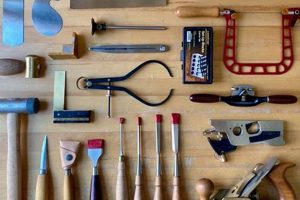
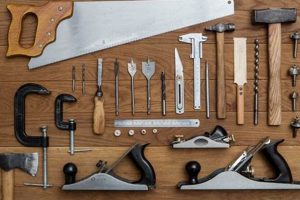
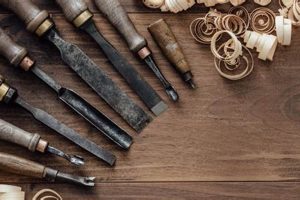
The creation of implements used for shaping and manipulating wood is a practice involving diverse techniques and materials. Examples include forging metal blades for planes, chisels, and saws, as well as shaping wooden handles and frames to provide ergonomic grip and leverage.
The ability to produce these instruments offers several advantages, including cost savings, customization options, and a deeper understanding of the craft. Historically, self-sufficiency in tool production was essential for woodworking professionals, granting them independence and control over their work.
The following sections will explore specific methods and considerations related to the construction of various woodworking essentials, focusing on both traditional techniques and modern approaches to their fabrication.
Construction Strategies for Woodworking Implements
Effective tool fabrication requires careful planning and execution. The following guidance provides insights into key considerations for building high-quality woodworking equipment.
Tip 1: Material Selection: Utilize high-carbon steel for blades to ensure edge retention and durability. Choose hardwoods, such as maple or beech, for handles to provide strength and resistance to wear.
Tip 2: Precision Grinding: Accurately grind cutting edges to the correct angle for specific tasks. A consistent bevel angle is crucial for clean and efficient cutting.
Tip 3: Heat Treatment: Properly heat-treat steel components to achieve the desired hardness and temper. Incorrect heat treatment can result in brittle or overly soft tools.
Tip 4: Ergonomic Design: Shape handles to fit comfortably in the hand, reducing fatigue during extended use. Consider the grip angle and overall balance of the instrument.
Tip 5: Accurate Joinery: Employ precise joinery techniques when assembling tool components. Strong and well-fitted joints are essential for structural integrity and longevity.
Tip 6: Finishing Techniques: Apply a protective finish to wooden parts to prevent moisture damage and enhance appearance. Oil-based finishes are commonly used for their durability and ease of application.
Tip 7: Regular Maintenance: Implement a routine maintenance schedule to keep tools in optimal condition. This includes sharpening blades, cleaning surfaces, and lubricating moving parts.
These guidelines, when followed meticulously, contribute to the creation of robust and dependable woodworking tools, enhancing both the efficiency and the enjoyment of the woodworking process.
The subsequent section will summarize the preceding information and offer concluding thoughts on the broader implications of self-sufficient tool production.
1. Design functionality

Design functionality, in the context of creating woodworking tools, is a critical determinant of the tool’s effectiveness and utility. It encompasses the careful consideration of a tool’s purpose, how it interacts with the wood, and how it is operated by the user. Effective design ensures that the tool performs its intended task efficiently and safely.
- Form Follows Function
This principle dictates that the tool’s physical shape should be directly derived from its intended purpose. For example, a spokeshave designed for shaping curved surfaces will have a curved blade and a body that allows for controlled manipulation along the curve. Deviation from this principle can result in a tool that is unwieldy, inefficient, or even unsafe to use.
- Mechanical Advantage
The design must maximize the mechanical advantage offered to the user. A well-designed lever, such as in a hand plane, amplifies the force applied by the user, allowing for precise and controlled cuts. The positioning of handles and the angle of the blade are crucial elements influencing mechanical advantage.
- Ergonomics and User Interface
The design should prioritize the user’s comfort and safety. Handles must be shaped and positioned to minimize strain and fatigue during prolonged use. The tool should be balanced and easy to control, reducing the risk of accidents. A poorly designed handle can lead to repetitive strain injuries and reduce the user’s ability to maintain accuracy.
- Material Compatibility
The tool’s design must account for the properties of the materials it will be used on. The cutting angle of a chisel, for instance, is dependent on whether it is intended for hardwoods or softwoods. A design that fails to consider material compatibility will result in suboptimal performance and potential damage to the tool or the workpiece.
These facets of design functionality are interwoven, and a successful woodworking tool embodies all of them. By attending to each element, the tool maker ensures not only the tool’s immediate utility but also its long-term durability and value within the woodworking practice. Furthermore, by maximizing the design functionality within each tool, the craftsman ensures greater control and accuracy of the woodworking products.
2. Material properties

The selection of materials is paramount in the construction of woodworking implements. The intrinsic properties of these materials dictate the tool’s performance, longevity, and suitability for specific tasks. Disregard for material characteristics inevitably leads to tools that are inefficient, unreliable, or prone to premature failure. For instance, using low-carbon steel for a plane blade results in rapid dulling and necessitates frequent sharpening, thereby impeding workflow and precision. Conversely, utilizing a brittle, high-hardness steel can result in chipping or fracturing under stress, compromising safety and rendering the tool unusable.
The application of specific alloys and treatments directly impacts a tool’s functional attributes. High-speed steel (HSS) drill bits maintain their hardness at elevated temperatures, making them ideal for prolonged drilling operations without loss of cutting efficiency. Hardwood selection for tool handles, such as hickory or ash, provides the necessary impact resistance and shock absorption required for chisels and mallets. Furthermore, understanding the grain orientation and density of wood used in tool bodies is crucial for minimizing warping and ensuring dimensional stability over time. An example of this is the use of quarter-sawn wood for hand plane bodies, which minimizes the effects of seasonal moisture changes.
In summary, an informed understanding of material properties is essential for anyone engaged in crafting woodworking tools. From the selection of appropriate metals and woods to the application of heat treatments and finishes, each decision influences the tool’s ultimate performance and durability. The investment in quality materials and the application of appropriate techniques results in tools that are not only more effective but also represent a lasting contribution to the craft. Failure to appreciate these factors compromises both the quality of the tools and the user’s ability to execute precise and efficient woodworking.
3. Precision crafting

Precision crafting is an indispensable component in the creation of effective woodworking tools. The accurate execution of each manufacturing step directly determines the tool’s functionality, longevity, and safety. Deviations from precise measurements and tolerances lead to tools that are inefficient, inaccurate, or prone to failure under operational stress. For example, a poorly aligned hand plane blade will chatter and produce uneven cuts, rendering it ineffective for surface preparation. Similarly, inaccuracies in the forging of a chisel blade can result in uneven hardness and a cutting edge that dulls or chips prematurely.
The implications of precision extend beyond the immediate performance of the tool. Accurate shaping and fitting of components ensure proper alignment and interaction, maximizing the tool’s mechanical advantage and minimizing user fatigue. Precise heat treatment of metal parts, for instance, is critical for achieving the optimal balance of hardness and toughness, enabling the tool to withstand repeated use without deformation or fracture. Consider a backsaw: if the teeth are not precisely set, the saw will bind in the cut, requiring excessive force and reducing the accuracy of the cut.
In conclusion, precision crafting is not merely a desirable attribute but a fundamental requirement for creating functional and reliable woodworking tools. Mastery of precise techniques, coupled with meticulous attention to detail, ensures that the tools perform as intended, enhancing the efficiency and accuracy of woodworking projects. This dedication to precision not only yields superior tools but also fosters a deeper appreciation for the craft itself, elevating the practice from a mere trade to an art form.
4. Ergonomic form

Ergonomic form, in the context of crafting woodworking tools, refers to the design attributes that optimize the interaction between the tool and the user. It prioritizes efficiency, safety, and comfort, minimizing physical strain and maximizing control during prolonged use. The integration of ergonomic principles directly influences the user’s ability to perform precise and controlled woodworking tasks.
- Grip Configuration
The shape, size, and texture of a tool’s handle are crucial for providing a secure and comfortable grip. Handles should be designed to fit the natural contours of the hand, distributing pressure evenly to prevent hotspots and fatigue. Examples include contoured chisel handles that minimize stress on the wrist and palm swellings on hand plane handles to enhance grip strength. Incorrect grip configurations can lead to reduced control and an increased risk of repetitive strain injuries.
- Balance and Weight Distribution
A well-balanced tool minimizes the effort required to maintain control and reduces the likelihood of unintended movements. The weight should be distributed in a manner that allows the tool to feel natural and stable in the hand. A hand plane with excessive weight concentrated at the front, for instance, can be difficult to control and tiring to use. Proper balance ensures that the tool is an extension of the user’s hand, rather than a burden.
- Force Transmission
The ergonomic form should facilitate efficient transfer of force from the user to the workpiece. The design should minimize wasted energy and allow the user to apply force in a direct and controlled manner. For example, the angle of a hammer handle relative to the head influences the force generated during impact. Optimal force transmission reduces the effort required to complete a task and improves the accuracy of the result.
- Material Selection for Comfort
Materials used in the construction of tool handles can significantly affect user comfort. Smooth, non-slip surfaces, such as oiled hardwoods, reduce the risk of blisters and improve grip security. Materials that absorb vibration, like certain polymers, can minimize the impact of repeated blows, reducing fatigue and the risk of joint damage. Appropriate material selection contributes to a more pleasant and productive woodworking experience.
These facets of ergonomic form are integral to the creation of high-quality woodworking tools. By incorporating these principles into the design process, tool makers can produce instruments that not only perform efficiently but also protect the user from physical strain and injury. Consequently, the emphasis on ergonomic form in tool design represents a commitment to both precision craftsmanship and the well-being of the woodworker.
5. Edge retention

Edge retention is a critical factor in the performance and usability of any cutting tool, and this is especially true in the context of implements employed in woodworking. It refers to a tool’s ability to maintain a sharp cutting edge over an extended period of use, minimizing the frequency of sharpening or re-honing. The selection of materials and manufacturing processes directly influences edge retention, impacting efficiency, precision, and the overall lifespan of the tool.
- Steel Composition and Hardness
The type of steel used in blades, such as those found in chisels, planes, and saws, is a primary determinant of edge retention. High-carbon steels, often alloyed with elements like chromium, vanadium, or molybdenum, offer increased hardness and resistance to abrasion. A higher Rockwell hardness number (HRC) typically indicates better edge retention, but excessive hardness can also make the steel brittle and prone to chipping. The optimal steel composition balances hardness with toughness to provide a durable and long-lasting cutting edge. For example, A2 tool steel, commonly used in plane blades, offers a good balance of these properties.
- Heat Treatment and Tempering
Proper heat treatment and tempering are essential for achieving the desired hardness and toughness in a tool’s cutting edge. Heat treatment involves heating the steel to a specific temperature and then rapidly cooling it (quenching) to harden it. Tempering involves reheating the hardened steel to a lower temperature to reduce its brittleness and improve its resistance to impact. Incorrect heat treatment can result in a blade that is either too soft and quickly loses its edge, or too brittle and prone to fracturing. Skilled tool makers carefully control these processes to optimize the steel’s microstructure and maximize edge retention. For instance, differential hardening, where only the cutting edge is hardened, allows for a tough, shock-resistant body with a hard, long-lasting edge.
- Blade Geometry and Sharpening Angle
The geometry of the blade, including the bevel angle and overall shape, influences edge retention. A steeper bevel angle generally provides a stronger, more durable edge, but it also requires more force to cut. A shallower bevel angle cuts more easily but is more susceptible to damage. The optimal bevel angle depends on the intended use of the tool and the type of wood being worked. Sharpening the blade at the correct angle and maintaining a consistent bevel are also crucial for maximizing edge retention. Micro-bevels, for example, can add strength to a thin edge without significantly increasing cutting resistance. The precision of the sharpening process also affects edge longevity; a finely polished edge will resist dulling better than a roughly sharpened one.
- Usage and Maintenance Practices
The way a woodworking tool is used and maintained has a significant impact on edge retention. Using excessive force, cutting abrasive materials, or improperly storing tools can all accelerate the dulling process. Regularly honing the edge with a fine stone or strop can maintain its sharpness for extended periods, reducing the need for more aggressive sharpening. Proper storage, such as in a tool roll or cabinet, protects the edge from damage. Furthermore, avoiding misuse, such as using a chisel as a lever, prevents chipping and deformation of the cutting edge, preserving its integrity and extending its lifespan. For example, regularly stropping a plane blade after each use can dramatically reduce the frequency of sharpening.
In summary, edge retention is a multifaceted property that relies on a combination of material selection, manufacturing techniques, blade geometry, and user practices. When the appropriate steps are taken during tool creation, the result is an implement that cuts efficiently, requires less frequent maintenance, and provides a more enjoyable and productive woodworking experience. Optimizing edge retention is a key aspect of crafting high-quality tools, contributing directly to the quality and efficiency of the woodworking process.
Frequently Asked Questions
The following questions address common inquiries regarding the design, fabrication, and maintenance of implements employed in woodworking. The answers provided aim to clarify misconceptions and provide factual information.
Question 1: What is the primary advantage of fabricating one’s own woodworking implements?
The principal benefit lies in the ability to customize tools to specific needs and preferences. Mass-produced tools often present compromises in design or material, whereas self-fabricated tools can be tailored for optimal performance in a particular application.
Question 2: What constitutes the most critical material characteristic for a tool intended for cutting?
Edge retention is paramount. The ability of a cutting tool to maintain a sharp edge directly influences its efficiency and the quality of the resulting work. The selection of appropriate steel alloys and proper heat treatment are crucial in maximizing edge retention.
Question 3: Why is ergonomic design considered important in tool creation?
Ergonomic design minimizes user fatigue and reduces the risk of repetitive strain injuries. A well-designed handle and balanced weight distribution allow for more precise control and greater comfort during prolonged use, enhancing both safety and productivity.
Question 4: What methods are used to ensure precision during the manufacturing of woodworking tools?
Precision is achieved through careful measurement, accurate machining, and meticulous assembly. The use of jigs and fixtures aids in maintaining consistent dimensions and angles. Precision grinding and honing are essential for creating sharp and accurate cutting edges.
Question 5: What are the potential drawbacks of creating woodworking tools independently?
Creating tools requires specialized knowledge, skills, and equipment. The process can be time-consuming and may initially result in tools of lower quality than commercially available options. The cost of materials and equipment can also be substantial.
Question 6: How does one maintain self-fabricated woodworking tools to ensure longevity?
Regular maintenance is crucial. This includes sharpening cutting edges, cleaning surfaces to prevent corrosion, lubricating moving parts, and storing tools in a dry environment to prevent rust and warping. Periodic inspection for damage and timely repairs are also essential.
In summary, the creation of woodworking tools offers both opportunities and challenges. A thorough understanding of materials, design principles, and manufacturing techniques is essential for producing high-quality implements that meet specific woodworking needs.
The subsequent section will explore advanced techniques and specialized applications in the context of woodworking tool creation.
In Summary
This exploration has detailed critical considerations for producing implements utilized in shaping and manipulating wood. It has emphasized the importance of design functionality, material properties, precision crafting, ergonomic form, and edge retention as foundational elements in achieving tools of lasting quality and utility. The process requires a synthesis of technical knowledge and practical skill.
Successful mastery of the techniques associated with making woodworking tools fosters not only self-sufficiency but also a deeper engagement with the craft itself. The dedication to producing functional and durable implements reflects a commitment to precision and a respect for the materials with which one works. This endeavor should be undertaken with meticulous care and a dedication to the pursuit of excellence in both design and execution, as well as a continuous assessment with each woodworking process.