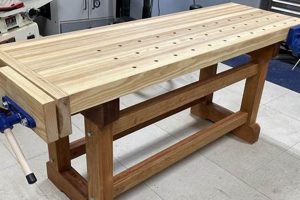
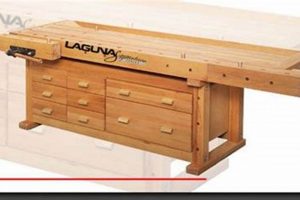
The practice involves elevating a smaller, more mobile work surface onto a larger, sturdier platform. This arrangement allows woodworkers to optimize their posture and bring the workpiece closer to eye level. For example, a craftsman might place a smaller, custom-built bench on top of a larger workbench to facilitate detailed carving or intricate joinery.
This technique provides several advantages. It can enhance ergonomic comfort, reducing strain on the back and shoulders during extended periods of focused work. The raised platform can also improve visibility, facilitating precision and accuracy. Historically, this method reflects an adaptive approach to tool and workspace optimization, predating standardized workbench heights.
This setup provides a foundation for several key considerations when designing a workshop. The primary bench should be solid, stable, and capable of withstanding heavy use, while the secondary bench should be lightweight, maneuverable, and tailored to specific project requirements. Proper selection of materials and construction methods ensures both safety and optimal performance.
Essential Considerations
The following guidelines address critical aspects for successful implementation of the elevated work platform strategy.
Tip 1: Stability is Paramount: The foundation bench must exhibit unwavering stability. Secure its footing to the floor if necessary. Any wobble compromises precision and safety.
Tip 2: Optimize Height Incrementally: Introduce elevation adjustments gradually. Ascertain the optimal height for prolonged comfort and minimal strain through iterative testing with representative projects.
Tip 3: Prioritize Secure Attachment: Implement a reliable fastening system between the two surfaces. This could involve non-slip pads, integrated clamping mechanisms, or strategically placed bench dogs to prevent slippage during forceful operations.
Tip 4: Control Work Zone: Define the work envelope on the upper surface. Prevent tools or materials from encroaching beyond its boundaries, potentially causing falls or obstructions.
Tip 5: Select Appropriate Materials: Ensure both platforms are crafted from materials with sufficient load-bearing capacity for the anticipated workload. Employ hardwoods like maple or beech for maximum rigidity and longevity.
Tip 6: Account for Reach: Evaluate the impact on access to surrounding tools and materials. Reposition frequently used items to maintain ergonomic efficiency and workflow.
Tip 7: Conduct Periodic Inspections: Routinely scrutinize the entire setup for wear, loosening of fasteners, or signs of structural fatigue. Promptly address any deficiencies to prevent catastrophic failure.
Adhering to these principles can significantly enhance workflow, precision, and long-term physical well-being.
Consider this framework as a starting point; continuous refinement based on individual requirements remains crucial for optimal outcome.
1. Ergonomic Height

Ergonomic height constitutes a primary driver in the adoption of elevated workbench configurations. The practice directly addresses the limitations of standard workbench heights, which may prove unsuitable for individuals of varying statures or for specific tasks demanding heightened precision. Utilizing a smaller bench atop a larger one allows woodworkers to customize the work surface elevation, mitigating strain on the back, shoulders, and neck. For instance, a craftsman performing intricate inlay work might elevate the project to eye level, reducing the need to hunch over the workpiece. This targeted adjustment enhances comfort and minimizes the risk of musculoskeletal disorders associated with prolonged or repetitive motions.
The application of ergonomic principles extends beyond mere comfort. Improved posture and reduced physical strain directly translate to enhanced focus and accuracy. When a woodworker can maintain a comfortable and natural position, they are better able to concentrate on the details of the project, leading to higher quality craftsmanship. Furthermore, fatigue is reduced, allowing for longer and more productive work sessions. Cabinet makers, carvers, and luthiers are just a few of the woodworkers who would find particular value in optimized ergonomics.
Therefore, the determination of ergonomic height through the employment of an elevated platform is not merely an optional enhancement; it represents a fundamental aspect of optimizing the woodworking workspace. By prioritizing comfort and proper posture, the elevated workbench strategy contributes to improved health, increased productivity, and enhanced precision in the execution of woodworking projects. Neglecting this critical factor can lead to long-term physical ailments and diminished work quality.
2. Stable Foundation

In “bench on bench woodworking,” a stable foundation serves as the bedrock for precision and safety. Its integrity underpins the effectiveness of any elevated work surface, influencing the accuracy and control achievable during woodworking operations. Any deficiency in the base structure propagates throughout the entire system, potentially compromising project quality and user safety.
- Weight Distribution and Load Capacity
The base bench must possess adequate weight distribution and load capacity to support both the upper bench and the workpiece. Uneven weight distribution leads to instability, potentially causing the upper bench to shift or topple. Consider, for instance, a large slab of hardwood placed off-center; an inadequate base could fail, leading to a hazardous situation. The base must also accommodate the dynamic forces generated during hammering, sawing, and other aggressive woodworking techniques.
- Rigidity and Dampening Characteristics
Rigidity is paramount to minimize vibration and flex. A rigid base transmits less energy to the upper bench, improving accuracy in tasks requiring fine motor control. Damping characteristics further enhance stability by absorbing vibrations generated by power tools or hand tools. A workbench constructed from dense hardwood, such as maple, is often preferred for its superior rigidity and damping capabilities compared to softer woods or lightweight materials.
- Footing and Floor Contact
Proper footing and floor contact ensure that the base remains firmly planted. Uneven floors can introduce wobble, necessitating adjustable feet to level the workbench. Non-slip pads or rubber feet further enhance stability by increasing friction and preventing movement. In some cases, securing the base to the floor might be necessary to achieve absolute stability, particularly for heavy-duty applications.
- Joinery and Structural Integrity
The joinery connecting the various components of the base bench must be robust and well-executed. Weak joints can lead to racking, where the bench distorts under load, compromising its stability and squareness. Traditional joinery techniques, such as mortise-and-tenon or dovetail joints, are often favored for their strength and durability. Regular inspection and maintenance of the joinery are essential to ensure long-term structural integrity.
A stable foundation is not merely a desirable attribute but an indispensable prerequisite for successful “bench on bench woodworking.” It directly influences precision, safety, and overall quality of the woodworking process. Failure to adequately address stability concerns can negate the benefits of the elevated work surface and expose the user to unnecessary risks.
3. Secure Coupling

Secure coupling within the context of “bench on bench woodworking” denotes the methods and mechanisms used to reliably join the upper and lower work surfaces. Its role extends beyond mere physical attachment, influencing the stability, safety, and precision of woodworking operations performed on the elevated platform. Inadequate coupling compromises the benefits of ergonomic height and can introduce hazards.
- Friction-Based Methods
Friction-based coupling employs high-friction materials between the surfaces to resist slippage. Examples include rubber mats, non-slip pads, or specialized coatings applied to the contact areas. This approach relies on the coefficient of friction and the applied normal force (weight) to prevent relative movement. In practice, friction-based methods are suitable for light to moderate workloads but may prove inadequate for tasks involving significant lateral forces or vibrations.
- Mechanical Fasteners
Mechanical fasteners, such as bolts, clamps, or screws, provide a more positive and robust connection. These fasteners generate compressive forces that clamp the two surfaces together, resisting both vertical and horizontal displacement. Examples include toggle clamps that secure the upper bench to the lower bench’s apron or screws that attach cleats to both surfaces. Mechanical fasteners offer greater security than friction-based methods, especially when subjected to heavy loads or repetitive impacts. The type and placement of fasteners must be carefully considered to avoid weakening the structural integrity of either bench.
- Bench Dog Systems
Bench dog systems leverage the existing dog holes present in many workbenches to create a secure interlocking connection. Dowels or metal dogs are inserted into corresponding holes in both the upper and lower surfaces, preventing lateral movement. This approach offers flexibility and ease of adjustment while maintaining a relatively strong connection. The effectiveness of a bench dog system depends on the precision of the dog holes and the strength of the bench dogs themselves. Variations include using wedge-shaped dogs to create a tighter fit or incorporating clamping mechanisms within the dog holes.
- Integrated Joinery
Integrated joinery involves incorporating structural features into the design of both benches to create a self-aligning and interlocking connection. Examples include creating a recess in the upper bench that fits snugly over a corresponding projection on the lower bench or using dovetail joints to connect the two surfaces. Integrated joinery offers the highest level of security and stability but requires careful planning and precise execution. This approach is often preferred for permanent or semi-permanent elevated workbench setups where maximum rigidity is paramount.
The selection of an appropriate secure coupling method is contingent upon the specific application, the anticipated workload, and the desired level of adjustability. While friction-based methods offer simplicity and convenience, mechanical fasteners, bench dog systems, and integrated joinery provide increasing levels of security and stability. Regardless of the chosen method, prioritizing a robust and reliable connection is paramount to ensure the safety and precision of woodworking operations performed within the “bench on bench woodworking” framework. Compromising on secure coupling undermines the entire concept.
4. Material Selection

Material selection is a cornerstone of successful “bench on bench woodworking,” directly affecting stability, durability, and overall performance. The choice of materials for both the primary and secondary benches dictates the system’s capacity to withstand loads, resist deformation, and maintain a safe, functional workspace.
- Wood Species and Density
The selection of wood species exerts a profound influence on workbench stability and load-bearing capacity. Dense hardwoods, such as maple, beech, and oak, offer superior strength and resistance to deformation compared to softer woods like pine or fir. A base bench constructed from maple provides a solid foundation capable of supporting significant weight and resisting racking forces. The upper bench, while potentially benefiting from hardwood construction, might also utilize lighter-weight options depending on its specific function. The interplay between the densities of the two materials impacts the overall center of gravity and stability of the system.
- Dimensional Stability and Moisture Content
Dimensional stability, the ability of a material to maintain its shape and size under varying moisture conditions, is a crucial consideration. Wood is hygroscopic, meaning it absorbs and releases moisture from the surrounding environment, causing it to expand and contract. Selecting wood with low moisture content and employing techniques to minimize moisture fluctuations are essential for preserving the flatness and integrity of both benches. Kiln-dried lumber is preferred for its reduced moisture content and improved dimensional stability. Applying a sealant or finish further mitigates moisture absorption and minimizes the risk of warping or cracking.
- Hardware and Fasteners
The selection of hardware and fasteners, while seemingly secondary, plays a critical role in the structural integrity of the “bench on bench” system. Screws, bolts, and other fasteners must possess sufficient strength and corrosion resistance to withstand the stresses imposed by woodworking operations. High-quality steel fasteners are generally preferred over softer materials like brass or aluminum. The type of thread, head style, and shank diameter should be carefully chosen to match the specific application. Proper pre-drilling and countersinking techniques are essential to prevent splitting and ensure a secure, flush connection. The interplay between the wood species and the fastener material impacts the holding power and longevity of the joint.
- Surface Finish and Coatings
The application of a surface finish or coating serves multiple purposes: protecting the wood from moisture, enhancing its aesthetic appeal, and providing a smooth, durable work surface. Oil-based finishes, such as linseed oil or tung oil, penetrate the wood fibers, providing protection from within. Film-forming finishes, such as varnish or lacquer, create a protective barrier on the surface. The choice of finish depends on the desired level of protection, the aesthetic preference, and the intended use of the workbench. A durable, non-slip finish is particularly important for the upper bench to prevent tools and workpieces from sliding off. The application of multiple coats and proper curing techniques are essential for achieving optimal protection and durability.
These facets underscore the integral connection between material selection and the success of “bench on bench woodworking.” Thoughtful consideration of wood species, dimensional stability, hardware, and surface finishes ensures a stable, durable, and functional workspace, enhancing both safety and precision in woodworking endeavors. Neglecting these considerations can lead to compromised structural integrity, reduced lifespan, and potential hazards.
5. Workpiece Accessibility
Workpiece accessibility, the ease with which a woodworker can position, manipulate, and interact with the material being worked on, is significantly influenced by the configuration of a “bench on bench woodworking” setup. Optimal accessibility promotes efficiency, precision, and reduced physical strain. When the workpiece is readily within reach and clearly visible, the craftsman can execute intricate tasks with greater confidence and accuracy.
- Optimal Height and Angle Positioning
The elevated platform allows for precise adjustment of the workpiece height, bringing it closer to the user’s natural line of sight. This reduces the need to bend or hunch over, minimizing strain on the back and neck. Furthermore, the secondary bench can facilitate angling the workpiece, providing improved access to specific areas for carving, shaping, or joinery. The capacity to fine-tune the height and angle contributes to a more comfortable and efficient working posture.
- Reduced Reach and Physical Strain
By bringing the workpiece closer to the woodworker, the elevated bench reduces the distance required to reach tools and materials. This minimizes unnecessary stretching and strain on the arms, shoulders, and back. A smaller, more manageable work area on the upper bench concentrates the focus and reduces the need to move around the workbench frequently. The reduction in physical exertion translates to increased productivity and reduced risk of repetitive strain injuries.
- Enhanced Visibility and Lighting
Elevating the workpiece can improve visibility, especially when combined with strategically positioned lighting. A raised platform brings the work surface into a better-lit zone, reducing shadows and enhancing detail perception. This is particularly beneficial for intricate tasks such as carving, inlay work, or fine joinery. Improved visibility minimizes errors and promotes greater precision in the execution of delicate operations.
- Flexible Workspace Configuration
The “bench on bench” approach provides a flexible workspace configuration that can be adapted to various project needs. The upper bench can be easily removed or repositioned to accommodate different workpiece sizes or tasks. This modularity allows the woodworker to optimize the workspace for specific operations, promoting efficiency and versatility. For example, a smaller bench might be used for carving, while a larger, flatter surface is preferred for assembly work.
These facets exemplify how the design and implementation of a “bench on bench woodworking” system directly impact workpiece accessibility. The capacity to optimize height, reduce reach, enhance visibility, and configure the workspace flexibly collectively contribute to a more ergonomic and efficient woodworking experience. Prioritizing workpiece accessibility within the “bench on bench” framework translates to improved precision, reduced physical strain, and enhanced overall craftsmanship.
Frequently Asked Questions
The subsequent section addresses common queries regarding the implementation and optimization of the elevated workbench strategy.
Question 1: What distinguishes this method from simply using a taller workbench?
This approach offers modularity and task-specific optimization absent in fixed-height workbenches. A standard, taller workbench sacrifices stability and comfort for tasks requiring lower working heights. The elevated system facilitates adjustments tailored to both the woodworker’s stature and the demands of the project.
Question 2: What is the recommended height differential between the primary and secondary benches?
The optimal height differential is subjective and depends on individual ergonomics. A general guideline suggests starting with a 6-inch elevation and adjusting incrementally until a comfortable working posture is achieved. The shoulders should be relaxed, and the elbows bent at approximately 90 degrees when performing typical tasks.
Question 3: Does this configuration compromise the stability of the work surface?
Stability is contingent upon the proper implementation of coupling strategies. Friction-based methods suffice for light work, whereas mechanical fasteners or integrated joinery are recommended for heavy-duty applications. The base bench must be adequately weighted and level to ensure a secure foundation.
Question 4: What materials are best suited for constructing the secondary bench?
The choice of materials depends on the intended use and load-bearing requirements. Hardwoods, such as maple or beech, offer superior rigidity and durability. However, lighter materials, such as plywood or softwood, may be appropriate for tasks requiring portability and maneuverability. Dimensional stability is crucial to prevent warping or cracking.
Question 5: How does this arrangement impact access to surrounding tools and materials?
The elevated platform can alter the spatial relationships within the workspace. Re-evaluation of tool placement and storage solutions may be necessary to maintain ergonomic efficiency. Frequently used items should be positioned within easy reach to minimize unnecessary stretching or bending.
Question 6: Is this technique suitable for all types of woodworking projects?
The elevated workbench setup is versatile but may not be ideal for every application. Large-scale projects requiring significant floor space or those involving heavy machinery may be better suited to a traditional workbench configuration. However, this is very effective for intricate carving, joinery, and detail work.
In summary, thoughtful consideration of ergonomic principles, material selection, and coupling strategies is essential for realizing the full potential of this method.
The concluding section examines case studies and practical implementations of these techniques.
Conclusion
The preceding exploration of “bench on bench woodworking” has elucidated its fundamental principles, encompassing ergonomic considerations, stability protocols, coupling mechanisms, material selection criteria, and workpiece accessibility enhancements. Each element contributes to a synergistic system designed to optimize the woodworking environment.
The effective implementation of these techniques demands meticulous planning and diligent execution. The pursuit of precision and safety remains paramount. Continuous refinement, guided by practical experience, should be embraced. Woodworkers are encouraged to adapt these guidelines to meet their unique needs and to further advance the craft.

![Top-Rated Best Portable Woodworking Bench [2024 Guide] | Step-by-Step Guides, Tools & Inspiration to Build Beautiful Wooden Decor on a Budget](https://woodfromhome.com/wp-content/uploads/2026/05/th-181-300x200.jpg "Top-Rated Best Portable Woodworking Bench [2024 Guide] Step-by-Step Guides, Tools & Inspiration to Build Beautiful Wooden Decor on a Budget")