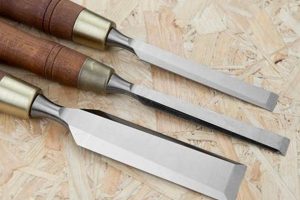
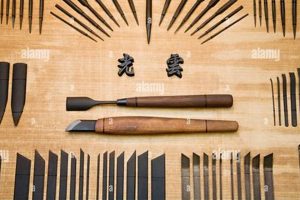
Specialized implements employed in shaping and manipulating wood, not commonly found in contemporary workshops, represent a significant facet of the craft’s history. These often pre-date mass production and exemplify ingenuity in design and functionality. A complex molding plane designed for a specific architectural detail serves as one instance of such an item.
The value of these items extends beyond mere utility. They offer insights into past woodworking techniques, trade practices, and the evolution of tool manufacturing. Furthermore, preservation efforts ensure that these pieces of history continue to inform and inspire current and future generations of craftspeople. Collecting them fosters an appreciation for the artistry and skill inherent in traditional woodworking.
The following discussion will delve into the characteristics that define collectibility, explore specific examples, and consider the resources available for identification and evaluation. Furthermore, the ethical considerations involved in acquisition and preservation will be addressed.
Tips for Identifying and Preserving Uncommon Carpentry Instruments
The acquisition and maintenance of uncommon carpentry instruments necessitate a methodical approach. Thorough research and careful handling are crucial for preserving their historical and functional value.
Tip 1: Conduct Thorough Research: Before acquiring any specimen, investigate its provenance, manufacturer, and typical applications. Historical catalogs, online databases, and scholarly articles can provide valuable insights.
Tip 2: Examine for Identifying Marks: Closely scrutinize the instrument for maker’s marks, patent dates, or owner’s stamps. These markings are essential for accurate identification and authentication.
Tip 3: Assess Condition Carefully: Evaluate the tool’s physical state, noting any cracks, rust, or missing parts. Prioritize examples that retain their original form and functionality.
Tip 4: Employ Gentle Cleaning Techniques: Avoid abrasive cleaners that can damage delicate surfaces. Use soft brushes, gentle solvents, and appropriate conservation methods to remove dirt and grime.
Tip 5: Implement Proper Storage Practices: Store items in a dry, stable environment to prevent corrosion and warping. Consider using archival-quality materials for wrapping and cushioning.
Tip 6: Document All Findings: Maintain a detailed record of each instrument’s history, condition, and any conservation treatments performed. This documentation enhances its long-term value and aids future research.
Tip 7: Seek Expert Consultation: Consult with experienced collectors, museum curators, or antique tool specialists for guidance on identification, valuation, and preservation techniques.
Careful examination, appropriate care, and informed decision-making are crucial in maintaining the value and integrity of uncommon carpentry instruments.
The following sections will explore the specific aspects of collecting, detailing strategies for finding tools and building a unique collection.
1. Rarity

The concept of scarcity directly influences the valuation and collectibility of woodworking implements. Limited production runs, specialized usage, or historical events contribute to an item’s uncommon status. Consequently, those items become desirable among collectors and museums. The limited availability amplifies the inherent value, transforming the tools from mere implements into artifacts of historical significance. A tool produced for a short duration due to a design flaw or low market demand invariably becomes scarcer over time.
Scarcity affects more than just monetary worth; it also determines the efforts collectors will take to acquire a piece. An example of this phenomenon is the complex molding planes manufactured by the now-defunct Mathieson firm. Specific, finely detailed iterations of these molding planes command high prices and require extensive search efforts. These planes were used for architectural moldings that are no longer common; therefore, their function became a niche skill, causing rarity. Tools with intricate designs or unique features are, by their very nature, less common, further driving up demand within the collecting community.
Understanding rarity is paramount in assessing the true value and significance of a particular woodworking artifact. Rarity can be attributed to various factors, ranging from accidental loss to deliberate restriction of availability; recognizing these drivers allows collectors to make informed decisions and appreciate the historical context within which these remarkable tools exist. Recognizing the rarity, preservation efforts are encouraged to maintain the woodworking heritage tools for the future generation.
2. Functionality

The operational utility of uncommon carpentry implements exerts a substantial influence on their valuation and desirability among collectors and historians. While rarity and historical significance are crucial factors, the degree to which a tool retains its intended functionality often dictates its practicality and appeal.
- Operational Integrity
A tool that remains capable of performing its original task is generally more valued than a non-functional counterpart. Preservation of cutting edges, mechanical components, and adjustment mechanisms is critical to maintaining operational integrity. For example, a complex joinery plane with intact blades and fully functional adjustment screws represents a higher value to a collector aiming to demonstrate its capabilities.
- Demonstration and Education
Functional items offer opportunities for demonstrating historical woodworking techniques and educating contemporary craftspeople. A working example allows observers to appreciate the tool’s design and intended application. A fully operational dovetail jig, for instance, can instruct on traditional joinery methods and highlight the precision of early craftsmanship.
- Restoration Potential
Even if a tool is not currently in working order, its potential for restoration can significantly impact its value. Complete, albeit damaged, items are often more desirable than fragmented or incomplete examples. The viability of replacing or repairing critical components determines the restoration potential; a damaged but complete complex moulding plane, with all original parts present, may be valued higher than an incomplete or heavily damaged example.
- Practical Application
While many collectors focus on preservation, some actively use uncommon implements in their woodworking projects. A functional item enables the continuation of traditional techniques and produces results that modern tools cannot replicate. A functional smoothing plane crafted by a renowned maker may be used to achieve a superior surface finish on fine woodworking projects.
The correlation between functionality and desirability underscores the significance of preservation efforts aimed at maintaining both the historical and operational aspects of uncommon carpentry tools. Preserving their utility allows for a deeper understanding and appreciation of traditional woodworking practices.
3. Provenance
Provenance, referring to an item’s documented history and chain of ownership, constitutes a critical determinant of value and historical significance in the realm of uncommon carpentry implements. A well-documented provenance establishes authenticity, provides context, and enhances the overall appeal to collectors and institutions.
- Maker Identification and History
A clear lineage tracing the item to its original craftsman or manufacturing firm is paramount. Identifying the maker allows for verification of authenticity and contextualization within the broader history of toolmaking. Maker’s marks, stamps, or labels directly link a tool to a particular individual or workshop. Records detailing the maker’s life, business practices, and other known creations bolster confidence in the item’s origins. For example, a rare Norris plane accompanied by documents confirming its manufacture and sale by the Norris company significantly increases its value and historical importance.
- Previous Ownership and Usage
Documented ownership by notable woodworkers, historical figures, or significant institutions adds to the item’s narrative and cultural value. Information regarding the tool’s use, such as specific projects it was employed in, provides insights into historical woodworking practices. Bills of sale, inventories, or photographs demonstrating the tool’s use in a particular workshop or construction project authenticate the history. An uncommon brace owned and used by a renowned furniture maker, supported by verifiable records, enhances its desirability among collectors.
- Acquisition and Transfer Records
A detailed record of how the item changed hands over time is crucial for establishing a complete provenance. This includes auction records, dealer inventories, private sales agreements, and donation receipts. Gaps in the chain of ownership can raise questions about authenticity and hinder valuation. A rare hand saw with a continuous record of ownership from its original purchase to the present day, complete with supporting documentation, lends credibility and boosts its market value.
- Geographic Context and Origin
Tracing the geographic location of the tool’s creation and usage provides essential context. Understanding the regional woodworking traditions and the availability of materials informs the tool’s design and function. Information about the specific workshop location, region where the tool was made, or the location where the tool was used is valuable for understanding regional woodworking traditions. For instance, a unique plane design originating from a specific German town, supported by local historical records, provides insight into regional craftsmanship and elevates its importance within a specialized collection.
The confluence of these factorsmaker identification, ownership history, transfer records, and geographic originconverges to form a comprehensive provenance, enriching the historical and cultural value of rare carpentry implements and promoting informed stewardship within the collecting community. A well-researched and documented provenance not only protects the investment of collectors but also preserves the legacy of traditional woodworking practices.
4. Condition

The state of preservation significantly impacts the value and collectibility of uncommon carpentry implements. Deterioration or damage directly diminishes an artifact’s worth and historical significance. Factors contributing to condition encompass environmental exposure, usage patterns, and previous attempts at restoration, each leaving distinct traces on the artifact. For instance, excessive rust due to improper storage can compromise the integrity of a metal plane body, while poorly executed repairs may obscure original features or damage delicate components. Tools subjected to heavy use often exhibit wear patterns indicative of their function, which, while demonstrating historical application, can also reduce their structural integrity. An unmodified, well-preserved example of a rare moulding plane generally commands a significantly higher price than a comparable, heavily worn, or poorly repaired specimen.
Evaluation of the artifact’s condition necessitates a meticulous assessment of all components. This encompasses examining metal parts for corrosion, wood components for rot or insect damage, and cutting edges for sharpness and integrity. The presence of original finishes, such as japanning or varnish, is also critical. While minor imperfections may be acceptable on very old or exceedingly uncommon pieces, severe damage typically reduces desirability and value. Furthermore, the degree to which a restoration respects the item’s original character influences its worth. Professional conservation treatments, aimed at stabilizing the artifact while preserving its historical integrity, enhance value, while aggressive or ill-considered interventions can be detrimental. For example, a brace with a missing chuck or a heavily pitted saw blade will hold less value than one that is complete and has minimal wear and tear.
The connection between condition and value underscores the importance of proper storage and handling practices. Maintaining a stable environment, free from excessive humidity and temperature fluctuations, is crucial for preventing deterioration. Gentle cleaning methods, using appropriate materials and techniques, are essential for removing dirt and grime without damaging delicate surfaces. Ethical considerations also come into play when considering restoration; interventions should be reversible and undertaken with the primary goal of preservation. By understanding the significance of condition and adopting responsible preservation practices, collectors and institutions can ensure the longevity and historical value of these uncommon carpentry tools.
5. Materials

The substances constituting woodworking implements directly influence their rarity, functionality, and historical significance. The selection and processing of raw materials, from hardwoods to specialized metals, reflect both the era of production and the intended application of the tool. Durable hardwoods, such as rosewood or ebony, often designated for handles or bodies, exhibit resistance to wear, while high-carbon steels contribute to the sharpness and longevity of cutting edges. The scarcity of specific materials, whether due to depleted resources or trade restrictions, elevates the rarity of tools crafted from them. For instance, tools incorporating ivory or tropical hardwoods, materials now subject to strict regulations, are often deemed more valuable due to limited availability.
The interplay between material properties and tool design further amplifies the importance of material considerations. The crafting of intricate molding planes necessitates precise metalworking techniques, including tempering and hardening. The quality of the steel used in a saw blade dictates its cutting efficiency and resistance to deformation. The choice of wood for a mallet or hammer handle affects its shock absorption and overall balance. The presence of specific materials can also provide clues to the tool’s origin and intended market. The use of locally sourced timber or imported metals often signifies the tool’s geographic provenance and its intended use within a particular trade or craft. Tools incorporating rare or exotic materials showcase the craftsmanship and dedication of the artisans and manufacturers, as well as their ability to source valuable resources.
Understanding the materials utilized in woodworking instruments enables a deeper appreciation of their history and functionality. Recognizing the composition and properties of different components aids in proper preservation and restoration efforts. By studying material selection and manufacturing techniques, contemporary craftspeople can gain insights into traditional woodworking practices and enhance their own skills. Thus, the knowledge of materials serves as a bridge between past craftsmanship and future innovations, ensuring the longevity and appreciation of these objects of functional art.
6. Maker's Mark

The identification and interpretation of maker’s marks serve as a cornerstone in authenticating and valuing uncommon carpentry implements. These often-subtle inscriptions provide crucial evidence linking an item to a specific craftsman, workshop, or manufacturing entity, enabling a deeper understanding of its origin and historical context.
- Authenticity and Attribution
A maker’s mark functions as a signature, verifying the origin of the tool. It provides a direct link to a specific artisan or manufacturing company. For instance, the presence of a clearly struck “Spiers” mark on a metal plane immediately suggests its manufacture by the renowned Scottish firm, contributing to its authenticity and value. In the absence of such marks, attribution becomes challenging, often relying on stylistic analysis and circumstantial evidence.
- Dating and Historical Context
Maker’s marks, when coupled with historical records, facilitate the precise dating of tools. Changes in a company’s logo, address, or manufacturing processes can provide valuable clues about the period of production. A mark including a patent date, for example, provides a definitive earliest date of manufacture. Furthermore, researching the history of the maker and their business practices offers insights into the economic and social conditions that influenced tool production.
- Rarity and Collectibility
The identity of the maker significantly impacts the tool’s rarity and desirability among collectors. Tools produced by renowned craftsmen or limited-production workshops often command higher prices. A plane bearing the mark of a relatively unknown but skilled artisan might be considered uncommon, attracting collectors specializing in regional or niche toolmaking traditions. Similarly, items produced during a maker’s brief period of operation may also increase a tool’s scarcity and value.
- Material and Construction Analysis
In conjunction with the maker’s mark, analysis of the materials and construction techniques used in the tool’s manufacture can reveal additional details about its origin and quality. Comparing the craftsmanship and materials to known examples from the same maker can support the attribution. The consistent use of high-quality steel, specific wood types, or unique joinery techniques can serve as further evidence of the tool’s authenticity and value. Analysis of these elements in combination with the maker’s mark contributes to a more complete understanding of the tool’s origins.
The presence, legibility, and documentation of maker’s marks on uncommon carpentry implements are critical factors in their identification, valuation, and preservation. These marks serve as tangible connections to the past, enabling collectors and historians to understand and appreciate the craftsmanship and heritage embodied in these artifacts.
7. Authenticity

In the realm of uncommon carpentry implements, establishing authenticity transcends mere verification; it represents a critical process of historical validation and value determination. A confirmed origin ensures the artifact’s narrative integrity and preserves its cultural significance for future generations.
- Material Analysis and Dating
Scientific techniques, such as dendrochronology for wooden components and metallurgical analysis for metal parts, provide objective evidence of age and composition. These methods reveal whether the materials are consistent with the purported period of manufacture. For instance, the identification of specific alloys or wood species known to be used during a particular era strengthens the claim of authenticity. Discrepancies uncovered through material analysis can raise serious questions regarding an instrument’s genuineness.
- Construction Techniques and Toolmarks
Analysis of joinery methods, hardware types, and toolmarks offer insights into the manufacturing processes employed during a specific period. Woodworking techniques, such as hand-cut dovetails or mortise-and-tenon joints, vary across time periods and geographic regions. Examining toolmarks left by planes, saws, and chisels can reveal whether these were made using period-appropriate tools and techniques. Inconsistencies between construction methods and the claimed period of origin can indicate a reproduction or alteration.
- Historical Records and Documentation
Corroborating an artifact’s history through historical records, such as trade catalogs, patent filings, and workshop inventories, lends further credence to its authenticity. Matching maker’s marks, tool designs, or manufacturing details with entries in archival sources strengthens the claim of originality. Documentation tracing the tool’s ownership and usage patterns adds to its provenance and reinforces its historical significance. The absence of supporting documentation raises questions about the artifact’s legitimacy.
- Expert Appraisal and Authentication
Consultation with experienced collectors, museum curators, and antique tool specialists provides valuable expertise in assessing authenticity. These experts possess in-depth knowledge of historical toolmaking practices, maker’s marks, and material properties. Their assessment, based on a comprehensive examination of the artifact and its accompanying documentation, offers a professional opinion on its genuineness. While not a guarantee, expert appraisal contributes significantly to the process of authentication.
The convergence of material analysis, construction technique evaluation, historical record verification, and expert appraisal forms a robust framework for establishing the authenticity of uncommon carpentry implements. The pursuit of verifiable authenticity safeguards the integrity of historical narratives and protects the value of these tangible artifacts from the past.
Frequently Asked Questions
This section addresses common inquiries regarding uncommon carpentry instruments, providing concise and factual answers to enhance understanding and inform responsible collection practices.
Question 1: What criteria define a woodworking tool as “rare?”
Rarity in woodworking instruments arises from limited production, specialized applications, or historical circumstances resulting in diminished availability. This can be a function of short production runs, tools designed for niche trades, or those made with materials that are no longer obtainable.
Question 2: How does condition affect the value of a collectible tool?
Condition is a paramount determinant of value. Tools in pristine, original condition generally command significantly higher prices than those exhibiting wear, damage, or poorly executed repairs. Conservation efforts that preserve original features enhance value.
Question 3: What is the significance of a maker’s mark on a woodworking implement?
A maker’s mark serves as a critical indicator of authenticity, linking the instrument to a specific craftsman, workshop, or manufacturing entity. The presence of a recognized mark facilitates accurate dating, identification, and valuation, thereby solidifying the tool’s historical importance.
Question 4: How does provenance contribute to a tool’s collectibility?
Provenance, or the documented history of ownership, adds essential context and enhances the appeal of a woodworking artifact. A clear lineage tracing the instrument to notable woodworkers, historical figures, or significant events elevates its value and confirms its historical authenticity.
Question 5: What are the key considerations when restoring a vintage woodworking tool?
Restoration endeavors should prioritize the preservation of original materials and construction techniques. Interventions should be reversible and undertaken with the primary goal of stabilizing the artifact. Unethical modifications may irreversibly damage the historical worth of an item.
Question 6: Where can one locate resources to research uncommon carpentry instruments?
Valuable resources include historical tool catalogs, online databases specializing in antique tools, scholarly articles published by historical societies, and the expertise of seasoned collectors and museum curators.
Understanding these elements ensures collectors maintain the historical and monetary integrity of their collection. Preservation efforts remain paramount in safeguarding these artifacts.
The following section will deal with where to find tools.
Concluding Remarks on Uncommon Woodworking Instruments
This exploration has illuminated the multifarious aspects of “rare woodworking tools,” emphasizing their historical, functional, and material significance. Attributes such as scarcity, condition, provenance, and maker’s marks collectively influence their valuation and collectibility. Ethical considerations in acquisition and restoration have been highlighted as crucial for preserving their inherent worth.
The continued study and responsible preservation of these implements ensure the legacy of traditional woodworking endures. By acknowledging their inherent value and historical context, future generations can continue to learn from and appreciate the ingenuity of past artisans. The survival of these objects is crucial for continued innovation.
![Buy Woodworking Tools Sales Online - [Your Brand] | Step-by-Step Guides, Tools & Inspiration to Build Beautiful Wooden Decor on a Budget](https://woodfromhome.com/wp-content/uploads/2026/05/th-213-300x200.jpg "Buy Woodworking Tools Sales Online - [Your Brand] Step-by-Step Guides, Tools & Inspiration to Build Beautiful Wooden Decor on a Budget")