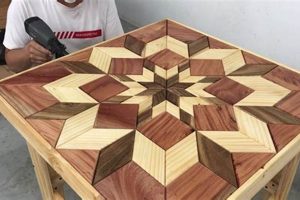
The realm of crafting functional and artistic objects from timber encompasses a wide spectrum of approaches. This field necessitates both technical proficiency and imaginative conceptualization. The outcome can range from meticulously constructed furniture pieces to uniquely sculpted decorative items, showcasing the inherent beauty and versatility of wood as a medium.
The value of innovative approaches to timber craftsmanship lies in its potential to elevate everyday objects to the level of art, providing aesthetic enrichment and functional utility. Historically, woodworking has been fundamental to civilization, providing shelter, tools, and transportation. Modern interpretations build upon this legacy, integrating contemporary design principles and technological advancements.
The following sections will delve into specific areas of focus within this diverse craft, including techniques for surface embellishment, utilization of reclaimed materials, and the integration of technology to enhance both the design and fabrication processes. These explorations aim to inspire novel approaches and expand the possibilities within this traditional yet constantly evolving discipline.
Practical Guidance for Woodworking Innovation
The following guidelines offer actionable insights intended to foster greater ingenuity and skill within the craft of woodworking. Adherence to these principles can lead to enhanced project outcomes and a deeper appreciation for the material.
Tip 1: Embrace Material Experimentation: Broaden the scope of timber selection beyond conventional species. Investigate the properties of locally sourced or reclaimed wood, noting variations in grain, density, and workability. This exploration can inform design choices and yield unique aesthetic results.
Tip 2: Integrate Digital Design Tools: Employ Computer-Aided Design (CAD) software to prototype complex forms and optimize material usage. These tools enable precise planning and facilitate the creation of intricate joinery, maximizing both structural integrity and visual appeal.
Tip 3: Master Surface Treatment Techniques: Venture beyond traditional staining and varnishing. Experiment with alternative finishes, such as milk paint, Shou Sugi Ban (Japanese charring), or epoxy resin casting, to add depth, texture, and durability to finished pieces.
Tip 4: Incorporate Mixed Media Elements: Combine timber with complementary materials like metal, glass, or concrete to create visually compelling contrasts and expand the functional possibilities of woodworking projects. This interdisciplinary approach can introduce unexpected textures and structural elements.
Tip 5: Prioritize Ergonomic Design: When creating functional objects, meticulously consider the human interface. Design prototypes that prioritize user comfort and efficiency, ensuring that the final product is both aesthetically pleasing and practical for its intended purpose.
Tip 6: Refine Joinery Skills: Invest time in mastering advanced joinery techniques beyond basic butt joints. Explore mortise and tenon, dovetail, and mitered joints to enhance the structural integrity and visual refinement of woodworking projects. Precise joinery is a hallmark of quality craftsmanship.
Tip 7: Document and Iterate: Maintain a detailed record of each project, including sketches, material specifications, and process notes. This documentation serves as a valuable resource for future reference, enabling continuous improvement and refinement of woodworking skills.
The integration of these guidelines into practice can significantly enhance the quality, functionality, and aesthetic appeal of woodworking projects. Consistent application of these principles fosters innovation and elevates the craft to a higher standard.
The subsequent segments of this article will further explore advanced techniques and project ideas, building upon the foundational principles outlined above.
1. Form

Form, in the context of timber craftsmanship, directly dictates the physical manifestation of creative conceptualizations. It encompasses the overall shape, structure, and spatial arrangement of a woodworking project. The chosen form profoundly influences the project’s functionality, aesthetic appeal, and structural integrity. A poorly conceived form can undermine the purpose of the piece, rendering it impractical or aesthetically unpleasing. Conversely, an innovative and well-executed form can elevate a simple object into a work of art, significantly increasing its value and utility.
The importance of form is exemplified by the evolution of chair design. Early chairs were rudimentary, prioritizing basic support over comfort or style. Through iterative design and experimentation with form, chairs have evolved into ergonomically optimized and visually diverse objects. Modern examples, such as the Eames Lounge Chair, demonstrate the profound impact of thoughtfully designed form on both comfort and aesthetic appeal. The chair’s carefully sculpted curves and contours provide optimal support and visual harmony, showcasing the transformative potential of well-considered form in woodworking.
A clear understanding of form is vital for successful woodworking. Challenges may arise in translating abstract ideas into tangible, structurally sound designs. Mastering techniques like 3D modeling and prototyping can mitigate these challenges, enabling woodworkers to explore and refine forms before committing to final fabrication. Ultimately, a deep appreciation for form allows woodworkers to bridge the gap between creative vision and practical execution, producing pieces that are both aesthetically pleasing and functionally effective, contributing significantly to innovative woodworking outcomes.
2. Function

Functionality represents a cornerstone in the realm of woodworking, intrinsically linked to the successful realization of innovative concepts. The intended purpose of a piece directly informs its design, material selection, and construction methods. Ignoring or inadequately addressing the functional requirements of a woodworking project will invariably lead to compromised outcomes, regardless of aesthetic merits.
- Ergonomics and Usability
Ergonomics, the study of human interaction with objects, is crucial when function dictates user experience. For example, a desk designed without proper consideration for height and reach can lead to discomfort and decreased productivity. In woodworking, this translates to meticulously planning dimensions and angles to optimize usability, ensuring the final product serves its intended purpose efficiently and comfortably.
- Structural Integrity and Durability
The intended function directly influences the structural requirements of a piece. A bookshelf designed to hold heavy volumes must be constructed with robust joinery and materials capable of withstanding significant weight. Selecting appropriate wood species and employing strong construction techniques are paramount to ensuring the long-term stability and functionality of such a project.
- Adaptability and Versatility
Function can extend beyond a single, fixed purpose. Designing pieces with adaptability in mind enhances their long-term value. A modular shelving system, for instance, can be reconfigured to accommodate changing storage needs. Incorporating features like adjustable shelves or removable components allows for increased versatility and extends the lifespan of the woodworking project.
- Problem-Solving and Innovation
Functionality often drives innovation in woodworking. Identifying a specific need or problem provides a framework for generating novel design solutions. For example, the development of space-saving furniture for small apartments demonstrates how a focus on function can lead to inventive and practical woodworking creations. This problem-solving approach encourages the exploration of unconventional materials and construction methods.
The facets of ergonomics, structural integrity, adaptability, and problem-solving highlight the central role of function in shaping effective woodworking outcomes. A comprehensive understanding of these principles enables woodworkers to create pieces that are not only visually appealing but also highly practical and enduring, contributing to the continued evolution of the craft.
3. Materiality

Materiality, the inherent properties and characteristics of wood, constitutes a fundamental element within the spectrum of imaginative timber craftsmanship. The selection and application of specific wood types directly influences a projects structural integrity, aesthetic qualities, and overall longevity. Understanding materiality is paramount for realizing innovative and enduring woodworking designs.
- Wood Species and Characteristics
The selection of wood species dictates several critical attributes of a woodworking project. Hardwoods, such as oak and maple, provide superior strength and durability, making them suitable for furniture construction. Softwoods, like pine and cedar, are more easily worked and often employed in decorative applications. The grain pattern, color, and density of each species contribute to the visual appeal and tactile experience of the finished piece. An informed selection process ensures the chosen material aligns with the intended function and aesthetic goals.
- Reclaimed and Recycled Wood
The incorporation of reclaimed or recycled wood introduces unique aesthetic possibilities and promotes sustainable practices. Salvaged timber often exhibits distinctive character marks, such as nail holes and weathering patterns, adding a sense of history and individuality to woodworking projects. Utilizing reclaimed materials reduces demand for virgin timber, minimizing environmental impact and contributing to a more responsible approach to the craft.
- Surface Finishes and Treatments
Surface treatments can significantly alter the materiality of wood, enhancing its durability, appearance, and resistance to environmental factors. Varnishes, lacquers, and oils provide protective barriers against moisture and abrasion, while stains and dyes can alter the wood’s color and accentuate its grain. Charring techniques, such as Shou Sugi Ban, offer a distinctive visual texture and enhance the wood’s resistance to fire and decay. Careful consideration of surface finishes is essential for optimizing both the functional and aesthetic properties of the material.
- Composite Wood Products
Engineered wood products, such as plywood and medium-density fiberboard (MDF), offer alternative material options with specific advantages. Plywood provides exceptional dimensional stability and resistance to warping, making it suitable for large panels and structural components. MDF offers a smooth, uniform surface that is ideal for painting and finishing. Understanding the properties and limitations of composite wood products expands the range of possibilities for creative woodworking applications.
These considerations related to wood species, reclaimed materials, surface treatments, and composite wood products underscores the crucial link between materiality and imaginative timber craftsmanship. Thoughtful selection and manipulation of material properties empowers woodworkers to create projects that are both aesthetically compelling and functionally sound, solidifying the craft’s place in both art and industry.
4. Technique
Technique, in the context of timber artistry, embodies the applied methods and processes that transform raw material into refined creations. It serves as the bridge connecting conceptual design and tangible realization, significantly impacting the fidelity, durability, and artistic merit of woodworking endeavors.
- Joinery Methods and Structural Integrity
Joinery methods, such as mortise and tenon, dovetail, and rabbet joints, are fundamental techniques that determine the structural integrity and longevity of woodworking projects. The selection and precise execution of these joints directly influences the strength and stability of furniture, cabinetry, and other wooden structures. Advanced joinery techniques, like compound angles and hidden fasteners, enable the creation of complex and visually seamless designs, expanding the possibilities for innovative woodworking forms.
- Wood Bending and Shaping
Wood bending techniques, including steam bending, lamination, and kerf bending, allow woodworkers to manipulate the shape of timber beyond its natural form. These techniques enable the creation of curved furniture components, sculptural elements, and intricate decorative details. Steam bending involves softening wood fibers with moisture and heat, allowing it to be formed around a mold. Lamination involves gluing thin strips of wood together over a curved form, creating strong and stable curved components. Kerf bending involves making a series of cuts into the back of a piece of wood, allowing it to bend more easily. Proficiency in these methods broadens the design possibilities and allows for the creation of fluid and organic forms.
- Surface Embellishment and Finishing
Surface embellishment techniques, such as carving, inlay, marquetry, and wood burning, add decorative details and visual interest to woodworking projects. These techniques allow woodworkers to personalize their creations, adding intricate patterns, textures, and artistic motifs. Carving involves removing wood to create three-dimensional designs, while inlay involves inserting contrasting materials, such as metal or stone, into the wood surface. Marquetry involves creating intricate patterns by assembling different pieces of veneer. Wood burning involves using a heated tool to create designs on the wood surface. Mastering these techniques requires precision, patience, and a keen eye for detail, allowing woodworkers to elevate their projects to a higher level of artistic expression.
- Use of Power Tools and Machinery
The skillful application of power tools and machinery, such as saws, planers, routers, and lathes, significantly enhances the efficiency and precision of woodworking processes. Power tools enable woodworkers to perform complex cuts, shape intricate profiles, and create smooth, consistent surfaces with greater speed and accuracy. CNC (Computer Numerical Control) technology further extends the capabilities of woodworking machinery, enabling the creation of highly complex and customized designs with automated precision. However, the safe and responsible use of power tools is paramount, requiring thorough training and adherence to safety protocols.
Collectively, these facetsjoinery methods, wood bending, surface embellishment, and tool utilizationunderscore the indispensable connection between technique and transformative woodworking concepts. Through mastering these techniques, craftspeople can shape their visions into reality, contributing meaningfully to the evolution of this enduring art form.
5. Sustainability

Sustainability represents a critical consideration within the domain of innovative timber craftsmanship. Integrating environmentally responsible practices into the creative process minimizes ecological impact and promotes the long-term viability of the craft. This integration necessitates a comprehensive understanding of resource management, material sourcing, and waste reduction strategies.
- Responsible Material Sourcing
Sourcing timber from sustainably managed forests constitutes a fundamental aspect of environmentally conscious woodworking. Certification programs, such as the Forest Stewardship Council (FSC), ensure that wood is harvested responsibly, minimizing deforestation and protecting biodiversity. Utilizing locally sourced timber reduces transportation emissions and supports regional economies. The implementation of rigorous tracking systems verifies the origin and legality of timber, mitigating the risk of illegal logging and promoting transparency in the supply chain.
- Use of Reclaimed and Recycled Materials
Employing reclaimed wood offers a compelling alternative to virgin timber, diverting valuable resources from landfills and reducing the demand for new logging operations. Salvaged timber often possesses unique character marks and historical significance, adding aesthetic value to woodworking projects. The recycling of wood waste, such as sawdust and wood shavings, into composite materials or biofuel reduces environmental impact and promotes resource efficiency. The careful assessment and preparation of reclaimed materials ensures their suitability for structural and aesthetic applications.
- Minimizing Waste Generation
Implementing strategies to minimize waste generation throughout the woodworking process is essential for environmental stewardship. Optimizing cutting layouts and employing efficient joinery techniques reduces material waste. The reuse of scrap wood for smaller projects or decorative elements minimizes disposal costs and maximizes resource utilization. The proper disposal of wood finishes and chemical products prevents environmental contamination and ensures compliance with regulatory requirements. Waste reduction initiatives contribute to a more sustainable and economically viable woodworking practice.
- Eco-Friendly Finishes and Adhesives
Selecting environmentally friendly finishes and adhesives reduces the emission of volatile organic compounds (VOCs) and minimizes exposure to harmful chemicals. Water-based finishes, natural oils, and plant-based adhesives offer viable alternatives to traditional solvent-based products. These eco-friendly options provide comparable performance characteristics while minimizing environmental and health risks. The proper ventilation and disposal of finishing materials ensures a safe and responsible working environment.
These considerations related to sourcing, reclamation, waste reduction, and material selection underscore the synergistic relationship between ecological responsibility and imaginative woodworking. By embracing sustainable practices, woodworkers can create pieces that are not only aesthetically pleasing and functionally sound but also environmentally responsible, ensuring the long-term preservation of natural resources and the continued vitality of the craft.
6. Ergonomics

Ergonomics, the scientific discipline concerned with the understanding of interactions among humans and other elements of a system, significantly impacts the domain of woodworking. When integrated with innovation in timber craftsmanship, ergonomics drives the creation of pieces that prioritize user comfort, safety, and efficiency. The failure to consider ergonomic principles can result in woodworking projects that are aesthetically pleasing yet impractical or even detrimental to physical well-being. For example, a kitchen island designed without regard for counter height or reach distances can lead to strain and discomfort for the user, undermining its intended functionality. Therefore, the deliberate application of ergonomic considerations is essential for achieving truly successful outcomes in woodworking.
Practical applications of ergonomics in woodworking are diverse and far-reaching. Chair design, for instance, requires careful consideration of seat height, back support, and armrest placement to ensure optimal posture and minimize strain. Similarly, the design of workbenches and tool handles must prioritize ergonomic principles to reduce fatigue and prevent repetitive stress injuries. The integration of adjustable features, such as height-adjustable desks or tilting drafting tables, further enhances user comfort and adaptability. By meticulously analyzing user needs and applying ergonomic principles, woodworkers can create pieces that are not only visually appealing but also promote well-being and productivity.
In summary, the integration of ergonomic principles is not merely a desirable addition to woodworking but a fundamental requirement for creating functional and user-centered designs. Understanding the relationship between human interaction and the objects crafted ensures that woodworking projects contribute positively to the user’s experience. While challenges may arise in balancing aesthetic considerations with ergonomic requirements, the ultimate goal remains to create pieces that are both beautiful and beneficial, enhancing the lives of those who interact with them. The continued emphasis on ergonomics within the field of woodworking promises to drive innovation and improve the quality of life through thoughtfully designed and expertly crafted objects.
7. Aesthetics

Aesthetics, encompassing the principles of beauty and artistic expression, significantly influences the creation and appreciation of woodworking projects. The aesthetic dimension of a piece dictates its visual impact and emotional resonance, elevating it beyond mere functionality. In the context of creative woodworking, aesthetic considerations guide design choices, material selection, and finishing techniques, shaping the overall perception and value of the finished product.
- Form and Proportion
Form and proportion, fundamental elements of aesthetic design, determine the visual balance and harmony of woodworking projects. The careful arrangement of shapes, lines, and volumes creates a sense of visual appeal and coherence. Proportional relationships, such as the golden ratio, can be employed to achieve aesthetically pleasing dimensions. Examples include the elegant curves of a sculpted chair or the balanced proportions of a finely crafted cabinet. Disregard for form and proportion can result in aesthetically unappealing or visually jarring outcomes.
- Texture and Surface Treatment
Texture and surface treatment contribute significantly to the tactile and visual qualities of woodworking projects. The grain pattern of wood, the smoothness of a polished surface, and the application of decorative finishes influence the overall aesthetic experience. Contrasting textures, such as rough-sawn lumber juxtaposed with smooth, polished surfaces, can add visual interest and depth. Surface treatments, such as staining, varnishing, or carving, enhance the wood’s natural beauty or create unique artistic effects. The appropriate selection and application of textures and surface treatments elevate the aesthetic appeal of woodworking projects.
- Color and Contrast
Color and contrast play a crucial role in shaping the aesthetic impact of woodworking designs. The inherent color of wood species, the application of stains or dyes, and the use of contrasting materials influence the overall visual impression. Warm tones, such as cherry and walnut, evoke feelings of comfort and warmth, while cooler tones, such as maple and birch, create a sense of serenity and spaciousness. Contrasting colors, such as dark wood against light upholstery, can add visual interest and drama. Skillful manipulation of color and contrast enhances the aesthetic harmony and visual appeal of woodworking projects.
- Integration of Ornamentation
Ornamentation, encompassing decorative elements and embellishments, adds visual complexity and artistic flair to woodworking projects. Carvings, inlays, marquetry, and other decorative techniques enhance the aesthetic richness and visual appeal of finished pieces. Ornamentation can be used to express personal creativity, cultural traditions, or historical styles. Examples include the intricate carvings on a Chippendale chair or the elaborate marquetry patterns on a Victorian table. The appropriate integration of ornamentation elevates the aesthetic sophistication and artistic value of woodworking projects.
These facets of form, texture, color, and ornamentation, considered collectively, highlight the integral role of aesthetics in shaping innovative woodworking concepts. By carefully attending to these principles, woodworkers can create pieces that are not only functional and durable but also visually compelling and emotionally resonant, enriching the human experience through the artistry of timber craftsmanship. Further investigation into historical styles and contemporary design trends can enhance understanding and application of aesthetic principles in woodworking projects.
Frequently Asked Questions Regarding Creative Woodworking Ideas
The following section addresses common inquiries and clarifies fundamental concepts within the domain of imaginative timber craftsmanship. The responses aim to provide clear, concise, and authoritative information.
Question 1: What constitutes a “creative” woodworking idea?
A creative woodworking idea extends beyond traditional applications and embraces innovation in design, material usage, or fabrication techniques. It often involves unconventional approaches or the integration of multiple disciplines to achieve unique and aesthetically pleasing results.
Question 2: How can woodworking skills be improved to facilitate the implementation of creative woodworking ideas?
Proficiency in fundamental woodworking techniques, such as joinery, shaping, and finishing, is essential. Consistent practice, experimentation with different materials, and continuous learning through workshops or mentorship programs contribute to skill development.
Question 3: What are the primary considerations when selecting materials for creative woodworking projects?
Material selection should be guided by factors such as structural requirements, aesthetic preferences, and sustainability concerns. Consideration should be given to the wood species, grain pattern, durability, and environmental impact of the chosen materials.
Question 4: How can the use of technology enhance the creative process in woodworking?
Digital design tools, such as CAD software and CNC machinery, enable the creation of complex forms and precise fabrication. These technologies facilitate experimentation, optimize material usage, and enhance the efficiency of woodworking processes.
Question 5: What are the ethical implications of creative woodworking practices?
Ethical considerations include responsible material sourcing, waste reduction, and fair labor practices. Prioritizing sustainability and minimizing environmental impact are crucial for maintaining ethical standards within the woodworking industry.
Question 6: Where can one find inspiration for creative woodworking ideas?
Inspiration can be derived from various sources, including nature, art, architecture, and design trends. Exploring online resources, visiting galleries and museums, and engaging with other woodworkers can foster creativity and generate new ideas.
Mastering fundamental woodworking principles and continuously exploring innovative approaches, and prioritizing ethical considerations will lead to better results.
Further information on the practical applications of creative woodworking ideas will be discussed in the final segment of this discourse.
Conclusion
The preceding discourse has explored various facets of creative woodworking ideas, ranging from fundamental design principles to advanced techniques and ethical considerations. The analysis emphasized the importance of form, function, materiality, technique, sustainability, ergonomics, and aesthetics in realizing innovative and impactful woodworking projects. The examination also addressed frequently asked questions, clarifying common misconceptions and providing actionable guidance.
The continued exploration and implementation of creative woodworking ideas hold significant potential for advancing the craft and promoting sustainable practices. It is incumbent upon woodworkers to embrace innovation, uphold ethical standards, and strive for excellence in both design and execution. This commitment will ensure the enduring relevance and value of woodworking in a rapidly evolving world.