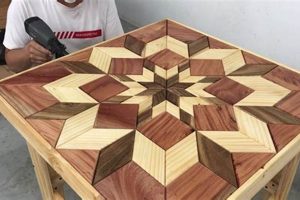
Valentine’s Day woodworking centers on the creation of handcrafted gifts and decorative items utilizing wood as the primary material, specifically for the occasion of Valentine’s Day. Examples include personalized wooden picture frames, carved heart-shaped ornaments, small decorative boxes, and customized cutting boards.
The practice offers a tangible and heartfelt alternative to mass-produced gifts. The inherent value lies in its personalization and the unique qualities imbued through manual craftsmanship. Historically, handmade gifts have symbolized deeper emotional investment and thoughtful consideration, contributing to a more meaningful exchange between individuals.
The following sections will explore specific project concepts, required tools and materials, essential woodworking techniques, and finishing methods for creating personalized items to express affection.
Woodworking Tips for Valentine’s Day Creations
The following tips aim to enhance the quality and personalization of woodworking projects intended as expressions of affection. Careful adherence to these guidelines will improve both the aesthetic appeal and the lasting value of these crafted items.
Tip 1: Wood Selection Matters: Opt for hardwoods, such as cherry or walnut, for their rich color and durability. Softer woods like pine are suitable for painting and staining, allowing for more design flexibility.
Tip 2: Precise Measurement and Cutting: Employ accurate measurement tools and techniques when cutting wood components. This ensures proper fit and prevents structural weaknesses in the finished product. Example: use a digital caliper.
Tip 3: Prioritize Safety: Wear appropriate safety gear, including eye protection and dust masks, when operating power tools. Maintain a clean and organized workspace to minimize the risk of accidents.
Tip 4: Emphasize Personalization: Incorporate initials, dates, or meaningful symbols through carving, wood burning, or laser engraving. These unique details elevate the sentimental value of the gift.
Tip 5: Master Finishing Techniques: Apply sealant or paint to protect the wood surface and enhance its appearance. Consider using natural finishes, like beeswax or tung oil, for a subtle and eco-friendly aesthetic.
Tip 6: Dry Fitting Before Assembly: Before applying glue, assemble the pieces of the project to ensure proper alignment and fit. This dry run allows for corrections and adjustments before permanent bonding.
Tip 7: Utilize Proper Clamping Techniques: Employ appropriate clamps to hold wood pieces securely while glue dries. Even pressure distribution ensures strong and durable bonds.
Careful selection of materials, meticulous execution, and thoughtful personalization are crucial for creating meaningful and enduring woodworking gifts. This approach ensures that each item serves as a lasting symbol of affection.
The subsequent sections will delve into specific project designs, further detailing the application of these tips in practical scenarios.
1. Personalized Carving

Personalized carving, within the context of Valentine’s Day woodworking, transforms functional or decorative wooden objects into unique and emotionally resonant expressions of affection. The addition of bespoke details through carving elevates a standard woodworking project into a cherished keepsake.
- Initial and Name Inscriptions
Carving initials or names directly onto a wooden gift establishes a personal connection between the giver and receiver. This is particularly relevant for items like wooden picture frames, small boxes, or cutting boards, where the recipient’s identity is directly associated with the gift’s utility and aesthetic. The permanence of carved inscriptions symbolizes the enduring nature of the relationship.
- Meaningful Dates and Anniversaries
Incorporating significant dates, such as anniversaries or the day a couple met, adds a layer of personal history to the woodworking project. A carved date on a wooden clock, for example, memorializes a shared moment in time, making the object a constant reminder of a specific and cherished event. The numerical representation of these dates provides a tangible link to shared memories.
- Symbolic Motifs and Imagery
Carving symbolic motifs, such as hearts, intertwined initials, or representations of shared interests, contributes to the storytelling aspect of the gift. The deliberate selection of imagery that holds personal significance to the couple strengthens the emotional connection. For instance, carving the likeness of a pet or a shared hobby reflects attentiveness to the recipient’s individual passions.
- Customized Quotes and Sentiments
Embedding short quotes, meaningful lyrics, or expressions of love directly into the wood adds a deeply personal dimension to the gift. A carved quote from a favorite book or a personal vow demonstrates thoughtfulness and attention to detail. These carved sentiments serve as daily reminders of the giver’s feelings, transforming a simple object into a source of emotional support and encouragement.
These facets of personalized carving demonstrate the potential to imbue handcrafted wooden objects with profound emotional meaning. The act of carving transforms the wood into a canvas for personal narratives, rendering each Valentine’s Day gift a unique and lasting testament to the relationship between giver and receiver.
2. Heart-Shaped Designs

Heart-shaped designs represent a prominent motif within woodworking projects intended for Valentine’s Day. The association stems from the universally recognized symbol of the heart as a representation of love, affection, and romantic sentiment. Its integration into wooden crafts, such as ornaments, boxes, and wall hangings, serves to immediately and unequivocally communicate the gift’s intended message of affection. The success of Valentine’s Day woodworking often hinges on the effective execution of heart-shaped designs, directly impacting the perceived sentimentality of the gift. For example, a meticulously crafted heart-shaped box serves as a more compelling token of affection than a hastily assembled square box, assuming equivalent material and workmanship quality.
The application of heart-shaped designs extends beyond mere outlines. Woodworkers frequently incorporate heart shapes through carving, inlay, and layering techniques to add depth and visual interest to their creations. Heart-shaped cutouts can be incorporated into picture frames to highlight a cherished photograph, while layered heart shapes of varying wood types can create visually striking wall art. The precision with which these shapes are formed significantly influences the overall aesthetic appeal of the project. Inaccurately shaped or poorly finished hearts detract from the intended message and diminish the perceived value of the handcrafted item.
In conclusion, heart-shaped designs are inextricably linked to the core purpose of Valentine’s Day woodworking: the expression of love through handcrafted objects. The successful incorporation of these designs requires a balance of technical skill, artistic sensibility, and an understanding of the symbolic weight the heart shape carries. Challenges may arise in achieving accurate and visually pleasing heart shapes, but mastering this element is essential for crafting gifts that effectively convey heartfelt emotions and sentiments.
3. Wood Burning Decoration
Wood burning, also known as pyrography, enhances projects through the application of controlled heat to create designs on a wooden surface. Its integration into endeavors yields individualized gifts. The technique allows for the application of personal messages, intricate patterns, and decorative elements directly onto the wood, augmenting the emotional significance of the handcrafted item. A wooden keepsake box, for example, gains added value through the addition of names, dates, or relevant imagery. This is particularly potent for smaller projects, transforming simple forms into visually attractive and uniquely designed objects.
The practical application of wood burning extends to various items. Cutting boards could feature custom monograms, or heart-shaped ornaments might display significant dates. Wood burning tools, equipped with variable temperature settings, allow for varied line thicknesses and shading effects. This flexibility enables craftspeople to adapt their designs to fit specific surface areas and desired aesthetic outcomes. Safety practices must be prioritized, as high temperatures and emitted fumes require adequate ventilation and protective gear.
In sum, wood burning is a valuable technique for adding individualized details to woodworking projects intended as gifts. The ability to permanently etch designs onto the wood surface provides a means of creating items with high sentimental value. By carefully controlling heat, practicing good workshop habits, and learning to shade, professionals and hobbyists alike can use this skill to enhance project.
4. Joint Strength Durability

Joint strength and durability are fundamental considerations within the context of Valentine’s Day woodworking ideas. The structural integrity of a wooden item directly influences its longevity, which correlates with its symbolic value as a lasting representation of affection. Weak joints or a lack of durability diminish the gift’s capacity to serve as a long-term reminder of the relationship. Consider a heart-shaped box intended to hold mementos; inadequately constructed joints may lead to its collapse, prematurely ending its function and negating its intended sentimental purpose. Similarly, a poorly joined wooden picture frame may fail to securely hold a cherished photograph, compromising its display and emotional impact.
Various woodworking techniques contribute to joint strength. Dovetail joints, mortise-and-tenon joints, and properly executed butt joints reinforced with fasteners, all offer varying degrees of robustness. The selection of the appropriate joint type depends on the specific design, the type of wood being used, and the anticipated stress the joint will endure. For smaller, decorative items, a simple miter joint with reinforced corner splines might suffice, while larger items, such as wooden benches or keepsake chests, require more structurally sound joints. Furthermore, the quality of the adhesive used is crucial. High-quality wood glues, properly applied and clamped, ensure a secure and lasting bond between wooden components.
Ultimately, a focus on joint strength and durability is essential to the creation of Valentine’s Day woodworking gifts that are not only aesthetically pleasing but also capable of withstanding the test of time. By employing appropriate joinery techniques and prioritizing structural integrity, woodworkers can craft items that effectively convey affection through both their form and their enduring presence, resulting in keepsakes that embody the lasting nature of the relationship they represent.
5. Finish Aesthetics Protection

In projects, finish aesthetics and protection constitute a critical element, influencing both the visual appeal and the long-term preservation of the crafted item. A carefully chosen and properly applied finish enhances the natural beauty of the wood, emphasizing grain patterns and color variations, while simultaneously shielding the surface from moisture, scratches, and UV damage. This protective layer is particularly important for items intended as lasting mementos, as it preserves their appearance and structural integrity over time. For example, a walnut keepsake box, finished with several coats of durable lacquer, presents a richer tone and greater resistance to wear and tear than the same box left unfinished. The appearance of the box symbolizes the giver’s thought and work.
The selection of finish materials depends on the type of wood used and the intended use of the item. Oil-based finishes, such as linseed or tung oil, penetrate the wood, enhancing its natural grain and providing a warm, matte appearance. Water-based finishes offer greater environmental friendliness and are suitable for projects that require a clear, non-yellowing finish. Polyurethane coatings offer exceptional durability and resistance to scratches and moisture, making them a suitable choice for items that will experience frequent handling. Careful surface preparation, including sanding and cleaning, is essential for achieving a smooth and even finish. Multiple thin coats, applied with proper drying time between each application, yield a superior result compared to a single thick coat.
In summary, achieving a harmonious balance between aesthetics and protection through the appropriate choice and application of finishes represents a crucial step in realizing high-quality projects. The proper finish enhances the natural wood while ensuring that the item can stand the test of time as a sentimental token. It ensures that items maintain their beauty. Proper execution yields a tangible and enduring symbol of affection.
6. Wood Selection Suitability

Wood selection suitability directly impacts the aesthetic appeal, durability, and workability of Valentine’s Day woodworking projects. The chosen wood species must align with the intended design, functionality, and symbolic message of the gift. Inappropriate wood selection can lead to structural weaknesses, difficulty in carving or finishing, and a diminished overall visual impact, thereby undermining the intended expression of affection. For example, a delicate heart-shaped ornament crafted from coarse-grained, splinter-prone wood may prove difficult to carve precisely and result in an aesthetically unappealing final product.
The correlation between wood species and intended design manifests in various ways. Hardwoods, such as cherry or walnut, lend themselves well to projects requiring fine detail and a durable finish, such as personalized keepsake boxes or engraved picture frames. Their tight grain and rich color provide an ideal canvas for intricate carving and resist wear and tear, ensuring the longevity of the gift. Softer woods, like pine or basswood, are more easily worked, making them suitable for simpler projects or those involving painting. The choice also affects the practicality of crafting, consider the difference in ease to carve between balsa wood and oak wood.
The understanding of wood selection suitability is crucial for successful woodworking gifts. By considering factors such as grain pattern, hardness, color, and workability, crafters can select wood species that enhance the aesthetic and structural integrity of their creations. This thoughtful consideration translates into items that are not only visually appealing but also enduring representations of affection. Overlooking this aspect can lead to subpar results, diminished sentimental value, and a less impactful expression of love on Valentine’s Day.
7. Sentimental Engravings
Sentimental engravings represent a crucial method for imbuing handcrafted items with emotional resonance. Within woodworking, this approach allows for personalizing projects with dates, initials, quotes, or symbols that hold specific meaning for the recipient. Consequently, what might otherwise be a generic wooden object transforms into a unique and cherished representation of the relationship between the giver and the receiver. The practice directly elevates the perceived value and thoughtfulness of the gift, enhancing its impact as a Valentine’s Day gesture. For example, a wooden picture frame engraved with the couple’s wedding date transcends its utilitarian purpose, becoming a daily reminder of a shared commitment.
The application of sentimental engravings extends across a range of woodworking projects. Small wooden boxes can be personalized with initials or a short phrase, transforming them into intimate keepsakes. Cutting boards might feature a significant date or a shared inside joke, adding a layer of personal connection to a functional kitchen item. Furthermore, larger projects, such as wooden benches or headboards, offer ample space for incorporating more elaborate engravings, such as meaningful quotes or personalized artwork. Laser engraving and traditional carving are commonly employed techniques, each offering unique aesthetic qualities and levels of precision. The durability of the engraving ensures that the sentiment remains visible and impactful for years to come, solidifying the gift’s status as a lasting token of affection.
The effectiveness of sentimental engravings hinges on careful planning and execution. The choice of font, the size and placement of the engraving, and the clarity of the message all contribute to the overall impact. A poorly executed engraving can detract from the aesthetic appeal of the project, diminishing its sentimental value. However, when thoughtfully planned and skillfully executed, sentimental engravings elevate the woodworking project from a simple gift to a personalized expression of love and commitment, thereby fulfilling the core intention of Valentine’s Day celebrations. The understanding of this critical component contributes directly to the success of endeavors.
Frequently Asked Questions About Valentine’s Day Woodworking
The following section addresses common inquiries related to Valentine’s Day woodworking, offering concise and informative answers to guide project planning and execution.
Question 1: What wood types are best suited for heart-shaped projects?
Hardwoods such as cherry, walnut, and maple offer durability and fine grain ideal for intricate heart shapes. Softwoods like pine are suitable for painted projects but require careful handling during carving.
Question 2: How can wood burning add personalized touches to Valentine’s gifts?
Wood burning enables the etching of names, dates, or meaningful quotes directly onto wooden surfaces. Variable temperature tools allow for controlled shading and line thickness, enhancing design possibilities.
Question 3: Which joint types provide the strongest bonds for wooden boxes?
Dovetail joints, mortise-and-tenon joints, and reinforced butt joints offer superior strength for wooden boxes intended to hold keepsakes or valuables.
Question 4: What finish options best protect woodworking projects from moisture damage?
Polyurethane coatings, lacquer finishes, and oil-based sealants provide durable protection against moisture, scratches, and UV damage, ensuring long-term preservation of the wood surface.
Question 5: How does wood grain direction influence the carving process?
Carving with the grain reduces splintering and facilitates smoother cuts. Conversely, carving against the grain can result in tear-out and a less refined finish.
Question 6: What safety precautions are essential when using woodworking power tools?
Eye protection, dust masks, and adequate ventilation are imperative when operating power tools. Maintaining a clean and organized workspace minimizes the risk of accidents.
Careful attention to these considerations enhances the quality, durability, and sentimental value of woodworking projects undertaken for Valentine’s Day.
The subsequent portion will explore advanced woodworking techniques and project design considerations for creating elevated presents.
Conclusion
This exploration of Valentine’s Day woodworking ideas underscored the potential for handcrafted wooden items to serve as meaningful expressions of affection. Factors ranging from wood selection and joint strength to finish aesthetics and sentimental engravings were identified as critical determinants of a project’s success. The integration of these elements ensures the creation of items that are not only visually appealing but also structurally sound and emotionally resonant.
Mastery in utilizing appropriate techniques will enhance the quality and emotional significance of gifts. The emphasis on these methods ensures that crafted items embody thoughtfulness and commitment to the craft. The practice continues to be a means to personalize affection on Valentine’s Day.