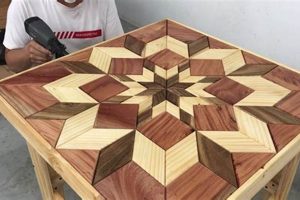
Decorative woodwork installed to conceal joints or edges, enhancing the aesthetic appeal and functionality of architectural features, constitutes a significant element of interior and exterior design. This encompasses a range of profiles and materials applied to surfaces, frames, and transitions within a structure. Common examples include crown molding at the intersection of walls and ceilings, baseboards along floors, door and window casings, and chair rails applied horizontally to walls.
The application of carefully selected embellishments can elevate the perceived value and visual interest of a space, providing a finishing touch that unifies design elements. Historically, elaborate detailing signified status and craftsmanship. Beyond aesthetics, it serves a practical purpose by protecting surfaces from wear and tear, covering gaps, and providing a clean, finished appearance. This adds refinement and helps define architectural style.
Consequently, a thoughtful approach to selection, design, and installation is essential to achieving desired outcomes. The following sections will explore various types, materials, design principles, and installation techniques involved in the creation and execution of diverse decorative woodwork projects.
Enhancing Spaces
Effective integration of decorative woodwork requires careful planning and execution. The following guidelines offer insight into best practices for achieving aesthetically pleasing and structurally sound results.
Tip 1: Material Selection: Consider the intended application and environmental factors when selecting materials. Hardwoods, such as oak or maple, offer durability for high-traffic areas, while softwoods, like pine, are more suitable for decorative elements in less demanding environments. Moisture resistance is paramount for exterior applications.
Tip 2: Profile Coordination: Maintain visual harmony by coordinating the profiles throughout a space. Establish a consistent style and scale for baseboards, casings, and crown molding to create a cohesive and balanced aesthetic.
Tip 3: Accurate Measurement and Cutting: Precision is crucial for seamless installations. Employ accurate measuring techniques and utilize appropriate cutting tools, such as a miter saw, to achieve clean, tight joints. Mitered corners should align perfectly for a professional finish.
Tip 4: Proper Fastening Techniques: Securely fasten pieces to the substrate using appropriate nails, screws, or adhesives. Consider the weight and dimensions of the elements and the type of wall or surface to ensure adequate support and prevent separation over time.
Tip 5: Seamless Jointing: Where necessary, employ techniques to create virtually invisible joints. This involves precise cutting, careful alignment, and the use of wood filler or caulk to conceal any imperfections. Sanding the filled areas smooth before finishing is essential.
Tip 6: Finishing and Sealing: Apply a consistent and durable finish to protect the wood and enhance its natural beauty. Consider the desired aesthetic and choose appropriate paints, stains, or clear coatings. Seal all surfaces, including edges and backs, to prevent moisture absorption and warping.
Tip 7: Consistent Reveal: Maintaining a uniform reveal (the visible portion of the molding) along windows, doors, and other features provides a polished, professional appearance. Use shims and spacers as needed to achieve consistent spacing.
Effective execution, based on these tips, results in aesthetically pleasing and structurally sound enhancements to residential and commercial spaces.
Following these guidelines, one can approach the implementation of decorative woodwork with increased confidence and skill. The subsequent sections will delve into more advanced design considerations.
1. Material Selection
The selection of appropriate materials is fundamental to the success of any decorative woodwork endeavor. The material directly impacts durability, aesthetic qualities, and suitability for the intended environment. For example, installing softwood moldings, such as pine, in high-traffic areas is ill-advised due to their susceptibility to dents and scratches. Conversely, hardwoods, like oak or maple, offer greater resistance to wear but require more specialized tools for cutting and shaping. In moisture-prone environments, such as bathrooms or exterior applications, materials with inherent water resistance, or those treated with protective coatings, are essential to prevent rot and decay.
Material choice further dictates the range of achievable design possibilities. Some materials are more amenable to intricate carving and shaping, while others are better suited for simple, clean lines. The selection must therefore align with the desired aesthetic. For instance, medium-density fiberboard (MDF) offers a smooth, consistent surface ideal for painting but lacks the natural grain and character of solid wood. Consideration must also be given to the compatibility of the material with the intended finishing techniques. Certain stains or paints may adhere better to some wood species than others, impacting the final appearance and longevity of the finish. Cost considerations are equally pertinent, as material prices vary significantly depending on species and grade.
Therefore, the material selection represents a foundational decision that significantly influences the longevity, appearance, and overall success of decorative woodwork. A thorough understanding of the properties and limitations of different materials is essential for informed decision-making and achieving the desired aesthetic and functional outcomes. Neglecting this aspect can result in premature deterioration, increased maintenance costs, and ultimately, a compromised design aesthetic. The subsequent stage involves choosing a profile design that complements the selected material and the broader architectural context.
2. Profile Design

Profile design represents a critical component of decorative woodwork. The chosen profile, which refers to the shape and contours of the trim, directly influences the aesthetic character of a space. A carefully selected profile can accentuate architectural features, create visual interest, and contribute to the overall style. Conversely, an ill-chosen profile can detract from the space, appearing out of scale or stylistically incongruent. For example, a heavily ornamented crown molding might overwhelm a small room with low ceilings, while a simple, minimalist profile could appear underwhelming in a grand, traditionally styled space. The profile, therefore, acts as a crucial determinant in the realization of any decorative woodwork project.
The relationship between profile and application is a cause-and-effect dynamic. The intended function of the trim often dictates the appropriate profile. Baseboards, designed to protect walls from impact and conceal flooring edges, typically feature a simpler profile than, say, a chair rail, which is primarily decorative. Door and window casings, while also functional, offer opportunities for more elaborate profiles that can frame the openings and enhance their visual appeal. Moreover, understanding historical styles is essential. A Greek Revival home benefits from profiles inspired by classical architecture, while a mid-century modern space calls for clean, geometric forms. The interplay between profile, material, and the surrounding architectural context requires careful consideration to achieve a cohesive and aesthetically pleasing outcome.
In summary, profile design forms an indispensable part of decorative woodwork. Its selection directly impacts the visual harmony and stylistic consistency of a space. Mastery of profile design entails an understanding of historical styles, material properties, and the intended function of the trim. This knowledge empowers informed decision-making and ensures that the resulting decorative woodwork enhances the overall aesthetic of the environment, not detracts from it. The following step will describe how the installation technique affects the woodworking trim ideas.
3. Installation Technique

Installation technique fundamentally dictates the success or failure of decorative woodwork projects. Regardless of material quality or profile design, improper installation undermines the overall aesthetic and structural integrity. Accurate measurements, precise cuts, and secure fastening are essential for achieving a professional finish. Mitered corners, for instance, require exact 45-degree cuts and seamless joining to create visually appealing and structurally sound connections. Gaps or misalignments not only detract from the appearance but also compromise the trim’s ability to protect surfaces and conceal joints. The choice of fastening method – nails, screws, or adhesives – must be appropriate for the material and the substrate to ensure long-term stability. For example, applying finishing nails without pre-drilling to hardwood can result in splitting and necessitate rework, whereas using an inadequate adhesive on a heavy molding can lead to detachment. Careful consideration of these elements transforms a collection of pieces into a cohesive architectural enhancement.
The proper application of installation techniques extends beyond basic assembly. Understanding the properties of the materials being used, the substrate to which they are being attached, and the environmental conditions is vital. In humid climates, wood expands and contracts, necessitating careful spacing and expansion joints to prevent buckling or cracking. Installing trim over uneven surfaces requires shimming and leveling to ensure a flush, professional appearance. The sequence of installation is also critical; installing baseboards before door casings can simplify the process and improve the fit. Addressing these finer points significantly elevates the quality and longevity of the installation. Real-world examples of improperly installed trim abound, ranging from amateur DIY projects with visible gaps and uneven reveals to professionally executed installations marred by shortcuts and inadequate preparation.
In conclusion, installation technique is an indispensable element of decorative woodwork. Proficiency in this domain requires not only skill and precision but also a thorough understanding of materials, tools, and environmental factors. Poor installation diminishes the value of even the most exquisite materials and designs, while meticulous installation elevates the ordinary to the exceptional. The ability to execute flawless installations is a hallmark of skilled craftsmanship and a testament to a commitment to quality. Its importance cannot be overstated. The subsequent section will focus on Finishing Application.
4. Finishing Application

Finishing application constitutes a critical and inseparable stage in the execution of decorative woodwork projects. The selected finish not only enhances the aesthetic appeal of the woodwork but also provides essential protection against environmental factors and wear. Choices range from paints and stains to varnishes, lacquers, and oils, each offering distinct visual qualities and levels of durability. The proper application of these finishes ensures the longevity and aesthetic integrity of the woodwork. The wrong choice or improper application can lead to premature deterioration, discoloration, or an undesirable final appearance. For example, a poorly applied varnish can exhibit brush marks or an uneven sheen, detracting from the intended elegance of the woodwork. A real-life consequence is the peeling or cracking paint on exterior window trim due to inadequate surface preparation or use of an inappropriate paint type.
Surface preparation is integral to achieving a successful finish. Sanding, priming, and cleaning are essential steps to ensure proper adhesion and a smooth, uniform surface. The application technique, whether brushing, spraying, or wiping, must be suited to the finish and the desired effect. Multiple thin coats are generally preferable to a single thick coat, minimizing runs, drips, and unevenness. The selection of appropriate application tools, such as brushes or spray guns, further influences the quality of the finish. Staining interior woodwork requires careful consideration of the wood’s grain and porosity to achieve a consistent color. Real-life examples of well-executed finishing applications include the rich, lustrous sheen of antique furniture meticulously restored or the flawlessly smooth paint finish on custom-built cabinetry.
In conclusion, finishing application is an indispensable element of decorative woodwork, influencing both the aesthetic appeal and the durability of the finished product. Understanding the properties of different finishes, mastering application techniques, and meticulous surface preparation are essential for achieving professional-quality results. A poorly executed finish compromises the entire project, regardless of the quality of materials or design. Therefore, investing time and effort in mastering finishing techniques is a crucial step in realizing the full potential of decorative woodwork. This leads to a consideration of the final aspect: Spatial Integration.
5. Spatial Integration

Spatial integration, in the context of decorative woodwork, concerns the harmonious blending of these elements with the overall design and architecture of a given space. Effective integration ensures that the enhancements complement and enhance, rather than detract from, the pre-existing aesthetic and functional characteristics. It involves a holistic assessment of dimensions, light, color palettes, and architectural styles to determine the most appropriate application of decorative trim.
- Scale and Proportion
Scale and proportion refer to the relationship between the size of the decorative woodwork and the dimensions of the room. Overly large moldings in a small space can feel oppressive, while undersized elements in a grand hall may appear insignificant. Achieving visual balance is crucial. A practical example is the use of thinner baseboards in rooms with low ceilings to avoid emphasizing the lack of height, whereas taller baseboards can enhance the perceived grandeur of higher-ceilinged spaces.
- Architectural Style Consistency
Maintaining consistency with the existing architectural style is paramount. A modern minimalist space benefits from clean, unadorned trim, while a Victorian-era home demands more ornate and detailed embellishments. Introducing anachronistic elements disrupts the visual harmony. Consider the integration of simple, square-edged trim in a contemporary loft apartment versus the use of intricately carved crown molding in a Queen Anne Victorian.
- Color and Material Coordination
The color and material of the decorative woodwork should complement the existing color palette and materials used in the space. Contrasting colors can create visual interest, but they must be carefully considered to avoid clashing or overwhelming the room. Similarly, the wood species or finish should harmonize with the flooring, furniture, and other architectural elements. For instance, matching the stain color of the trim to the hardwood floors can create a cohesive and unified look.
- Lighting Considerations
The way light interacts with decorative woodwork influences its appearance. Properly placed lighting can accentuate the texture and detail of moldings, while poorly positioned lighting can create unwanted shadows or highlight imperfections. Consider the direction and intensity of light sources when selecting trim profiles and finishes. A gloss finish, for example, may reflect too much light in a brightly lit room, while a matte finish can absorb light and create a softer effect.
These facets, when addressed thoughtfully, allow decorative woodwork to seamlessly integrate into a space, enhancing its overall aesthetic and functionality. Ignoring these considerations can result in a disjointed and visually unappealing outcome. Effective spatial integration transforms decorative woodwork from a mere addition into an integral part of the architectural narrative.
Frequently Asked Questions
The following section addresses common inquiries regarding the selection, application, and maintenance of decorative woodwork, providing clarity and informed guidance.
Question 1: What factors determine the appropriate scale of decorative woodwork for a given room?
The scale of woodwork should correspond to the dimensions of the room. Large rooms accommodate bolder, more substantial profiles, while smaller rooms benefit from more delicate and understated designs. Ceiling height is a crucial factor; high ceilings can handle taller baseboards and more elaborate crown molding, while low ceilings require simpler, less imposing trim.
Question 2: What are the primary differences between paint-grade and stain-grade decorative woodwork?
Paint-grade woodwork is typically constructed from less expensive materials, such as MDF or finger-jointed pine, and is designed to be painted. Stain-grade woodwork is made from hardwoods with attractive grain patterns, intended to be stained to highlight the natural wood. The selection depends on the desired aesthetic; paint obscures the wood’s natural characteristics, while stain enhances them.
Question 3: How does one prevent decorative woodwork from warping or cracking?
Preventative measures include proper acclimation of the wood to the environment before installation, sealing all surfaces (including the back) to prevent moisture absorption, and employing appropriate fastening techniques that allow for expansion and contraction. Maintaining consistent humidity levels in the space is also beneficial.
Question 4: What is the best method for concealing nail holes and imperfections in decorative woodwork?
Small nail holes can be filled with wood filler or putty that matches the color of the wood or the intended finish. Apply the filler sparingly, allow it to dry completely, and then sand it smooth before painting or staining. For larger imperfections, consider using wood patches or epoxy fillers.
Question 5: How frequently should decorative woodwork be cleaned, and what cleaning products are recommended?
Regular cleaning with a soft, damp cloth is generally sufficient to remove dust and dirt. Avoid using harsh chemicals or abrasive cleaners that can damage the finish. For more stubborn stains, a mild soap solution can be used, but ensure the surface is thoroughly dried afterward.
Question 6: What considerations are relevant when selecting decorative woodwork for a bathroom or other high-moisture environment?
In high-moisture environments, choose materials that are naturally water-resistant, such as cedar or redwood, or opt for composite materials like PVC trim. Ensure that all surfaces are properly sealed with a moisture-resistant finish. Adequate ventilation is essential to prevent the buildup of humidity.
In summary, informed decisions regarding material selection, installation, and maintenance are crucial for maximizing the longevity and aesthetic appeal of decorative woodwork.
Subsequent sections explore advanced applications and customization techniques.
Conclusion
This exploration of decorative woodwork, often referred to as “woodworking trim ideas,” has underscored its critical role in enhancing both the aesthetic value and functional integrity of interior and exterior spaces. Careful consideration must be given to material selection, profile design, installation techniques, finishing applications, and spatial integration to achieve optimal results. The discussed principles serve as a foundation for informed decision-making.
The information provided is intended to serve as a guide for professionals and enthusiasts seeking to elevate their craft and built environments. Understanding and applying these techniques will yield superior outcomes. Further investigation into advanced methodologies and innovative materials is encouraged for continual improvement within this domain.