The process of reducing the moisture content of lumber to a level suitable for crafting projects within a domestic setting is a critical step in woodworking. This procedure ensures the wood’s stability, minimizing warping, cracking, and shrinkage after the piece is completed. For instance, a craftsman might employ air-drying or kiln-drying techniques on their property to prepare rough-sawn lumber for furniture making.
Properly conditioned lumber is essential for the longevity and structural integrity of woodworking projects. Historically, air-drying was the primary method used, relying on natural airflow over extended periods. The benefits of managing moisture levels prior to construction include improved joinery, a superior finish, and a reduced risk of structural failure over time.
The subsequent discussion will address practical methods for achieving optimal moisture content in wood using accessible techniques. It will examine air-drying strategies, solar kiln construction, and the use of conventional oven-drying methods, detailing the specific steps and considerations required for each approach.
Essential Considerations for Wood Conditioning
Achieving optimal moisture content in wood within a home environment requires careful planning and execution. These guidelines offer a structured approach to maximize success and minimize potential defects.
Tip 1: Species Identification: Accurately identify the wood species being processed. Different species possess varying drying rates and susceptibility to warping. Hardwoods, for example, typically require more careful and gradual drying than softwoods.
Tip 2: Proper Stacking: When air-drying, stack lumber with stickers (thin strips of wood) between each layer. This allows for consistent airflow around all surfaces, facilitating even moisture evaporation and preventing localized damp spots.
Tip 3: Controlled Airflow: Ensure adequate ventilation around the stacked lumber during air-drying. A shaded, breezy location is preferable. Avoid direct sunlight, which can cause rapid surface drying and subsequent cracking.
Tip 4: Gradual Drying: Whether using air-drying or a kiln method, reduce the moisture content gradually. Rapid drying induces stress within the wood, leading to warping, checking (surface cracks), and internal honeycombing (internal cracks).
Tip 5: Moisture Meter Monitoring: Regularly monitor the wood’s moisture content using a reliable moisture meter. This allows for precise tracking of the drying process and enables adjustments to be made as needed.
Tip 6: Weight Monitoring: For larger pieces where a moisture meter may not be practical, track the weight of the wood over time. A consistent decrease in weight indicates moisture loss.
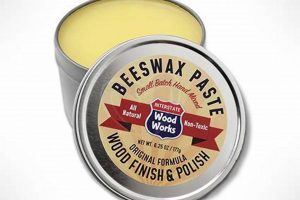
Tip 7: End Sealing: Apply an end sealer to the freshly cut ends of the lumber. This slows the rate of moisture loss from the ends, which are more susceptible to cracking.
Adhering to these recommendations helps to ensure that the wood is appropriately seasoned, resulting in stable and workable material for various woodworking endeavors. The time invested in careful preparation translates to a higher quality finished product.
Following these tips leads to a smoother woodworking process, improving the project’s final integrity and appearance. The next section will explore common challenges and solutions encountered during wood conditioning.
1. Air Circulation

Effective air circulation is paramount to achieve consistent moisture reduction within lumber intended for woodworking when undertaken domestically. Adequate airflow facilitates the even removal of water from the wood, mitigating differential drying rates that contribute to warping, cracking, and other defects. This section will explore critical facets of air circulation and its direct impact on the success of drying lumber at home.
- Role in Moisture Evaporation
Air circulation serves as the primary mechanism for carrying away evaporated moisture from the wood’s surface. Stagnant air becomes saturated with water vapor, thereby reducing the rate of further evaporation. Consistent airflow ensures that the air surrounding the wood remains relatively dry, promoting continuous moisture removal. Without sufficient air movement, drying slows considerably, potentially leading to fungal growth and prolonged exposure to conditions favorable for degradation.
- Stacking Configuration Influence
The arrangement of lumber during the drying process directly affects air circulation. Lumber should be stacked with stickers (thin strips of wood) placed between each layer. These stickers create air gaps, allowing air to flow freely across all surfaces of the boards. The spacing of stickers and the alignment of the stack in relation to prevailing wind directions are crucial for optimal airflow. A poorly configured stack restricts air movement, resulting in uneven drying and increased risk of defects.
- Environmental Control Considerations
External environmental factors such as humidity and temperature significantly influence the effectiveness of air circulation. High humidity reduces the air’s capacity to absorb moisture, slowing the drying process. High temperatures, while promoting faster evaporation, can also lead to rapid surface drying and subsequent cracking if not carefully managed. Therefore, controlling the environment around the lumber stack, through shading or strategic placement, can enhance the benefits of air circulation.
- Optimizing for Enclosed Spaces
When drying lumber indoors or within a confined space, supplemental air circulation may be necessary. Fans can be used to create a consistent airflow around the lumber stack, mimicking the effects of natural wind. The size and placement of fans should be carefully considered to ensure uniform air movement without creating overly rapid drying conditions that could damage the wood.
These components of air circulation collectively determine the success of drying lumber intended for woodworking at home. By understanding the dynamics of airflow and its interaction with moisture evaporation, woodworkers can implement strategies to minimize defects and produce lumber of superior quality. The careful consideration of these factors represents a crucial investment in the long-term stability and usability of the material.
2. Moisture Content

The percentage of water within wood is a central determinant of its dimensional stability and suitability for woodworking. Controlling moisture content at home is integral to achieving predictable results and preventing defects in finished projects.
- Equilibrium Moisture Content (EMC)
EMC refers to the point at which wood neither gains nor loses moisture to its surrounding environment. The ideal EMC for woodworking varies based on geographic location and typical indoor conditions. Wood dried to an inappropriate EMC will either shrink or swell after construction, potentially compromising joints and causing warping. For example, wood dried to 6% moisture content in a desert climate may swell to 10% if introduced into a humid coastal environment.
- Measuring Moisture Content
Accurate measurement of moisture content is essential for determining when wood is adequately dry. Moisture meters, either pin-type or pinless, are used to assess the percentage of water within the wood. Pin-type meters measure electrical resistance, which varies with moisture levels, while pinless meters use electromagnetic fields. Consistent and accurate readings throughout the drying process allow for informed decisions about the duration and intensity of drying efforts. Inconsistencies in readings can indicate uneven drying.
- Drying Methods and Moisture Gradients
Different drying methods, such as air-drying and kiln-drying, create distinct moisture gradients within the wood. Air-drying typically results in a gradual reduction of moisture, with the outer layers drying more quickly than the core. Kiln-drying allows for more precise control over temperature and humidity, minimizing moisture gradients and reducing the risk of defects. However, improper kiln-drying can cause case hardening, where the outer layers of the wood dry too quickly, compressing the inner layers and leading to stress.
- Impact on Woodworking Properties
Moisture content directly affects the workability and stability of wood. Wood that is too wet is difficult to machine and glue, while wood that is too dry can become brittle and prone to splitting. Optimal moisture content ensures that the wood can be easily shaped, joined, and finished without compromising its structural integrity. For example, wood with a moisture content above 20% is susceptible to fungal decay, while wood below 6% may become excessively brittle.
These considerations regarding moisture content underscore the importance of careful drying techniques in domestic woodworking. By understanding the relationship between moisture content, EMC, and drying methods, woodworkers can effectively prepare lumber for projects that are both aesthetically pleasing and structurally sound.
3. Stacking Method

The stacking method employed during air-drying directly influences the rate and uniformity of moisture reduction within lumber. Incorrect stacking impedes airflow, leading to uneven drying, which in turn promotes warping, twisting, and checking (surface cracks). Conversely, a properly configured stack maximizes air circulation, facilitating consistent moisture evaporation and minimizing the risk of these defects. For instance, placing boards directly on the ground without any elevation restricts airflow beneath the wood, leading to significantly slower drying and increased susceptibility to fungal growth in that area.
A standard stacking practice involves layering lumber with “stickers,” thin strips of wood, placed perpendicular to the boards and spaced at regular intervals, typically every 12 to 24 inches. These stickers create air gaps between each layer, allowing air to circulate freely around all surfaces of the lumber. The choice of sticker material is also important; using kiln-dried stickers prevents them from contributing additional moisture to the stack. Furthermore, orienting the stack parallel to prevailing winds maximizes the benefits of natural airflow. In environments with limited natural airflow, using fans to supplement air movement becomes necessary.
Ultimately, the stacking method serves as a critical component of successful air-drying. Proper implementation minimizes the potential for defects, reduces drying time, and yields lumber with greater dimensional stability. While variations in technique exist based on available space and specific wood species, adherence to fundamental principles of airflow and support remains paramount. Neglecting proper stacking will often result in significant material waste and compromised project outcomes, regardless of other drying efforts.
4. Species Variation

The diverse characteristics inherent in different wood species significantly affect the processes involved in domestic lumber drying for woodworking. Understanding these variations is critical for preventing defects and achieving stable, workable material.
- Density and Porosity
Wood density and porosity dictate the rate at which moisture migrates through the material. Denser woods, like oak and maple, generally dry more slowly than less dense woods, such as pine or cedar. Higher porosity facilitates faster moisture evaporation. Therefore, a craftsman must adjust drying schedules based on species-specific density and porosity to minimize checking and warping. For instance, attempting to dry oak at the same rate as pine will invariably lead to defects in the oak.
- Cell Structure and Grain Orientation
Variations in cell structure and grain orientation influence the direction and rate of shrinkage during drying. Woods with interlocked or spiral grain patterns are more prone to warping than those with straight grains. Similarly, differences in cell wall composition affect moisture absorption and release. Careful consideration of grain orientation and cell structure is crucial when stacking lumber for air-drying, as it dictates the optimal sticker placement and drying environment. Quarter-sawn lumber, for example, typically exhibits greater dimensional stability than plain-sawn lumber due to the orientation of the growth rings.
- Extractives and Oils
The presence of extractives and oils within wood impacts its drying behavior. Certain species, like teak and rosewood, contain natural oils that impede moisture evaporation and make them more resistant to decay. However, these oils can also complicate the drying process, requiring longer drying times and careful monitoring to prevent surface case hardening. In contrast, woods with lower extractive content dry more readily but may be more susceptible to fungal attack if not properly protected during drying.
- Susceptibility to Collapse and Honeycombing
Collapse and honeycombing are internal defects that can occur during drying, particularly in species with thin-walled cells. Collapse refers to the flattening of cells due to excessive negative pressure created by rapid moisture loss, while honeycombing involves the formation of internal checks and voids. Species like eucalyptus and redwood are particularly prone to these defects. Controlled drying schedules and proper sticker placement can help minimize the risk of collapse and honeycombing, ensuring that the lumber retains its structural integrity.
In summary, species variation introduces a layer of complexity to domestic lumber drying. By accounting for species-specific characteristics, woodworkers can tailor their drying methods to optimize the outcome and ensure that the lumber is properly conditioned for subsequent woodworking endeavors. The principles governing air circulation and moisture content must be applied with discernment, recognizing that each species presents unique challenges and opportunities.
5. Drying Time

The duration required for wood to reach a suitable moisture content is a critical consideration in domestic woodworking preparations. Achieving optimal dryness is essential for project stability and longevity. Drying time varies significantly based on several interrelated factors that must be assessed for successful at-home wood preparation.
- Wood Species and Density
Different wood species exhibit varying drying rates primarily dictated by their density and cellular structure. Denser hardwoods, such as oak or maple, necessitate longer drying periods compared to less dense softwoods like pine or cedar. For example, air-drying one-inch thick oak may require a year or more, while pine of the same thickness might be adequately dried in several months. Ignoring these inherent differences can lead to uneven drying and potential defects. Selecting appropriate species for specific applications, coupled with a realistic drying timeline, is essential.
- Thickness of Lumber
The thickness of the lumber directly correlates with the time required for moisture to migrate from the core to the surface and evaporate. Thicker boards naturally require longer drying periods. The drying time increases exponentially with thickness; a two-inch thick board will take significantly longer to dry than two one-inch thick boards. Failure to account for thickness often results in surface drying while the interior remains wet, leading to warping or cracking as the wood eventually equalizes. Careful measurement and estimation of drying time based on thickness is critical.
- Environmental Conditions
Ambient temperature, humidity, and air circulation significantly influence the rate of moisture evaporation. Warmer temperatures and lower humidity accelerate drying, while cooler temperatures and higher humidity retard it. Enclosed spaces with stagnant air extend drying times considerably. A shaded, well-ventilated area is optimal for air-drying. Implementing strategies to control environmental conditions, such as using fans or dehumidifiers, can reduce the required drying time. Maintaining awareness of seasonal variations and their impact on drying rates is essential for accurate timeline projections.
- Drying Method Employed
The chosen method of drying affects the drying timeline. Air-drying is a passive, slower process, while kiln-drying offers accelerated and controlled drying. Solar kilns, built from readily available materials, expedite the drying process compared to air-drying but still require careful monitoring. Oven-drying small pieces is a faster alternative, but poses a higher risk of defects if not executed cautiously. The method selected should align with the project’s needs and available resources, with careful attention paid to the inherent time constraints and risks associated with each approach.
These facets demonstrate the complexity of estimating drying time for lumber processed at home. Accurately evaluating these variables and adjusting drying strategies accordingly is paramount for ensuring the wood is adequately prepared for woodworking. Ultimately, the time invested in proper drying methods yields dividends in terms of project stability, longevity, and reduced material waste.
6. End Sealing

End sealing is a crucial step in domestic lumber drying, specifically when the objective is woodworking. This practice mitigates moisture loss through the end grain of boards, thereby reducing the likelihood of defects arising during the drying process.
- Function in Moisture Control
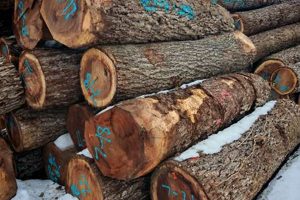
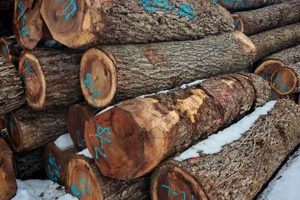
The primary function of end sealing is to slow the rate of moisture evaporation from the ends of freshly cut lumber. Wood loses moisture more rapidly through the end grain than through the tangential or radial surfaces. This differential drying rate induces stress within the wood, leading to end-checking (cracks). End sealing creates a barrier that equalizes the drying rate across the board, reducing this stress. For example, a freshly sawn log left unsealed may develop significant cracks within days, while a sealed log dries more evenly over a longer period.
- Types of Sealants Available
Several types of sealants are appropriate for end sealing, each with varying levels of effectiveness and cost. Paraffin wax, applied hot, is a traditional option. Commercially available end sealers, often latex-based or wax emulsions, provide a more convenient and consistent application. Alternatively, even several coats of thick paint can provide a decent barrier. The choice of sealant depends on the scale of the operation and the desired level of protection. A sawmill processing large quantities of lumber would likely use a specialized commercial product, while a hobbyist might opt for paraffin wax or paint.
- Application Techniques
Proper application is critical for effective end sealing. The sealant should be applied immediately after the lumber is sawn, before any significant moisture loss occurs. The ends should be coated liberally, ensuring complete coverage of the end grain. Multiple coats may be necessary, particularly with thinner sealants. Careful attention to detail during application minimizes the risk of localized drying and subsequent checking. For instance, applying a thin layer of sealant on a hot, sunny day may result in premature drying and cracking of the sealant itself, negating its protective effect.
- Integration with Drying Method
End sealing complements other drying methods, such as air-drying and kiln-drying. Regardless of the chosen drying technique, end sealing remains an essential step for minimizing end-checking. In air-drying, end sealing protects the lumber during the initial, more rapid phase of moisture loss. In kiln-drying, it helps to maintain a more uniform moisture content throughout the board, reducing stress and improving overall quality. End sealing is thus an integral component of a comprehensive lumber drying strategy.
These facets of end sealing underscore its importance in the context of drying lumber for woodworking applications at home. Integrating end sealing into the drying process helps ensure that lumber is stable and free from end checks, increasing the yield of usable material and improving the quality of finished projects. Without it, material loss due to splitting is almost guaranteed.
Frequently Asked Questions on Home Lumber Drying
The following questions address prevalent concerns related to conditioning wood for woodworking in a home setting. These responses offer guidance based on established practices and principles.
Question 1: How critical is moisture content measurement when drying lumber at home?
Precise moisture content measurement is essential. Accurate readings ensure that the lumber reaches a suitable level for woodworking, preventing warping, cracking, and joint failure in finished projects. Consistent monitoring throughout the drying process allows for timely adjustments to drying conditions.
Question 2: What constitutes an appropriate air-drying location?
An ideal air-drying location is shaded, well-ventilated, and protected from direct sunlight and rain. Consistent airflow around the lumber stack is paramount for even moisture evaporation. Locations with stagnant air or high humidity impede the drying process and promote fungal growth.
Question 3: Can conventional ovens be used to accelerate lumber drying?
While conventional ovens can expedite drying for small pieces, the risk of overheating and causing irreversible damage to the wood is significant. Temperature control is challenging, and rapid drying can lead to case hardening, warping, and cracking. This method is not recommended for larger pieces or valuable wood.
Question 4: How does wood species influence the drying process?
Different wood species exhibit varying drying rates and susceptibility to defects. Denser hardwoods require more gradual drying than softwoods. Understanding the specific characteristics of the wood species being dried is crucial for tailoring drying methods and preventing damage.
Question 5: What are the consequences of inadequate sticker placement during air-drying?
Improper sticker placement obstructs airflow, leading to uneven drying and localized damp spots. This increases the risk of warping, twisting, and fungal growth. Stickers should be evenly spaced and aligned vertically to provide consistent support and airflow across the entire stack.
Question 6: Is end sealing always necessary?
End sealing is highly recommended, particularly for thicker boards and species prone to rapid moisture loss through the end grain. It slows the drying rate at the ends, minimizing checking and splitting. Skipping this step often results in significant material loss.
The key takeaways emphasize the importance of careful planning, consistent monitoring, and species-specific considerations when drying wood at home. A diligent approach ensures stable and workable lumber for woodworking.
The succeeding section will delve into common challenges encountered and solutions for refining the lumber drying process.
How to Dry Wood at Home for Woodworking
The comprehensive examination of how to dry wood at home for woodworking reveals a multi-faceted process demanding meticulous attention to detail. Successful implementation necessitates understanding species-specific properties, mastering stacking methodologies, controlling environmental factors, and consistently monitoring moisture content. Deviations from established best practices invariably result in material degradation and compromised project outcomes.
The practice of lumber conditioning within a domestic setting represents a commitment to quality and sustainability in woodworking. By embracing the principles outlined, craftsmen can ensure their projects are built on a foundation of stable and reliable material. This dedication ultimately yields superior results, extending the lifespan and enhancing the aesthetic appeal of finished woodworking pieces. The diligent application of these techniques contributes to the preservation of resources and promotes enduring craftsmanship.