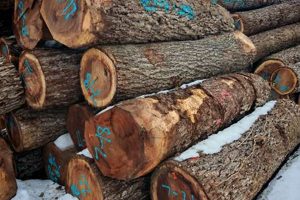
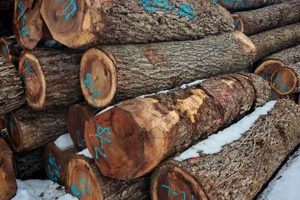
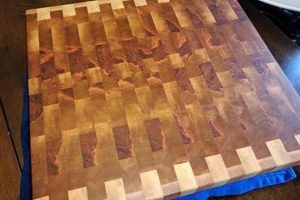
The process of reducing the moisture content in lumber to a level suitable for crafting furniture, structures, or other wood-based projects is critical. This process stabilizes the wood, minimizing warping, cracking, and fungal growth after construction. Improperly processed lumber will continue to dry and move after being worked, which will eventually ruin the piece.
Proper moisture management offers numerous advantages. It enhances dimensional stability, ensuring longevity and structural integrity of the finished product. Furthermore, it increases the wood’s resistance to decay and insect infestation. Historically, air drying was the only method available, but technological advancements have brought faster and more controlled techniques to the forefront.
Understanding the various methods, principles, and best practices are essential for any woodworker. Therefore, a deeper examination of air drying, kiln drying, moisture meters, and wood storage techniques will provide a foundation for achieving optimal results. These will be explored further in this article.
Essential Considerations for Effective Lumber Seasoning
Achieving proper moisture content in lumber requires attention to detail and adherence to established practices. The following points outline critical considerations for successful wood drying.
Tip 1: Species Identification: Different wood species possess varying densities and cellular structures, influencing their rate of moisture loss. Accurate species identification is paramount to implementing appropriate drying schedules. For example, hardwoods like oak require slower drying than softwoods like pine.
Tip 2: Initial Moisture Content Assessment: Prior to commencing any drying method, determine the wood’s initial moisture content using a calibrated moisture meter. This baseline measurement informs the drying strategy and allows for monitoring progress.
Tip 3: Air Drying Preparation: When air drying, stack lumber with stickers (spacers) between each layer to promote airflow. Proper sticker placement and uniform spacing are essential for consistent moisture evaporation. Ensure the stack is elevated off the ground to prevent ground moisture absorption.
Tip 4: Kiln Drying Schedules: If using a kiln, adhere to established drying schedules specific to the wood species and thickness. Deviating from recommended schedules can lead to degrade, such as checking, warping, or case hardening. Employ a data logger to monitor temperature and humidity within the kiln environment.
Tip 5: Gradual Drying Rate: Regardless of the drying method, a gradual reduction in moisture content is crucial. Rapid drying causes stress within the wood, leading to defects. Control the rate of drying by adjusting temperature, humidity, or airflow.
Tip 6: Moisture Meter Monitoring: Throughout the drying process, regularly monitor the moisture content using a moisture meter. Take readings from multiple locations within the wood to ensure uniform drying. Calibrate the moisture meter regularly for accurate readings.
Tip 7: Equalization and Conditioning: After reaching the target moisture content, allow the lumber to equalize to the ambient humidity of its intended environment. This process minimizes dimensional changes after the wood is worked. In kiln drying, a conditioning step may be necessary to relieve internal stresses.
Adhering to these guidelines will improve the probability of achieving properly seasoned lumber, thereby ensuring the quality and longevity of woodworking projects. Avoiding hasty practices, understanding how varying species respond and regularly monitoring levels are key.
The subsequent sections will address common problems encountered during lumber seasoning and provide solutions for mitigating these challenges.
1. Airflow Importance

Airflow is paramount in the process of drying lumber for woodworking, directly influencing the rate and uniformity of moisture evaporation. Insufficient airflow inhibits moisture removal, leading to prolonged drying times and increased susceptibility to fungal growth. Conversely, excessive airflow can cause rapid surface drying, resulting in stress gradients within the wood that manifest as checks (surface cracks) or warping.
In air drying, proper stacking with stickers (spacers) facilitates adequate air circulation around each board. The sticker placement should align vertically to prevent sagging, and the stack should be oriented to prevailing winds to maximize airflow. For kiln drying, fan systems control airflow, ensuring even distribution of heated air throughout the kiln chamber. A real-world example can be seen in comparing two lumber stacks left to dry: One properly stickered in an open area, compared to a poorly stickered pile in a damp, sheltered space; the former will dry more evenly with minimal defects compared to the latters likely development of mold, uneven drying, and warping.
Understanding and managing airflow is, therefore, a critical component for effective lumber preparation. Challenges arise from varying environmental conditions (humidity, temperature) and the inherent properties of different wood species. Balancing airflow with other drying parameters, such as temperature and humidity, is essential for achieving optimal results and minimizing degrade. This balance directly impacts the quality and usability of lumber intended for woodworking applications.
2. Kiln Temperature

Kiln temperature is a critical factor in controlled lumber drying. Elevated temperatures accelerate moisture evaporation from wood, but excessive heat can induce irreversible damage. The relationship between kiln temperature and drying rate necessitates careful management to prevent defects. For example, exceeding recommended temperature limits for a given species leads to case hardening, where the outer layers of the wood dry and shrink prematurely, creating stress that inhibits moisture release from the core. In contrast, insufficient temperature extends drying times, potentially promoting fungal growth and increasing operational costs. The temperature settings are, therefore, inextricably linked with the final quality of material used for woodworking.
Optimizing kiln temperature requires considering wood species, thickness, and initial moisture content. Hardwoods generally demand lower temperatures and slower drying schedules than softwoods due to their denser cellular structure. Monitoring temperature uniformity within the kiln chamber is essential; temperature variations can lead to uneven drying and dimensional instability. Data loggers, strategically placed throughout the kiln, provide continuous temperature readings, enabling adjustments to maintain uniform conditions. A practical example would be utilizing different temperatures depending on moisture content, to optimize process.
In summary, kiln temperature directly impacts the efficiency and effectiveness. Maintaining precise control over temperature, informed by species-specific requirements and continuous monitoring, is essential for maximizing lumber yield and minimizing degrade. Improper temperature management presents a significant challenge, emphasizing the need for trained operators and advanced kiln control systems. Understanding and skillfully implementing temperature management enhances the utility and value of the final wood product.
3. Moisture Content

Moisture content is a fundamental determinant in the process of drying lumber for woodworking. Wood’s susceptibility to warping, cracking, and fungal decay is directly proportional to its moisture content. This connection between internal moisture and the structural integrity of wood necessitates careful monitoring and management throughout the procedure. Lumber that has not reached an acceptable moisture level relative to its intended environment will inevitably undergo dimensional changes, compromising the precision and stability of woodworking projects. For example, furniture constructed with insufficiently dried lumber may exhibit shrinking joints, splitting surfaces, or structural instability as the wood continues to equilibrate with ambient humidity.
The practical implications of this understanding are multifaceted. First, precise measurement of content using calibrated moisture meters is imperative at various stages of drying. These readings inform adjustments to drying parameters, such as temperature, humidity, and airflow. Second, the target depends on the species of wood and the intended application. Interior woodwork generally requires lower levels (6-8%) than exterior applications (12-15%). Third, the drying method whether air drying or kiln drying must be tailored to the initial value and the desired final figure. Kiln drying offers greater control over the rate of moisture removal, while air drying relies on natural climatic conditions and requires extended timeframes. A cabinet shop in Arizona, for example, where humidity levels are consistently low, will need to ensure that lumber is dried to a lower percentage than a similar shop located in coastal Georgia.
Achieving appropriate values is not without its challenges. Over-drying can lead to brittleness and difficulty in machining, while under-drying invites structural instability and potential decay. Regular monitoring and adjustments, alongside knowledge of wood species characteristics, are essential for successful seasoning. A comprehensive understanding and skilled management of levels form the bedrock of woodworking, directly influencing the quality, longevity, and aesthetic appeal of the finished product.
4. Species Variance

The inherent variability in wood species dictates the appropriate methods for lumber drying. Understanding the specific characteristics of each species is essential for minimizing drying defects and ensuring the stability of the final product.
- Density and Drying Rate
Different wood species possess varying densities, which directly impact drying rates. Denser hardwoods, such as oak and maple, exhibit slower moisture release than less dense softwoods, like pine and fir. Attempting to dry hardwoods too rapidly can lead to case hardening, checking, or warping. Conversely, excessively slow drying of softwoods may promote fungal growth. A furniture maker using both cherry and poplar in a single piece must consider the varying levels between these species to prevent differential shrinkage and subsequent joint failure.
- Cellular Structure and Moisture Movement
The cellular structure of wood influences the pathway and rate of moisture movement. Species with larger, more open cells, such as ash, tend to dry more quickly than species with smaller, denser cells. The arrangement of vessels and rays also affects the direction and uniformity of moisture evaporation. For example, quarter-sawn oak, with its prominent rays, dries differently than plain-sawn oak, requiring adjustments to drying schedules.
- Extractives and Drying Stresses
Certain wood species contain extractives, such as oils, resins, or tannins, which can influence drying stresses and susceptibility to collapse. These extractives may inhibit moisture movement or create localized stress concentrations. Redwood, for instance, contains extractives that make it resistant to decay but also necessitate careful drying to prevent collapse. The presence of extractives requires a nuanced approach to drying parameters.
- Dimensional Stability and Shrinkage
Dimensional stability, or the tendency to shrink or swell with changes in moisture content, varies significantly among wood species. Species with high tangential shrinkage, such as beech, are prone to warping and cupping during drying. Understanding the shrinkage characteristics of a species is crucial for designing and constructing projects that will remain dimensionally stable over time. Failure to account for differences in shrinkage can lead to structural failure or aesthetic defects.
The unique characteristics of each species necessitate a tailored approach to lumber drying. Ignoring these variations can result in significant degrade, rendering the lumber unsuitable for woodworking applications. A comprehensive understanding of species-specific drying requirements is, therefore, essential for maximizing lumber yield and ensuring the quality of woodworking projects. Proper identification and species appropriate handling is essential to drying wood for woodworking.
5. Stacking Method
The stacking method is a critical determinant in successful lumber drying. Improper stacking impedes airflow, leading to uneven moisture evaporation, fungal growth, and ultimately, degrade. The cause-and-effect relationship is direct: the configuration of lumber within a stack dictates the efficiency of air circulation, influencing the speed and uniformity with which moisture is removed. Lumber placed directly on the ground, for example, will absorb moisture from the soil, counteracting the drying process. Similarly, densely packed stacks without adequate spacing trap moisture, creating microclimates that favor mold and stain development. The consequences of neglecting proper stacking manifest as warped boards, internal stresses, and reduced lumber value. A comparative example: Two piles of freshly sawn oak, one stickered properly and spaced adequately, the other stacked haphazardly with boards touching. After several weeks, the properly stacked pile will show even drying and minimal warping, while the haphazard pile will exhibit significant cupping, twisting, and discoloration.
Effective stacking methods prioritize airflow and stability. Stickers (spacers) are strategically placed between each layer of boards to elevate them and create channels for air circulation. The sticker material should be dry and of uniform thickness to prevent uneven drying and distortion. Sticker placement should align vertically from layer to layer to distribute weight evenly and prevent sagging. Stack orientation should consider prevailing wind directions to maximize airflow through the stack. The base of the stack should be elevated above ground level to prevent moisture absorption. A practical application involves a lumber yard that invested in a well-designed stacking system, resulting in a significant reduction in drying defects and increased customer satisfaction. This shows the importance of stacking wood for woodworking.
Mastering the stacking method is integral to achieving optimally dried lumber. Challenges arise from varying board dimensions, species characteristics, and environmental conditions. Adapting stacking techniques to accommodate these factors requires a thorough understanding of drying principles. By prioritizing airflow, stability, and proper sticker placement, woodworkers can minimize drying defects, maximize lumber yield, and ensure the quality and longevity of woodworking projects. The stacking method, therefore, represents a cornerstone of effective lumber preparation, directly impacting the success of subsequent woodworking endeavors.
6. Drying Time

Drying time is an inextricable element in lumber preparation, representing the duration required to reduce wood to a moisture content suitable for woodworking applications. This duration is not a fixed value but rather a variable dependent on species, thickness, initial moisture level, drying method (air or kiln), and environmental conditions. An insufficient drying period results in unstable lumber prone to warping, cracking, and fungal decay, compromising the integrity of subsequent woodworking projects. Conversely, excessive drying can lead to brittleness and increased susceptibility to splitting during machining. The careful consideration of duration is, therefore, integral to successful seasoning.
Air drying, a traditional method, relies on natural air circulation and typically requires several months to years, depending on local climate and wood species. A practical example involves comparing two stacks of air-drying lumber in different geographic locations: in a dry, arid climate, the lumber may reach the target moisture content relatively quickly, whereas the same lumber in a humid, coastal region may take significantly longer. Kiln drying, a more controlled method, utilizes heated air and regulated humidity to accelerate moisture evaporation. While kiln drying significantly reduces duration, it also demands precise monitoring and control to prevent drying defects. For instance, forcing drying can lead to case hardening where the outside dries faster than the inside. The optimum must be met.
Effective lumber preparation acknowledges the dynamic relationship between drying duration and other variables. Regular monitoring with moisture meters, combined with an understanding of species-specific drying characteristics, allows for informed adjustments to drying parameters. Addressing the challenge of achieving an appropriate drying time is central to producing stable, workable lumber, ultimately contributing to the quality and longevity of finished woodworking projects. Mastering the manipulation of time is therefore vital to success.
7. Meter Accuracy

Precise measurement of moisture content constitutes a foundational element in the successful preparation of lumber for woodworking. The accuracy of moisture meters directly influences the effectiveness of drying processes, thereby affecting the stability and longevity of finished wood products. A calibrated and reliable meter provides essential data, guiding critical decisions regarding drying schedules, equalization periods, and readiness for use. Erroneous readings can lead to defects and structural compromise, underscoring the importance of meter calibration and proper usage.
- Calibration and Standardization
Moisture meter calibration is paramount to ensuring accurate readings. Meters must be periodically calibrated against known standards or reference samples to compensate for drift or component aging. Standardization protocols, often provided by the manufacturer, should be meticulously followed. For example, a pin-type meter used in a commercial kiln operation must be calibrated bi-weekly against a calibrated oven-dry test to maintain accuracy within +/- 0.5% moisture content. Failure to calibrate introduces systematic errors, compromising the validity of content assessments.
- Meter Type Selection
Different types of moisture meters employ distinct measurement principles, each with its own strengths and limitations. Pin-type meters measure electrical resistance between two probes inserted into the wood, while pinless meters measure dielectric properties via a sensor pad. Pin-type meters are sensitive to surface moisture and require good contact, while pinless meters are affected by density variations and require a smooth surface. Selecting the appropriate meter type for the specific wood species and application is crucial for minimizing measurement errors. A furniture maker working with exotic hardwoods, for instance, may opt for a pinless meter with species-specific correction factors to account for density variations.
- Species Correction Factors
Moisture meter readings are influenced by the density and chemical composition of wood. Species correction factors compensate for these variations, providing more accurate content estimates. Manufacturers typically provide correction factor tables or settings for common wood species. Applying the appropriate correction factor is essential, particularly when working with unfamiliar or less common species. A cabinet maker using imported mahogany, for example, must consult species-specific correction factors to avoid over-drying or under-drying the lumber.
- Environmental Considerations
Ambient temperature and humidity can affect moisture meter readings. Temperature variations influence the electrical properties of wood, while high humidity can introduce surface moisture, skewing measurements. Some meters incorporate automatic temperature compensation, while others require manual adjustments. Performing measurements in a stable environment and applying appropriate temperature and humidity corrections improves accuracy. A woodworker measuring lumber in an unheated shop during winter must account for temperature-induced errors to obtain reliable moisture content readings.
The accuracy of moisture meters directly affects the success of drying processes and the quality of finished woodworking projects. Proper calibration, meter selection, application of species correction factors, and consideration of environmental influences are essential for obtaining reliable content measurements. These measurements, in turn, inform critical decisions regarding drying schedules and readiness for use, ultimately ensuring the stability and longevity of wood products. By prioritizing measurement accuracy, woodworkers can minimize drying defects and maximize the value of their lumber resources.
Frequently Asked Questions
The following addresses common inquiries regarding the preparation of lumber for woodworking. These responses aim to clarify best practices and mitigate potential challenges in achieving properly dried stock.
Question 1: What is the optimal moisture content for lumber used in interior woodworking projects?
The generally accepted range is between 6% and 8%. This range corresponds to the typical equilibrium moisture level found in climate-controlled indoor environments. Lumber seasoned to this range minimizes dimensional changes after construction.
Question 2: How long does it take to air dry lumber?
Air drying durations vary significantly depending on species, thickness, and regional climate. Generally, expect a minimum of one year per inch of thickness. Hardwoods often require longer periods than softwoods. Humid climates extend drying times.
Question 3: Can lumber be over-dried?
Yes. Excessive drying can render wood brittle and prone to splitting, especially during machining. Over-dried lumber also exhibits increased shrinkage, potentially compromising joint integrity. Monitoring moisture content throughout the drying process is essential.
Question 4: Is kiln drying superior to air drying?
Kiln drying offers greater control over the drying process, allowing for faster and more uniform moisture removal. However, improperly executed kiln drying can cause irreversible damage. Air drying, while slower, is a gentler process that minimizes stress within the wood.
Question 5: What are the common indicators of improperly dried lumber?
Indicators include warping, cupping, checking (surface cracks), case hardening (uneven stress distribution), and fungal growth. A moisture meter confirms suspicions of inadequate seasoning.
Question 6: Is it necessary to sticker lumber during air drying?
Yes, stickers are crucial for promoting airflow between boards, facilitating uniform drying. Without stickers, moisture becomes trapped, leading to uneven drying, warping, and potential fungal growth. Stickers should be dry and of uniform thickness.
These responses offer insights into key aspects of preparing lumber. Diligence and adherence to established practices improve the likelihood of successful drying.
The subsequent section will explore advanced techniques and troubleshooting strategies for addressing specific drying challenges.
Conclusion
This exploration underscores the critical importance of understanding and effectively implementing processes central to “how to dry wood for woodworking.” From identifying species-specific characteristics and employing proper stacking methods to meticulously controlling kiln temperatures and accurately monitoring moisture content, each element significantly influences the final quality and stability of the lumber. A failure to address these factors adequately can lead to irreversible damage, rendering the material unsuitable for its intended purpose.
Ultimately, mastering the art and science of preparing lumber demands continuous learning, careful observation, and a commitment to best practices. This knowledge serves as the foundation for woodworking, enabling craftspeople to transform raw material into enduring and functional creations. Continued refinement of lumber seasoning techniques ensures the longevity and integrity of woodworking endeavors for generations to come.