Materials sourced from durable, slow-growing hardwoods are essential components for crafting long-lasting and aesthetically pleasing items. These materials encompass lumber, hardware, finishes, and tools specifically selected for projects requiring structural integrity and visual appeal, often utilized in furniture making, cabinetry, and decorative arts. An example includes using quarter-sawn lumber known for its stability in constructing a table.
The use of high-quality resources ensures the longevity and value of the final product. Historically, the selection of appropriate materials has been a key determinant of the lifespan and perceived worth of crafted items. Advantages include enhanced durability, resistance to wear, and the potential for intricate detailing, contributing significantly to the overall quality and desirability of finished pieces.
The subsequent sections will delve into specific aspects, examining the selection criteria for premium lumber, the types of hardware suitable for robust construction, and the techniques employed to achieve exceptional finishes. These considerations are paramount in achieving superior results in woodworking endeavors.
Practical Guidance
This section provides essential advice for maximizing the quality and efficiency of projects.
Tip 1: Lumber Selection: Prioritize air-dried lumber for increased stability. Kiln-dried lumber is acceptable; however, air-drying reduces the risk of warping post-construction.
Tip 2: Moisture Content: Maintain consistent moisture content in the workspace and lumber to prevent dimensional changes. Using a moisture meter ensures accuracy.
Tip 3: Hardware Compatibility: Utilize appropriately sized and corrosion-resistant hardware to maintain structural integrity. Stainless steel or brass are recommended for exterior applications.
Tip 4: Joint Selection: Employ appropriate jointing methods based on the intended stress and aesthetic. Dovetail joints offer superior strength for drawer construction, while mortise and tenon joints are ideal for frame assemblies.
Tip 5: Sanding Technique: Progress gradually through sandpaper grits to achieve a smooth, even surface before finishing. Start with a coarser grit to remove imperfections, then refine with finer grits.
Tip 6: Finish Application: Apply finishes in thin, even coats to prevent runs and ensure proper curing. Adequate ventilation is crucial during application and drying.
Tip 7: Tool Maintenance: Maintain sharp tools to ensure clean cuts and reduce the risk of tear-out. Regular sharpening is essential for optimal performance.
Adhering to these guidelines promotes longevity and aesthetic quality in crafted pieces.
The following section will summarize the core components of this discussion, emphasizing the advantages of informed material selection and skillful application.
1. Durable Lumber

Durable lumber constitutes a foundational element within the framework of comprehensive woodworking resources. The longevity and structural integrity of completed projects depend directly on the quality and resilience of the lumber employed. As such, the selection of durable lumber is not merely a preference but a critical requirement for endeavors aimed at producing enduring and functional pieces. The connection between the two is causal: “oak tree woodworking supplies” must include components that allow durability. For instance, using improperly dried lumber can lead to warping and structural failure, directly undermining the purpose of high-quality resources. Understanding this relationship is paramount for artisans and builders alike.
Specific examples underscore this connection. Quarter-sawn oak, known for its stability and resistance to moisture, is frequently selected for furniture construction precisely because of its inherent durability. Similarly, the use of kiln-dried hardwoods, treated to reduce moisture content and minimize warping, demonstrates a commitment to long-term structural integrity. Failure to account for the durability characteristics of lumber can result in premature degradation, rendering the finished product functionally deficient and aesthetically compromised. Proper selection of material is to avoid additional unnecessary tasks.
In summary, durable lumber is an indispensable component of superior resources for woodworking. The practical significance of selecting materials renowned for their strength, stability, and resistance to environmental factors cannot be overstated. This understanding enables builders to create pieces that not only meet immediate functional requirements but also withstand the test of time. Prioritizing durable lumber is crucial to producing high-quality, long-lasting woodwork.
2. Quality Hardware

Quality hardware represents a critical component within the broader category of woodworking materials and tools. The integrity and functionality of wood-constructed items are directly influenced by the caliber of fasteners, hinges, and other mechanical elements employed. A deficient or improperly specified fastener, for instance, can lead to structural instability or premature failure, negating the value of otherwise high-quality lumber and craftsmanship. The relationship between superior carpentry and dependable hardware is therefore symbiotic; one cannot fully compensate for a lack in the other.
Consider the example of a meticulously crafted oak cabinet. While the joinery and finish may be exemplary, the use of substandard hinges will inevitably result in sagging doors and impaired functionality. Similarly, the selection of inappropriate screws can lead to stripped threads and weakened joints. Conversely, utilizing high-quality, corrosion-resistant fasteners and robust hinges ensures smooth operation, long-term durability, and aesthetic consistency. Brass hinges on a writing desk, for example, provide both functionality and an enhanced appearance fitting for the overall product.
In conclusion, the selection and integration of quality hardware are indispensable for achieving optimal outcomes in woodworking projects. The practical significance of this understanding lies in the realization that every component contributes to the whole. Neglecting the importance of hardware constitutes a critical oversight that can undermine the longevity and overall value of even the most skillfully executed woodworking endeavors.
3. Appropriate Finishes

Appropriate finishes are integral to the efficacy of woodworking resources. Finishes serve not only to enhance the aesthetic appeal of completed pieces but also to provide critical protection against environmental factors, wear, and potential damage. The selection of a suitable finish is directly related to the type of wood utilized, the intended use of the finished item, and the desired aesthetic outcome. In the context of woodworking resources, a finish failure negates the value of the materials and labor invested. Therefore, the relationship between durable materials and protective coatings is inseparable.
Consider the application of a polyurethane finish to an oak table. Polyurethane, known for its durability and water resistance, protects the underlying wood from moisture, scratches, and stains, thereby prolonging the lifespan of the table. Conversely, using an inappropriate finish, such as a water-based stain without adequate sealing, can lead to water damage, warping, and premature deterioration of the oak. The appropriate choice of finish is dictated by the specific characteristics of the wood and the expected environmental conditions. Oak’s open grain structure, for instance, necessitates a finish that effectively seals the pores to prevent moisture absorption. Exterior woodwork requires finishes with UV inhibitors and weather resistance properties. These requirements have important consequences in the life of the wood.
In summary, appropriate finishes are indispensable for maximizing the longevity and aesthetic value of woodwork. The practical significance of selecting the correct finish underscores its role as a critical protective barrier. The careful consideration of wood type, intended use, and environmental factors allows for informed decisions that ensure durability. Selecting high-quality finishes extends the life of woodworking projects.
4. Precision Tools

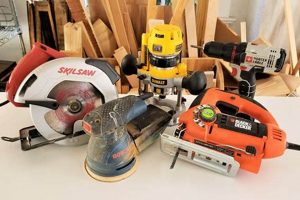
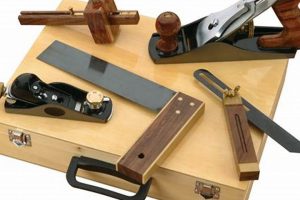
Precision tools form an indispensable element within the suite of woodworking resources. These instruments, characterized by their accuracy and capability for fine adjustments, directly influence the quality and intricacy of finished woodwork. The connection between precision tools and superior results is causal; imprecise tools inevitably lead to inaccuracies and compromised outcomes, regardless of the material’s quality. Within the context of creating lasting pieces, precision tools represent an investment in the project’s ultimate success, ensuring both aesthetic appeal and structural integrity. Using hand planes or measuring tapes will help with woodworking precision.
Examples underscore the importance of this connection. When crafting a dovetail joint in oak, a precise dovetail saw and chisel are required to achieve a tight, gap-free fit. Similarly, accurate measurement with a calibrated measuring tape is crucial for ensuring that cabinet components align correctly. Conversely, using dull or inaccurate tools results in ragged cuts, misaligned joints, and a generally lower quality of workmanship. For example, A misaligned mortise and tenon joint compromises the structural integrity of a load-bearing element. In short, the degree of precision inherent in the tools directly affects the final product’s durability and aesthetic.
In summary, precision tools are essential components of comprehensive woodworking resources. The practical significance of selecting and maintaining high-quality instruments lies in their ability to facilitate accuracy, efficiency, and superior craftsmanship. By investing in precision tools, woodworkers enhance their capacity to create durable, aesthetically pleasing pieces that stand the test of time, thereby linking tool quality to the long-term value of their output.
5. Safety Equipment

Safety equipment is an indispensable component of any woodworking endeavor, particularly when working with hardwoods. Protecting the woodworker from potential hazards associated with machinery, sharp tools, and airborne particles is paramount. Effective safety measures mitigate the risk of injury, fostering a secure environment conducive to quality craftsmanship and material longevity.
- Eye Protection
Safety glasses or face shields are essential to protect the eyes from flying debris produced during sawing, sanding, and chiseling. Oak, in particular, can generate fine splinters and dust particles that pose a significant risk of eye irritation or injury. Consistent use of appropriate eye protection minimizes these risks, ensuring clear vision and preventing potential long-term vision impairment.
- Respiratory Protection
Respirators or dust masks are crucial for preventing the inhalation of fine wood dust generated during sanding, sawing, and routing. Oak dust can be a respiratory irritant, and prolonged exposure may lead to respiratory problems. Proper respiratory protection filters out these harmful particles, safeguarding the worker’s respiratory health and minimizing the risk of respiratory illnesses.
- Hearing Protection
Earplugs or earmuffs are necessary to protect the hearing from the loud noises produced by power tools such as saws, planers, and routers. Prolonged exposure to these sounds can cause hearing damage or loss. Consistent use of hearing protection reduces the noise level reaching the ears, preventing noise-induced hearing loss and preserving auditory health.
- Hand Protection
Gloves are recommended to protect the hands from cuts, splinters, and abrasions. They also provide a better grip on tools and materials, reducing the risk of accidents. Depending on the task, different types of gloves may be necessary. Leather gloves offer protection from cuts and abrasions. Gloves are an important measure for avoiding injuries.
Integrating comprehensive safety protocols and equipment is not merely a precautionary measure but a fundamental requirement for responsible woodworking. By prioritizing safety, woodworkers minimize the potential for injury, preserve their long-term health, and ensure the sustainable pursuit of their craft, directly contributing to the quality and longevity of their woodwork utilizing material.
Frequently Asked Questions about Resources for Woodworking
This section addresses frequently encountered inquiries pertaining to the selection and application of resources for woodworking, aiming to clarify common points of confusion and provide clear, concise guidance.
Question 1: What distinguishes air-dried lumber from kiln-dried lumber, and which is preferable for furniture construction?
Air-dried lumber undergoes a slower, more gradual drying process, resulting in reduced internal stress and warping. Kiln-dried lumber is dried more rapidly in controlled environments. While kiln-drying is faster, it can introduce internal stresses. Air-dried lumber is often preferred for fine furniture making due to its stability; however, properly kiln-dried lumber is acceptable if moisture content is carefully monitored.
Question 2: How critical is moisture content in woodworking, and what are the potential consequences of neglecting it?
Maintaining appropriate moisture content is essential for preventing dimensional changes in wood. Neglecting moisture content can lead to warping, cracking, and joint failure. Ideal moisture content typically ranges from 6% to 8% for interior applications. A moisture meter aids in accurate measurement and adjustment.
Question 3: What factors should be considered when selecting hardware for woodworking projects?
Material, size, and corrosion resistance are key factors in selecting hardware. Stainless steel or brass hardware is recommended for exterior applications or high-moisture environments. Ensure hardware is appropriately sized for the load and stress it will bear. Compatibility with the type of wood is another essential consideration.
Question 4: What are the benefits of using a specific joint over another?
Different joints offer varying strengths and aesthetic qualities. Dovetail joints excel in drawer construction due to their exceptional strength. Mortise and tenon joints provide robust connections for frame assemblies. Selecting the appropriate joint depends on the intended structural requirements and visual design.
Question 5: What is the recommended approach for sanding wood to achieve a smooth finish?
A gradual progression through sandpaper grits is crucial. Begin with a coarser grit to remove imperfections, then refine with progressively finer grits. Even pressure and consistent strokes are essential to avoid unevenness. Proper sanding prepares the surface for optimal finish adhesion.
Question 6: What precautions should be taken when applying finishes to woodwork?
Apply finishes in thin, even coats to prevent runs and ensure proper curing. Adequate ventilation is essential during application and drying to minimize exposure to fumes. Follow the manufacturer’s instructions for specific drying times and application methods.
These FAQs provide a foundation for informed decision-making. Further exploration of specific techniques and materials is encouraged for advanced woodworking projects.
The next section will summarize the key principles discussed, reinforcing the importance of informed material selection and skillful application in the pursuit of superior woodworking.
Conclusion
The preceding discussion has explored the essential elements comprising resources for woodworking, emphasizing the critical roles of durable lumber, quality hardware, appropriate finishes, and precision tools. Safe working conditions were also mentioned to ensure the work is done at the best and safe condition. Each component contributes uniquely to the durability, functionality, and aesthetic quality of finished pieces. Recognizing the interdependencies among these elements is paramount for achieving superior results. Prioritizing the careful selection and skillful application of these resources ensures both the immediate success and the long-term value of woodworking projects.
The commitment to informed material selection and precise execution distinguishes enduring works of craftsmanship. Future endeavors should reflect a dedication to refining techniques and expanding knowledge, thereby upholding standards of quality and innovation. In that way, oak tree woodworking supplies can be a great help to future projects.