



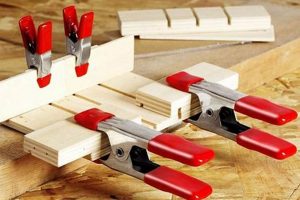
These tools are designed for temporarily holding workpieces together, primarily during the gluing or fastening phases of woodworking projects. Employing a spring mechanism, they exert pressure to maintain a secure grip. A common example involves holding small pieces of wood while adhesive sets, ensuring accurate alignment and a strong bond.
Their significance lies in their ease of use and rapid application, streamlining workflow and enhancing efficiency. The quick-action nature of these devices proves particularly useful in situations requiring immediate clamping force, saving time and effort compared to traditional screw-type clamps. Historically, simpler clamping methods preceded these, but the spring-loaded design offered a substantial improvement in speed and convenience.
The subsequent sections will delve into considerations for selecting suitable models, exploring different types available, and outlining best practices for their effective utilization in various woodworking applications.
Effective Usage Strategies
To maximize the utility of these devices, adherence to specific guidelines is recommended for optimal results and longevity of the tool.
Tip 1: Material Compatibility: Ensure the clamp’s jaw material is compatible with the wood species. Certain plastics may react adversely with specific wood finishes, causing staining or adhesion.
Tip 2: Pressure Adjustment: Avoid over-tightening. Excessive force can mar the wood surface or compromise the integrity of delicate joints. Utilize models with adjustable pressure mechanisms when working with softer woods.
Tip 3: Protective Pads: Employ protective pads or shims between the clamp jaws and the workpiece. This mitigates the risk of indentation or scratching, particularly on finished surfaces.
Tip 4: Even Distribution: Distribute multiple units evenly across the joint area. This promotes uniform pressure distribution, preventing warping or misalignment during the bonding process.
Tip 5: Jaw Capacity Awareness: Respect the maximum jaw opening capacity. Overextending the tool can compromise the spring mechanism and reduce its clamping force.
Tip 6: Regular Maintenance: Clean the tool regularly to remove adhesive residue and debris. A clean mechanism ensures smooth operation and extends the lifespan of the spring.
Tip 7: Storage Considerations: Store these devices in a dry environment. Exposure to moisture can lead to corrosion of the spring and reduce its effectiveness.
Consistently applying these techniques will enhance project outcomes, minimize potential damage, and ensure that these important tools remain a reliable asset in the workshop.
The following section will provide a comprehensive overview of various types and their specific applications, aiding in informed selection for specific woodworking requirements.
1. Clamping Pressure

Clamping pressure, the force exerted by woodworking spring clamps to hold materials together, is a critical factor in achieving strong and durable joints. Insufficient pressure results in weak bonds, while excessive pressure can damage the wood fibers or distort the workpiece. These consequences highlight the direct effect of clamping pressure on the structural integrity and aesthetic quality of woodworking projects. For instance, when gluing a miter joint, adequate and even pressure ensures a seamless, gap-free connection. Without sufficient pressure, the adhesive may not properly bond, leading to a visible seam and a compromised joint strength.
The effectiveness of clamping pressure is also dependent on the type of woodworking spring clamp utilized. Smaller clamps may be adequate for delicate tasks like holding thin veneers, while larger, heavier-duty versions are required for assembling frame structures. Real-world examples include securing cabinet door frames where uniform pressure is vital to maintaining squareness during glue-up, preventing racking or misalignment. Moreover, the wood species itself impacts the optimal pressure level; softer woods are more susceptible to indentation under high pressure, necessitating careful adjustment or the use of protective pads.
In summary, understanding the relationship between clamping pressure and woodworking spring clamps is paramount for successful woodworking. Selecting the correct tool based on the required pressure, wood type, and joint configuration ensures project stability and longevity. Challenges arise in accurately gauging appropriate pressure levels, necessitating experience and careful observation. Mastery of this facet directly contributes to achieving professional-grade results in woodworking endeavors.
2. Jaw Capacity

Jaw capacity, referring to the maximum opening width of woodworking spring clamps, fundamentally dictates the range of workpiece thicknesses these tools can accommodate. Insufficient jaw capacity renders a clamp useless for a given task, while excessive capacity may lead to instability when clamping thinner materials. The selection of appropriate jaw capacity is therefore a primary consideration when choosing a woodworking spring clamp. For instance, clamping a stack of boards for edge gluing requires a clamp with sufficient jaw capacity to encompass the combined thickness of all boards. Failure to account for this dimension results in an inability to apply the necessary clamping force, compromising the joint’s integrity.
Variations in jaw capacity influence the types of projects for which a particular spring clamp is suitable. Smaller clamps with limited jaw capacity are often employed for tasks like holding small trim pieces or securing miters on picture frames. Conversely, larger clamps with extended jaw capacity are essential for assembling larger cabinet components or clamping thick panels. The shape of the clamp jaws themselves can also affect the practical jaw capacity. Some clamps feature deep throats, allowing them to reach further into recesses or around complex shapes. Real-world applications reveal the importance of proper jaw capacity in minimizing stress concentrations on the workpiece, preventing damage or distortion during clamping.
In summation, jaw capacity represents a critical specification when evaluating woodworking spring clamps. Selecting clamps with appropriate jaw capacity ensures versatility across a range of projects, mitigating the risk of project failure due to inadequate clamping. Challenges arise in accurately estimating the required jaw capacity for complex assemblies, underscoring the need for careful measurement and planning. Mastery of this selection criterion ensures the tools effectively meet project requirements while safeguarding the integrity of the workpiece.
3. Handle Ergonomics
Handle ergonomics, concerning the design of handles to optimize human interaction, directly influences the usability and efficiency of woodworking spring clamps. The ergonomic design of these handles affects user comfort, reduces fatigue, and contributes to overall safety during prolonged use. Several factors converge to determine the effectiveness of handle ergonomics in this context.
- Grip Material and Texture
The material composition and surface texture of clamp handles affect grip security and comfort. Handles made from non-slip materials, such as rubber or textured polymers, enhance grip, especially when hands are wet or sweaty. Insufficient grip can lead to slippage, reducing clamping force and potentially causing injury. For example, textured handles allow for a firmer hold when manipulating clamps to secure a workpiece at an awkward angle.
- Handle Shape and Size
The shape and size of handles are crucial for accommodating a range of hand sizes and grip styles. Contoured handles that fit naturally within the hand reduce strain and improve control. Handles that are too small or too large can lead to discomfort and reduced clamping efficiency. Woodworkers clamping multiple pieces benefit from ergonomic handles by reducing strain.
- Leverage and Force Application
The design of the handle directly impacts the leverage available for applying clamping force. Handles that provide a mechanical advantage allow users to apply greater force with less effort. Improper leverage can lead to fatigue and inconsistent clamping pressure. Spring clamps with handles designed for optimal leverage enable easier and more precise force application during project assembly.
- Spring Resistance and Actuation
The ergonomic interaction between the handle and spring mechanism dictates how easily the clamp opens and closes. Low spring resistance and intuitive actuation minimize hand strain, especially during repetitive tasks. Excessive resistance can lead to fatigue and potential musculoskeletal issues. Spring clamps with ergonomically optimized spring mechanisms require minimal effort to operate, enhancing productivity and user well-being.
The attributes of handle ergonomics in woodworking spring clamps significantly affect user experience. Proper handle design promotes efficiency, reduces user fatigue, and enhances the safety of woodworking operations. Consideration of these elements leads to a more intuitive and comfortable clamping process.
4. Material Compatibility
Material compatibility, referring to the chemical or physical interactions between woodworking spring clamps and the materials they contact, is critical to preserving workpiece integrity and clamp longevity. Selecting clamps made from compatible materials avoids undesirable effects on the wood, finish, or the clamp itself. Understanding these interactions is crucial for optimal woodworking practices.
- Jaw Pad Material
The composition of the clamp jaw pads, often made of rubber, plastic, or cork, can react with certain wood finishes. Some plastics contain plasticizers that can leach out and soften or discolor delicate finishes. Natural rubber may contain sulfur compounds that can tarnish silver or react with water-based coatings. Protective pads made from inert materials like Teflon or acid-free paper offer a barrier, preventing unwanted chemical reactions. For example, using vinyl jaw pads on a shellac finish can result in permanent discoloration and softening of the coating, necessitating costly repairs.
- Clamp Body Material
The clamp’s metal or plastic body can also interact with the surrounding environment. Steel clamps, if unprotected, can corrode in humid conditions, potentially staining wood if the rust comes into contact. Anodized aluminum or stainless-steel clamps offer greater corrosion resistance and minimize the risk of staining. Plastic clamps may degrade with prolonged exposure to UV light, becoming brittle and losing clamping force. Consideration of the clamp body material is essential for preventing both workpiece damage and premature clamp failure.
- Adhesive Interactions
Woodworking adhesives, such as PVA or epoxy, can adhere to clamp jaws if not properly protected. This build-up can compromise the clamp’s grip and transfer to subsequent workpieces, potentially marring the surface. Using non-stick coatings, such as PTFE, or applying release agents, like wax paper, can prevent adhesive build-up. Routine cleaning of clamp jaws with appropriate solvents is also necessary to maintain functionality and prevent contamination.
- Wood Species Sensitivities
Certain wood species contain natural oils or acids that can react with the clamp’s components. For example, acidic woods like oak can accelerate corrosion of unprotected steel clamps. Similarly, oily woods like teak can degrade certain rubber jaw pads. Selecting clamps constructed from corrosion-resistant materials or using protective barriers is essential when working with these species. Regular inspection of the clamp jaw pads for signs of degradation is recommended to prevent damage to the workpiece.
These facets of material compatibility underscore the importance of careful clamp selection and maintenance. Failing to account for these interactions can lead to damaged workpieces, compromised finishes, and reduced clamp lifespan. A proactive approach, involving thorough material knowledge and routine inspection, ensures woodworking spring clamps remain a valuable and reliable tool in the shop.
5. Pivot Point Durability

Pivot point durability, referring to the capacity of the hinge or joint in woodworking spring clamps to withstand repeated stress and maintain functionality over extended use, is a significant determinant of the tool’s overall lifespan and reliability. This aspect governs the clamp’s ability to consistently apply clamping force and maintain its structural integrity during regular woodworking tasks. The following points outline the key facets of pivot point durability.
- Material Composition
The material from which the pivot point is constructed significantly impacts its durability. Pivot points made from hardened steel or other high-strength alloys exhibit superior resistance to wear, deformation, and fatigue compared to those made from softer metals or plastics. Real-world examples include clamps used in production environments where repetitive clamping cycles place considerable stress on the pivot point. Clamps with hardened steel pivot points will maintain their functionality for a longer duration under these conditions.
- Joint Design and Tolerance
The design of the pivot joint, including factors such as surface area, bearing type, and tolerances, influences its load-bearing capacity and resistance to loosening. Pivot points with tight tolerances and smooth bearing surfaces minimize friction and wear, resulting in improved durability. Clamps with poorly designed pivot joints may exhibit excessive play or binding, leading to inconsistent clamping force and eventual failure. Proper design considers the anticipated stresses and strains placed upon the joint during operation.
- Lubrication and Maintenance
Regular lubrication and maintenance of the pivot point are essential for preserving its functionality and extending its lifespan. Applying lubricants reduces friction, prevents corrosion, and facilitates smooth operation. Neglecting maintenance can lead to accelerated wear, corrosion, and eventual seizure of the joint. Woodworkers who routinely clean and lubricate their spring clamps can expect significantly longer service life compared to those who do not.
- Fastener Security
The method by which the pivot point is fastened or secured affects its stability and resistance to loosening. Pivot points secured with robust fasteners, such as rivets or threaded bolts with locking mechanisms, are less prone to failure under repeated stress. Clamps with poorly secured pivot points may exhibit loosening over time, resulting in reduced clamping force and potential safety hazards. The choice of fastener must consider the forces exerted on the joint during clamping and unclamping operations.
In conclusion, pivot point durability is a defining characteristic of high-quality woodworking spring clamps. Selection of tools incorporating durable materials, robust joint designs, and secure fasteners, combined with proper maintenance, ensures reliable performance and extended lifespan. By prioritizing pivot point durability, woodworkers can minimize downtime, reduce replacement costs, and maintain a safe and efficient working environment.
6. Spring Tension
Spring tension, the force exerted by the spring mechanism within woodworking spring clamps, is a fundamental determinant of their clamping effectiveness and usability. It directly governs the amount of pressure applied to the workpiece, influencing joint strength and stability. Understanding spring tension is crucial for selecting the appropriate clamp for a given woodworking task.
- Clamping Force Regulation
Spring tension dictates the clamping force exerted by the jaws. Higher spring tension translates to greater clamping force, suitable for securely holding thicker materials or creating stronger joints. Conversely, lower spring tension is preferred for delicate workpieces or softwoods to prevent damage. Spring tension must be carefully matched to the material properties and the specific requirements of the joint being created. An example is clamping delicate veneer where high tension would cause crushing.
- User Fatigue and Ergonomics
The spring tension also impacts the effort required to open and close the clamp. Excessive spring tension can lead to user fatigue, particularly during repetitive clamping tasks. Clamps with ergonomically designed handles and optimized spring tension ratios minimize hand strain and improve overall usability. High spring tension necessitates greater hand strength, whereas balanced tension facilitates easier and more consistent operation.
- Material Compliance and Adaptability
Spring tension must be calibrated to accommodate variations in workpiece thickness and material compliance. A spring with insufficient tension may not provide adequate clamping force for thicker materials or warped surfaces, leading to compromised joints. Adaptive spring mechanisms, capable of adjusting to different material thicknesses, enhance versatility and ensure consistent clamping pressure across a range of applications. Clamping a stack of boards requires compliance to accommodate slight thickness variations.
- Durability and Long-Term Performance
The spring tension, combined with the spring’s material properties and construction, affects the clamp’s long-term durability. Springs that are consistently stressed beyond their elastic limit may weaken over time, leading to reduced clamping force. High-quality springs, made from resilient materials and properly heat-treated, maintain their tension and functionality for extended periods. Consistent high tension contributes to metal fatigue, whereas moderate tension prolongs the lifespan of the spring.
These interrelated aspects of spring tension underscore its pivotal role in woodworking spring clamp functionality. Matching spring tension to the specific application, considering user comfort, and ensuring durability are critical factors in selecting and utilizing these tools effectively. Variances in spring tension require careful consideration to achieve optimal woodworking results.
7. Jaw Configuration
Jaw configuration, pertaining to the shape, size, and design of the clamping surfaces on woodworking spring clamps, fundamentally determines their suitability for various applications. Its relevance lies in its direct impact on the clamp’s ability to securely grip workpieces of different shapes, sizes, and materials, thereby affecting joint quality and project outcome.
- Jaw Shape and Contact Area
The shape of the clamp jaws dictates the area of contact with the workpiece. Flat jaws provide uniform pressure distribution on flat surfaces, while curved jaws are better suited for clamping rounded or irregular shapes. Insufficient contact area can lead to localized stress concentrations, potentially damaging the wood fibers or compromising the joint’s integrity. For instance, clamping a dowel with flat jaws concentrates pressure along a narrow line, whereas curved jaws distribute the force more evenly. The configuration ensures stability and prevents crushing the dowel during glue-up.
- Jaw Depth and Reach
Jaw depth, or reach, determines how far the clamp can extend into a workpiece or assembly. Clamps with shallow jaws are suitable for edge clamping or securing thin materials, while those with deep jaws allow access to recessed areas or enable clamping of thicker stock. Insufficient jaw depth limits the clamp’s applicability, potentially requiring the use of specialized clamping techniques. For example, when repairing a chair rung, a deep-reach spring clamp enables securing the joint from the outside, even if the rung is recessed within the chair frame.
- Jaw Padding and Surface Protection
The inclusion of padding, such as rubber or cork, on the jaw surfaces prevents damage to the workpiece. These materials provide a compliant layer, distributing pressure and minimizing the risk of indentation or scratching, especially on finished surfaces. Jaw padding is essential when working with delicate woods or applying clamps to pre-finished components. Securing a piece of highly polished hardwood without protective padding can result in visible marks and necessitate costly refinishing.
- Adjustability and Versatility
Certain spring clamps feature adjustable jaws or interchangeable jaw pads, enhancing their versatility across a range of applications. Adjustable jaws enable accommodating workpieces of varying thicknesses and shapes, while interchangeable pads allow adapting the clamp for different materials and finishes. This adaptability reduces the need for multiple specialized clamps, streamlining the woodworking process. A spring clamp with adjustable jaws can be used to secure both thin veneers and thicker lumber, maximizing its utility in a diverse workshop setting.
The aspects of jaw configuration play pivotal roles in optimizing the performance of woodworking spring clamps. Proper jaw configuration allows the secure and safe clamping of all woodworking materials.
Frequently Asked Questions About Woodworking Spring Clamps
The following addresses common inquiries regarding the selection, application, and maintenance of these tools.
Question 1: What clamping force is typical for general woodworking tasks?
The required clamping force varies depending on the adhesive used and the materials being joined. Generally, several pounds of force per square inch of joint surface area are sufficient, but consulting adhesive manufacturer specifications is advisable.
Question 2: Can woodworking spring clamps be used on all types of wood?
These clamps are suitable for a variety of wood types, but care is warranted with softer woods. Excessive clamping pressure can cause indentation. Protective pads should be used to mitigate this risk.
Question 3: How does jaw capacity influence the selection process?
Jaw capacity determines the maximum thickness of material the clamp can accommodate. Accurate measurement of the workpiece is essential to ensure the selected clamp provides adequate grip.
Question 4: What maintenance procedures extend the lifespan of these tools?
Regular cleaning to remove adhesive residue and lubrication of the pivot points are recommended. Storage in a dry environment minimizes corrosion.
Question 5: Are there alternatives for applications requiring higher clamping pressure?
For applications demanding greater force, screw-type clamps or bar clamps are more appropriate. These offer adjustable pressure and increased holding power.
Question 6: Is there a risk of spring fatigue over prolonged usage?
Consistent overextension of the spring can lead to fatigue and reduced clamping force. Respecting the clamp’s maximum jaw opening and avoiding excessive tension contribute to longevity.
Proper understanding and application of these principles contribute to successful project outcomes and extended tool life.
The next section will address advanced clamping techniques and specialized applications.
Conclusion
The preceding exploration has illuminated key characteristics of woodworking spring clamps, underscoring factors such as clamping pressure, jaw capacity, handle ergonomics, material compatibility, pivot point durability, spring tension, and jaw configuration. Each element plays a distinct role in clamp effectiveness and suitability for diverse woodworking tasks. Successful application necessitates a thorough understanding of these variables and their interdependencies.
Effective use of these essential tools hinges on informed selection, diligent maintenance, and a commitment to best practices. By prioritizing these aspects, woodworkers can ensure project integrity, prolong tool lifespan, and elevate the overall quality of their craft. The informed and discerning utilization of these vital devices significantly contributes to the precision and stability required for superior woodworking outcomes.
![Top-Rated: Best Quick Clamps for Woodworking Projects [2024] | Step-by-Step Guides, Tools & Inspiration to Build Beautiful Wooden Decor on a Budget](https://woodfromhome.com/wp-content/uploads/2026/04/th-264-300x200.jpg "Top-Rated: Best Quick Clamps for Woodworking Projects [2024] Step-by-Step Guides, Tools & Inspiration to Build Beautiful Wooden Decor on a Budget")