



The process of securing wood components together during assembly using specialized tools designed to apply and maintain pressure is fundamental to woodworking. These tools, commonly referred to as workholding devices, ensure precise alignment and solid adhesion while glue dries or fasteners are applied. Employing the correct type and technique can significantly impact the strength and appearance of the finished project. For example, a project involving multiple pieces of wood being glued together requires consistent pressure applied across all surfaces to ensure a strong bond and prevent gaps.
Effective workholding provides numerous advantages, including preventing movement during assembly, ensuring accurate alignment, and maximizing the effectiveness of adhesives. Historically, woodworking relied on ingenuity and simple wedges for this purpose. Modern iterations offer greater precision and control, contributing to improved efficiency and product quality. The evolution of these tools reflects a continuous pursuit of precision and durability in woodworking practices.
Understanding the diverse range of styles, selection criteria, and proper application techniques is essential for achieving successful woodworking outcomes. Subsequent sections will delve into various types, their respective strengths and weaknesses, and best practices for their implementation in a woodworking setting.
Essential Woodworking Workholding Strategies
The following guidelines offer practical advice for optimizing workholding techniques in various woodworking scenarios. Implementing these tips will contribute to greater accuracy, stability, and overall quality in woodworking projects.
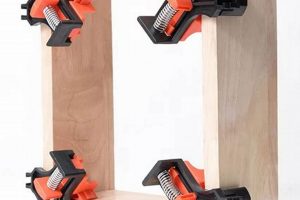
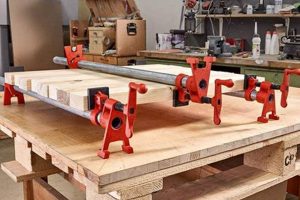
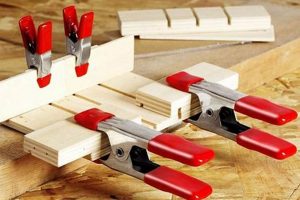
Tip 1: Select the Appropriate Style. Different woodworking tasks necessitate different designs. Bar styles are suitable for large panels, while spring and hand screw styles offer versatility for smaller, more intricate assemblies. Miter designs are specifically intended for angled joints.
Tip 2: Employ Protective Measures. Direct contact between metal surfaces and wood can lead to indentation. Utilize wooden pads or specialized jaws to distribute pressure evenly and prevent damage to the workpiece.
Tip 3: Distribute Pressure Uniformly. Uneven pressure can result in misalignment or distortion. Position multiple units strategically to ensure consistent force across the entire joint or assembly. Adjust tension to apply consistent force across the joint.
Tip 4: Adhere to Adhesive Drying Times. Premature removal can compromise the bond strength. Consult adhesive manufacturer recommendations and allow for adequate drying time under maintained pressure before releasing the workpiece.
Tip 5: Confirm Squareness and Alignment. Before adhesive sets, verify that the assembly is square and properly aligned. Minor adjustments can be made while pressure is applied. The use of a square ensures precise 90-degree angles.
Tip 6: Consider Specialized Jigs and Fixtures. For repetitive tasks, custom-built jigs can streamline the process and improve accuracy. These fixtures provide consistent positioning and clamping points, enhancing efficiency.
Tip 7: Maintain and Inspect Workholding Tools. Regular cleaning and lubrication ensure smooth operation and prevent corrosion. Inspect components for wear or damage, replacing parts as needed to maintain optimal performance and safety.
Effective implementation of these strategies will enhance the stability and precision of woodworking projects. A thorough understanding of the principles of force distribution and material properties is crucial for achieving optimal results.
The following sections will provide a more detailed discussion of specific applications and advanced workholding techniques.
1. Selection

The initial step of employing workholding devices effectively is the careful selection of the appropriate type for the given woodworking task. This selection process directly impacts the success of the subsequent assembly and bonding phases. A mismatch between the workholding device and the project requirements can lead to inadequate pressure, misalignment, or damage to the wood. Therefore, a thorough understanding of the various types available is paramount.
For example, assembling a large tabletop necessitates bar styles capable of spanning the entire width and applying consistent pressure along the joints. Attempting to use small spring styles in this situation would result in insufficient force and potential gaps. Conversely, intricate detail work, such as constructing a small box with mitered corners, benefits from specialized miter designs that apply pressure at the correct angle and prevent slippage. Failure to select the correct type for a specific joint type can compromise the joint’s integrity, leading to structural weakness or aesthetic flaws. Another aspect includes material compatibility; metal workholding devices can sometimes stain or mar certain wood species, requiring the selection of options with protective features or the use of cushioning materials.
In conclusion, the selection is not merely a preliminary consideration but an integral component of the overall process. Understanding the unique strengths and limitations of each type, considering the size and configuration of the project, and accounting for material compatibility are crucial for achieving optimal results in woodworking. Inadequate selection undermines subsequent steps, diminishing project quality. The selection serves as the foundation for stable, precise, and durable woodworking outcomes.
2. Pressure

The application of appropriate force constitutes a central element in effectively employing workholding devices for woodworking purposes. Insufficient pressure compromises joint integrity, while excessive pressure can lead to material deformation or damage. Achieving the optimal pressure balance is therefore essential for successful assembly and adhesion. This balance hinges on several factors, including the species of wood, the adhesive utilized, and the specific design of the joint. Examples of pressure causing deformation in softer woods with dense glue are common occurrences. Appropriate pressure prevents gaps in the joining of wood to wood which will prevent wood to break easily.
The type of adhesive used plays a pivotal role in determining the necessary pressure level. Polyurethane adhesives, for instance, require minimal pressure to ensure proper expansion and bonding, while polyvinyl acetate (PVA) adhesives often necessitate greater compressive force to achieve a strong bond line. Species density influences pressure considerations. Softer woods, such as pine or basswood, are more susceptible to indentation and deformation under high compressive force; therefore, a more delicate touch is required. Hardwoods, such as maple or oak, can withstand greater pressure without significant risk of damage. Examples include using spring workholding devices for delicate work and bar styles for larger projects.
In conclusion, effective pressure management is inextricably linked to successful woodworking outcomes. Careful consideration of wood species, adhesive properties, and joint design informs the proper selection and application of workholding devices. Achieving the appropriate balance of compressive force ensures robust joints, prevents material damage, and ultimately contributes to the longevity and aesthetic appeal of the finished woodworking project. Without considering appropriate force, a woodworking project will be negatively affected and reduce life span of wood products.
3. Protection
The implementation of protective measures during the application of workholding devices is critical for preserving the integrity and aesthetic quality of woodworking projects. Direct contact between the metal surfaces of workholding devices and the wood can result in undesirable indentations, staining, or crushing of wood fibers. Therefore, the judicious use of protective barriers is essential to mitigate these risks.
- Pad Materials and Application
Pad materials, such as cork, felt, leather, or wood shims, serve as physical barriers between the workholding device and the workpiece. These materials distribute pressure more evenly, reducing the likelihood of concentrated force causing damage. For example, using a cork pad between a metal jaw and a delicate wood surface cushions the impact and prevents indentation. The correct application involves ensuring the pad is adequately sized to cover the contact area and securely positioned to prevent slippage during pressure application.
- Jaw Design and Modification
Some workholding devices feature specialized jaws designed to minimize marring. These jaws may be constructed from softer materials like plastic or rubber, or they may incorporate textured surfaces that grip without excessive pressure. Modifying existing jaws with adhesive-backed felt or similar materials can provide an additional layer of protection. Selecting a device with a suitable jaw design can significantly reduce the risk of surface damage.
- Pressure Adjustment and Monitoring
Over-tightening workholding devices is a common cause of damage, even with protective measures in place. Careful pressure adjustment and continuous monitoring are necessary to prevent excessive force. Gradual tightening, combined with visual inspection of the workpiece, allows for precise control and minimizes the risk of crushing wood fibers or creating unsightly indentations. The use of pressure-limiting workholding devices can also be beneficial in this context.
- Wood Species Considerations
Softer wood species, such as pine or cedar, are particularly vulnerable to damage from workholding devices. Extra caution and more robust protective measures are required when working with these materials. Harder woods, while more resistant, still benefit from protection to prevent marring or staining. Understanding the specific properties of the wood species is essential for selecting appropriate protection strategies.
The consistent application of these protective strategies, in conjunction with careful selection of workholding devices and controlled pressure application, ensures the longevity and aesthetic appeal of woodworking projects. Failure to prioritize protection can lead to costly repairs or compromised project quality, underscoring the importance of proactive preventative measures during the assembly and bonding phases.
4. Alignment

Precise alignment of components prior to and during the application of workholding devices directly influences the structural integrity and aesthetic quality of woodworking projects. Misalignment, even of a minor degree, can propagate structural weaknesses, visual imperfections, and functional deficiencies. The proper use of workholding devices serves not only to secure components but also to maintain a predetermined alignment throughout the assembly process. For instance, the construction of a cabinet requires that the face frame be square and coplanar before the glue sets. Improper alignment during glue-up results in a skewed frame, affecting door installation and overall structural stability.
The relationship between alignment and workholding extends beyond initial positioning. The force exerted by workholding devices can inadvertently induce subtle shifts in alignment if not applied strategically. Even distribution of pressure and the use of reference surfaces are critical techniques for maintaining alignment under load. A practical example involves edge-joining boards for a tabletop. If workholding devices are applied unevenly, the boards can buckle or shift out of alignment, resulting in a surface that is not flat and requires extensive correction. Similarly, when assembling mortise and tenon joints, the workholding devices must exert pressure perpendicular to the joint surfaces to ensure that the tenon seats fully and the shoulders remain flush.
In conclusion, the ability to achieve and maintain precise alignment is an essential component of effective workholding practices. Understanding the potential for misalignment, employing appropriate techniques to prevent it, and utilizing workholding devices to maintain intended geometry are crucial for successful woodworking outcomes. Ignoring alignment considerations compromises the structural integrity, aesthetic appeal, and functional performance of the finished project. This understanding highlights the practical significance of mastering both alignment techniques and workholding device usage for producing high-quality woodworking.
5. Distribution
The term ‘distribution,’ in the context of woodworking involving workholding devices, refers to the strategic placement of force application points across a workpiece. Improper distribution of force, when securing wood components, introduces the risk of uneven pressure, leading to material deformation, joint failure, or misalignment. For instance, applying a single workholding device to the center of a long glue joint results in insufficient pressure at the ends, potentially creating weak points in the bond. Effective distribution necessitates multiple devices positioned to exert equal pressure across the entire joint surface, ensuring consistent adhesion.
The selection and arrangement of workholding devices must account for the geometry and material properties of the workpiece. Complex shapes, such as curved panels or irregularly shaped frames, demand careful consideration of force vectors to prevent distortion. A real-world example is veneering a substrate. Uneven pressure during the veneering process can cause the veneer to buckle or lift, resulting in a flawed surface. Distributing pressure uniformly across the entire veneer surface, using a vacuum press or multiple clamping points, ensures consistent adhesion and a smooth, blemish-free finish. The use of cauls, shaped to match the curve, further aids in uniform pressure distribution on curved surfaces.
In conclusion, strategic distribution of force is not merely an adjunct to workholding; it is a fundamental component of achieving successful outcomes in woodworking. Proper distribution ensures structural integrity, prevents material damage, and facilitates precise alignment. Understanding the principles of force distribution and their application in woodworking is crucial for producing high-quality, durable, and aesthetically pleasing projects. The challenge lies in adapting distribution strategies to the unique characteristics of each project, requiring careful planning and a thorough understanding of material behavior under pressure.
6. Drying Time

The duration required for adhesives to cure under pressure is a critical parameter in woodworking. Adherence to specified drying times is essential to achieve optimal bond strength and structural integrity when employing workholding devices.
- Adhesive Chemistry and Cure Rate
Different adhesive formulations exhibit varying cure rates, influenced by factors such as temperature, humidity, and material porosity. Polyvinyl acetate (PVA) adhesives, commonly used in woodworking, cure through water evaporation, a process that can be accelerated by higher temperatures and lower humidity. Conversely, epoxy resins cure through a chemical reaction that is less dependent on environmental conditions. Understanding the specific cure mechanism of the adhesive is crucial for determining appropriate workholding duration. Premature removal can weaken the bond while excessive workholding time is not advantageous.
- Impact of Premature Removal
Releasing pressure before the adhesive has reached sufficient strength can compromise joint integrity. Internal stresses within the wood, combined with inadequate bond strength, can lead to joint creep, misalignment, or complete failure. For example, removing workholding devices from a mortise and tenon joint before the adhesive is fully cured may result in the tenon pulling out of the mortise over time, weakening the structure. Adequate drying prevents these effects.
- Influence of Wood Species and Joint Type
Certain wood species, due to their density or oil content, can affect adhesive cure rates. Dense hardwoods may slow down the evaporation of water from PVA adhesives, while oily woods can interfere with the bonding process of some adhesives. Joint type also plays a role; larger glue surfaces or joints with tight tolerances may require longer drying times to ensure complete adhesive penetration and cure. Drying time is critical when joining dissimilar wood species.
- Best Practices for Drying Time Management
Consulting the adhesive manufacturer’s recommendations for drying time is paramount. These recommendations typically provide guidelines for various environmental conditions and material combinations. Implementing a system for tracking drying times, such as labeling assemblies with the application date and expected removal time, can help prevent premature release. Periodic inspection of the joints during the drying process can reveal any signs of movement or adhesive failure, allowing for corrective action. Accurate timing leads to strong bonds.
Adherence to recommended drying times, coupled with appropriate workholding techniques, guarantees robust and durable woodworking projects. Disregarding the significance of this temporal factor diminishes structural integrity. A thorough understanding of material interactions, adhesive properties, and environmental influences contributes to achieving optimal outcomes in woodworking.
7. Maintenance

The operational effectiveness and longevity of workholding devices are directly contingent upon consistent and appropriate maintenance practices. Neglecting maintenance protocols initiates a cascade of detrimental effects, ultimately diminishing the performance and lifespan of these tools. Proper care extends beyond mere aesthetics; it ensures the devices function as intended, providing the necessary force and alignment critical for successful woodworking projects. For instance, corroded threads on a screw-type device impede smooth operation, potentially leading to inconsistent pressure application, which in turn compromises joint integrity. Similarly, dirt and debris accumulation on the jaws of a workholding device reduces its grip, increasing the risk of slippage and misalignment during assembly. A neglected tool can cause more work.
Specific maintenance procedures vary based on the type of workholding device. Screw-type devices benefit from periodic lubrication of the threads with a suitable oil or grease, reducing friction and preventing corrosion. Bar styles require inspection for bending or distortion, as these deformities compromise their ability to apply uniform pressure. Spring types necessitate checking for spring fatigue, which can reduce their holding power. Cleaning residue, such as glue or sawdust, from all surfaces is a fundamental aspect of maintenance, preventing build-up that hinders proper functioning. Protective coatings or treatments can further mitigate corrosion and extend the life of the device. For example, applying a rust inhibitor to metal components prevents oxidation, particularly in humid environments. Regular maintenance keeps tools reliable.
In conclusion, the integration of diligent maintenance into the workflow is not optional but rather an indispensable component of employing workholding devices effectively. Consistent maintenance ensures optimal performance, extends the lifespan of the tools, and ultimately contributes to the quality and durability of woodworking projects. The time invested in routine cleaning, lubrication, and inspection yields significant returns in terms of reliable operation and reduced risk of project failures. Overlooking maintenance represents a false economy, as the cost of replacing damaged or malfunctioning workholding devices far exceeds the effort required for preventative care. Maintenance ensures performance.
Frequently Asked Questions Regarding Woodworking Workholding Devices
The following section addresses common inquiries concerning the appropriate utilization of workholding devices in woodworking applications. The information provided aims to clarify prevalent misconceptions and offer practical guidance for optimal performance.
Question 1: Is there a single style suitable for all woodworking tasks?
No. The appropriate selection is contingent upon project size, joint type, and material properties. Bar styles are typically employed for large panels, while spring types are suitable for smaller, more delicate assemblies. Miter styles are specifically designed for angled joints. Selecting an inappropriate style can compromise joint integrity.
Question 2: How much pressure is too much when applying workholding devices?
Excessive pressure can damage wood fibers, leading to indentation or distortion. Softer wood species are particularly vulnerable. The ideal pressure balances secure adhesion with material preservation. Protective padding is recommended to distribute force evenly.
Question 3: Are protective pads always necessary?
While not universally required, protective pads are highly advisable, especially when working with delicate wood species or when using metal workholding devices. Direct contact can cause marring or staining. Using pads minimizes the risk of surface damage.
Question 4: Can workholding devices correct misalignment?
Workholding devices primarily maintain alignment rather than correct it. It is crucial to ensure components are properly aligned before applying pressure. Minor adjustments can be made, but relying on workholding devices to force alignment can compromise joint strength.
Question 5: How critical is adherence to adhesive drying times?
Adhering to recommended drying times is paramount for achieving optimal bond strength. Premature removal can weaken the joint, leading to creep or failure. Consult the adhesive manufacturer’s specifications for precise guidance.
Question 6: What constitutes adequate maintenance for workholding devices?
Regular maintenance includes cleaning, lubrication, and inspection for damage. Corroded threads or distorted frames compromise performance. Proper maintenance extends the lifespan of workholding devices and ensures consistent performance.
In summary, the effective employment of workholding devices necessitates careful consideration of style selection, pressure management, protective measures, alignment, drying times, and routine maintenance. These factors collectively contribute to project quality and longevity.
The subsequent section will provide a comprehensive overview of advanced workholding techniques.
Conclusion
The preceding discussion elucidates the multifaceted nature of securing wood components. Mastering the techniques outlined, from appropriate selection to meticulous maintenance, is essential for achieving structurally sound and aesthetically pleasing results. The skillful application of pressure, combined with the implementation of protective measures, ensures the preservation of material integrity. Adherence to recommended drying times further solidifies the bond, contributing to the longevity of the finished piece.
The proper implementation of workholding principles represents a fundamental aspect of woodworking. Continued refinement of these skills will contribute to the production of durable and visually appealing projects. Consistent application of these techniques transforms woodworking endeavors, elevating them from mere assembly to expressions of precision and craftsmanship.
![Top-Rated: Best Quick Clamps for Woodworking Projects [2024] | Step-by-Step Guides, Tools & Inspiration to Build Beautiful Wooden Decor on a Budget](https://woodfromhome.com/wp-content/uploads/2026/04/th-264-300x200.jpg "Top-Rated: Best Quick Clamps for Woodworking Projects [2024] Step-by-Step Guides, Tools & Inspiration to Build Beautiful Wooden Decor on a Budget")