![Build a Better Table Saw Router Table Plan [DIY Guide]](data:image/svg+xml;base64,PHN2ZyB4bWxucz0iaHR0cDovL3d3dy53My5vcmcvMjAwMC9zdmciIHdpZHRoPSI0NzQiIGhlaWdodD0iNzIiIHZpZXdCb3g9IjAgMCA0NzQgNzIiPjxyZWN0IHdpZHRoPSIxMDAlIiBoZWlnaHQ9IjEwMCUiIHN0eWxlPSJmaWxsOiNjZmQ0ZGI7ZmlsbC1vcGFjaXR5OiAwLjE7Ii8+PC9zdmc+ "Build a Better Table Saw Router Table Plan [DIY Guide] Step-by-Step Guides, Tools & Inspiration to Build Beautiful Wooden Decor on a Budget")
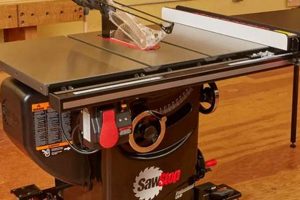
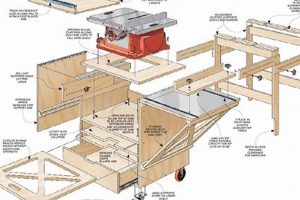
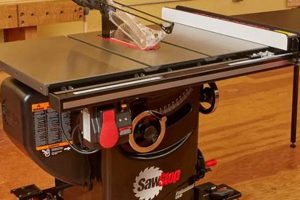
A combination woodworking project integrates the functionality of a table saw and a router table into a single, unified piece of equipment. This design typically involves incorporating a router plate into the table saw’s surface or an adjacent extension, allowing woodworkers to perform both sawing and routing operations on the same platform. The integrated design optimizes workshop space and workflow.
This approach offers numerous advantages. By consolidating two essential tools, it saves valuable floor space in smaller workshops. The shared table surface provides a stable and consistent platform for both cutting and shaping wood. Historically, woodworkers have sought efficient methods to maximize functionality within limited spaces, driving the development of combination tools like this. The result is increased efficiency and versatility in woodworking projects.
The subsequent sections will delve into the specific design considerations, construction techniques, and safety protocols associated with building a combination woodworking platform. Factors such as table flatness, router plate compatibility, and dust collection integration will be examined. Attention will be given to various design options and the tools needed to successfully complete the build.
Essential Construction Tips
The following guidelines offer crucial advice for those undertaking a woodworking project that merges table saw and router table functionalities. Adhering to these recommendations will contribute to a safer and more functional outcome.
Tip 1: Precise Measurements are Paramount: Accurate measurements are indispensable for achieving a seamless integration. Inaccurate dimensions can lead to alignment issues and compromise the overall stability of the woodworking platform. Use a precision measuring tool and double-check all dimensions before cutting any material.
Tip 2: Prioritize a Flat Table Surface: The table surface must be perfectly flat. Any warping or unevenness will negatively affect both sawing and routing operations. Consider using high-quality materials, such as Baltic birch plywood or medium-density fiberboard (MDF), known for their stability and flatness.
Tip 3: Secure Router Plate Installation: The router plate must be securely and flushly mounted into the table. A loose or uneven router plate can cause vibration, inaccurate cuts, and potential hazards. Use appropriate fasteners and ensure the router plate is perfectly level with the table surface.
Tip 4: Implement Effective Dust Collection: Routing and sawing operations generate substantial amounts of dust. Integrate an effective dust collection system to maintain a clean and safe working environment. Connect dust ports to both the table saw and router fence.
Tip 5: Consider Fence Design Carefully: The fence should be versatile and adjustable to accommodate both sawing and routing operations. Ensure the fence is parallel to the saw blade and router bit for accurate cuts. A T-track system can allow for flexible fence positioning and the addition of feather boards or other accessories.
Tip 6: Reinforce Critical Joints: Reinforce all critical joints with glue and screws to ensure structural integrity. The combined platform will be subjected to significant stress during use. Properly reinforced joints will enhance the longevity and stability.
Tip 7: Adhere to Safety Protocols: Always wear appropriate safety gear, including eye protection and hearing protection, when operating power tools. Familiarize yourself with the safety features of both the table saw and router, and never bypass safety mechanisms.
By following these construction tips, builders can ensure the successful integration of table saw and router table functionalities. The result will be a versatile and efficient tool, improving the accuracy and safety of woodworking projects.
The article’s next segment provides insights into the essential safety measures applicable when using the completed platform.
1. Combined Functionality

In the context of a woodworking platform integrating a table saw and a router table, “Combined Functionality” represents the synergistic operation of two distinct tools within a unified design. This integration necessitates a careful consideration of how both tools can be used efficiently and safely within the shared workspace.
- Shared Table Surface Utilization
The unified platform allows for a single, large table surface to serve both the table saw and router table functions. This sharing of space mandates strategic placement of the router insert, ensuring it does not impede table saw operations while remaining accessible for routing. Real-world examples include designs where the router insert is located within a table saw extension wing or in a dedicated area offset from the saw blade’s path.
- Integrated Fence System
A well-designed fence system adaptable to both sawing and routing is crucial. This may involve a single, adjustable fence that can be positioned for either operation or a system where two fences are used, one optimized for sawing and the other for routing, each easily deployed as needed. An example is a T-track system integrated into the table surface, enabling quick and precise fence adjustments for various tasks.
- Power and Dust Management
Combining functionality requires a thoughtful approach to power distribution and dust collection. Strategically placed power outlets and integrated dust ports are necessary to support both the table saw and router. Real-world examples include designs incorporating a shared dust collection system with blast gates to direct airflow to the active tool, maximizing efficiency and minimizing cleanup.
- Workflow Optimization
The primary benefit of combined functionality is the potential to streamline woodworking processes. By minimizing the need to switch between separate tools, the user can perform related tasks in sequence, improving overall efficiency. An example would be cutting stock to size on the table saw and then immediately shaping edges with the router without relocating the workpiece.
These facets of combined functionality demonstrate how a carefully planned table saw router table can enhance the woodworking experience. By optimizing space, integrating shared systems, and streamlining workflow, this type of woodworking project provides a versatile and efficient solution for both amateur and professional woodworkers.
2. Space Optimization

Space Optimization, within the context of a table saw router table woodworking plan, directly addresses the challenge of limited workspace. A primary cause for adopting such an integrated tool is the lack of sufficient area to accommodate separate, full-sized table saws and router tables. The effect is a consolidation of functionalities within a single footprint, maximizing the utility of available space. Space Optimization is therefore not merely a desirable feature, but a critical component in the design, influencing dimensions, layout, and overall configuration. Examples include small home workshops or garages where dedicating space to multiple large tools is impractical. The incorporation of a router table into the extension wing of a table saw allows both tools to share the same floor space, effectively doubling the functionality without increasing the spatial demand. This understanding has practical significance for hobbyist woodworkers and small-scale professional operations, directly impacting their ability to undertake diverse projects in restricted environments.
Further enhancing Space Optimization, designs often include integrated storage solutions. Below-table storage cabinets can house router bits, saw blades, and other accessories, minimizing clutter and maximizing the utility of the area surrounding the combined tool. Folding or collapsible extensions can be incorporated to further reduce the footprint when the full table surface is not required. Moreover, consideration is given to maneuverability within the workshop. The compact nature of the combined tool allows for easier navigation and workflow around other equipment. For instance, a mobile base allows the combined table saw and router table to be easily moved when larger projects require more open floor space. Therefore, the woodworking plan must carefully consider not only the dimensions of the tool itself, but also its interaction with the surrounding workspace.
In summary, Space Optimization is fundamental to the utility and practicality of a table saw router table woodworking plan. By consolidating two essential tools into a single unit, it addresses the spatial constraints often encountered in woodworking environments. The design must account for efficient use of the table surface, storage considerations, and maneuverability within the workshop. Challenges may include balancing the size of the table surface with the need for compactness or accommodating dust collection systems within a confined space. Ultimately, the successful integration of Space Optimization contributes to a more efficient, organized, and productive woodworking experience, facilitating a wider range of projects within limited spatial boundaries.
3. Enhanced Versatility
The integration of table saw and router table functionalities yields a woodworking tool characterized by Enhanced Versatility, expanding the range of projects and operations that can be undertaken within a single workstation.
- Diverse Cutting Capabilities
The combination of a table saw and router table allows for a broader spectrum of cutting operations. The table saw enables accurate ripping and crosscutting of stock, while the router table facilitates edge profiling, dadoing, and shaping. A practical application is the creation of cabinet doors, where the table saw cuts the frame components to size, and the router shapes the decorative edges. This eliminates the need for multiple dedicated machines, streamlining the workflow.
- Complex Joinery Creation
Enhanced Versatility extends to joinery options. The table saw can be used for basic joinery cuts like tenons and rabbets, while the router table excels at creating precise mortises, dovetails, and other intricate joints. For instance, constructing a drawer involves using the table saw to cut the drawer box components and the router table to create dovetail joints for robust assembly. This integrated approach increases the precision and efficiency of joinery processes.
- Material Adaptation
The integrated platform accommodates a wider array of materials compared to using individual tools. The table saw handles solid wood, plywood, and composites with ease, while the router table is effective for shaping plastics, acrylics, and other non-wood materials. Building a custom sign might involve cutting the sign blank from plywood on the table saw and then using the router to carve the lettering and decorative elements. This versatility allows for experimentation and the creation of mixed-media projects.
- Project Scalability
The combined functionalities allow for projects of varying scales, from small decorative items to larger furniture pieces. The table saw provides the capacity to handle large sheet goods, while the router table enables intricate detailing and finishing touches. Constructing a bookcase could involve using the table saw to cut the shelves and side panels and then employing the router table to add decorative edge profiles. This scalability makes the integrated platform suitable for both beginner and advanced woodworkers.
The aforementioned facets of Enhanced Versatility illustrate how the integration of table saw and router table functionalities expands the creative possibilities within a woodworking shop. The ability to perform a diverse range of cutting, shaping, and joinery operations on a single platform empowers woodworkers to tackle a wider array of projects with greater efficiency and precision.
4. Structural Integrity

Structural Integrity is a paramount consideration in any “table saw router table woodworking plan.” It dictates the tool’s ability to withstand operational stresses, maintain dimensional accuracy, and ensure user safety over an extended lifespan. A compromised structure risks instability, inaccurate cuts, and potential hazards.
- Frame Robustness
The frame serves as the foundation of the integrated platform. Its construction must resist deflection and vibration caused by the operation of both the table saw and the router. Real-world examples include using heavy-gauge steel or laminated hardwood for the frame, reinforced with cross-bracing and gussets. Failure to provide sufficient frame robustness can result in inaccurate cuts and premature wear.
- Tabletop Rigidity
The tabletop must exhibit exceptional rigidity to provide a stable surface for both sawing and routing operations. Materials such as high-density particleboard or Baltic birch plywood, supported by a solid understructure, are commonly employed. Insufficient tabletop rigidity can lead to warping, affecting the accuracy of cuts and potentially creating hazardous conditions.
- Joint Construction
The joints connecting various components of the integrated platform must be meticulously constructed to ensure long-term durability. Techniques such as mortise-and-tenon joints, rabbet joints with screws and adhesive, and reinforced butt joints are essential. Poorly executed joints are prone to failure under stress, compromising the overall Structural Integrity of the platform.
- Router Plate Integration
The method of integrating the router plate into the tabletop is critical to Structural Integrity. The router plate must be securely mounted and flush with the table surface to prevent vibration and ensure accurate routing. Using a precisely milled recess and robust fasteners is crucial. A poorly integrated router plate can create uneven surfaces, leading to inaccurate cuts and potential hazards.
These facets of Structural Integrity directly impact the performance and safety of a “table saw router table woodworking plan.” Careful attention to frame robustness, tabletop rigidity, joint construction, and router plate integration is essential for creating a stable, accurate, and durable woodworking tool.
5. Dust Management
Dust Management is an indispensable component of any table saw router table woodworking plan. Effective dust control directly affects the operator’s health, tool longevity, and the quality of the finished product. Without a comprehensive system, the combined operations of sawing and routing generate significant particulate matter, posing respiratory risks and hindering visibility.
- Source Capture Integration
Source capture involves collecting dust directly at the point of generation. Examples include shrouds around the table saw blade and router bit, connected to a dust collection system via hoses. Integrated designs featuring dedicated ports and internal baffling optimize airflow. The absence of effective source capture results in airborne dust dispersal, increasing health hazards and necessitating more extensive cleanup.
- Enclosure Design
Enclosing portions of the table saw and router table, especially beneath the tabletop, minimizes dust escape. Cabinets with sealed seams and well-fitting doors contain dust generated during operations. Lower cabinets with integrated dust ports can significantly reduce the volume of airborne particles. In contrast, open-frame designs allow dust to freely disperse into the surrounding environment.
- Air Filtration Systems
Supplemental air filtration systems capture airborne dust that escapes initial collection efforts. These systems employ filters to remove fine particles, improving air quality within the workshop. Strategically placed air cleaners supplement source capture and enclosure strategies, further mitigating health risks. Relying solely on air filtration without addressing source capture is less effective and requires more powerful filtration units.
- Material Selection and Coating
Material selection plays a role in dust management. Smooth, non-porous materials, such as melamine or coated MDF, are easier to clean and prevent dust accumulation. Applying a sealant or coating to exposed wood surfaces minimizes dust absorption, simplifying cleanup procedures. Uncoated or rough surfaces trap dust, making them difficult to clean and potentially harboring allergens.
Integrating these facets of Dust Management is essential for maximizing the benefits of a table saw router table. The combined operations generate substantial quantities of dust, necessitating a robust and well-planned system. An effective Dust Management strategy contributes to a safer, cleaner, and more efficient woodworking environment, enhancing both the user’s health and the quality of finished projects.
6. Safety Integration

Safety Integration is a fundamental and non-negotiable component of any “table saw router table woodworking plan.” The combination of two powerful and potentially hazardous tools into a single workstation necessitates meticulous attention to safety features and operational protocols. A failure to adequately integrate safety measures directly increases the risk of serious injury. The design and implementation of specific safety features are not optional additions but intrinsic elements of the plan. For instance, implementing blade guards and anti-kickback pawls on the table saw portion and providing a secure router bit guard with a featherboard setup for the router table aspect are critical for preventing accidents. These features must be thoughtfully integrated into the overall design to ensure they do not hinder usability while maximizing protection.
Furthermore, effective Safety Integration involves considerations beyond physical guards. The inclusion of a readily accessible emergency stop switch capable of cutting power to both the table saw and router is a vital safeguard. Attention must also be paid to dust collection. The fine dust generated by both tools presents a significant respiratory hazard and reduces visibility, increasing the likelihood of accidents. An integrated dust collection system connected to both the saw blade and router bit enclosures is therefore essential. The physical layout of the combined unit should also promote safe operation. Adequate clearance around the workstation is necessary to prevent accidental collisions and allow for unimpeded movement. Clear and prominent safety labels, warning users of potential hazards and providing guidance on safe operating procedures, are also indispensable.
In summary, Safety Integration in a “table saw router table woodworking plan” transcends mere compliance with safety standards; it constitutes a commitment to user well-being. The integration encompasses physical guards, emergency controls, effective dust collection, and ergonomic design considerations. Challenges involve balancing safety with usability and adapting safety features to accommodate a wide range of woodworking tasks. The successful integration of these safety measures is essential for creating a woodworking tool that is both versatile and safe, enabling users to pursue their craft with confidence and minimizing the risk of injury.
7. Design Considerations

Design Considerations are pivotal in shaping the functionality and usability of any woodworking project, but hold particular significance when developing a table saw router table. These considerations dictate the balance between the individual functionalities of each tool while ensuring the overall design aligns with the intended use and spatial constraints. The effect of neglecting design considerations manifests as a tool that is either unsafe, inefficient, or impractical for the intended woodworking tasks. Prioritizing design elements ensures a harmonious blend of functionality, safety, and ergonomics within the integrated platform. A design process that emphasizes workflow and user needs results in a woodworking tool tailored to enhance productivity and reduce the risk of accidents.
Specific examples of crucial Design Considerations include table dimensions, fence design, router insert placement, and dust collection integration. Table dimensions directly influence the size and type of projects that can be undertaken. A larger table offers greater support for handling large sheet goods on the table saw, but may compromise maneuverability in a small workshop. Fence design dictates the precision and versatility of cuts made on both the table saw and router table. A well-designed fence system should be easily adjustable, stable, and capable of accommodating various jigs and fixtures. Router insert placement impacts the accessibility and efficiency of routing operations. A carefully positioned insert allows for smooth transitions between sawing and routing tasks. Integrated dust collection ports and internal baffling can mitigate dust accumulation, improving visibility and reducing health hazards. Poor integration of any of these considerations leads to a less functional and potentially unsafe tool.
In conclusion, Design Considerations are not merely aesthetic choices but fundamental determinants of the success of any table saw router table woodworking plan. They dictate the tool’s functionality, safety, and adaptability to the user’s specific needs and workspace limitations. The integration of these considerations requires a thorough understanding of woodworking operations, spatial planning, and ergonomic principles. A woodworking plan that prioritizes design elements results in a versatile, efficient, and safe tool that enhances the woodworking experience.
Frequently Asked Questions
The following addresses common inquiries regarding woodworking plans that combine a table saw and router table into a single unit. These answers are designed to provide clarity and guidance for prospective builders.
Question 1: Is a combined table saw router table suitable for all woodworking tasks?
While versatile, a combined unit may not be optimal for all woodworking applications. Extremely large or specialized projects might be better suited to dedicated tools. The integrated design represents a trade-off between space efficiency and specialized functionality.
Question 2: What safety precautions are particularly important when using a combined unit?
Extra caution is required due to the proximity of two powerful tools. Ensure all safety guards are in place and functioning correctly. Implement a robust dust collection system. Pay close attention to the power source and disconnect the tool before making adjustments or changing blades or bits.
Question 3: What are the key considerations when selecting a woodworking plan?
Assess the plan’s complexity, material requirements, and clarity of instructions. Ensure the plan incorporates essential safety features and robust structural design. Verify that the plan aligns with the intended use and skill level.
Question 4: Does combining the tools compromise accuracy?
Accuracy is dependent on the quality of the plan and the precision of the build. A well-designed and meticulously constructed combined unit should provide accuracy comparable to individual tools. Regular maintenance and calibration are essential for maintaining precision.
Question 5: How important is dust collection for a combined table saw router table?
Dust collection is of paramount importance. The combined operations generate significant quantities of fine dust, posing a respiratory hazard and reducing visibility. A comprehensive dust collection system is non-negotiable for safe and efficient operation.
Question 6: What is the expected lifespan of a well-built combined unit?
The lifespan is contingent upon the quality of materials, construction techniques, and usage intensity. A well-built and properly maintained unit can provide years of reliable service. Routine inspections and timely repairs are essential for extending its lifespan.
These answers provide a foundation for understanding the complexities and considerations associated with a woodworking plan integrating a table saw and router table. Thorough planning and execution are crucial for a safe and functional outcome.
The concluding section summarizes key benefits and risks associated with a combined table saw router table woodworking plan.
Conclusion
The exploration of a table saw router table woodworking plan reveals a multifaceted undertaking, demanding careful consideration of functionality, safety, and spatial constraints. The integration of two essential woodworking tools offers undeniable advantages in terms of space optimization and workflow efficiency. However, the successful implementation requires a robust design, precise execution, and unwavering adherence to safety protocols. Structural integrity, dust management, and versatility must be meticulously balanced to realize the full potential of the combined unit.
The viability of a table saw router table woodworking plan hinges on the individual woodworker’s needs and skill level. While offering a compelling solution for space-conscious workshops, it necessitates a thorough assessment of the trade-offs between specialization and versatility. Ultimately, a well-executed plan yields a valuable tool, enhancing the woodworking experience while minimizing risks. Continued diligence in design innovation and safety awareness will further refine the integration of these tools, ensuring safer and more efficient woodworking practices for years to come.